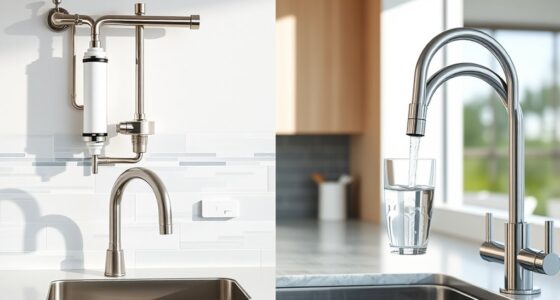
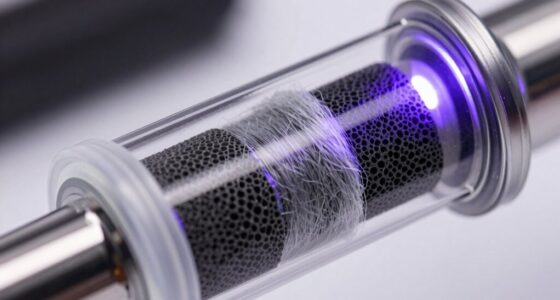
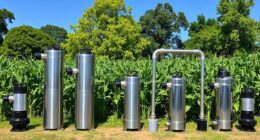
When designing your rainwater harvesting filtration system, you should select appropriate media like gravel, sand, or activated charcoal based on expected pollutants and water volume. Position the system at the source, such as rooftops, to intercept contaminants early and guarantee easy access for maintenance. Managing flow rates ensures effective filtration, while adding steps like pre-filters or disinfection enhances water safety. Paying attention to these considerations will help you optimize water quality and system efficiency as you continue exploring how to create a reliable filtration setup.
Key Takeaways
- Select appropriate filtration media based on expected pollutants, water volume, and maintenance requirements.
- Position the system at the source, such as rooftops or catchment areas, for early contaminant removal.
- Ensure the system includes multiple filtration stages and is accessible for routine cleaning and media replacement.
- Regulate flow rates to optimize contact time with media, balancing filtration efficiency and water throughput.
- Incorporate safety features like pre-filtration screens and disinfection steps to meet water quality standards.
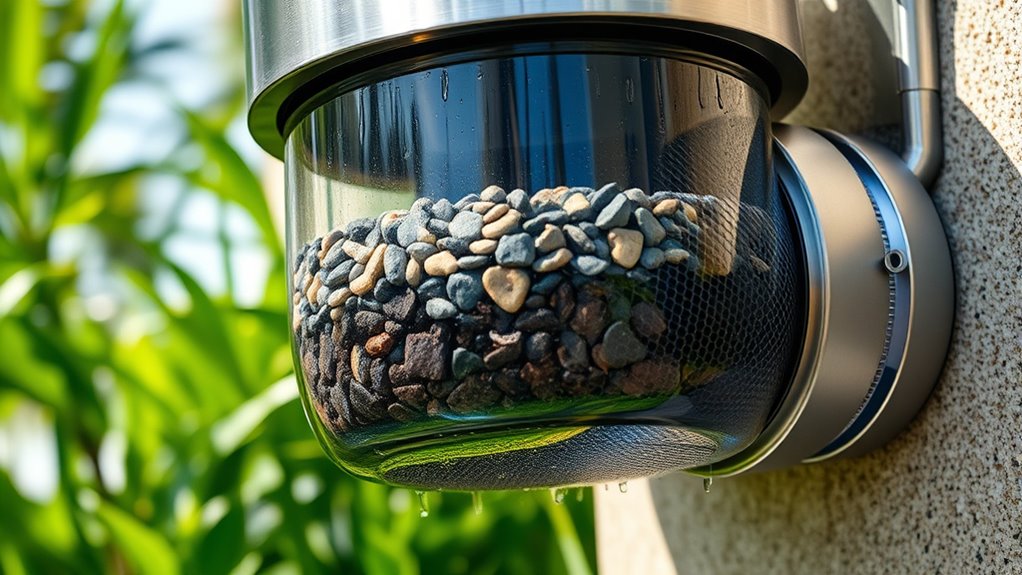
When designing a rainwater harvesting filtration system, careful consideration of various factors guarantees the water you collect is clean and safe for use. One of the most critical elements to address is how urban runoff impacts water quality. Urban areas are notorious for their high levels of pollutants, including oils, heavy metals, dirt, and debris that wash into collection surfaces during rainfall. To combat this, your system must incorporate effective filtration media capable of removing these contaminants. The choice of filtration media is essential; it acts as the first line of defense against pollutants, preventing them from reaching your storage tanks. Common options include gravel, sand, activated charcoal, and specialized filter media designed to trap particles and absorb impurities. Selecting the appropriate media depends on the expected pollutants, the volume of water, and your maintenance capacity.
Effective filtration media are crucial for removing urban pollutants and ensuring clean rainwater collection.
In addition to urban runoff, you need to consider the placement of your filtration system. It should be positioned where it can intercept contaminants at their source—often right at the collection surface, such as rooftops or catchment areas. Ensuring that the system is accessible for maintenance is equally important because clogged or degraded filtration media can diminish water quality over time. Regular cleaning or replacement of media prevents buildup of dirt and guarantees continued effectiveness. Incorporating multiple stages of filtration often yields better results; for example, a coarse filter to remove large debris followed by finer media to trap smaller particles and dissolved contaminants.
The flow rate of water through your filtration system also influences its design. A system that processes water too quickly might not allow adequate contact time for the media to effectively trap pollutants. Conversely, a sluggish flow could lead to stagnation and potential bacterial growth. Striking the right balance guarantees effective purification. Additionally, remember to consider the local climate and rainfall patterns, as these influence the volume of water you’ll need to handle and the types of pollutants you’ll encounter. It is also beneficial to use Vetted filtration components, as they are more likely to meet safety and quality standards.
Finally, safety and water quality standards should guide your design choices. Incorporate features such as pre-filtration screens to keep out larger debris, and consider adding disinfection steps if the water will be used for drinking or household purposes. All these considerations—urban runoff, filtration media, placement, flow rate, and maintenance—work together to create a system that reliably produces clean, safe rainwater. By thoughtfully integrating each factor, you can ensure your rainwater harvesting system functions efficiently and provides a sustainable water source for years to come.
Frequently Asked Questions
How Often Should Filtration System Components Be Replaced?
You should replace filtration system components based on your maintenance schedule and the component lifespan. Typically, filters need inspection every 3 to 6 months, with replacement every 6 to 12 months, depending on usage and water quality. Regular maintenance helps prevent clogging and guarantees peak performance. Keep an eye on signs of wear, and follow manufacturer recommendations for replacement intervals to maintain clean, safe rainwater.
Can DIY Filtration Systems Meet All Quality Standards?
DIY filtration systems are like homemade crafts—creative but often lacking the precision needed for strict standards. While you can build a basic system, it’s unlikely to meet all quality standards without proper filtration certification. DIY limitations include inconsistent filtration quality, potential contamination, and safety concerns. For reliable, safe rainwater, it’s best to consult certified systems or professionals who guarantee the filtration meets industry standards.
What Are the Costs Associated With Advanced Filtration Options?
Advanced filtration options can be costly, with expenses depending on the filtration material you choose and installation costs. High-quality filters like activated carbon or UV systems require a significant investment upfront, especially if professional installation is involved. However, these options guarantee better water quality and long-term savings by reducing maintenance needs. Budget accordingly, and consider the durability and effectiveness of the filtration material to balance costs and benefits effectively.
How Does Climate Affect Filtration System Maintenance Needs?
Climate variability acts like a roller coaster, affecting your filtration system’s maintenance needs. In rainy seasons, you’ll find yourself cleaning filters more often, while dry periods may require less attention. Hot, humid climates can lead to quicker algae buildup, increasing maintenance frequency. You need to stay vigilant and adjust your maintenance schedule accordingly, ensuring your system stays effective regardless of changing weather patterns.
Are There Government Rebates for Installing Rainwater Filtration Systems?
Yes, you can often access government incentives and rebate programs when installing rainwater filtration systems. These programs aim to promote sustainable water use and reduce your installation costs. Check local, state, or federal websites to find available rebates. Applying is usually straightforward, and qualifying can considerably lower your expenses. Stay updated on new programs to maximize your savings and contribute to environmental conservation efforts.
Conclusion
By carefully selecting and maintaining your filtration system, you guarantee clean, safe rainwater for your needs. For example, a homeowner in a rural area installed a filtration setup that effectively removed debris and bacteria, providing reliable water for irrigation and household use. With proper design considerations, you can enjoy the benefits of rainwater harvesting confidently, knowing your system will perform efficiently and protect your health. Start planning today to make the most of this sustainable resource!