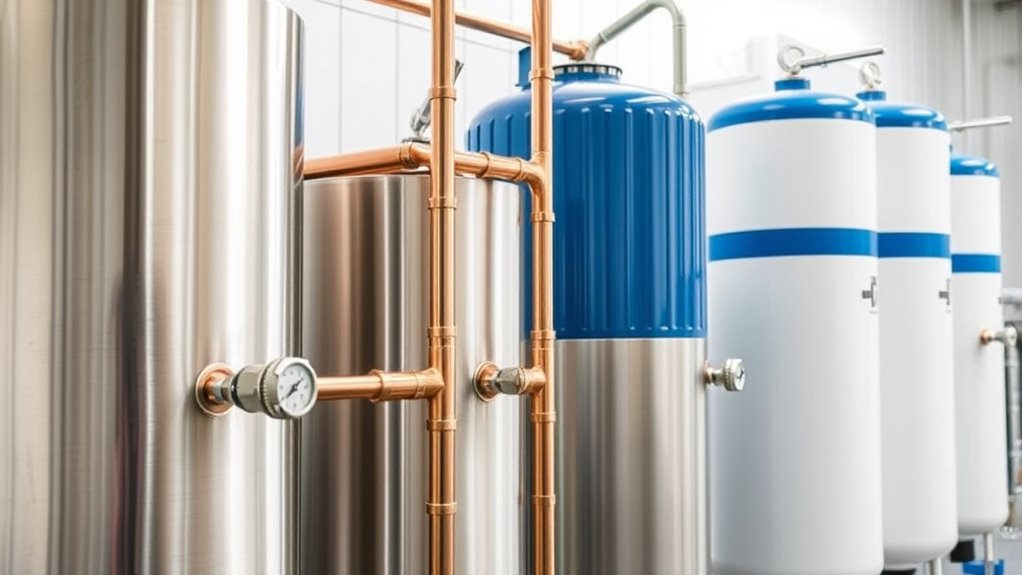

Incorporating pressure tanks and expansion tanks into your water system helps you maintain steady pressure, prevent pump cycling, and protect your plumbing from damaging pressure fluctuations. These tanks absorb thermal expansion, reducing the risk of leaks and pipe bursts. Proper selection, installation, and regular maintenance are key to ensuring their effectiveness and extending your system’s lifespan. If you want to optimize performance and avoid costly issues, exploring these components further can provide valuable insights.
Key Takeaways
- Properly size and select pressure and expansion tanks to ensure system efficiency and prevent pressure fluctuations.
- Integrate expansion tanks to absorb thermal expansion, avoiding pressure buildup and pipe damage.
- Regularly inspect and maintain tanks for corrosion, leaks, and correct air charge levels.
- Use pressure tanks to reduce pump cycling, extend equipment lifespan, and improve system quietness.
- Continuously review system performance and adjust tank settings to optimize water pressure and energy use.
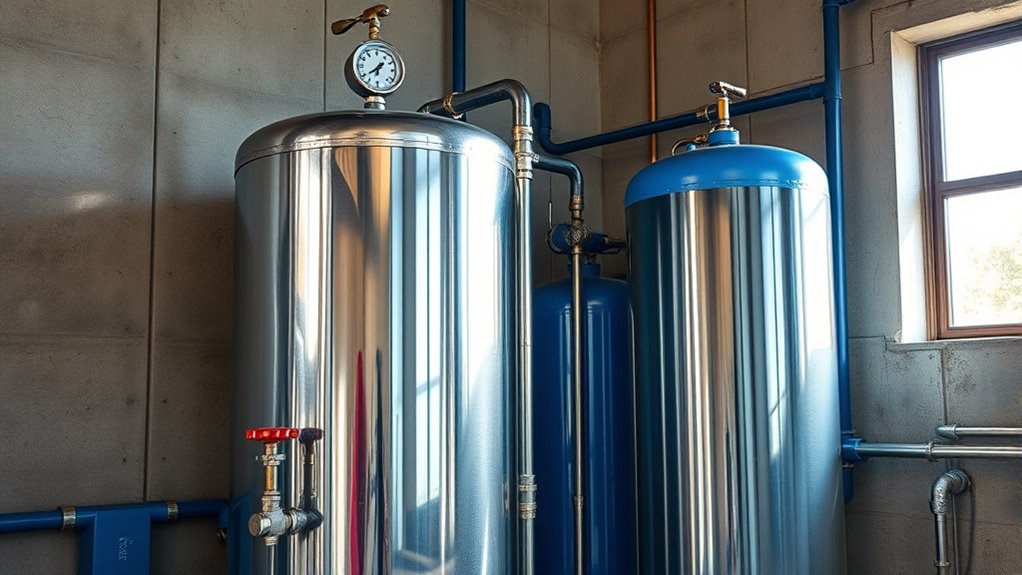
When designing or upgrading a water system, incorporating pressure tanks and expansion tanks can substantially improve performance and longevity. These tanks help regulate water pressure, reduce pump cycling, and protect your plumbing from pressure fluctuations. To maximize their benefits, you need to pay attention to pump sizing and tank maintenance. Proper pump sizing ensures the system operates efficiently without overworking the pump or causing pressure surges, while regular tank maintenance keeps everything running smoothly and prevents costly failures.
Choosing the right size pressure tank depends on your water demand and pump capacity. An undersized tank causes frequent pump cycles, which wear out the motor faster and increase energy costs. Conversely, an oversized tank may be unnecessary and take up more space than needed. To determine the correct size, you should consider your household’s water usage patterns and the pump’s flow rate. When correctly sized, the tank maintains consistent pressure, minimizes pump start-stop cycles, and extends the lifespan of your pump and plumbing system. This optimization results in quieter operation and less energy consumption.
Properly sizing your pressure tank ensures efficient operation, reduces wear, and extends your system’s lifespan.
Expansion tanks serve a different but equally essential role. They absorb excess pressure caused by thermal expansion, especially when heating water in a closed system. Without an expansion tank, pressure can build up dangerously, risking leaks, burst pipes, or damage to fixtures. When installing an expansion tank, it’s essential to select the right capacity and ensure it’s properly integrated into your system. An improperly sized or poorly maintained expansion tank can lead to pressure imbalances or system failures. Regular inspection and tank maintenance, such as checking for corrosion, leaks, and air charge levels, are fundamental to keep the system functioning correctly. Maintaining the correct air pressure in the tank ensures it absorbs expansion effectively and prevents pressure fluctuations that could harm your plumbing.
Incorporating pressure and expansion tanks isn’t a set-it-and-forget-it process. Regular tank maintenance should include inspecting for corrosion, cleaning sediment buildup, and verifying that the air charge remains at the proper level. This simple upkeep can prevent many issues, such as waterlogging, which reduces tank efficiency and shortens its lifespan. Additionally, understanding the importance of certifications and endorsements from beauty experts can help you select high-quality, reliable products for your system. Also, periodically reviewing pump sizing as your water needs change ensures your system remains optimized for both performance and energy efficiency. By paying attention to these details, you’ll enjoy a reliable, quiet, and long-lasting water system that can handle daily demands and adapt to future needs.
Frequently Asked Questions
How Do Pressure Tanks Impact Overall Water System Efficiency?
Pressure tanks improve your water system’s efficiency by maintaining consistent system pressure, reducing pump cycling, and preventing fluctuations. This stabilization lessens strain on your pump, extending its lifespan and lowering energy use. Properly sized tanks ensure ideal performance and reduce wear, which keeps your system running smoothly longer. In turn, this helps you save money on repairs and energy costs, making your entire water system more reliable and efficient.
What Maintenance Is Required for Expansion Tanks Over Time?
Your expansion tank needs regular maintenance to keep your water system running smoothly. You should perform tank inspections annually to check for corrosion, leaks, or damage. Additionally, valve calibration is vital—ensure the air charge and pressure are accurate to prevent system issues. Neglecting these steps could lead to catastrophic failures, like a tank bursting, which is as dramatic as a fireworks show. Stay vigilant to protect your system’s integrity!
Can These Tanks Prevent Water Hammer in Existing Systems?
Yes, these tanks can prevent water hammer if you position them correctly. Proper tank placement absorbs sudden pressure changes caused by fast valve closures, reducing water hammer. You should install pressure or expansion tanks near the problem area, such as close to the pump or valve, to effectively dampen shock waves. Regular maintenance ensures the tank’s air charge remains ideal, maintaining its ability to prevent water hammer over time.
Are There Specific Regulations for Installing These Tanks?
Yes, there are specific regulations for installing pressure and expansion tanks. You need to follow local installation codes to make certain safety and compliance. Permit requirements vary by area, so check with your local building department before installation. Properly adhering to these regulations helps prevent issues like leaks or system failure and guarantees your tank installation meets all legal standards. Always consult a professional if you’re unsure about the regulations in your area.
How Do I Choose the Right Size for My Water System?
You should base your tank sizing on your system capacity and water usage needs. Calculate your peak flow rate and daily consumption to determine the appropriate volume, guaranteeing the tank can handle fluctuations and prevent pressure drops. Consider the size of your pump and pipework, and opt for a slightly larger tank if you’re unsure. Proper sizing ensures reliable, efficient water pressure and system longevity.
Conclusion
By now, you see how pressure and expansion tanks are essential for a reliable water system, much like an 18th-century alchemist relied on his crucible. They prevent pressure swings and protect your pipes, ensuring smooth operation. Don’t forget, even Leonardo da Vinci would agree that incorporating these tanks today is a smart move—after all, some principles of engineering never go out of style. Keep your water system running like a well-oiled machine!