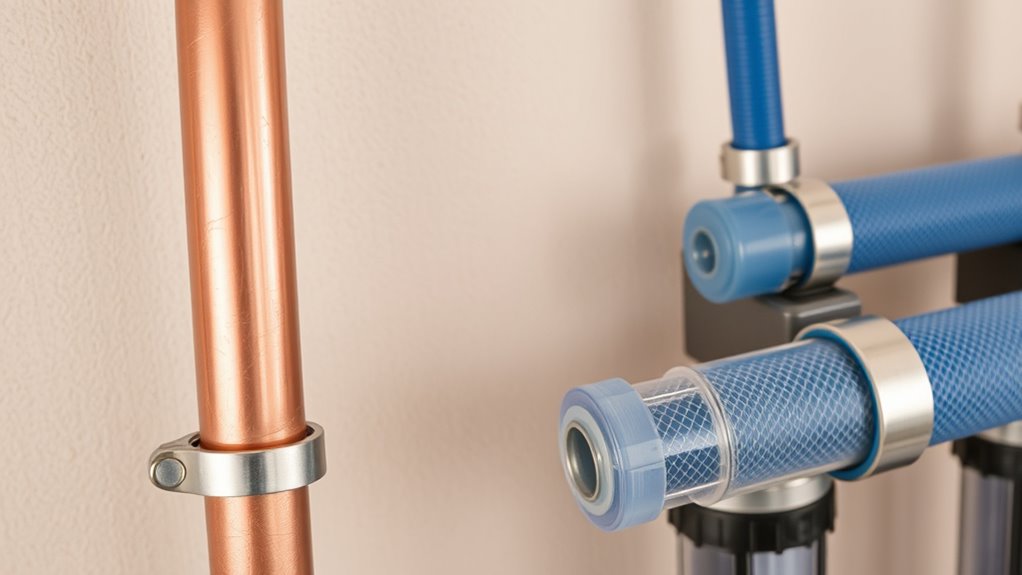

When choosing between PEX and copper for filter installations, consider your budget, skill level, and project needs. PEX offers an affordable, easy-to-install option that bends around corners and requires fewer fittings, making it ideal for complex spaces or DIY setups. Copper, while pricier, provides long-term durability and resistance to high temperatures, perfect for demanding environments. To find out which material suits your situation best, explore the key differences further.
Key Takeaways
- PEX is more cost-effective and easier to install, ideal for complex or tight spaces around filters.
- Copper provides long-term durability and resistance, suitable for high-temperature or demanding filter environments.
- PEX requires fewer fittings, reducing installation time and potential leak points in filter setups.
- Copper’s soldering and rigid pipes may increase labor costs but offer proven longevity.
- Choose PEX for budget-friendly, quick installations; opt for copper for durability and high-temperature resistance.
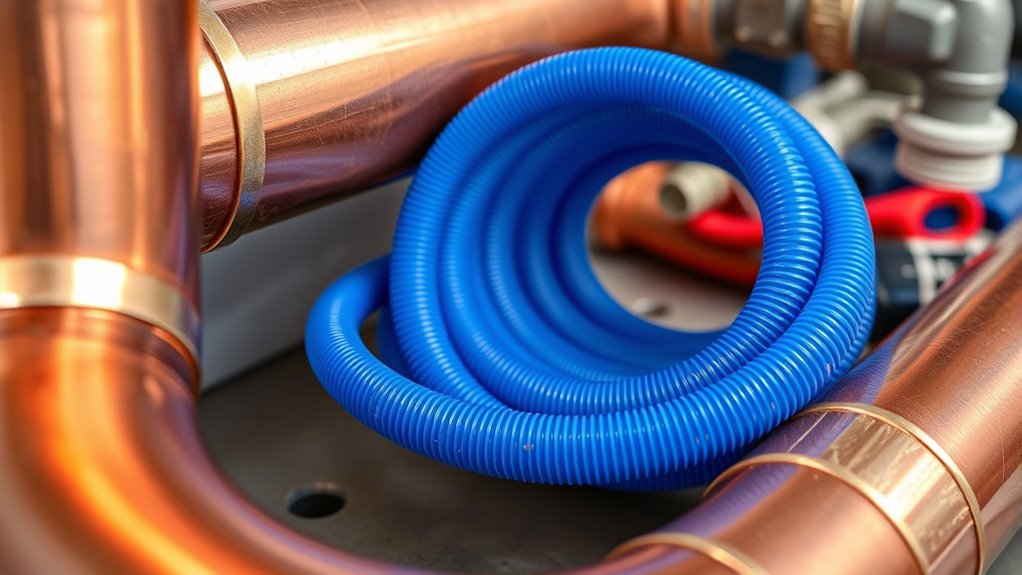
Selecting the right materials for your plumbing system is essential to guarantee durability, safety, and efficiency. When choosing between PEX and copper for filter installations, you need to consider several factors, including cost comparison and installation ease. Both materials have their advantages, but understanding their differences helps you make an informed decision that suits your project’s needs and budget.
Starting with cost comparison, PEX typically costs less than copper upfront. PEX pipes are more affordable to purchase and often require fewer fittings, which reduces material expenses. Copper, on the other hand, tends to be pricier, especially if you’re working on a large-scale project. However, copper’s durability can make it a worthwhile investment in the long run, especially if you want a material that withstands high temperatures and resists corrosion over decades. While the initial costs favor PEX, it’s important to weigh these savings against potential long-term benefits and the specific demands of your filter system.
PEX is cheaper upfront, but copper offers long-term durability and resistance.
When it comes to installation ease, PEX stands out as the more user-friendly option. Its flexibility allows you to bend it around corners and tight spaces without needing as many fittings or joints. This flexibility simplifies the installation process, especially in tight or complex spaces, saving you time and effort. PEX also doesn’t require soldering; instead, it uses simple crimp or clamp fittings, which almost anyone can learn quickly. This ease of installation means you can often do the work yourself, reducing labor costs and avoiding the need for specialized tools.
Copper, however, can be more challenging to install. It’s rigid, so you’ll need to cut and fit the pipes precisely, and soldering or compression fittings are necessary to connect sections. This process demands more skill, patience, and sometimes special tools, which can increase installation time and costs if you hire a professional. Additionally, working with copper involves handling open flames for soldering, which adds safety considerations and might not be suitable for every environment, especially in DIY projects.
Ultimately, your choice depends on your priorities. If you’re looking for a cost-effective, straightforward installation, PEX offers a compelling solution. If you prefer a material with proven longevity and are willing to invest more time and money upfront, copper could be the better option. It is also worth considering the performance characteristics of each material, which can influence their suitability for specific applications. By carefully weigh these factors, you can select the material that best aligns with your budget, skills, and the specific requirements of your filter installation.
Frequently Asked Questions
How Does PEX Handle High-Pressure Water Systems?
You’ll find that PEX handles high-pressure water systems well due to its flexible nature. It absorbs pressure fluctuations effectively, reducing stress on joints and fittings. Unlike rigid materials, PEX’s flexibility allows it to bend around obstacles without cracking, maintaining consistent flow even during pressure spikes. This resilience makes PEX a reliable choice for high-pressure systems, offering durability and ease of installation while accommodating pressure changes smoothly.
Are There Environmental Concerns With Copper or PEX?
You should consider the environmental impact of both materials. Copper is highly recyclable, reducing waste and supporting sustainability, but mining and processing can harm ecosystems. PEX, made from plastic, has recycling concerns because it’s harder to recycle and may release chemicals if burned. Both materials have environmental considerations, so weigh their eco-friendliness and recycling options to choose the best fit for your project.
Which Material Is More Resistant to UV Exposure?
Copper is more UV resistant and offers better material durability against sunlight exposure. PEX, on the other hand, is less resistant to UV rays and can degrade if exposed directly over time. If your installation involves outdoor or sunlight-exposed areas, copper is the better choice for long-term durability. You should consider UV resistance when selecting materials to guarantee your plumbing system remains reliable and maintains its integrity over time.
Can PEX Be Used Outdoors Long-Term?
Think of PEX as a brave explorer facing harsh outdoor conditions. While it has decent UV resistance, prolonged exposure to sunlight isn’t its forte. You can use PEX outdoors long-term, but it requires UV-protective coatings or coverings to withstand the environment. Consider its environmental impact, too, as PEX’s flexibility reduces waste during installation. For long-term outdoor use, guarantee proper protection and weigh its eco-friendliness against other options like copper.
How Do Installation Costs Compare Between PEX and Copper?
You’ll find that PEX installation costs are generally lower than copper, thanks to its affordability and ease of installation. PEX’s flexibility allows you to work faster, reducing labor time and expenses. In contrast, copper requires more fittings, tools, and skill, which increases costs. Overall, the cost comparison favors PEX for budget-conscious projects, especially if you prioritize installation ease and speed.
Conclusion
Ultimately, choosing between PEX and copper depends on your specific needs and budget. Both materials have their strengths, so don’t put all your eggs in one basket. Do your homework, weigh the pros and cons, and pick the one that fits your project best. Remember, it’s better to be safe than sorry—so don’t rush the decision. When you make an informed choice, you’ll have plumbing that stands the test of time.