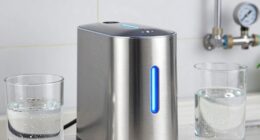
When designing filter systems for small spaces or tiny homes, focus on compact, multi-stage units that combine HEPA filters for tiny particles and activated carbon filters for odors. Choose space-efficient, quiet models that fit seamlessly into your environment and require minimal maintenance. Modular options can help customize your setup without cluttering your living space. Keeping these factors in mind guarantees the best air quality and comfort—stay with us to explore more tips for creating the perfect system.
Key Takeaways
- Incorporate compact, multi-stage filters combining HEPA and activated carbon to maximize air purification in limited space.
- Choose space-efficient, modular, standalone units that can be easily integrated and customized within tiny home layouts.
- Ensure low-noise operation to maintain a peaceful environment without sacrificing filtration performance.
- Implement regular maintenance routines, including timely filter replacements, to sustain system efficiency and air quality.
- Prioritize thoughtful placement and size optimization to enhance airflow, reduce clutter, and improve overall system longevity.
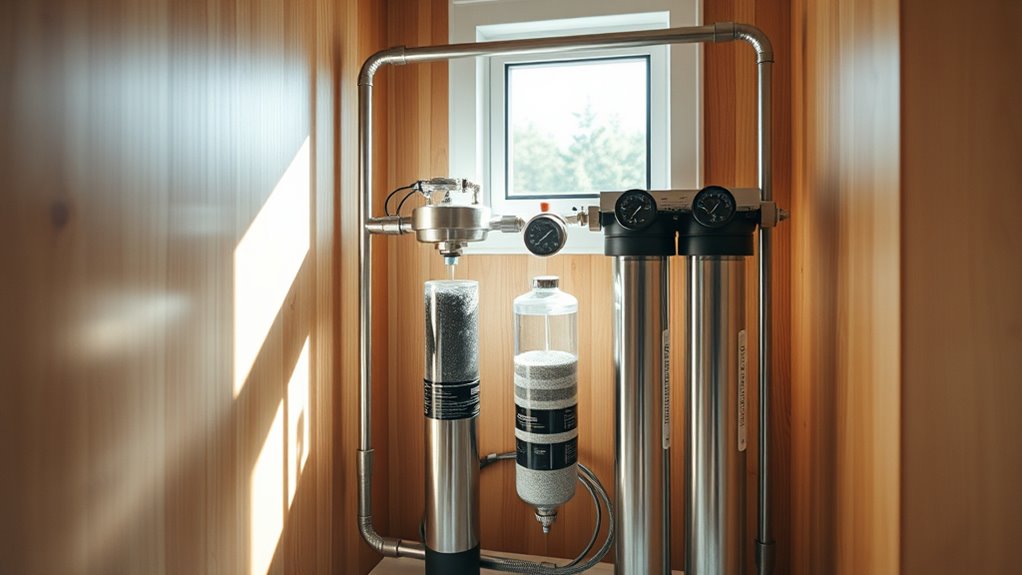
Looking for effective filter systems for small spaces and tiny homes? You’re in the right place. When space is limited, choosing the right filter system becomes vital to maintaining good air quality and making sure your environment stays healthy and comfortable. Small spaces tend to trap dust, pet dander, and airborne pollutants more easily, so a well-designed filter system can make a significant difference. It’s not just about installing a filter; it’s about selecting one that’s efficient, easy to maintain, and suited to your specific needs.
One of the first things to consider is the type of filter you’ll use. HEPA filters are often the top choice because they effectively trap tiny particles, including pollen, mold spores, and smoke. These filters are compact enough to fit into small spaces yet powerful enough to improve air quality noticeably. Activated carbon filters are also beneficial, especially if you’re dealing with odors or VOCs (volatile organic compounds). Combining these two types in a multi-stage system can provide all-encompassing air cleaning, which is ideal for tiny homes where air can circulate less freely.
HEPA and activated carbon filters combined offer compact, effective air purification for tiny homes.
Designing a filter system for a tiny space requires balancing performance with space-saving features. Look for compact units that can be easily integrated into your existing HVAC system or used as standalone air purifiers. Modular designs are particularly useful—they allow you to customize your setup and upgrade filters as needed without occupying too much space. Additionally, consider the noise level of the system; a quiet operation ensures you won’t be constantly aware of its presence, making it easier to incorporate into daily living.
Maintaining your filter system is just as important as choosing the right one. Establish simple maintenance routines to keep your air quality high. Regularly check and replace filters according to the manufacturer’s instructions—this might mean every 3 to 6 months for HEPA filters and more frequently for carbon filters if you notice odors or increased particle buildup. Keeping your system clean involves not only changing filters but also wiping down vents and fans to prevent dust accumulation. This proactive approach ensures your system runs efficiently, prolongs its lifespan, and consistently delivers clean, fresh air.
In small spaces, every inch counts, so pick a filter system that’s not only effective but also space-conscious. With thoughtful design and consistent maintenance routines, you can enjoy healthier indoor air quality without sacrificing precious space in your tiny home. Proper planning and beneficial technology can help maximize your system’s efficiency and lifespan, ensuring long-term comfort and health. With this approach, your environment remains comfortable, safe, and fresh, no matter how compact your living area is.
Frequently Asked Questions
How Do I Choose the Best Filter System for Limited Space?
To choose the best filter system for limited space, prioritize portable solutions that fit easily into tight areas. Look for compact, efficient units that don’t sacrifice performance. Consider aesthetic considerations to make sure the filter blends seamlessly with your decor. You want a system that’s easy to install, maintain, and moves if needed. By balancing size, portability, and style, you’ll find a filter system that meets your air quality needs without cluttering your space.
Can Compact Filters Handle Multiple Air Quality Issues Simultaneously?
Your compact filter can tackle multiple air quality pollutants at once, but only if it has enough filter capacity. Think of it as a superhero with limited powers—it’s effective, but overloading it with pollutants might cause it to falter. Choose a filter designed for multi-tasking, ensuring it’s rated for the specific pollutants you’re concerned about. This way, your tiny space stays fresh without overwhelming your system.
What Maintenance Is Required for Tiny Home Filter Systems?
You need to regularly inspect your tiny home filter system to guarantee it runs efficiently. Replace filters as needed—typically every 3 to 6 months—depending on usage and air quality. Keep an eye out for reduced airflow or odors, which indicate it’s time for a filter replacement. Conduct system inspections periodically to check for dust buildup or damage, ensuring your filter system continues to provide clean, healthy air in your small space.
Are There Eco-Friendly Filtering Options Suitable for Small Spaces?
Yes, you can opt for eco-friendly filtering options suitable for small spaces. Natural filtration methods, like activated charcoal or sand, effectively clean water without chemicals. Biodegradable filters made from plant-based materials also work well, reducing waste and environmental impact. These options are space-efficient, easy to maintain, and perfect for tiny homes, helping you stay eco-conscious while ensuring clean, safe water.
How Do Noise Levels Affect Filter System Choices in Tiny Homes?
If noise levels in tiny homes were a thunderstorm, you’d want your filter system to be a whispering breeze, barely noticeable. High noise can disrupt peace, so prioritize units with sound insulation and noise mitigation features. Opt for quieter models with vibration dampening and soundproof enclosures. This way, your filter system becomes a subtle helper, maintaining serenity without turning your compact space into a noisy chaos.
Conclusion
Think of your tiny home as a delicate garden that needs the right filter system to thrive. By choosing compact, efficient filters, you’re planting the seeds for clean, invigorating air in a small space. With a little care and the right setup, your home becomes a sanctuary—like a gust of fresh mountain air, no matter how tight the quarters. Keep your filters maintained, and enjoy the clear, crisp environment you’ve designed with purpose.