
If your system’s flow feels weak or sluggish, undersized pipes may be the hidden culprit. Narrow pipes increase resistance, causing delays and reducing overall capacity, which can lead to equipment strain and inefficiency. These bottlenecks often go unnoticed but can markedly impact performance and energy use. Choosing the right pipe size is critical for smooth operation. Keep exploring to discover how proper sizing can solve these hidden flow problems.
Key Takeaways
- Undersized pipes increase flow resistance, reducing system capacity and causing sluggish flow.
- Improper pipe sizing leads to pressure drops downstream, diminishing overall performance.
- Small diameter pipes require more energy, raising operational costs and risking system inefficiency.
- Incorrect pipe sizing can cause frequent maintenance issues and potential system blockages.
- Properly designed pipe diameters ensure optimal flow, prevent bottlenecks, and support future expansion.
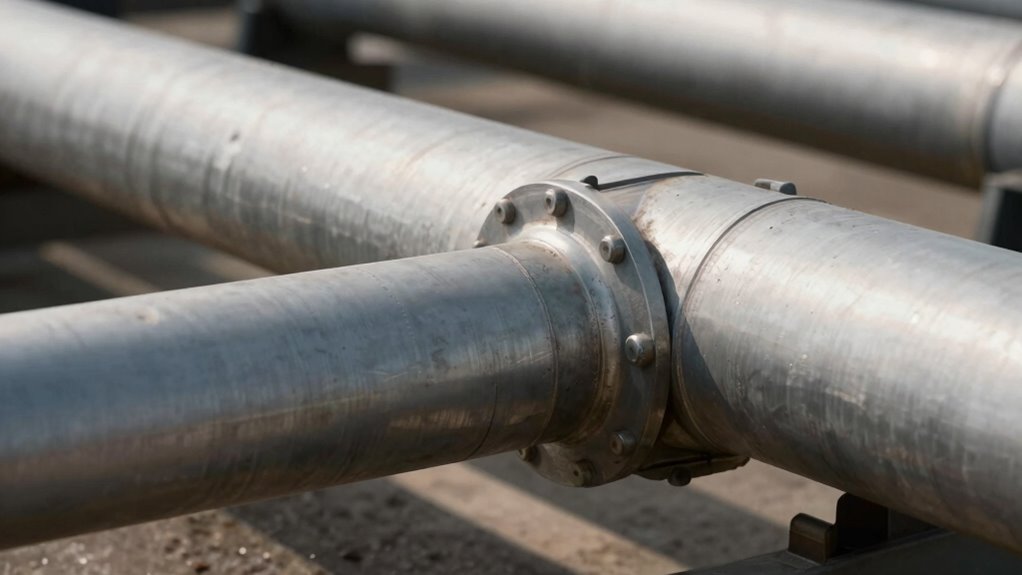
Pipe size bottlenecks occur when the diameter of a pipe limits the flow rate, causing delays and inefficiencies in your system. When the pipe is too narrow, it creates increased flow resistance, which hampers the movement of fluids or gases through the pipeline. This resistance isn’t just a minor inconvenience; it can substantially reduce your system’s capacity, leading to sluggish performance and potential pressure drops downstream. Recognizing the impact of pipe size on flow is vital because many issues attributed to equipment or pressure regulation might actually stem from undersized piping.
Undersized pipes increase resistance, reduce capacity, and cause delays in fluid or gas flow.
One of the main challenges with pipe size bottlenecks is the installation process itself. Choosing the wrong pipe diameter can be a result of oversight or lack of proper planning, but once the pipes are in place, fixing the problem isn’t always straightforward. Larger pipes might require more space, specialized fittings, or additional support, making installation more complex and costly. Conversely, selecting a pipe that’s too small initially might seem like a quick fix, but it often results in ongoing flow resistance and frequent maintenance issues. Properly sizing pipes from the start is essential, yet it can be tricky because it demands precise calculations and understanding of your system’s flow requirements.
When you face installation challenges with improper pipe sizing, it’s not just about replacing pipes; it involves re-evaluating your entire setup. You need to consider factors like pipe material, fittings, and the physical constraints of your installation environment. Sometimes, upgrading to a larger diameter pipe involves dismantling existing infrastructure, which can be disruptive and expensive. If you ignore these challenges, you risk continuing with a system that’s inefficient, prone to blockages, or unable to meet demand. The ripple effect of undersized pipes can lead to increased energy consumption as pumps work harder to overcome flow resistance, further escalating costs.
Addressing pipe size bottlenecks requires a proactive approach. You should assess your flow rates regularly and consider the long-term implications of pipe diameter choices. Consulting with engineers or flow specialists can help you determine the ideal size that minimizes flow resistance and balances installation challenges. Remember, a well-designed piping system accounts not only for current needs but also for future expansion, preventing bottlenecks before they become major issues. Proper pipe sizing is essential for optimizing system performance and avoiding costly retrofits later on. By understanding the interplay between pipe size, flow resistance, and installation challenges, you can guarantee your system operates smoothly, efficiently, and reliably.
Frequently Asked Questions
How Can I Determine if My Pipe Size Is Causing Flow Issues?
You can determine if your pipe diameter is causing flow issues by measuring your current pipe size and comparing it to the flow rate you need. If your flow rate is lower than expected, it could be due to a narrow pipe diameter restricting water flow. Use flow meters or consult a professional to assess if your pipes are adequately sized for your system’s demands.
What Are the Signs of a Pipe Size Bottleneck?
You’ll notice pressure drops and flow irregularities—like water teasing you with inconsistent bursts. If your pipes suddenly choke or sputter, it’s a clear sign of a bottleneck. Reduced flow rate, strange noises, or sluggish performance all point to a size mismatch. When your pipes can’t keep up, they whisper their frustration through these signs, revealing that a bottleneck’s got your flow on a slow, bumpy ride.
Can Upgrading Pipe Size Improve Flow Without Other Modifications?
Yes, upgrading pipe size can improve flow rate without other modifications. Larger pipes reduce resistance, allowing water to move more freely. The pipe material also matters—smooth materials like PVC or copper minimize friction, boosting flow efficiency. When you increase pipe diameter, you’ll see less pressure drop and a stronger flow, making your system more effective without needing extra adjustments. Just guarantee the new pipe size matches your system’s requirements.
How Do Pipe Material and Diameter Interact to Affect Flow?
Your pipe material and diameter directly influence flow efficiency. A smooth pipe material like PVC reduces resistance, allowing better flow, while rougher materials like cast iron increase friction. Larger pipe diameters decrease flow resistance, boosting capacity, but only if the material’s smoothness is maintained. Combining a suitable pipe material with an ideal diameter minimizes bottlenecks, ensuring your system moves fluid smoothly and efficiently without unnecessary pressure drops.
What Tools or Methods Are Best for Measuring Pipe Flow Capacity?
Your flow measurement game can make or break your system. Use a digital flow meter or ultrasonic flow meter for precise readings, and pipe sizing tools like flow calculators or CAD software to optimize pipe capacity. These tools help you identify bottlenecks and verify your pipes handle the flow efficiently. Don’t settle for guesswork—maximize your system’s potential with the right measurement tools today!
Conclusion
Now that you know the hidden culprit behind your weak flow, you can see how a simple pipe size bottleneck acts like a clogged artery, blocking your system’s essentiality. Don’t let tiny restrictions choke your performance—think of upgrading your pipes as unclogging a vital vein, allowing the flow to surge freely. With the right size, your water or air can dance through like a lively river, bringing strength and smoothness back to your system’s heartbeat.