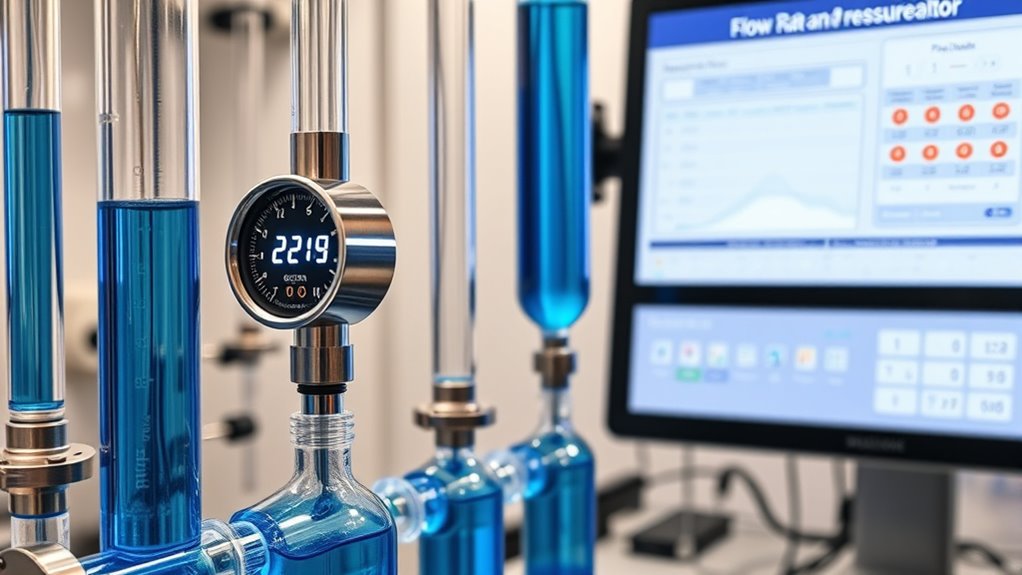

Understanding flow rate and pressure drop calculators helps you design and troubleshoot fluid systems effectively. These tools estimate how fluids move and identify where energy losses happen, influenced by factors like pipe size, material, and fluid viscosity. Pros know that simple models might overlook complex variables, so interpretation is key. Correct use improves system efficiency and longevity. Keep exploring to uncover expert tips that can make your calculations even more accurate.

Get home appliances delivered free — and shop member deals
- Fast, free delivery on millions of items
- Access to Prime Big Deal Days deals on October 6–7
- Prime Video, Amazon Music and more included
Key Takeaways
- Accurate flow rate and pressure drop calculations help optimize system efficiency and prevent equipment overload or failure.
- Proper understanding of pipe size, material, and fittings is essential for precise pressure drop estimation.
- Simplified calculators provide quick estimates but may lack accuracy for complex systems; advanced tools offer detailed analysis.
- Regular calibration and consistent measurement procedures ensure reliable data for making informed decisions.
- Recognizing the impact of fluid viscosity and turbulence improves troubleshooting and system design for better performance.
Understanding the Basics of Fluid Dynamics

Fluid dynamics is the study of how liquids and gases move and interact with their surroundings. When you look at a fluid flow, two key factors influence its behavior: flow velocity and fluid viscosity. Flow velocity determines how fast the fluid moves through a system, affecting pressure and energy transfer. Higher velocities can lead to turbulence, which changes flow patterns dramatically. Fluid viscosity measures the fluid’s resistance to movement, influencing how easily it flows. Thicker fluids with high viscosity resist motion more, slowing down flow and increasing pressure drops. Understanding these basics helps you predict how fluids respond under different conditions, ensuring you can optimize systems for efficiency and safety. Mastering these concepts is essential for working with any fluid-based process or equipment. Additionally, GMC tuning techniques can influence fluid flow within engine systems, optimizing performance and efficiency.
How Flow Rate Affects System Performance
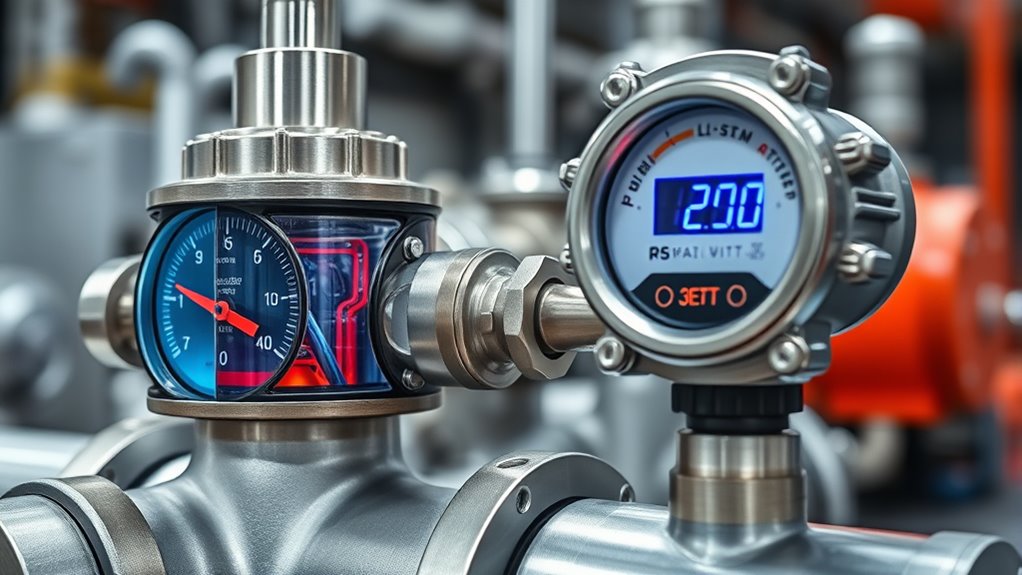
The flow rate considerably impacts system performance by determining how efficiently a fluid moves through equipment or pipelines. If your flow rate is too high, it can overload components, leading to faster wear or potential failure. Conversely, a low flow rate might cause insufficient system capacity, reducing productivity. Maintaining the right flow rate ensures ideal operation, balancing efficiency and longevity. It also influences pressure drops and energy consumption, affecting overall system costs. Understanding how flow rate interacts with your system helps you avoid bottlenecks or underperformance. When you optimize flow rate, you maximize system capacity, ensuring consistent, reliable operation without unnecessary strain on equipment. This balance is key to achieving better performance and extending the lifespan of your system components.
The Role of Pressure Drop in Pipe Systems
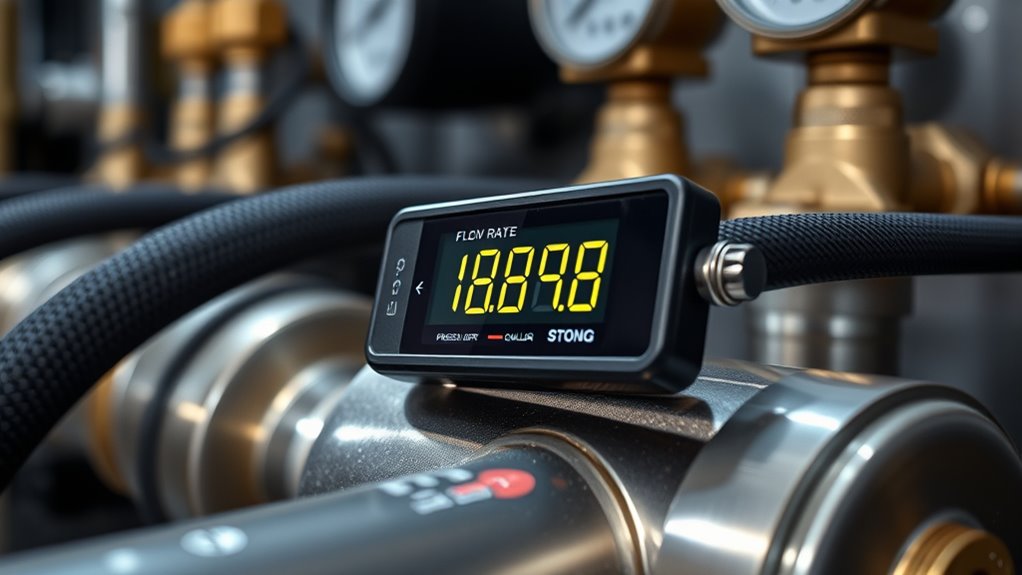
Pressure drop causes energy loss in your pipe system, reducing overall efficiency. When pressure drops too much, your system doesn’t perform as well and may require more power to operate. Understanding this balance helps you optimize performance and save energy. Additionally, monitoring pressure drop levels can help identify potential system issues before they lead to costly repairs.
Energy Loss Impacts Efficiency
Since pressure drop represents energy lost as fluid moves through a pipe, it directly affects system efficiency. When pressure drops too much, your pump has to work harder to maintain flow, wasting energy. This increased workload not only raises energy costs but can also lead to equipment wear over time. Proper pipe sizing and selecting smooth interior surfaces, and reducing unnecessary fittings help lower pressure losses. By understanding how pressure drop impacts energy consumption, you can make smarter choices in your system design and operation. Focusing on reducing energy loss through pressure management not only cuts costs but also improves system longevity and sustainability. Ultimately, controlling pressure drop is key to achieving better system optimization.
System Performance Affected
When a significant pressure drop occurs in a pipe system, it can considerably reduce flow rates and disrupt overall performance. The pipe material influences how much pressure is lost, as rougher or less smooth surfaces increase resistance. Fluid viscosity also plays a critical role; thicker fluids create higher resistance, resulting in greater pressure drops. These drops mean less fluid reaches the outlet, impairing system efficiency and potentially causing equipment issues. If you use rigid materials like steel, you might experience different pressure losses compared to flexible or plastic pipes. Understanding how pipe material and fluid viscosity interact helps you anticipate performance problems. Properly managing pressure loss ensures ideal flow rates, minimizes energy use, and maintains system reliability.
Common Factors Influencing Flow and Pressure Loss
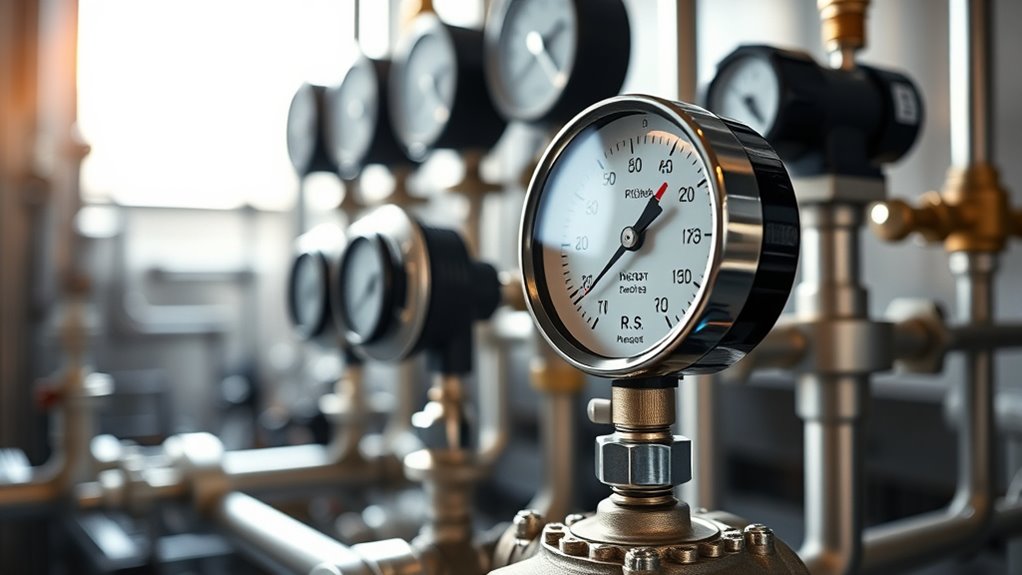
Various factors can considerably influence flow rate and pressure loss within a system. One major factor is flow turbulence, which occurs when the fluid’s movement becomes chaotic, increasing friction and energy loss. Turbulence is often caused by sudden changes in flow direction or velocity, leading to higher pressure drops. Pipe roughness also plays a prominent role; rougher surfaces create more resistance, forcing the fluid to work harder and reducing flow efficiency. The material and condition of the pipe’s interior significantly impact pressure loss, especially as buildup or corrosion increases roughness over time. Additionally, pipe diameter, length, and fittings contribute to pressure drops. Recognizing these factors helps you better predict system behavior and optimize design for efficient flow and minimal pressure loss. Juice detox can sometimes influence fluid dynamics in biological systems, emphasizing the importance of understanding flow factors.
Choosing the Right Calculator for Your Needs
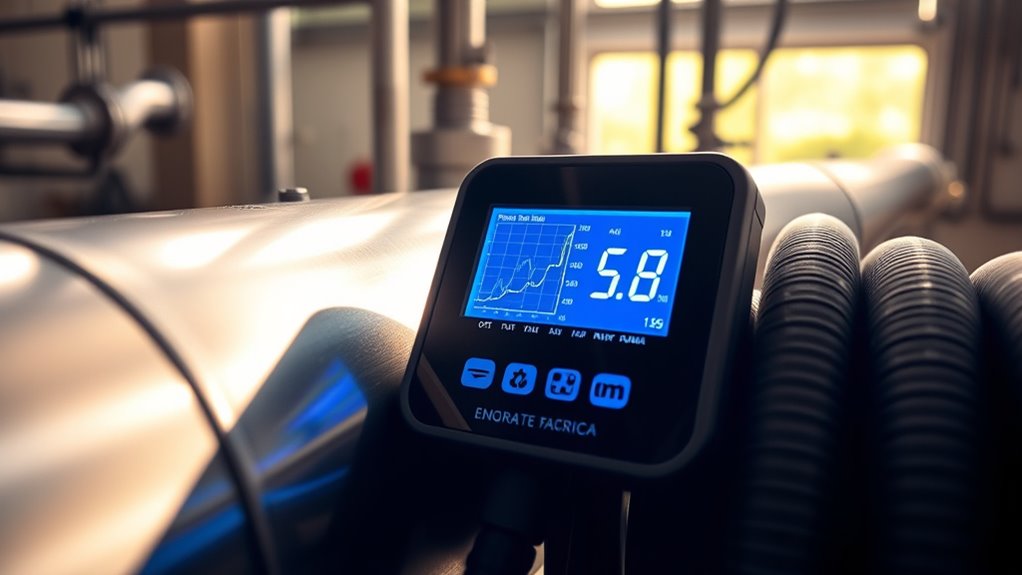
Choosing the right calculator depends on understanding the specific details of your fluid system. Consider factors like material selection, pipe diameter, and operational pressures. Different calculators cater to varied needs, from quick estimates to detailed analysis. For example, if you’re managing a system with corrosive materials, pick a calculator that accounts for material compatibility. Conversely, if maintenance schedules are critical, opt for tools that factor in wear and tear over time. Here’s a quick comparison:
| Feature | Basic Calculator | Advanced Calculator | Maintenance Focused |
|---|---|---|---|
| Material Compatibility | Limited | Extensive | Moderate |
| Pressure Range | Low to Medium | Wide | Variable |
| Maintenance Inputs | No | Yes | Yes |
Choosing prudently ensures accurate results tailored to your system’s needs. Additionally, understanding the pressure drop in your system can significantly impact its efficiency and longevity.
Interpreting Results: What the Numbers Really Mean

Interpreting the results from your flow rate and pressure drop calculator is essential for making informed decisions about your fluid system. When analyzing the numbers, consider flow variability — fluctuations in flow that can indicate potential issues or inefficiencies. Pressure fluctuations, shown in your results, reveal where pressure drops might be uneven or excessive, affecting system performance. If the flow rate varies considerably along the system, it suggests restrictions or leaks that need addressing. Likewise, inconsistent pressure readings can signal problems like blockages or pump inefficiencies. Understanding what these numbers mean helps you identify weak points, optimize system design, and prevent costly failures. Additionally, awareness of storage conditions, such as temperature and exposure to light, can impact the accuracy of your pressure and flow measurements. Remember, the data is only valuable if you interpret it correctly, focusing on how flow variability and pressure fluctuations impact overall system health.
Practical Tips for Accurate Measurements and Calculations

To guarantee your measurements and calculations are accurate, start by using properly calibrated sensors and following consistent procedures. Regular sensor calibration ensures your data stays precise over time, preventing errors caused by drift or wear. Keep your measurement techniques consistent, such as maintaining the same flow conditions and avoiding sudden changes. When analyzing your data, use clear data visualization tools like graphs and charts to spot trends or anomalies quickly. These visual aids help verify whether your measurements align with expected results. Double-check calibration status before each measurement session, and document your procedures to maintain consistency. Additionally, understanding regional divorce statistics can help inform expectations and planning during legal processes. Accurate data collection combined with effective visualization allows you to identify issues early and improve overall calculation reliability.
Limitations of Standard Flow and Pressure Drop Tools

While standard flow and pressure drop tools are widely used for quick assessments, they often have limitations that can affect accuracy. These tools rely on simplified models that don’t account for complex system variables, leading to accuracy issues. Software limitations also play a role; many calculators can’t handle diverse pipe materials, irregular geometries, or fluctuating flow conditions. This can result in potential errors when applying generic formulas to specific scenarios. Understanding these constraints helps you recognize when to seek more detailed analysis. Additionally, modeling complexities may require advanced simulations beyond basic calculations.
How Professionals Use These Calculators to Optimize Systems

Professionals rely on these calculators to size systems accurately, ensuring they meet specific flow and pressure requirements. They also use them to boost efficiency by identifying ideal configurations and reducing energy waste. Additionally, troubleshooting becomes faster when precise data helps pinpoint issues quickly and effectively.
Precise System Sizing
Accurate system sizing relies on the precise use of flow rate and pressure drop calculators, enabling engineers to enhance performance and efficiency. By considering pipe material and fluid viscosity, you can select appropriate pipe diameters and materials that reduce pressure drops and improve flow. For example, rigid PVC may handle certain fluids better than copper, depending on viscosity. Using these calculators helps you determine the right combination, avoiding undersized pipes that cause excessive pressure loss or oversized pipes that waste resources. Here’s a quick comparison:
| Pipe Material | Suitable for Viscosity Levels |
|---|---|
| Copper | Low to medium viscosity fluids |
| PVC | Low viscosity fluids |
| Steel | High viscosity fluids |
This approach ensures your system is precisely tailored for optimal, reliable operation. Additionally, understanding pressure drops helps in designing systems that maintain consistent flow rates without overexerting pumps or creating inefficiencies.
Efficiency Enhancements
Have you ever wondered how engineers achieve maximum system efficiency using flow rate and pressure drop calculators? They analyze how pipe material impacts flow resistance and energy loss. Different pipe materials, like copper or PVC, have varying surface roughness, which affects pressure drops. By inputting fluid viscosity into the calculator, you can see how thicker or thinner fluids influence flow dynamics. Professionals adjust pipe diameter or select materials that minimize pressure loss, ensuring ideal flow with less energy consumption. These calculators help identify bottlenecks caused by high fluid viscosity or unsuitable pipe choices. Ultimately, understanding how pipe material and fluid properties interact allows you to enhance system efficiency, reduce operating costs, and prolong equipment lifespan. This precise approach delivers smarter, cost-effective system management.
Troubleshooting Techniques
When troubleshooting system issues, engineers rely on flow rate and pressure drop calculators to identify where problems originate. By analyzing pressure drops across different sections, you can pinpoint obstructions or leaks. Considering pipe material is vital, as it affects flow resistance and pressure loss; for example, smooth pipes like PVC have lower pressure drops than rougher materials. Fluid viscosity also plays a significant role—higher viscosity fluids increase resistance, causing unexpected pressure drops. Using these calculators, you can compare expected versus actual readings, revealing if flow restrictions or incorrect pipe choices cause inefficiencies. This approach helps you target specific issues quickly, whether it’s adjusting pipe material, cleaning blockages, or optimizing flow rates to improve system performance and reliability.
Frequently Asked Questions
How Do Temperature Variations Affect Flow Rate Calculations?
Temperature variations impact flow rate calculations because thermal expansion can alter pipe dimensions, affecting flow. Additionally, viscosity changes with temperature influence the fluid’s resistance, making it flow easier or harder. When temperatures rise, fluids usually become less viscous, increasing flow rate, while cooler temps raise viscosity and slow flow. You should account for these factors to guarantee accurate calculations, especially in systems with significant temperature fluctuations.
Can These Calculators Account for Pipe Aging and Corrosion?
Like a seasoned sailor steering treacherous waters, you might wonder if these calculators can handle pipe aging and corrosion. While they don’t directly account for pipe degradation or corrosion effects, you can input updated pipe dimensions and roughness values to reflect deterioration. Keep in mind, though, that they’re more like maps than GPS; regular inspections and adjustments are essential to accurately predict flow changes caused by corrosion.
What Safety Margins Should I Consider When Interpreting Results?
When interpreting results, you should consider safety margins of at least 10-20% to account for uncertainties like pipe aging, corrosion, and variations in flow conditions. Safety considerations involve estimating margins that ensure your system can handle unexpected fluctuations without failure. Always factor in potential wear and tear, and consult industry standards to determine appropriate margin estimation, so you can maintain system reliability and prevent costly damage or downtime.
Are There Industry-Specific Standards for Pressure Drop Limits?
Yes, industry-specific standards set pressure limits you should follow. For example, in HVAC, the pressure drop must stay within certain limits to guarantee efficiency, while in plumbing, standards focus on safety and flow rate. You need to check relevant codes and guidelines for your sector, as these standards help you avoid system failures and maintain compliance. Always stay updated on the latest industry standards for peak performance.
How Often Should System Measurements Be Recalibrated for Accuracy?
You should recalibrate your system measurements at least once every 6 to 12 months to guarantee accuracy. Your recalibration schedule depends on factors like usage frequency, environmental conditions, and equipment stability. Regular measurement frequency checks help catch deviations early, preventing costly errors. Keep a log of recalibrations and adjust the schedule if you notice inconsistencies or changes in system performance, maintaining reliable and precise readings.
Conclusion
Now that you understand the key factors influencing flow rate and pressure drop, you’re ready to make smarter decisions. But the real challenge is knowing how to apply these insights effectively—are your measurements truly accurate? As you explore further, you’ll uncover even more nuances that could transform your system’s performance. Stay curious, keep experimenting, and don’t overlook the small details—they might just hold the secret to optimizing your entire setup.
Fall Picks
fall essentials
As an affiliate, we earn on qualifying purchases.