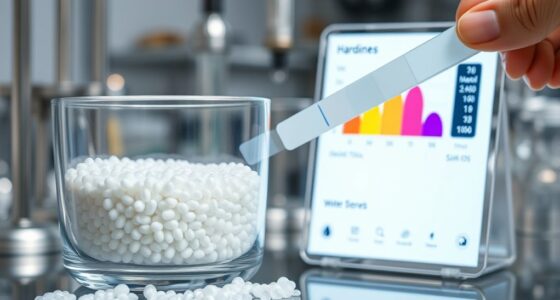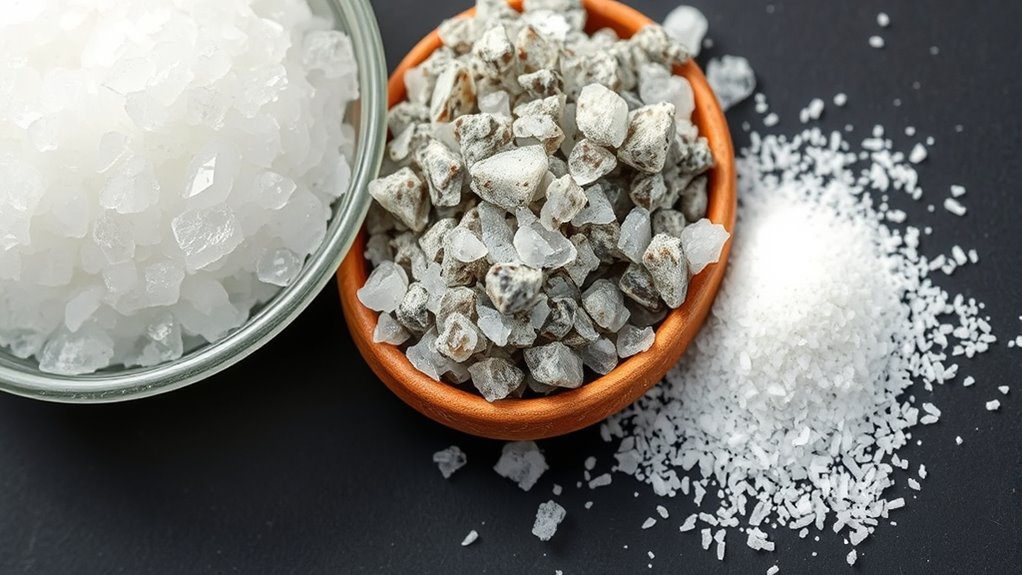

For water softeners, solar salt is your best choice because it’s minimally processed, retains natural minerals, and has a lower environmental impact. Rock salt also works well but involves mining, which can be more eco-friendly depending on extraction methods. Evaporated salt offers convenience but may have fewer minerals and a higher ecological footprint. To get the most benefits for your system and the planet, consider solar salt—more details are just a step away.
Key Takeaways
- Solar salt retains natural minerals and is environmentally sustainable, making it a gentle option for water softening.
- Rock salt is effective and commonly used in water softeners but may contain impurities depending on purity levels.
- Evaporated salt is highly refined and pure, often preferred for consistent results but offers fewer mineral benefits.
- Solar salt’s minimal processing preserves minerals that can benefit water quality and health.
- Consider environmental impact and mineral content when choosing between solar, rock, or evaporated salts for softening.
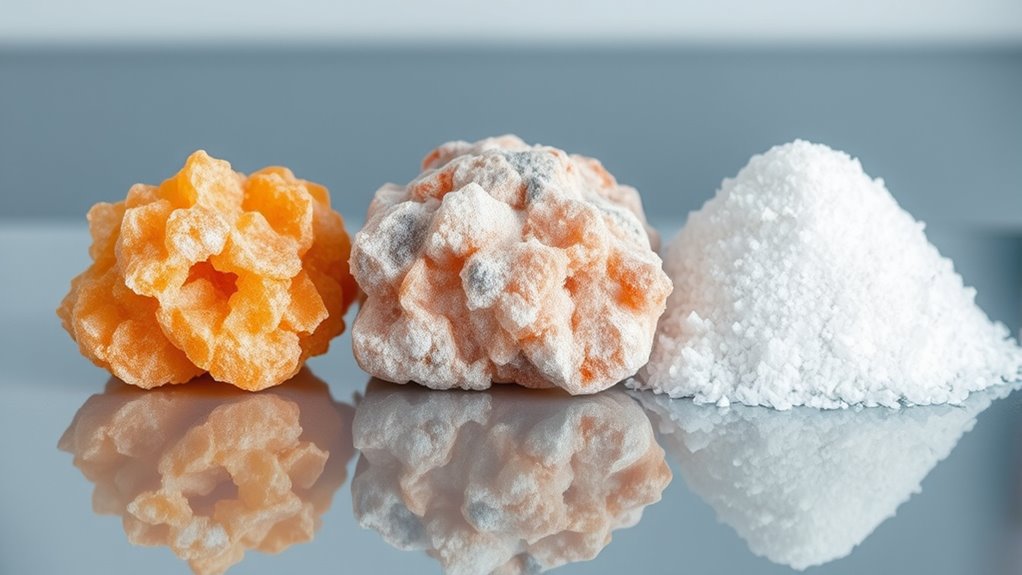
When it comes to cooking and seasoning your meals, choosing the right salt can make a significant difference in flavor and health. But beyond the kitchen, the type of salt you pick also impacts your health benefits and the environment. Understanding the differences between solar, rock, and evaporated salts helps you make an informed decision that aligns with your values and dietary needs. Solar salt, also known as sea salt, is harvested through natural evaporation of seawater in shallow ponds exposed to the sun. Its health benefits include naturally containing trace minerals like magnesium and potassium, which can support your overall health. Since solar salt is minimally processed, it retains more of these beneficial minerals compared to more refined salts. From an environmental perspective, solar salt production has a lower carbon footprint because it relies on natural solar evaporation rather than energy-intensive processes. This makes it a more sustainable choice, especially if you’re concerned about reducing your ecological impact. Additionally, choosing unrefined salts supports maintaining the natural mineral content**, which can be beneficial for your well-being. Rock salt, on the other hand, is mined from underground salt deposits deep within the earth. It’s often used for culinary purposes and in salt lamps, but it’s primarily valued for its mineral content, including calcium and magnesium. The health benefits of rock salt can be comparable to those of solar salt, especially when it contains fewer additives and anti-caking agents. However, the environmental impact of mining can be more significant. Extraction requires heavy machinery, which consumes energy and can disturb ecosystems. If sustainability is important to you, it’s worth considering how the mining process might affect local environments and weighing that against the mineral benefits. Evaporated salt, or refined table salt, goes through extensive processing to remove impurities and minerals, resulting in a pure sodium chloride product. While it’s convenient and often fortified with iodine, its health benefits are limited compared to unrefined salts, and it may lack the trace minerals found in solar and rock salts. From an environmental standpoint, the refining process consumes considerable energy, and the mining of the raw material can have a notable ecological footprint. If you’re aiming for an environmentally conscious choice, evaporated salt might not be the best option, especially if you’re interested in maximizing mineral intake** and reducing your carbon footprint.
Frequently Asked Questions
How Does Salt Type Affect Water Softener Maintenance Frequency?
The salt type impacts your water softener’s maintenance frequency because it influences salt dissolution and the number of regeneration cycles needed. Evaporated salt dissolves quickly, reducing buildup and extending maintenance intervals. Rock salt dissolves slower, causing more frequent regeneration cycles and increased maintenance. Solar salt offers a balance, with moderate dissolution rates. Choosing the right salt helps optimize softener performance and minimizes maintenance efforts.
Are There Environmental Impacts Associated With Each Salt Type?
You’re diving into the environmental impact of each salt type, and it’s clear that sustainability considerations matter. Solar salt is eco-friendlier, needing less energy to produce, while rock salt can leave more residue. Evaporated salt has a higher energy footprint but dissolves easily. Overall, choosing eco-conscious options helps reduce your water softener’s environmental footprint, so weigh the long-term effects before making your decision. It’s a small step that can make a big difference.
Can I Mix Different Types of Salt in My Softener?
You can mix different types of salt in your softener, but salt compatibility varies. Be cautious with salt blending, as incompatible types may cause clumping or reduce efficiency. Always check your softener manufacturer’s guidelines before combining salts. Mixing solar, rock, or evaporated salts might save money initially, but it can lead to uneven regeneration and potential damage over time. To guarantee the best performance, stick to one salt type if possible.
Which Salt Is Most Cost-Effective Long-Term?
You’ll find that solar salt is generally the most cost-effective long-term option because of its lower price per bag and good regeneration performance. Rock salt tends to be cheaper upfront but may require more frequent refills, increasing costs over time. When considering your budget, compare the cost per pound and how often you’ll need to replenish your softener to make the best choice for your long-term savings.
How Do Salt Types Influence the Lifespan of Water Softener Components?
Think of salt as the guardian of your water softener’s longevity. Higher salt purity, like a clear shield, protects components from mineral buildup and corrosion. Different salt types influence resin compatibility and wear; poor-quality or impure salt accelerates deterioration, shortening lifespan. Using the right salt guarantees your system’s parts stay resilient, reducing maintenance costs and keeping your water softening process smooth and effective over time.
Conclusion
Ultimately, selecting the right salt depends on your system and budget. While some worry about higher costs, using the best salt guarantees your softener works efficiently, saving you money in the long run. Don’t compromise on quality—choosing the right salt keeps your water soft and appliances running smoothly. Remember, a small investment in good salt now can prevent costly repairs later, making your water treatment both effective and economical.