To effectively use a softener regeneration calculator, focus on inputting accurate water testing data like hardness levels and resin capacity. Do monitor your water quality regularly, and update the info as needed. Avoid guessing or relying on outdated estimates, as this can lead to over- or under-regeneration. Proper scheduling minimizes waste and extends your system’s life. Keep exploring to learn how to interpret results and optimize your softener’s performance better.
Key Takeaways
- Do input accurate water test results, especially hardness levels, for reliable regeneration scheduling.
- Not do rely on outdated water usage estimates; regularly update consumption data.
- Do interpret resin capacity and water hardness results to optimize regeneration timing.
- Not do ignore routine maintenance checks like salt levels and system component inspections.
- Do use the calculator’s guidance to plan regeneration during off-peak hours for efficiency.
Understanding the Purpose of the Calculator

Understanding the purpose of the calculator is essential for accurately determining when your water softener needs regeneration. This tool helps you assess the resin’s capacity by analyzing your water testing results. When your water contains high levels of hardness minerals, the resin becomes saturated faster, signaling the need for regeneration. The calculator guides you through calculating the resin’s remaining capacity, ensuring you don’t regenerate too early or too late. Proper timing preserves resin cleaning, extending its lifespan and maintaining water quality. It also prevents unnecessary salt usage and reduces waste. By understanding this purpose, you can optimize your softener’s performance, avoid costly repairs, and keep your water soft and clean. The calculator becomes an invaluable aid in managing your system effectively. Monitoring water quality helps you stay proactive in system maintenance and ensures optimal softening efficiency.
Key Inputs Needed for Accurate Results

To get accurate regeneration results, you need to know your water’s hardness levels and your softener’s resin capacity. These inputs directly affect how much salt and water your system uses. Without precise measurements, your calculations could be off, leading to inefficient regeneration cycles. Proper understanding of fathers’ influence can help you better interpret your system’s performance and needs.
Water Hardness Levels
Have you ever wondered how water hardness impacts softener regeneration? The level of hardness directly affects how much resin needs to be regenerated and how often. If your water softener installation is in an area with high mineral content, you’ll need to regenerate more frequently to prevent buildup. Knowing your water hardness levels helps determine the correct salt dosage and regeneration cycle length. Without accurate data, you risk resin replacement too soon or insufficient softening, leading to inefficient operation. Monitoring your water hardness ensures you optimize your softener’s performance, saving money and extending its lifespan. Regular testing provides the key input needed to adjust settings properly, reducing unnecessary resin replacement while maintaining effective softening. Properly understanding water hardness is essential for a well-functioning water softening system. Understanding water hardness levels is crucial for optimizing softener performance and longevity.
Resin Capacity Details
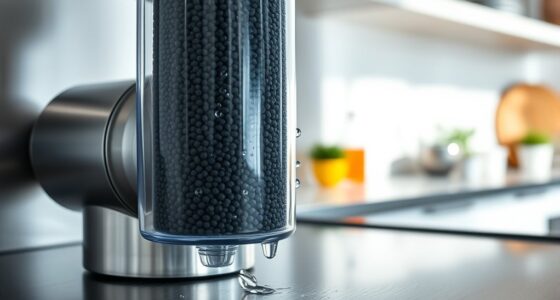
Accurate resin capacity calculations depend on knowing specific key inputs. Your resin capacity indicates how much hardness the resin can remove before needing regeneration or resin replacement. To determine this, you need to know the resin’s total capacity, usually expressed in grains or milliequivalents. This value helps you estimate how much water can be softened before the resin becomes exhausted. Additionally, knowing the amount of resin in your softener tank allows for precise calculations, ensuring you don’t over- or under-regenerate. Resin capacity varies depending on the resin type and condition, so regular monitoring is essential. When resin reaches its capacity, resin replacement becomes necessary to restore effective softening. Accurate details about resin capacity help optimize regeneration schedules and extend the lifespan of your softener. Regular testing of water hardness levels can provide valuable insights into resin performance and remaining capacity.
How to Properly Use the Softener Regeneration Calculator

Using the softener regeneration calculator correctly guarantees you determine the right amount of salt and water needed for ideal system performance. First, verify your equipment is properly calibrated to avoid inaccuracies. Next, input your system’s chemical analysis data to reflect your water’s specific mineral content. Finally, follow these steps:
- Double-check your readings, especially after performing chemical analysis, to ensure accuracy.
- Input your resin’s capacity and current salt levels into the calculator.
- Review the recommended regeneration settings, adjusting for any calibration differences or chemical variations.
Common Mistakes to Avoid When Using the Tool

When using the softener regeneration calculator, you need to be careful to enter accurate data; mistakes here can lead to incorrect results. Skipping maintenance checks or ignoring signs of equipment issues can also cause problems later. Additionally, misinterpreting the calculations might lead you to poor decisions about your softening schedule. Understanding the importance of proper equipment maintenance can help ensure optimal performance and avoid costly errors.
Ignoring Input Accuracy
If you neglect input accuracy, your softener’s regeneration process can become ineffective or even cause damage. Incorrect data can lead to poor water treatment results and costly softener maintenance. To avoid this, double-check your inputs before using the calculator.
Here are common mistakes to watch out for:
- Entering incorrect water hardness levels, which can cause over- or under-regeneration.
- Using outdated water usage estimates, leading to inefficient softener cycles.
- Ignoring the actual flow rate, affecting the accuracy of the calculations.
- Overlooking the importance of Lifestyle factors that can influence water quality and softener performance.
Accurate input ensures your softener works efficiently, prolongs its lifespan, and maintains ideal water treatment. Always verify your data to get reliable results and avoid unnecessary repairs or replacement costs.
Overlooking Maintenance Checks
Neglecting regular maintenance checks can undermine the effectiveness of your water softener and lead to preventable problems. Skipping these checks can cause mineral buildup, decreased efficiency, or even salt bridges. To avoid this, schedule routine inspections and cleanings. Use the following table to understand key maintenance tasks:
| Task | Frequency | Importance |
|---|---|---|
| Resin Bed Cleaning | Every 6-12 months | Keeps softener functioning at its best |
| Salt Level Check | Monthly | Ensures proper regeneration |
| Bypass Valve Inspection | Quarterly | Prevents leaks and malfunctions |
| Resin Bed Replacement | Every 5 years | Maintains softening efficiency |
| System Leak Check | Monthly | Avoids water damage |
Regular maintenance checks ensure your water softener operates smoothly, saving you time and money in the long run. Additionally, understanding the resin bed and its role in ion exchange can help you better maintain your system.
Misinterpreting Calculations
Misinterpreting calculations is a common mistake that can lead to improper softener regeneration and inefficient water treatment. If you don’t understand the numbers, you might set incorrect regeneration schedules, wasting salt and water. To avoid this, focus on these key points:
- Verify your water usage data is accurate before inputting it into the calculator.
- Double-check the salt dosage and resin capacity figures for your Water Softener.
- Remember that misreading the results can cause over- or under-regeneration, impacting water quality and system lifespan.
- Understanding the contrast ratio can help you better interpret the visual quality of a projector, ensuring your home cinema setup delivers optimal image depth and clarity.
Interpreting the Calculator’s Output Effectively

Interpreting the calculator’s output accurately is key to optimizing your softener’s performance. When reviewing results, focus on understanding how much resin capacity remains and how often you need to regenerate. Proper water testing helps guarantee the data is accurate, preventing over- or under-estimation of your water hardness levels. Use the calculator’s guidance to schedule filter maintenance, which can affect softener efficiency. If the output indicates high resin usage, consider adjusting your regeneration cycle or inspecting your system for issues. Consistently monitoring your water quality and understanding the calculator’s suggestions allow you to fine-tune your setup, saving money and extending your softener’s lifespan. Accurate water testing ensures the data used is reliable for making informed decisions. Clear interpretation leads to better water quality and more efficient softener operation.
Do This: Regularly Update Your Water Usage Data
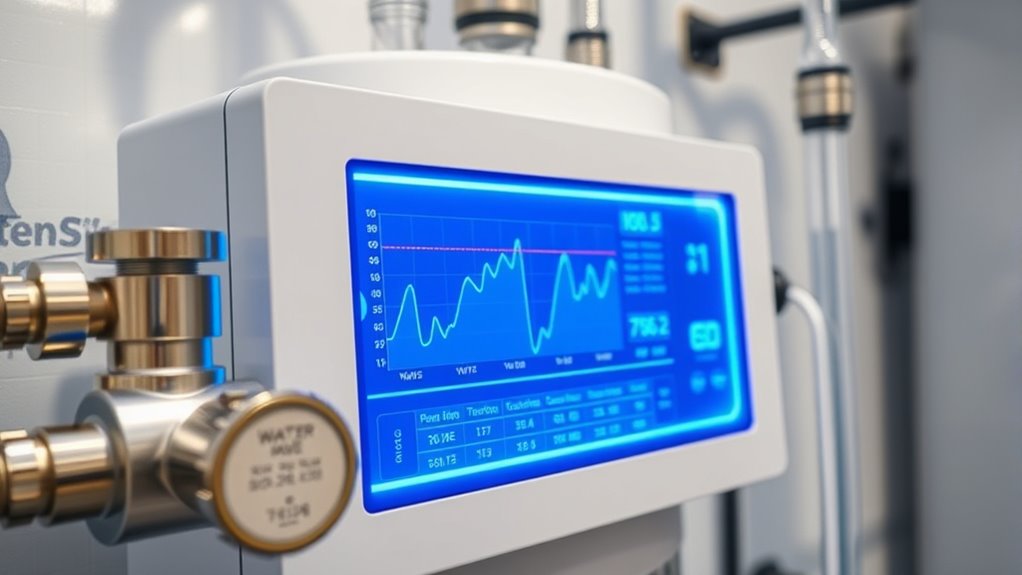
To guarantee your softener operates efficiently, you need to regularly update your water usage data. Accurate data helps optimize softening technology, ensuring your water filtration system works effectively without wasting salt or water. Regularly reviewing performance metrics can help you identify any inconsistencies or areas for improvement in your system’s operation. Here’s what you should do:
- Track your daily water consumption for a week to identify patterns and adjust your softener’s settings accordingly.
- Update your water usage information in the softener’s control panel or calculator to keep regeneration cycles precise.
- Review and reset data after any major changes in household water use, such as new appliances or additional family members.
Consistently updating this data ensures your softening technology remains effective, reducing mineral buildup and prolonging system life. Stay proactive to keep your water filtration system running smoothly.
Not That: Relying on Guesswork Instead of Data

Relying on guesswork instead of accurate data can lead to inefficient softener operation and unnecessary costs. Without proper chemical analysis, you might misjudge the resin’s capacity or the salt dosage needed, causing over- or under-regeneration. Guesswork also risks neglecting equipment calibration, which is vital for precise control. If your system isn’t calibrated correctly, you won’t get reliable readings, making your decisions based on assumptions rather than facts. This approach wastes resources, shortens equipment lifespan, and reduces water quality. Instead, invest in regular chemical analysis to monitor water chemistry accurately and guarantee your equipment is properly calibrated. Using data-driven insights helps optimize regeneration cycles, saving money and maintaining consistent softening performance.
Optimizing Regeneration Schedules for Cost Savings

Optimizing regeneration schedules is essential for reducing operational costs and enhancing system efficiency. When you plan resin regeneration carefully, you minimize unnecessary water softening and save on salt and water use. To do this effectively:
Careful regeneration planning reduces costs, water, and salt use while boosting system efficiency.
- Monitor your water hardness levels regularly to determine the most favorable time for resin regeneration.
- Schedule regeneration during off-peak hours to reduce energy costs and system strain.
- Adjust regeneration frequency based on water usage patterns, avoiding over- or under-regeneration.
Do This: Monitor Your Water Hardness Levels

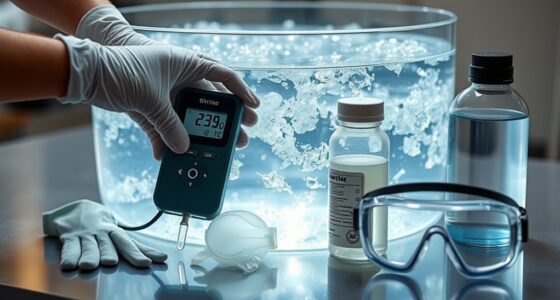
Monitoring your water hardness levels regularly is essential for effective resin regeneration. By tracking the hardness, you ensure your water softener operates efficiently and prevents unnecessary regeneration cycles. Use a water testing kit or device to measure calcium and magnesium levels, and record the results consistently. Accurate data helps you adjust the regeneration scheduling, avoiding both premature and delayed regeneration. When water hardness increases, your Water Softener needs to regenerate sooner; if it decreases, you can extend the cycle. This proactive approach maintains soft water quality and prolongs the lifespan of your system. Regular monitoring simplifies decision-making, reduces waste, and guarantees your water softener functions at its best over time. Keep a log and stay vigilant for changes in your water quality.
Not That: Ignoring Changes in Water Quality Over Time
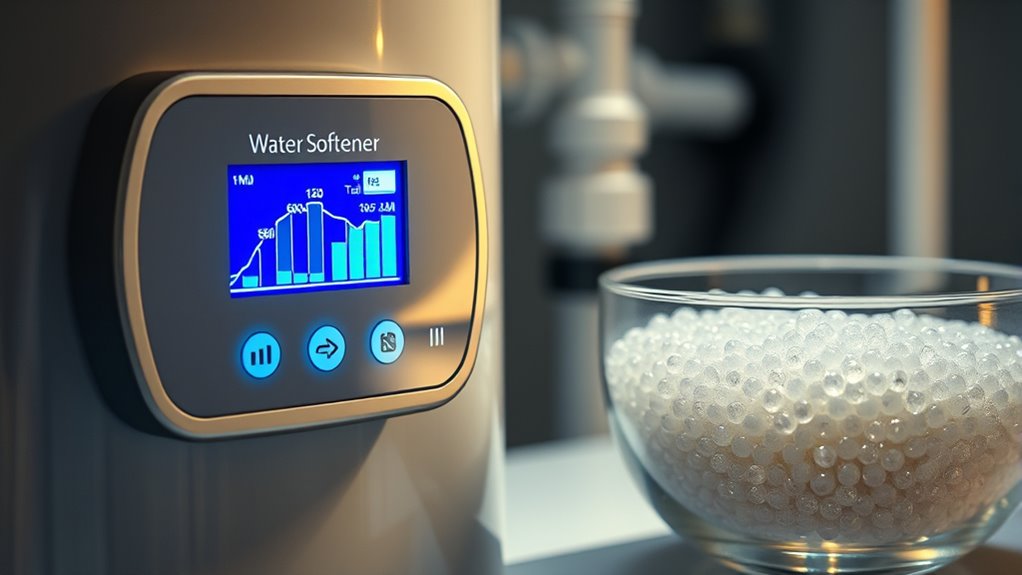
Have you ever ignored subtle changes in your water quality and wondered why your softener isn’t performing as well? Ignoring shifts in water quality can lead to inefficient softening and increased maintenance needs. When you overlook these changes, your maintenance routines become less effective, and mineral buildup may occur.
To avoid this, consider these tips:
- Regularly test your water quality, especially if you notice more mineral deposits.
- Adjust your softener’s regeneration cycle based on water hardness variations.
- Keep track of water quality trends to anticipate when maintenance routines need updating.
Neglecting water quality changes hampers your softener’s performance and shortens its lifespan. Stay vigilant to ensure excellent operation and reduce costly repairs.
Frequently Asked Questions
How Often Should I Regenerate My Water Softener?
You should regenerate your water softener typically every 7 to 14 days, depending on your water usage and hardness levels. Consistent softener maintenance and proper regeneration scheduling guarantee your system works efficiently. Keep an eye on your salt levels and water hardness to adjust the schedule as needed. Regularly monitoring these factors helps prevent issues like reduced softening capacity or system damage, keeping your water soft and your softener in top shape.
What Are Signs My Softener Needs Regeneration?
If you notice foul water or a decline in water quality, your softener might need regeneration. Other signs include increased soap usage, hard water spots, or a cloudy appearance in your water. These issues often indicate a softener malfunction or depleted resin. Regenerating your softener restores its efficiency, so address these signs promptly to guarantee your water stays soft and clean. Regular maintenance can prevent costly repairs down the line.
Can I Automate the Regeneration Process?
Yes, you can automate the regeneration process with automatic scheduling or DIY automation. Many modern water softeners come with built-in timers or control valves that let you set regeneration times, so you don’t have to do it manually. If you’re handy, DIY automation kits are available, making it easy to customize your system. This way, you guarantee your softener regenerates efficiently without constant oversight, saving you time and effort.
How Does Water Temperature Affect Regeneration?
Water temperature impacts regeneration efficiency profoundly. Warmer water speeds up the chemical reactions involved, making regeneration more effective and quicker. Conversely, cold water slows down the process, possibly leading to incomplete regeneration and reduced softener performance. To optimize your system, guarantee water temperature stays within the recommended range, usually around 40-80°F. This way, you maximize regeneration efficiency and keep your water softener working smoothly.
Is There a Recommended Salt Type for Regeneration?
You should use high-purity sodium chloride salt, such as pellet or solar salt, for ideal regeneration efficiency. Avoid using rock salt, as it contains impurities that can clog your system and reduce performance. The right salt type ensures thorough resin cleaning, extending your softener’s lifespan and maintaining consistent water softness. Always follow your manufacturer’s recommendations for salt type and maintain proper salt levels for best results.
Conclusion
Think of the softener regeneration calculator as your secret weapon, much like a seasoned captain steering unpredictable waters. By using accurate data and avoiding guesswork, you can steer your system toward efficiency and savings. Remember, neglecting water quality changes is like sailing without a compass—you’re bound to drift off course. Keep monitoring, stay informed, and let data be your guiding star for optimal softener performance.