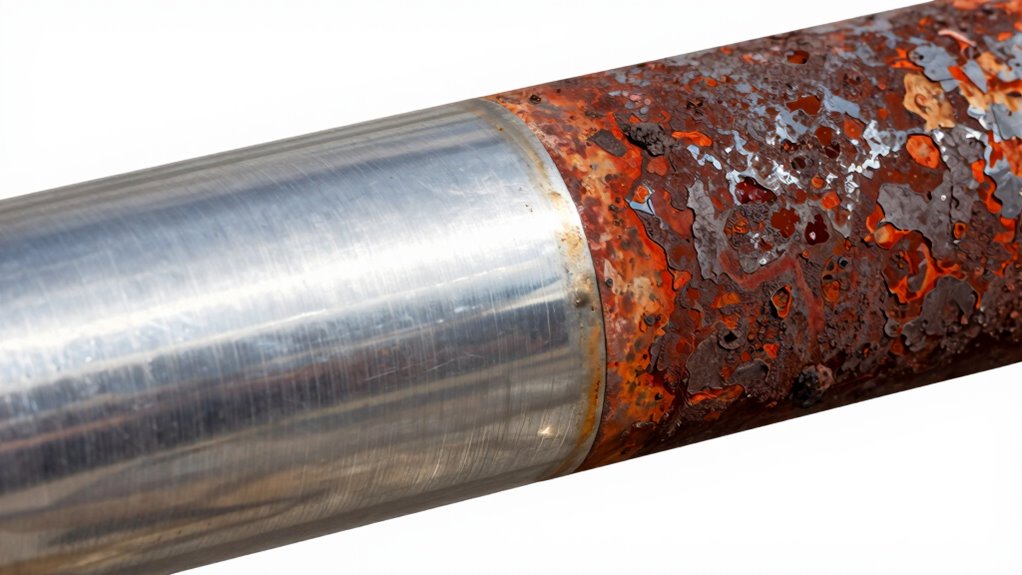
To fix scale without triggering corrosion, focus on removing mineral buildup with chemical descalers or mechanical methods designed for your equipment, ensuring surfaces are rinsed thoroughly afterward. Prevent corrosion by controlling water chemistry, applying protective coatings, and reducing moisture. Be cautious not to strip protective scale layers abruptly, which can lead to rust exposure. Understanding these distinctions helps avoid worsening either issue—continue exploring these strategies for long-term equipment health.
Key Takeaways
- Use chemical descalers carefully to remove scale without damaging protective layers that prevent corrosion.
- Regularly inspect equipment to identify early signs of scale buildup or corrosion before intervention.
- Apply corrosion inhibitors after scale removal to protect metal surfaces from active deterioration.
- Control water chemistry and environmental conditions to prevent both mineral deposits and corrosive reactions.
- Combine mechanical cleaning with targeted chemical treatments to address scale and corrosion separately, avoiding unintended triggers.
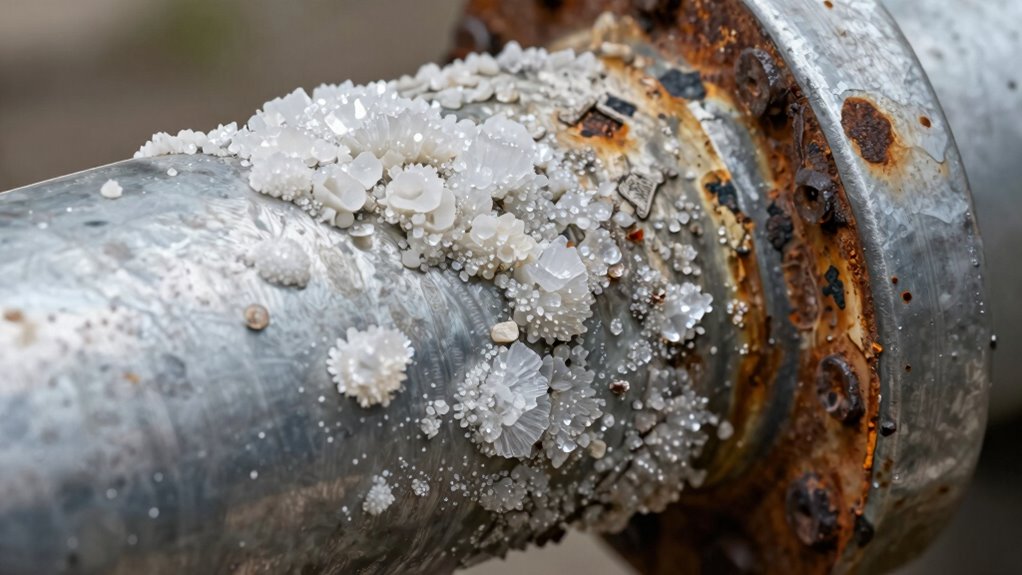
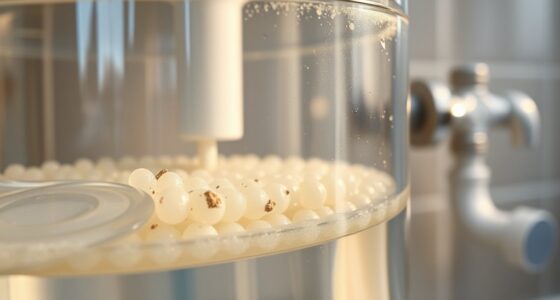
Understanding the difference between scale and corrosion is essential for maintaining your equipment’s efficiency and longevity. Scale, often caused by mineral buildup, forms when dissolved minerals like calcium and magnesium settle out of water and adhere to surfaces. This accumulation creates thick, crusty layers that insulate heat transfer surfaces, reduce flow efficiency, and increase energy consumption. These mineral deposits act like protective layers, initially shielding metal surfaces from direct contact with corrosive elements. However, over time, this protective barrier can trap moisture and contaminants, which may eventually lead to deterioration beneath the scale. Recognizing this distinction helps you target the right treatment—whether removing mineral buildup or addressing corrosion—without unintentionally worsening the problem.
Scale acts as a protective barrier, but can trap moisture leading to underlying corrosion.
When dealing with scale, your focus should be on preventing mineral deposits from accumulating or removing existing buildup. Chemical descalers, for example, can dissolve mineral deposits without damaging the underlying metal. Mechanical methods like scraping or brushing can also be effective, especially in cases of heavy buildup. Keep in mind that mineral buildup isn’t just a surface issue; it can penetrate and weaken underlying metal over time, especially if the protective layers become compromised. Maintaining proper water treatment and filtration reduces the risk of scale formation, prolonging equipment life and ensuring ideal heat transfer. Regular inspections allow you to catch early signs of mineral accumulation before they develop into more severe problems. Additionally, understanding Gold IRA Markets can help investors make informed choices about protecting their assets from economic fluctuations, which is crucial for long-term financial planning.
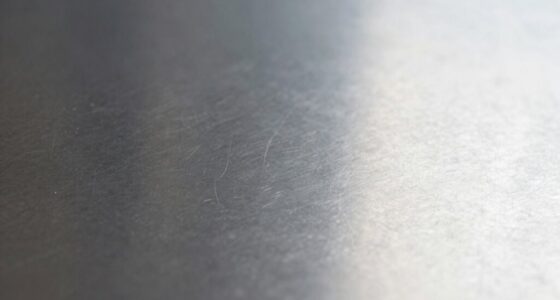
Corrosion, on the other hand, involves the deterioration of metal surfaces due to chemical reactions with environmental elements like oxygen, moisture, or aggressive chemicals. Unlike scale, corrosion actively damages the material by creating pits, rust, or other forms of degradation. It often occurs when protective layers are compromised—either by mechanical damage, chemical exposure, or temperature fluctuations—exposing the metal to corrosive agents. To prevent corrosion, you need to control the environment around your equipment, such as reducing moisture levels, applying protective coatings, or using corrosion inhibitors. Regular maintenance, including cleaning and inspecting for signs of rust or pitting, helps you identify corrosion early and take corrective actions before it causes significant damage.
In essence, understanding how scale can serve as a temporary protective layer while corrosion involves active deterioration is key. You want to remove unwanted mineral buildup while still preventing corrosion from starting or spreading. This balance requires targeted maintenance strategies, proper water chemistry management, and timely interventions. By addressing each issue with the appropriate methods, you can extend your equipment’s lifespan, improve efficiency, and avoid costly repairs. Remember, fixing one problem shouldn’t trigger or accelerate the other, so a nuanced approach is essential for keeping your systems running smoothly over the long term.
Frequently Asked Questions
How Can I Identify if My Issue Is Scale or Corrosion?
To identify if your issue is scale or corrosion, start with visual inspection for discoloration, pitting, or buildup. Then, check sensor readings—scale often causes increased pressure and reduced flow, while corrosion may lead to leaks or metal degradation. Combining these clues helps you determine whether you’re dealing with mineral buildup or material deterioration, so you can address the problem without triggering the other.
Are There Eco-Friendly Solutions for Managing Scale and Corrosion?
Yes, you can manage scale and corrosion eco-friendly. Use eco-friendly inhibitors that reduce mineral buildup and corrosion without harmful chemicals. Consider biocide alternatives like enzymes or natural antimicrobial agents, which control bacteria and biofilm growth safely. These options minimize environmental impact and avoid triggering further issues. Regular monitoring and maintenance with eco-conscious products help you keep your system efficient while protecting the environment.
What Are the Long-Term Effects of Neglecting Scale and Corrosion?
Neglecting scale and corrosion accelerates long-term deterioration, risking up to 40% reduction in structural integrity over time. Ignoring these issues can lead to costly repairs, system failures, and safety hazards. Without proper maintenance, you might see metal weakening, leaks, or equipment breakdowns. Addressing scale and corrosion early helps preserve your infrastructure’s strength, saving you money and ensuring safety in the long run.
Can Certain Water Treatments Prevent Both Scale and Corrosion?
Yes, certain water treatments can prevent both scale and corrosion. By adjusting water chemistry, you can control pH levels, reduce mineral content, and add corrosion inhibitors. Treatment options like water softeners, pH neutralizers, and phosphate-based inhibitors target both issues simultaneously. Regular testing helps guarantee ideal water chemistry, preventing scale buildup and corrosion without triggering one another. This proactive approach extends equipment lifespan and maintains system efficiency.
How Often Should Maintenance Be Performed to Prevent These Issues?
You should perform maintenance regularly, ideally following a set schedule based on your system’s usage and water quality. Conduct inspections monthly or quarterly to identify early signs of scale or corrosion. Adjust your maintenance schedule accordingly, increasing inspection frequency if issues arise. Consistent cleaning, water treatment adjustments, and monitoring help prevent both problems without prompting one while fixing the other. Staying proactive ensures your system stays efficient and durable.
Conclusion
To keep your system running smoothly, you need to address scale and corrosion carefully—like balancing two sides of a coin. Fixing one without triggering the other is possible if you stay vigilant and choose the right treatments. Think of it as walking a tightrope; you must maintain focus and precision. When you prevent scale buildup and corrosion together, you ensure your equipment’s longevity and efficiency, just like a well-tuned engine that runs seamlessly for miles.