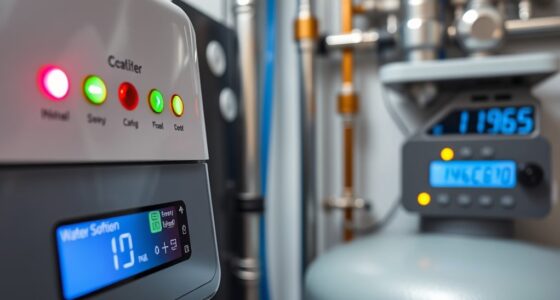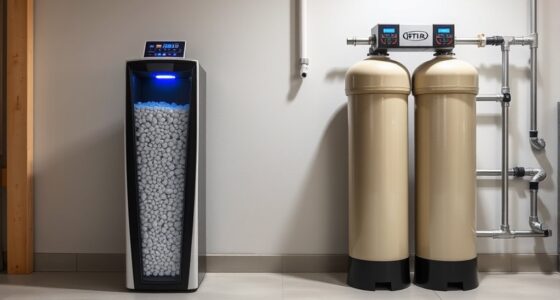
Rust filters target sediment and visible rust particles, trapping debris in mesh or cartridges. They don’t chemically remove dissolved iron, so they won’t eliminate the iron causing staining or discoloration. True iron treatment systems, on the other hand, use oxidation and chemical processes to convert dissolved iron into a solid that can be removed. Understanding these differences helps you choose the right solution—keep exploring to learn how proper systems can protect your water quality more effectively.
Key Takeaways
- Rust filters trap rust particles but do not chemically remove dissolved iron from water.
- True iron treatment systems chemically convert dissolved iron into a removable solid form.
- Rust filters address sediment and rust stains; true systems eliminate iron completely through oxidation.
- Proper system design, pH balance, and circulation are essential for effective iron removal.
- Confusing rust filters with true iron treatment can lead to inadequate water quality solutions.
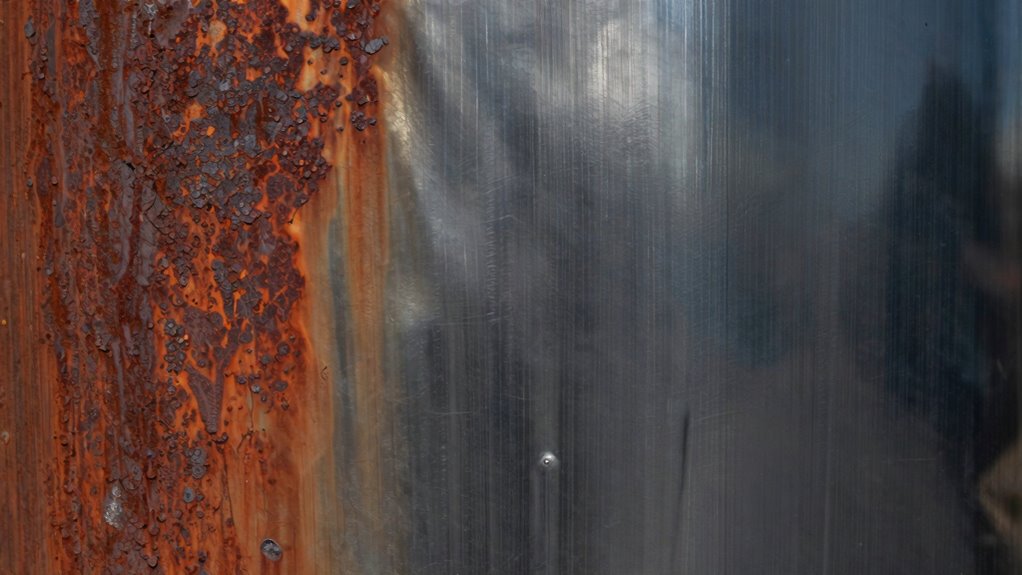
When dealing with rusty water or iron buildup in your plumbing system, choosing the right solution can be confusing. You might see filters labeled as “rust filters” and assume they handle all iron-related issues, but that’s not always the case. Understanding the difference between simple rust filters and true iron treatment is essential to effectively resolve your water quality problems. Rust filters typically target sediment and larger iron particles, filtering out the visible rust that causes discoloration and stains. They often work by trapping debris in a mesh or cartridge, but they don’t chemically alter the iron or address dissolved iron. This means if your water contains ferrous iron (dissolved form), a rust filter alone won’t remove it effectively.
True iron treatment, on the other hand, involves specialized systems designed to chemically convert dissolved iron into a solid form that can be filtered out. These systems often use oxidation processes, where the water’s pH balance is carefully managed to optimize iron removal. Proper pH balance is critical because if the water is too acidic or too alkaline, iron removal becomes less efficient, and equipment wear can increase. Water circulation is also a key factor; good circulation ensures the oxidation process is even and thorough, helping the treatment system work at peak performance. When water circulates properly through the treatment system, the chemical reactions happen uniformly, resulting in cleaner, clearer water. Additionally, system design plays a crucial role in ensuring efficient iron removal and minimal maintenance.
Many homeowners mistakenly rely solely on rust filters, assuming they’re addressing all iron issues. However, if your water contains dissolved iron, you’ll need a true iron removal system, such as an oxidizing filter or a chemical feed system. These systems require maintenance and monitoring of pH levels to stay effective, but they can eliminate iron entirely rather than just mask it. Additionally, they improve water circulation by ensuring that the treatment process isn’t hindered by stagnation or uneven flow, which can cause incomplete oxidation or filtration.
Frequently Asked Questions
Can Rust Filters Remove All Types of Iron?
Rust filters can remove many types of iron, but they might not eliminate all. To guarantee effective removal, you need proper rust filter maintenance and consider additional iron treatment installation if your water has high or complex iron levels. Regularly inspecting and cleaning your rust filter helps maintain its efficiency. For stubborn iron, combining rust filters with other treatment methods can give you the best results, ensuring your water stays clean and iron-free.
How Long Does a True Iron Treatment Last?
Think of a true iron treatment as a long-lasting shield for your water; it typically lasts 3 to 5 years. Like water softening, it actively reduces iron stains and keeps your water clear. However, the lifespan depends on iron levels and water usage. Regular maintenance guarantees its effectiveness, so plan for periodic checks, especially if iron staining reemerges. Proper care helps extend its benefits and keeps your water quality steady.
Are Rust Filters Effective for High Iron Concentrations?
Rust filters are quite effective for high iron concentrations, as they specialize in iron removal. They use a physical filtration process that captures iron particles, making them suitable for heavy iron issues. However, their effectiveness depends on proper maintenance and filter replacement. If your water has very high iron levels, combining rust filters with other treatment methods might be necessary for ideal water quality.
Do These Treatments Affect Water Taste or Smell?
These treatments can affect water taste or smell, but it depends on the method used. Rust filters mainly focus on improving water purity by removing iron, which can sometimes cause a metallic taste or odor if not properly maintained. True iron treatments are designed for treatment effectiveness, ensuring iron is fully eliminated and preventing any residual taste or smell. Regular maintenance helps keep your water tasting fresh and pure.
Which Option Is More Cost-Effective Long-Term?
You’ll find that filters generally have lower initial costs but higher maintenance costs over time, making them less cost-effective long-term. True iron treatments often require a bigger upfront investment but tend to have lower ongoing maintenance costs, providing better value over years. Conduct a thorough cost analysis considering both upfront expenses and maintenance costs to determine which option suits your budget and needs best.
Conclusion
Don’t let confusion stop you from choosing the right solution. Rust filters help prevent future buildup, but true iron treatment actually removes existing stains and restores your water’s quality. Some might think treatment is unnecessary or costly, but investing in the right system saves you money and hassle in the long run. By understanding these options, you can confidently protect your plumbing and enjoy clean, clear water without worry.