To prevent 90% of HVAC problems, stick to a strict filter change schedule. Change your filters at least every three months, or sooner if you have pets, smokers, or allergy sufferers in your home. Keep an eye out for reduced airflow or strange odors. Regularly replacing filters helps your system run smoothly, improves air quality, and prevents costly repairs. If you want to learn more about maintaining an effective schedule, keep going for key tips.
Key Takeaways
- Change filters every 30 to 60 days if you have pets, smokers, or respiratory issues to prevent airflow problems.
- Regularly monitor for signs like strange odors or reduced airflow to adjust your filter schedule proactively.
- Use manufacturer-recommended filters and replace them on time to maintain systems’ efficiency and prevent breakdowns.
- Keep spare filters available and set reminders to ensure timely replacements without neglect.
- Perform seasonal or monthly system checks to maintain optimal filter performance and avoid costly repairs.
Changing your filters on a regular schedule is essential to keep your appliances and systems running smoothly. It’s a simple step that can make a significant difference in maintaining good air quality inside your home. When filters are dirty or clogged, they can’t effectively trap dust, allergens, and other airborne particles, which means your indoor air becomes stale and contaminated. Regular filter changes are one of the most effective maintenance tips you can follow to prevent common problems like reduced HVAC efficiency, foul odors, and increased allergy symptoms.
Regular filter changes ensure cleaner air and better HVAC performance.
You should aim to replace your filters at least every three months, but this can vary depending on your household’s specific needs. For households with pets, smokers, or individuals with respiratory issues, more frequent changes—every 30 to 60 days—are recommended. If you notice a significant reduction in airflow, strange odors, or if your energy bills spike unexpectedly, it’s a clear sign your filter needs attention. Staying vigilant about these signs helps you avoid system strain, which can lead to costly repairs down the line.
Keeping on top of your filter schedule doesn’t just improve air quality; it also prolongs the lifespan of your appliances. Clogged filters cause your HVAC system to work harder, increasing wear and tear. By replacing filters regularly, you reduce the risk of overheating or motor failure, saving you money and avoiding inconvenient breakdowns. Think of it as a preventive maintenance tip that pays off in the long run. When you change filters on a set schedule, you’re actively reducing the buildup of dust and debris that could otherwise compromise the efficiency of your system.
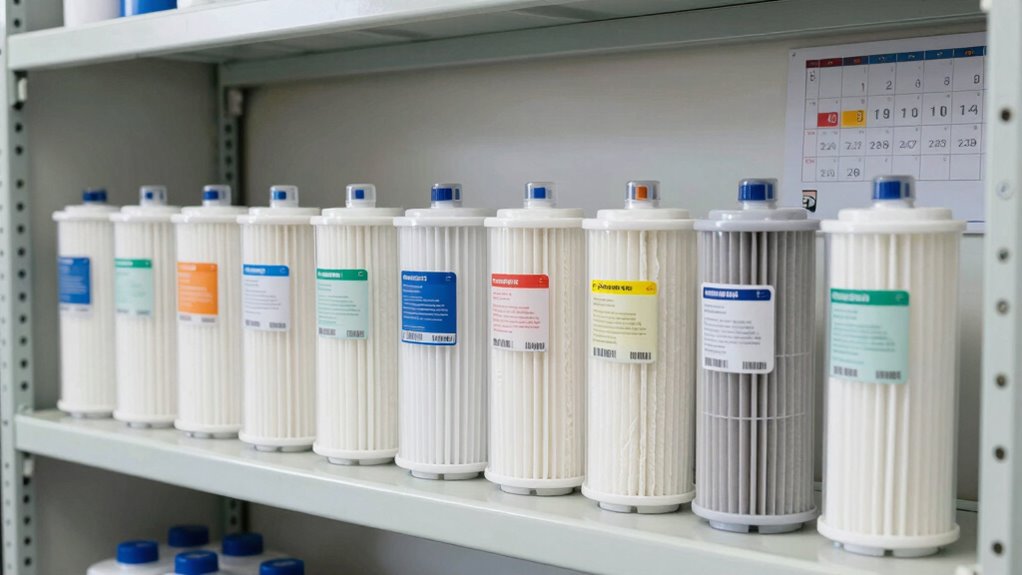
To make the process easier, mark your calendar or set reminders on your phone. Keep spare filters handy, so you’re ready to swap them out without delay. Make sure to select the right type and size of filter for your system, and follow manufacturer recommendations for replacement frequency. Remember, a fresh filter not only improves air quality but also helps your heating and cooling systems operate at peak performance. This proactive approach keeps your home healthier and more comfortable, especially during allergy season or extreme weather. Additionally, understanding air filtration technology can help you choose the most effective filters for your needs, ensuring optimal system performance.
Frequently Asked Questions
How Do I Know if My Filter Needs Changing Sooner?
You’ll know your filter needs changing sooner if you notice a decline in air quality or decreased airflow. Check your filter regularly—if it looks dirty or clogged before the recommended filter lifespan, it’s time to replace it. A dirty filter can compromise air quality and strain your system, so trust your senses and inspection rather than sticking strictly to a schedule. Regular checks help keep your system running efficiently.
Can I Change Filters Myself or Should I Hire a Professional?
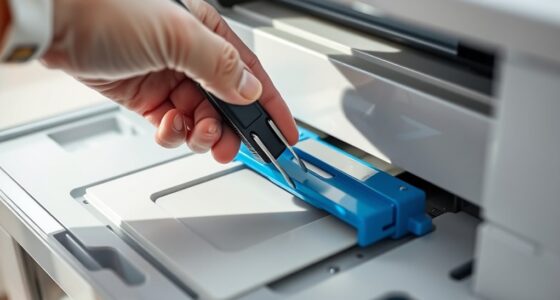
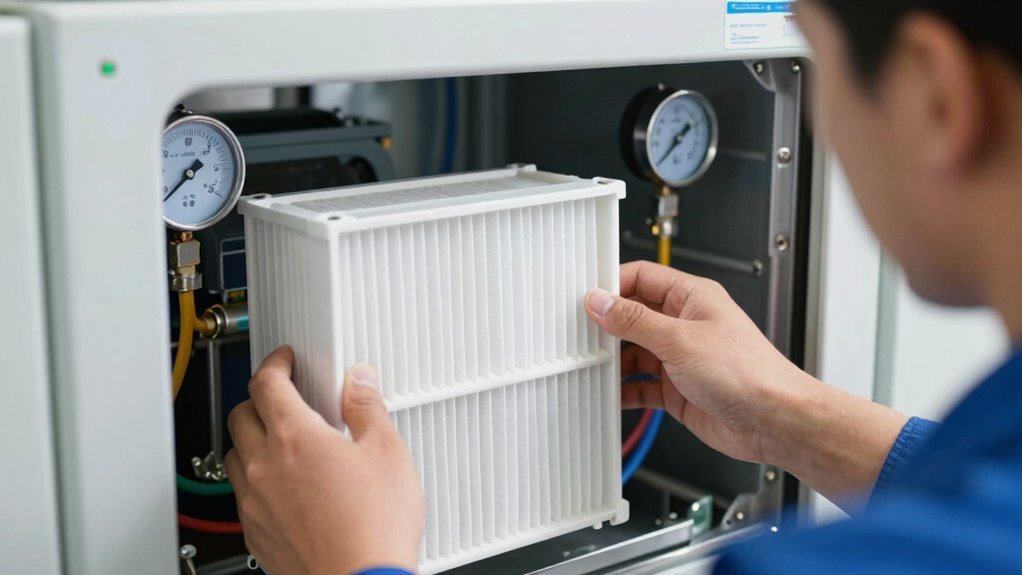
You can absolutely change filters yourself with some DIY tips, saving time and money. Just turn off the system, carefully remove the old filter, and install the new one properly. However, if you’re unsure or dealing with complex equipment, professional services can guarantee the job’s done right and safely. Consider your comfort level and the equipment’s complexity to decide whether to DIY or hire a professional.
What Types of Filters Are Best for Different Appliances?
Did you know that choosing the right filter can extend your appliance’s lifespan by up to 30%? For air purifiers, HEPA filters are best for capturing allergens and particles. For your dishwasher, different filter types like mesh, microfilter, or coarse filter target specific debris. Always match the filter type to your appliance’s needs, and follow manufacturer recommendations for peak performance.
Are There Eco-Friendly Filter Options Available?
Yes, eco-friendly filter options are available. You can choose filters made with biodegradable materials that break down naturally, reducing landfill waste. Look for products from recycling programs that prioritize sustainability. These filters often have certifications or labels indicating eco-friendliness. By selecting such options, you help protect the environment while maintaining your appliances, making a positive impact with environmentally conscious choices.
How Does Filter Quality Affect Overall Appliance Lifespan?
Think of your appliance as a marathon runner; quality filters are the sturdy shoes that keep it going longer. When you choose high-quality filter material, you extend the filter lifespan, reducing wear and tear on your appliance. Poor-quality filters act like worn-out sneakers, causing strain and early breakdowns. By investing in better filters, you safeguard your appliance’s longevity and ensure it runs smoothly for years to come.
Conclusion
Sticking to a regular filter change schedule can prevent up to 90% of common issues, saving you time and money. Did you know that neglecting filters can lead to a 15% increase in energy costs? By simply changing your filters on time, you’re not only improving your system’s efficiency but also reducing potential repairs. Stay consistent with your schedule, and you’ll enjoy cleaner air and fewer headaches down the line.