
Water softening removes calcium and magnesium ions that cause scaling, but it doesn’t address existing mineral buildup or other minerals like iron, manganese, or silica. Softening is mainly preventative and doesn’t clear old deposits, so you may still see scale and stains. Plus, if your system isn’t maintained, its effectiveness drops. To fully resolve scale issues, you might need additional treatments tailored to your water’s mineral content—continue exploring to find out more.
Key Takeaways
- Water softening only exchanges calcium and magnesium ions, not addressing other minerals like iron or silica that cause scale.
- Existing mineral deposits require descaling; softening doesn’t remove or dissolve accumulated buildup.
- Softening systems can lose efficiency over time, reducing their ability to prevent scale formation.
- Full mineral analysis is essential to determine if additional treatments are needed beyond softening.
- Softening focuses on preventing new scale but doesn’t resolve existing mineral deposits or complex scaling issues.
If you’ve noticed your appliances or fixtures developing a white, chalky buildup or experiencing reduced efficiency, softening and scale buildup are likely the culprits. Softening and scale complaints can often be misleading, as other minerals may contribute to the problem. You might think that installing a water softener will solve all your problems, but that’s not always the case. Softening works by exchanging calcium and magnesium ions—responsible for hardness—with sodium ions, which prevents scale formation. However, this process doesn’t address every type of mineral deposit or scale issue you might face. One key factor often overlooked is water mineral content beyond hardness minerals. Hard water isn’t just calcium and magnesium; it can also contain other minerals like iron, manganese, or silica, which aren’t always effectively removed by standard softening systems. These minerals can still cause buildup, staining, or reduce appliance efficiency, even if your water feels softer to the touch.
Hard water contains minerals beyond calcium and magnesium, which can cause buildup despite softening efforts.
Moreover, softening primarily targets the minerals that cause hardness-related scale, but it doesn’t eliminate existing buildup. If your appliances or fixtures already have a significant layer of mineral deposits, softening alone won’t clear it away. You need additional descaling or cleaning solutions to remove old deposits that have accumulated over time. Regular descaling is often necessary to maintain appliance performance and prevent damage. Relying solely on softening can give the illusion of cleaner water but won’t resolve persistent scale problems stemming from mineral deposits that have already formed. Full mineral analysis can help you identify which minerals are present and determine if additional treatments are required. Conducting such an analysis can also reveal unexpected mineral content that may need targeted removal for optimal results. Understanding the water mineral content can help you tailor your treatment strategies more effectively.
Another critical aspect is the resin lifespan in your water softener system. Over time, the resin beads that facilitate ion exchange become less effective due to fouling, clogging, or saturation. When resin lifespan decreases, your softener’s ability to remove calcium and magnesium diminishes, leading to less effective softening and ongoing scale buildup. Regular resin regeneration or replacement is essential to maintain *ideal* performance. If you ignore this maintenance, softening becomes less effective, and scale-related issues persist, despite having a softener installed.
Additionally, understanding the full mineral composition of your water can help you determine whether softening alone will be sufficient or if supplementary treatments are necessary. In the end, softening isn’t a one-size-fits-all solution. While it can *considerably* reduce scale caused by hardness minerals, it doesn’t fix every problem linked to mineral content or existing deposits. To truly address your scale complaints, you need to *evaluate* the full water composition, keep up with system maintenance, and sometimes incorporate additional treatments like descaling agents or filters designed for specific minerals. Softening plays a *crucial* role, but it’s only part of a *thorough* approach to managing scale and preserving your appliances’ efficiency and longevity.
As an affiliate, we earn on qualifying purchases.
Frequently Asked Questions
Can Scale Buildup Cause Damage Beyond Blockages?
Yes, scale buildup can cause damage beyond blockages. Mineral deposits and scale corrosion weaken pipes and appliances over time, leading to leaks or cracks. When mineral deposits accumulate, they can cause uneven wear, reduce efficiency, and increase the risk of costly repairs. Softening water helps reduce scale formation, but if buildup has already caused corrosion or structural damage, softening alone might not prevent further issues.
Are There Alternative Solutions to Softening for Scale Removal?
You can explore alternative methods like mechanical scrubbing, high-pressure water jets, or specialized chemical treatments to remove scale buildup effectively. Chemical treatments often dissolve or loosen deposits, while mechanical methods physically dislodge them. Combining these approaches can yield better results than softening alone. By choosing the right method for your situation, you guarantee thorough cleaning, prevent future buildup, and extend the lifespan of your equipment.
How Often Should I Perform Scale Prevention Measures?
You should perform scale prevention measures regularly, ideally as part of your maintenance schedule, to keep buildup at bay. How often depends on your water hardness and usage, but generally, doing it every three to six months works well. Consistent scale prevention guarantees your appliances run efficiently, reduces long-term damage, and minimizes the need for costly repairs or descaling. Stay proactive for the best results.
Does Water Temperature Affect Scale Formation?
Yes, water temperature considerably impacts scale formation. Higher temperatures accelerate the water chemistry processes that lead to mineral deposits, making scale more likely to form in hotter water systems. When water is warm, minerals like calcium and magnesium tend to precipitate out faster, creating deposits on surfaces. To prevent this, you should regularly monitor water temperature and consider water treatment options that address temperature impact to reduce scale buildup effectively.
What Are the Health Risks of Softened Water?
Softened water can pose health risks because it often leads to increased water mineralization and pH imbalance. While you’re seeking pure, safe water, softened water may contain higher sodium levels, which can be risky for those with hypertension or heart issues. The imbalance in mineral content and pH levels can compromise your body’s natural functions, making you more vulnerable to health problems you might not expect from what seems like safe water.
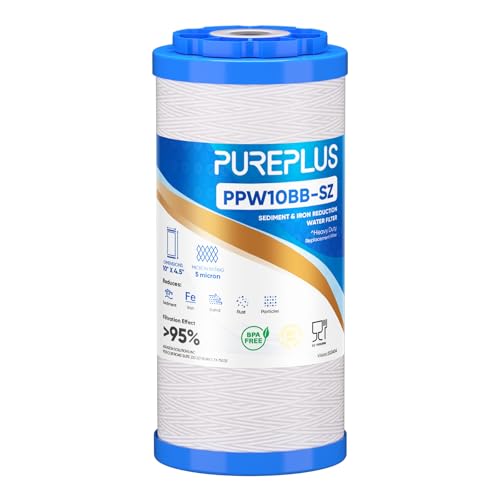
PUREPLUS 10"×4.5" String Wound Sediment Filter Compound With Iron Reducing Filter, Compatible With Whole House Water Filtration System For Well Water, 1Pack
- 2-in-1 Multi-Function Filter: Combines sediment and iron reducing filters
- Effective Iron Removal: Reduces iron from 3.0 ppm to 0.01 ppm
- High Filtration Efficiency: Removes up to 99% of particles
As an affiliate, we earn on qualifying purchases.
As an affiliate, we earn on qualifying purchases.
Conclusion
Remember, you can’t fix every problem with a simple softening approach. While it may seem like a quick fix, addressing scale complaints often requires a deeper understanding and targeted solutions. Don’t put all your eggs in one basket—be prepared to explore different strategies. As the saying goes, “Don’t put off until tomorrow what you can do today.” Tackle issues head-on, and you’ll find lasting results rather than just temporary relief.
As an affiliate, we earn on qualifying purchases.
As an affiliate, we earn on qualifying purchases.