To keep your printer working well, you should watch for signs like faded print, streaks, or smudges indicating it’s time to replace cartridges. Check your printer’s alerts for low ink or toner levels, and replace cartridges before they run out completely. Frequency depends on your usage, but regular monitoring helps prevent issues. If you keep these tips in mind, you’ll be ready for a smooth cartridge change—discover more tips below.
Key Takeaways
- Monitor ink and toner levels regularly to anticipate replacements before print quality declines.
- Follow manufacturer alerts and messages to schedule timely cartridge replacements.
- Replace cartridges when print quality shows smudges, fading, streaks, or requires multiple attempts.
- Use high-quality or compatible cartridges to extend lifespan and prevent damage.
- Store cartridges properly and perform routine cleaning to maximize their service life.

E-Z Ink Pro Compatible Brother TN221 TN225 Toner Cartridges for TN221 TN225
- Compatible Printer Models: Brother HL and MFC series
- Package Includes: 2 Black, 1 Cyan, 1 Magenta, 1 Yellow
- Page Yield: 2500 pages for black, 2200 for color
As an affiliate, we earn on qualifying purchases.
As an affiliate, we earn on qualifying purchases.
Recognizing Signs That Your Cartridge Needs Replacing
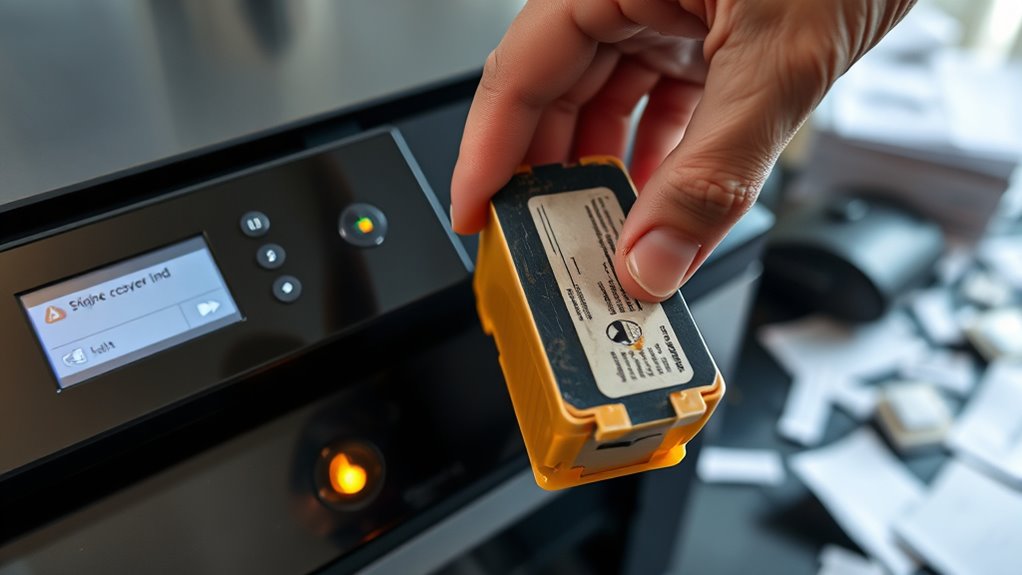
Knowing when to replace your cartridge is essential for maintaining print quality. One clear sign is if you notice ink smudges on your pages. These smudges indicate the ink isn’t drying properly, often because the cartridge is running low. Another warning sign is print fading, where your documents lose vibrancy and appear washed out. If you see streaks or inconsistent color, it’s a strong sign that the cartridge needs replacing soon. You might also notice that your printer requires multiple attempts to produce a clear print, wasting time and ink. Don’t ignore these signs; they point to the need for a fresh cartridge. Addressing these issues early helps avoid poor print quality and ensures your documents look sharp and professional. Recognizing how digital literacy impacts your printing habits can help you better understand when replacement is necessary.

65XL 65 3755 5055 Ink Cartridges Black/Color Combo Pack for HP Printers
- Package Contents: Black and color ink cartridges with user guide
- Compatibility: HP ENVY 5000 series printers
- Additional Compatibility: HP DeskJet 2600 and 3700 series printers
As an affiliate, we earn on qualifying purchases.
As an affiliate, we earn on qualifying purchases.
How Often Should You Change Ink Cartridges?
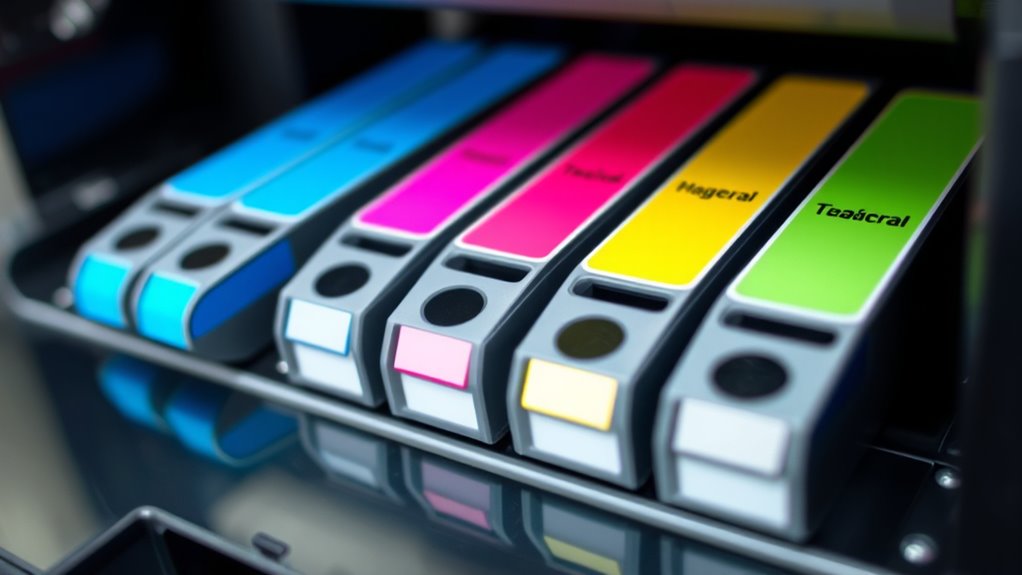
How often you need to change ink cartridges depends on how frequently you print and the indicators your printer provides. If you print often, your cartridges will run out faster, but your printer’s alerts will notify you when replacement is needed. Paying attention to your usage and these signals helps keep your printer running smoothly. Additionally, understanding sector performance metrics can inform maintenance schedules and optimize printer efficiency over time.
Ink Usage Frequency
You should change your ink cartridges based on your printing habits, as frequent printing can quickly deplete ink levels. Understanding your ink usage patterns helps you plan better and avoid unexpected runouts. If you print mostly black and white documents, you’ll find your black cartridges last longer, while color cartridges may need more frequent replacements if you print in color often. Proper color management is key; printing high-quality images or photos consumes more ink, requiring more frequent changes. Keep track of your typical usage to prevent interruptions, especially during important projects. Ultimately, the frequency of cartridge replacements depends on your printing volume and style. Regularly monitoring your ink levels and adjusting your schedule guarantees smooth operation without waste. Additionally, being aware of the Pinball Machine Weight can be useful if you’re considering large or high-capacity units that may impact your setup or maintenance routines.
Printer Indicators
Typically, printer indicators provide clear signals when ink cartridges need replacing, helping you avoid unexpected print failures. These signals are essential for proper printer maintenance and guarantee smooth operation. Most printers display warning lights or messages on the screen, alerting you to low ink levels or cartridge incompatibility issues. Pay attention to these indicators to prevent damage caused by running out of ink or using incompatible cartridges. Regularly checking printer alerts can also extend your device’s lifespan and maintain print quality. Keep spare cartridges on hand to quickly replace them when needed. By following these signals, you can schedule timely replacements, ensuring your printer remains reliable and efficient. Staying attentive to printer indicators simplifies cartridge management and keeps your printing process seamless. Additionally, understanding printer alert systems can help you respond promptly to maintenance needs and avoid costly repairs.
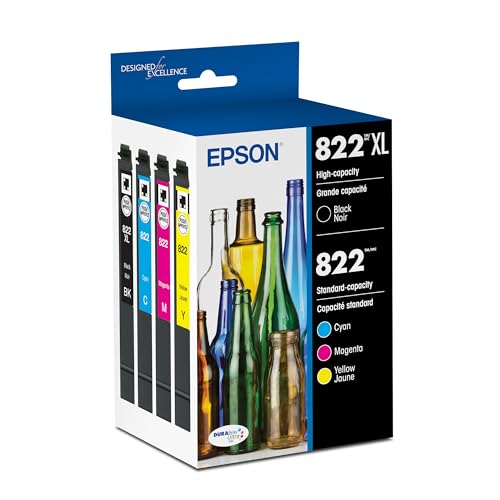
EPSON 822 DURABrite Ultra Ink High Capacity Black & Standard Color Cartridge Combo Pack (T822XL-BCS) Works with WorkForce Pro WF-3820,3823, 4820, 4830, 4833, 4834
- Compatible with Epson printers: Works with specific WorkForce Pro models
- High-capacity black ink: Fewer replacements needed
- Genuine Epson cartridges only: Use authentic ink to avoid damage
As an affiliate, we earn on qualifying purchases.
As an affiliate, we earn on qualifying purchases.
How Frequently to Replace Toner Cartridges
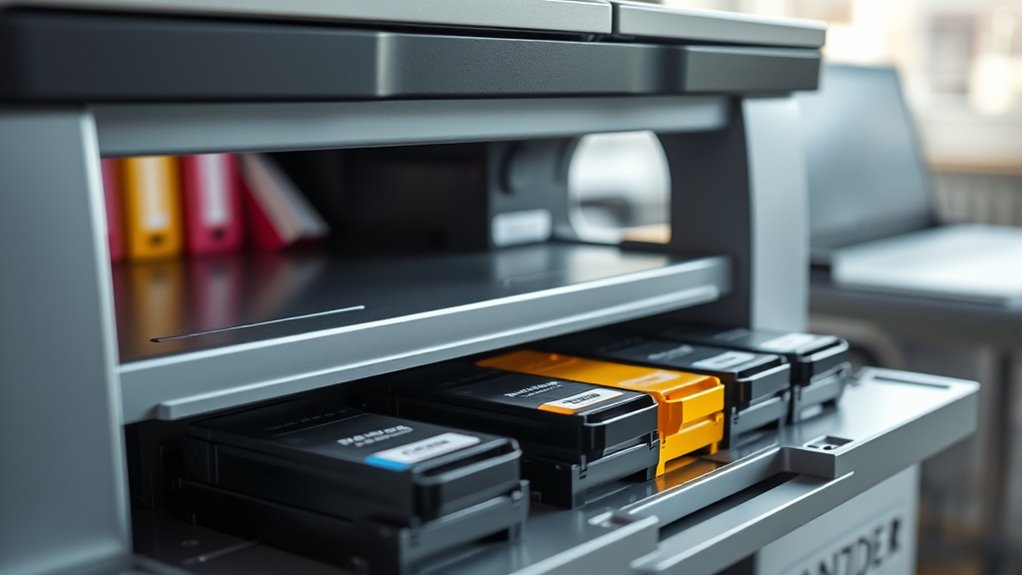
Toner cartridges need replacement based on your printing habits and the cartridge’s capacity. If you print frequently or in large volumes, you’ll need to replace your cartridge more often—typically every few thousand pages. Keep an eye on your printer’s toner level indicator or alerts to avoid unexpected runouts. To save money and reduce waste, consider using compatible cartridges, which often last as long as original ones. Recycling your used cartridges through proper cartridge recycling programs helps protect the environment and supports sustainability efforts. How often you replace your toner depends on the cartridge’s capacity and your printing needs. Regularly monitoring usage and staying aware of toner levels will help you schedule replacements effectively, preventing interruptions and maintaining good print quality. Incorporating sound healing science principles into your routine can also promote overall well-being and reduce stress during long printing sessions.

Smart Ink Compatible Ink Cartridge Replacement for HP 564 XL 564XL High Yield 10 Combo Pack (4 Black & 2 C/M/Y) for DeskJet 3520 3522 Photosmart 7520 6520 5520 7525 5514 7510 OfficeJet 4620 Printers
- Compatible Printer Models: HP Photosmart, DeskJet, OfficeJet series
- Printer Compatibility: Models using HP 564 and 564XL ink
- Cartridge Pack Contents: 10 high-yield cartridges: 4 Black, 2 Cyan, 2 Magenta, 2 Yellow
As an affiliate, we earn on qualifying purchases.
As an affiliate, we earn on qualifying purchases.
Understanding Printer Alerts and Notifications

Understanding printer alerts and notifications is essential for maintaining smooth printing operations. These alerts inform you about issues like low ink or toner, print cartridge compatibility problems, or the need for replacement. Pay attention to notifications about ink drying time, especially with inkjet printers, as delayed drying can lead to smudges if you disregard the warning. When your printer alerts you to a cartridge problem, double-check that you’re using the correct print cartridge for your model. Ignoring notifications can cause poor print quality or damage to the printer. Regularly monitoring these alerts ensures you catch issues early, preventing downtime, and keeping your printing process efficient. Staying attentive to notifications helps you manage your cartridges effectively and avoid unexpected interruptions. Additionally, understanding printer maintenance can help prolong the lifespan of your equipment and ensure consistent performance.
Step-by-Step Guide to Replacing Ink Cartridges

Replacing ink cartridges is a straightforward process that guarantees your printer continues to produce high-quality prints. First, turn on your printer and open the access panel or ink cartridge door. Identify the ink color you need to replace and gently remove the old cartridge, being careful not to touch the nozzles or contacts. Check the cartridge warranty to verify you’re within the return period if needed. Before installing the new cartridge, remove any protective tape or plastic seal. Insert the new ink color cartridge firmly into its slot until it clicks into place. Close the access panel, and run a test print to confirm proper installation. Regularly replacing cartridges on schedule helps maintain print quality and preserves your warranty coverage.
How to Safely Change Toner Cartridges
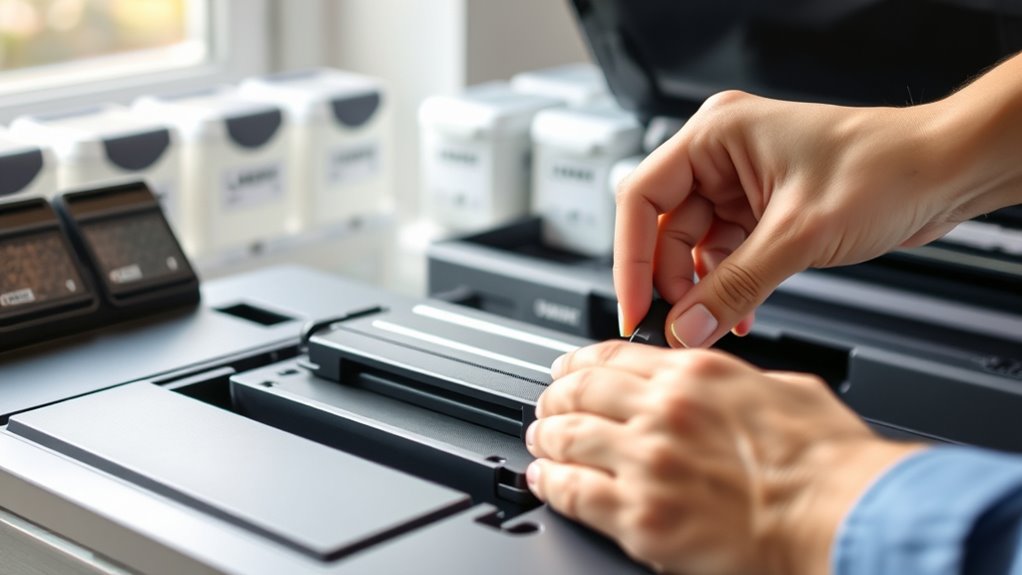
Since toner cartridges contain fine powder that can stain and create messes, it’s essential to handle them carefully. Start by turning off your printer and waiting for it to cool down. Gently open the printer’s access panel and carefully remove the old toner cartridge, avoiding shaking or spilling powder. Before inserting the new cartridge, perform cartridge cleaning inside the printer if needed, using a soft, lint-free cloth. Be sure to follow your manufacturer’s instructions for installation to prevent damage. Once replaced, close the panel securely. Remember to participate in toner recycling programs—many manufacturers offer recycling options for used cartridges. Proper handling and disposal help reduce environmental impact and keep your printer functioning smoothly. Additionally, understanding your cartridge’s change schedule can help prevent printing issues and ensure optimal printer performance.
Tips for Extending Cartridge Lifespan
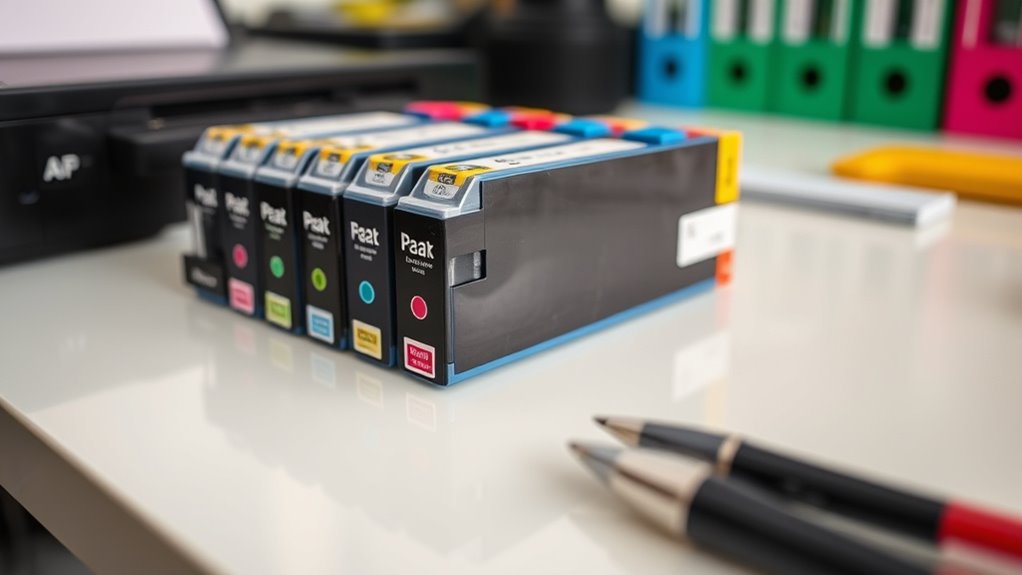
To get the most out of your printer cartridges, you should follow some simple tips. Proper storage keeps cartridges in good condition, and choosing quality options guarantees better performance. Regularly cleaning printer heads also helps extend the lifespan and maintain clear prints. Staying informed about advancements like generative AI in media can inspire innovative ideas for creative projects involving printed materials.
Use Proper Storage Techniques
Proper storage techniques are essential for maximizing your cartridge’s lifespan. When you store cartridges correctly, you prevent ink from drying out and protect them from damage. Keep cartridges in a cool, dry place away from direct sunlight, which can degrade ink quality. Store ink bottles upright to avoid leaks and contamination. Seal the ink bottle tightly after each use to maintain ink freshness, ensuring consistent print resolution. Avoid exposing cartridges to extreme temperatures, as heat can cause ink to evaporate or clog. If you’re not using a cartridge for a while, place it in an airtight container or original packaging. Temperature control is also important, as maintaining a stable environment prevents ink deterioration. By following these tips, you’ll extend cartridge life and ensure reliable, clear prints every time.
Opt for Quality Cartridges
Choosing high-quality cartridges is one of the best ways to extend their lifespan and guarantee consistent print quality. While ink cartridge pricing varies, investing in reputable brands or compatible cartridge types ensures better durability and fewer issues. Cheaper, low-quality cartridges often lead to clogs or damage, costing more in the long run. Consider these options:
| Cartridge Type | Benefits |
|---|---|
| Original OEM | Reliable, high-quality prints |
| Compatible | Cost-effective, decent quality |
Opting for quality cartridges helps prevent frequent replacements and maintains excellent printer performance. Always research and select cartridges suited for your needs, balancing cost and reliability. Remember, choosing the right cartridge type can save you time and money, ensuring your printer stays in top shape longer. Additionally, understanding cartridge maintenance can further extend their lifespan and improve overall printing results.
Regularly Clean Printer Heads
Regularly cleaning your printer heads is essential for maintaining peak print quality and prolonging your cartridge lifespan. Proper printer maintenance prevents ink drying and clogs that can reduce print clarity. To keep your printer in top shape, consider these tips:
- Use the printer’s built-in cleaning function regularly.
- Remove cartridges and gently wipe nozzles with a lint-free cloth.
- Run test prints to check for ink flow issues.
- Avoid letting ink dry by printing periodically, even if unused.
Common Mistakes to Avoid When Changing Cartridges
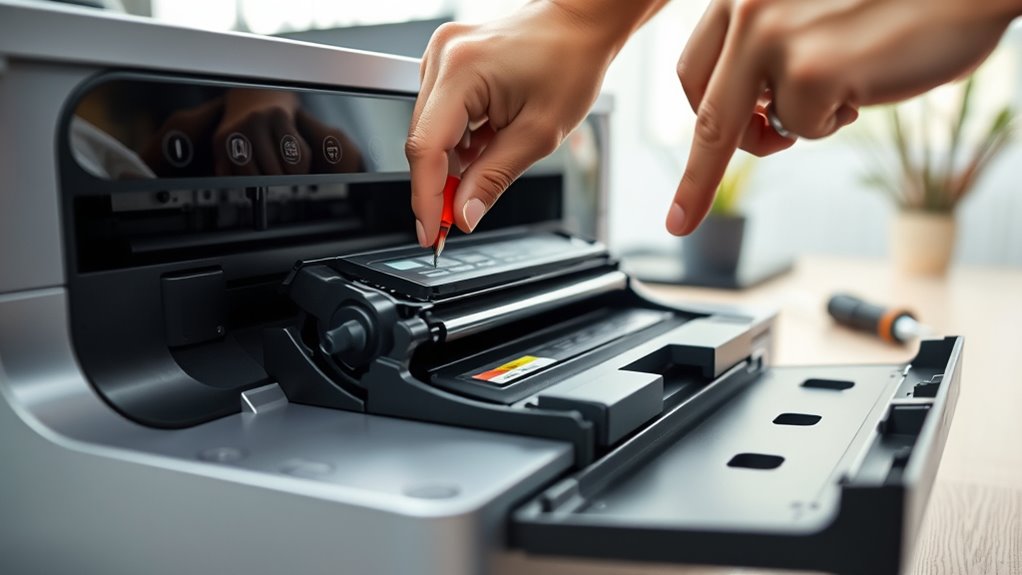
When changing cartridges, one common mistake is handling them without properly aligning or securing them, which can cause poor print quality or damage your printer. Always double-check that the cartridge clicks into place and is seated correctly. Avoid rushing the process, as misaligned cartridges can lead to leaks or print errors. Also, don’t forget to contemplate ink cartridge recycling—dispose of used cartridges responsibly to reduce waste. Choosing compatible cartridge selection is essential; using incompatible or cheap substitutes may harm your printer or result in subpar prints. Additionally, avoid mixing old and new cartridges, which can cause ink flow issues. Taking these precautions ensures your printer runs smoothly and extends its lifespan, saving you money and hassle in the long run.
Maintaining Your Printer for Optimal Cartridge Performance
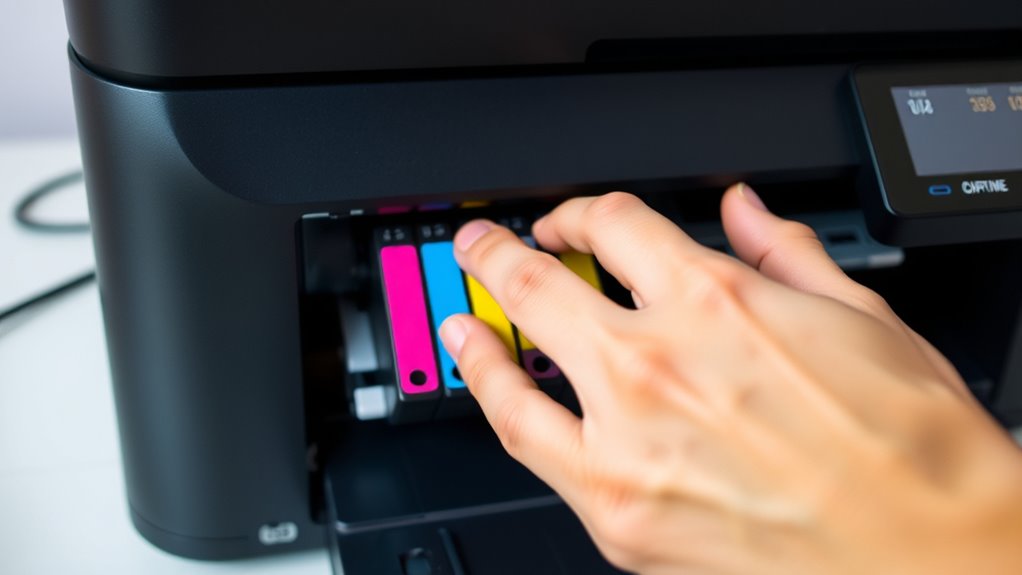
Proper maintenance of your printer is key to ensuring your cartridges perform at their best and last longer. Regularly clean print heads and check for paper jams to prevent print quality issues. Use genuine print cartridge branding to avoid compatibility problems and maintain ideal performance. If you prefer ink refill methods, choose reputable refill kits to reduce risks of clogs or leaks. Keep your printer in a dust-free environment and update firmware periodically to enhance functionality. Additionally, run test prints occasionally to spot potential issues early. Proper maintenance ensures your cartridges stay reliable and cost-effective, whether you’re using original or refilled ink cartridges. Remember, a well-maintained printer minimizes the need for frequent replacements and keeps your print quality consistent.
Frequently Asked Questions
Can Using Third-Party Cartridges Affect Your Printer’s Warranty?
Using third-party cartridges can affect your printer’s warranty because compatibility issues may arise, leading to potential warranty implications. Manufacturers often specify that only their original cartridges should be used to maintain warranty coverage. If you encounter problems caused by third-party cartridges, the manufacturer might refuse to cover repairs. To avoid this, check your printer’s warranty policy and verify any third-party cartridges you use are compatible and reputable.
Does Print Quality Decline Gradually With Cartridge Wear?
Yes, print quality gradually declines as your cartridge wear increases. Over time, you may notice faded colors, streaks, or blurred images, indicating your cartridge isn’t performing at its best. Regularly monitor your printouts and replace cartridges when you see signs of wear. This proactive approach ensures your print quality remains high, preventing issues caused by worn cartridges from affecting your documents or photos.
Are There Environmental Benefits to Recycling Cartridges?
Recycling cartridges is like giving them a second chance at life. By participating in cartridge recycling, you actively reduce the environmental impact of waste. It prevents harmful materials from ending up in landfills and conserves resources used in manufacturing new cartridges. Your small action makes a big difference, helping to protect the planet. So, yes — recycling cartridges benefits the environment, turning waste into a positive force for change.
How Does Temperature Impact Cartridge Longevity?
Temperature affects your cartridge longevity by influencing print temperature and ink durability. If you expose your printer to high temperatures, ink can dry out or clog nozzles, reducing print quality and lifespan. Conversely, very cold environments may cause ink to thicken or freeze, hindering proper flow. To extend your cartridge’s life, keep your printer in a stable, moderate temperature setting, avoiding extreme heat or cold that can damage the ink and impact performance.
Is It Safe to Shake Cartridges to Extend Their Use?
Shaking cartridges isn’t safe and can cause ink leaks or damage. Instead, try gently tilting or swirling the cartridge to promote ink redistribution, which may extend its use. Cartridges are designed to work best when handled carefully, so avoid shaking to prevent spills or air bubbles that could affect print quality. Proper storage and gentle handling help maximize the cartridge’s lifespan safely.
Conclusion
Think of your cartridges as the heartbeat of your printer — when they’re tired, your machine struggles. By recognizing signs, following proper replacement steps, and caring for your cartridges, you keep your printer humming like a well-tuned orchestra. Don’t let low ink or toner be the villain; instead, be the maestro who guarantees every page sings with clarity. Keep your printer happy, and it’ll serve you flawlessly for many chapters to come.