
Thinking of your filter life as a water-quality story helps you see it as more than just maintenance; it’s about protecting your health, your appliances, and your investment. You’ll want to monitor signs of saturation, like changes in taste, smell, or flow, and replace filters proactively to prevent contaminants from bypassing. By understanding the science behind contaminant removal and integrating routine checks, you guarantee consistent water quality. Keep exploring to discover how to turn this story into a strategic advantage for better water.

Get home appliances delivered free with Prime
- Fast, free delivery on millions of items
- Prime Video, Amazon Music and more included
- Member-only deals all year
Key Takeaways
- View filter lifespan as part of a continuous water-quality improvement journey, not just a maintenance task.
- Understand how contaminants accumulate and impact filter effectiveness over time.
- Monitor signs like flow reduction and taste changes to gauge filter saturation proactively.
- Regularly assess and replace filters to prevent contaminant bypass and ensure water safety.
- Incorporate scientific knowledge of contaminant removal into a strategic, proactive water management plan.
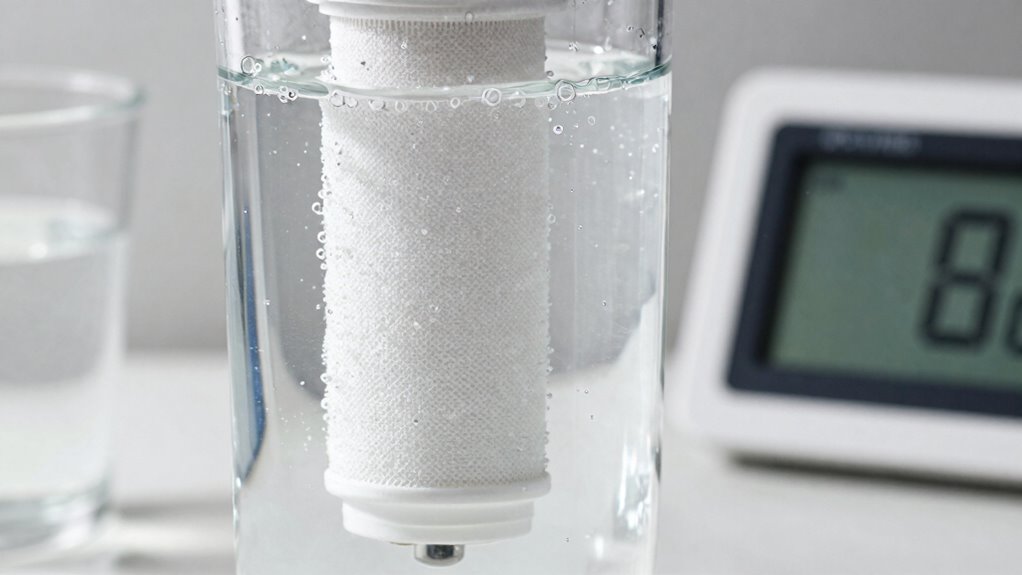
Have you ever wondered how long your filters actually last and why it matters? Understanding the lifespan of your filters isn’t just about replacing parts on time; it’s about guaranteeing your water remains clean and safe. Over time, filters accumulate contaminants, especially carbon buildup, which can clog the system and reduce its effectiveness. When filters become saturated with impurities, their ability to remove harmful substances diminishes, letting impurities slip through and compromise water quality. That’s why knowing when to change your filter is essential. It’s not just a matter of routine but a key part of your maintenance scheduling, which directly impacts the health of your water supply.
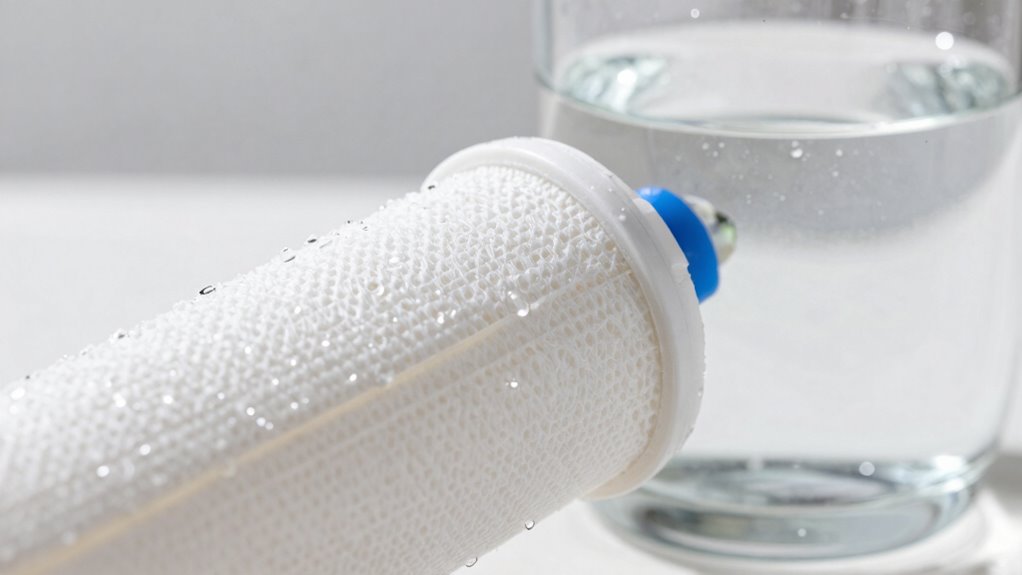
As your filter works, it traps particles, chemicals, and other impurities, but it doesn’t do this forever. Carbon filters, in particular, are highly effective at adsorbing contaminants like chlorine, volatile organic compounds, and unpleasant odors. However, once the carbon granules become saturated with these substances, they form a thick layer of carbon buildup. This buildup can cause flow restrictions, reducing water pressure and increasing strain on your system. If you ignore the signs of saturation and delay replacement, you risk letting the buildup cause more than just reduced performance—potentially allowing contaminants to bypass the filter altogether. This highlights why proactive maintenance scheduling is vital.
Thinking about filter life as part of your overall water-quality story helps you see it as an ongoing process rather than a one-time task. Regularly checking your filter’s condition, paying attention to changes in water flow, taste, or smell, and adhering to recommended replacement timelines keep your system functioning efficiently. Additionally, understanding the science behind contaminant removal can help you select the most effective filters for your specific needs. By doing so, you prevent the excessive carbon buildup that can lead to clogs and diminished filtration capacity. Scheduling maintenance around your filter’s expected lifespan also saves you money in the long run, avoiding costly repairs or premature replacements. Remember, a well-maintained filter not only lasts longer but continues to deliver the clean, fresh water you rely on daily.
In essence, thinking about your filter’s life as part of your water-quality story means being aware of how long your filters last, understanding the role of carbon buildup, and integrating maintenance into your routine. It’s about taking control and making informed decisions that guarantee your water remains pure and safe. When you stay attentive to your filter’s condition and replace it at the right times, you’re actively protecting your health, your appliances, and your investment in clean water. This proactive approach transforms filter management from a chore into a key component of your overall water quality strategy. Recognizing the importance of filter lifespan and regular monitoring can help you optimize your water filtration system’s performance and longevity. Additionally, understanding the science behind contaminant removal can guide you in choosing the right filters for your needs.
water filter replacement cartridges
As an affiliate, we earn on qualifying purchases.
As an affiliate, we earn on qualifying purchases.
Frequently Asked Questions
How Does Water Quality Affect Filter Lifespan?
Water quality directly impacts your filter’s lifespan because high levels of chemical buildup and sediment accumulation cause it to clog faster. When chemicals and sediments build up, your filter works harder, reducing its efficiency and longevity. Regularly testing your water and performing maintenance helps prevent excessive buildup, ensuring your filter lasts longer. Better water quality means less strain on your filter, saving you money and ensuring consistently clean water.
Can Filter Life Vary by Water Usage?
Absolutely, your usage patterns can turn filter life into a rollercoaster. When water usage surges, filters work harder, and their durability can decrease faster. Conversely, lighter usage allows filters to last longer, stretching their lifespan like a melody. So, think of your water habits as the conductor of your filter’s symphony—your patterns directly influence how long your filter performs at its best.
Are There Signs of Filter Failure Before Replacement?
Yes, there are clear signs of filter failure before replacement. During filter maintenance, watch for reduced water flow, strange tastes or odors, and increased filter pressure. These are common replacement indicators that your filter is nearing the end of its life. Pay attention to these cues, as ignoring them can compromise water quality. Regularly inspecting your filter helps guarantee peak performance and prevents unexpected failures.
How Do Environmental Factors Influence Filter Efficiency?
Environmental factors gently sway your filter’s performance like wind shaping a landscape. Harsh chemicals and fluctuating temperatures engage in subtle chemical interactions, gradually wearing down the filter’s ability to purify. Meanwhile, biological contamination, such as algae or bacteria, can quietly invade, reducing efficiency. To maintain ideal filtration, monitor these influences closely, recognizing that external conditions can subtly but considerably impact your filter’s longevity and water quality.
What Are the Long-Term Cost Implications of Filter Replacements?
You should consider the long-term cost implications of filter replacements through thorough cost analysis and effective replacement scheduling. Regularly replacing filters prevents costly repairs and reduces energy consumption caused by clogged filters. By planning replacements ahead of time, you avoid emergency costs and maintain water quality. Investing in proper scheduling and understanding the true costs helps you save money over the filter’s lifespan, ensuring efficient operation and better water management.
As an affiliate, we earn on qualifying purchases.
Conclusion
Thinking about filter life isn’t just about replacing parts; it’s about understanding the story your water tells over time. By paying attention to signs of wear and maintaining your filter, you guarantee cleaner, healthier water. Isn’t it worth visualizing your filter as a storyteller, revealing the journey of your water’s purity? When you see the signs, you’ll know it’s time to act—keeping your water clear and your home safe.
As an affiliate, we earn on qualifying purchases.
As an affiliate, we earn on qualifying purchases.
Fall yard work Picks
leaf blowers
As an affiliate, we earn on qualifying purchases.