Carbon filters lose their effectiveness over time because their adsorption sites become saturated with trapped particles, gases, and odors. As these sites fill up, the filter’s ability to trap new pollutants decreases considerably. Factors like pollution levels, usage frequency, and humidity speed up this process. Once saturated, the filter can’t do its job properly and may even become a breeding ground for bacteria or mold. Keep going to discover how to maintain ideal air quality longer.
Get ready for Prime Big Deal Days — try Prime free
Exclusive member deals on October 6–7, plus fast free delivery. Cancel anytime.
As an affiliate, we earn on qualifying purchases.
Key Takeaways
- Carbon filters lose effectiveness as adsorption sites become saturated with trapped particles.
- Continuous pollutant buildup reduces the filter’s capacity to adsorb new contaminants.
- Environmental factors like humidity can accelerate microbial growth, degrading filter performance.
- Higher pollution levels shorten the lifespan of filters by filling adsorption sites faster.
- Over time, saturation causes filters to no longer effectively remove gases, odors, or chemicals.
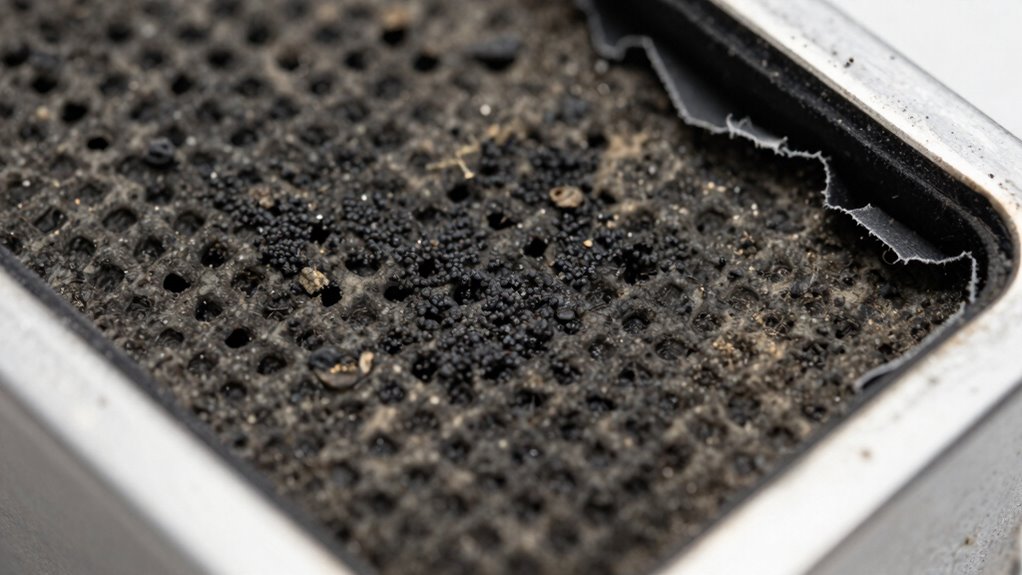
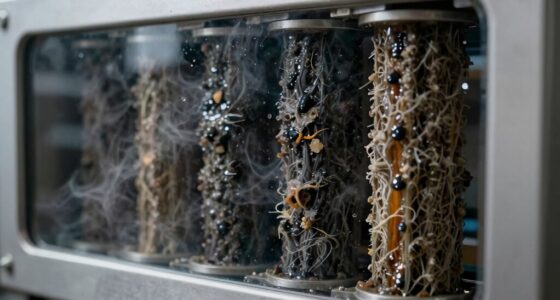
Carbon filters gradually lose their ability to remove contaminants as they trap particles over time. This decline directly impacts air quality, making it essential for you to understand why filters don’t last forever. The core issue revolves around the filter’s limited capacity to adsorb gases and odors. As you run your air purifier or filtration system, the activated carbon beads or granules work by attracting and binding airborne pollutants. Initially, the filter performs at peak efficiency, effectively capturing a wide range of unwanted particles, chemicals, and smells. However, as time passes and the filter continues to trap contaminants, the available adsorption sites start to fill up. Once these sites are saturated, the filter’s capacity to remove new pollutants diminishes significantly.
Carbon filters lose effectiveness over time as adsorption sites fill, reducing their ability to remove pollutants and odors.
You might notice that your air quality doesn’t improve as much as it did when the filter was new, and that’s a clear sign that the filter’s lifespan is nearing its end. When the carbon becomes saturated, it can no longer effectively adsorb additional contaminants, leading to a decline in overall performance. This isn’t just about the filter’s efficiency; it also affects your health, especially if you rely on the filter to remove harmful chemicals or odors from your environment. Over time, a saturated filter can even become a breeding ground for bacteria or mold if not replaced regularly, further jeopardizing air quality. Regularly inspecting your filters can help you identify early signs of filter saturation**** before it impacts your health. Additionally, environmental factors such as humidity can accelerate the saturation process by promoting microbial growth on the surface of the filter.
The rate at which a carbon filter loses its effectiveness depends on several factors, including the level of pollution in your environment and how often you operate your filtration system. If you live in an area with high levels of airborne chemicals or smoke, your filter’s lifespan will be shorter. Conversely, in less polluted environments, it might last longer, but eventually, all filters reach a point where they need replacing. Many manufacturers recommend changing filters every three to six months, but this can vary based on usage and air quality conditions. Ignoring these guidelines could mean compromised air quality and less effective odor or chemical removal. Being aware of filter saturation signs can help you maintain optimal air quality and prevent performance decline. In the long run, understanding the filter lifespan helps you plan maintenance and ensure your indoor environment remains healthy. In the end, understanding the relationship between filter lifespan and air quality helps you make smarter decisions about maintenance. Replacing your carbon filter at appropriate intervals ensures your system performs optimally, keeps your indoor air clean, and prevents the decline in filtration performance that comes with saturation. Remember, no filter lasts forever, but proactive replacement extends the benefits of clean, fresh air in your space.
replacement activated carbon filter for air purifier
As an affiliate, we earn on qualifying purchases.
As an affiliate, we earn on qualifying purchases.
Frequently Asked Questions
How Often Should I Replace My Carbon Filter?
You should replace your carbon filter every 3 to 6 months to maintain ideal air quality. The filter’s lifespan depends on usage and air quality; if you notice a persistent odor or decreased airflow, it’s time for a change. Regular replacement guarantees your air remains fresh and healthy, preventing pollutants from bypassing the filter. Keep an eye on performance signs to know the best time to swap out your filter for continued effectiveness.
Do Different Brands of Filters Degrade Differently?
Did you know some filters last twice as long as others? Brand comparisons show significant differences in filter longevity, affecting how often you need replacements. Higher-quality brands often use better materials, which helps maintain performance longer. So, if you want consistent air quality and save money in the long run, choose a reputable brand. Don’t assume all filters degrade equally—your choice impacts both effectiveness and lifespan.
Can Reactivating a Carbon Filter Restore Its Performance?
Reactivating a carbon filter can sometimes restore its performance, but it’s often limited. Filter reactivation involves heating or washing the filter to remove absorbed contaminants, which may temporarily improve efficiency. However, over time, the carbon’s pore structure degrades, making performance restoration less effective. Generally, replacing the filter is the best way to guarantee ideal filtration, as reactivation provides only a short-term solution and doesn’t fully restore the original filtering capacity.
What Environmental Factors Accelerate Filter Deterioration?
Environmental factors like high humidity, pollutants, and chemical buildup accelerate your filter’s deterioration. Poor air quality introduces more contaminants, causing the filter to clog faster. Excess moisture encourages mold growth and reduces filter efficiency. Chemical buildup from household cleaners or fumes also breaks down the carbon’s ability to absorb pollutants. To prolong your filter’s life, keep the environment clean, control humidity, and avoid exposing it to harsh chemicals.
Are There Signs Indicating My Filter Needs Replacement?
You’ll notice subtle signs when your filter’s filter lifespan is nearing its end. If odors start lingering despite running your system regularly, it’s a gentle nudge to think about a replacement. Reduced odor absorption and a faint smell of trapped particles are clear indicators. Trust your senses—if the air feels less fresh, it’s time to swap your filter to maintain ideal performance and keep your environment clean and healthy.
long-lasting carbon filter for air purifier
As an affiliate, we earn on qualifying purchases.
As an affiliate, we earn on qualifying purchases.
Conclusion
So, don’t let your carbon filter become a forgotten relic collecting dust. Over time, it loses its power like a superhero drained of all its energy, leaving your air unprotected. Regular replacements keep your air fresh and pure, ensuring you breathe in nothing but clean, crisp air. Think of your filter as the hero of your home—you wouldn’t want it to fade into oblivion, powerless against airborne villains. Keep it up, and breathe easy every day.
odor removing carbon filter replacement
As an affiliate, we earn on qualifying purchases.
As an affiliate, we earn on qualifying purchases.
high capacity activated carbon filter
As an affiliate, we earn on qualifying purchases.
As an affiliate, we earn on qualifying purchases.
Fall yard work Picks
leaf blowers
As an affiliate, we earn on qualifying purchases.