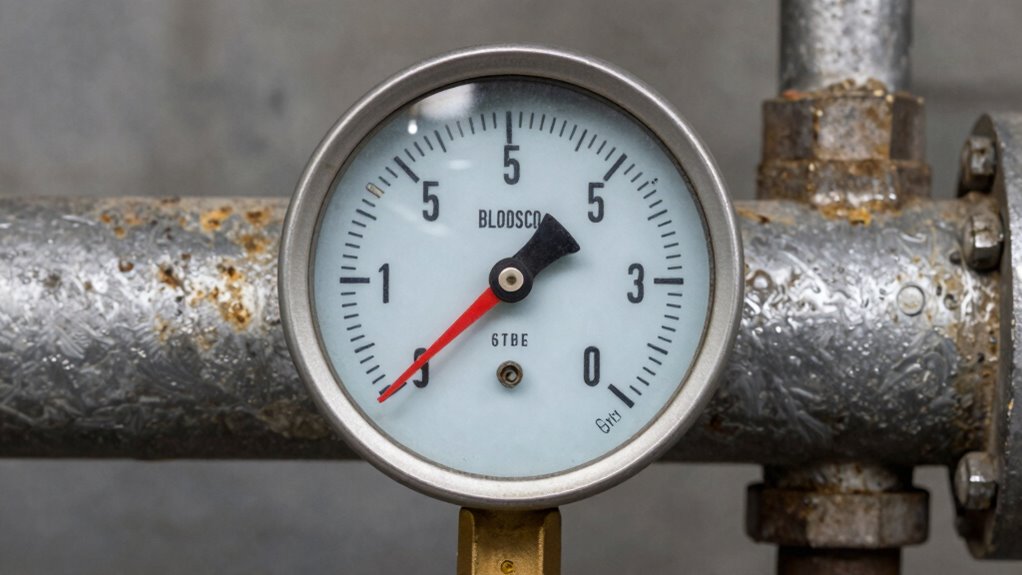

Position your pressure gauge near the main pressure source and where pressure stays stable, not at the end of long pipe runs. Avoid turbulent areas or spots prone to pressure drops to get accurate readings. Make sure it’s accessible and protected from hazards, vibrations, or extreme temperatures. Proper placement guarantees reliable data and extends the sensor’s lifespan. Keep in mind these tips, and you’ll discover key placement strategies that can improve your system’s performance.
Key Takeaways
- Place the gauge near the pressure source for accurate, real-time readings.
- Avoid locations at pipe ends or long runs where pressure may drop or fluctuate.
- Install the gauge in accessible, protected areas following safety standards for maintenance and safety.
- Ensure proper orientation (preferably vertical) to prevent measurement errors from turbulence.
- Regular calibration at the installed location maintains measurement accuracy and device longevity.
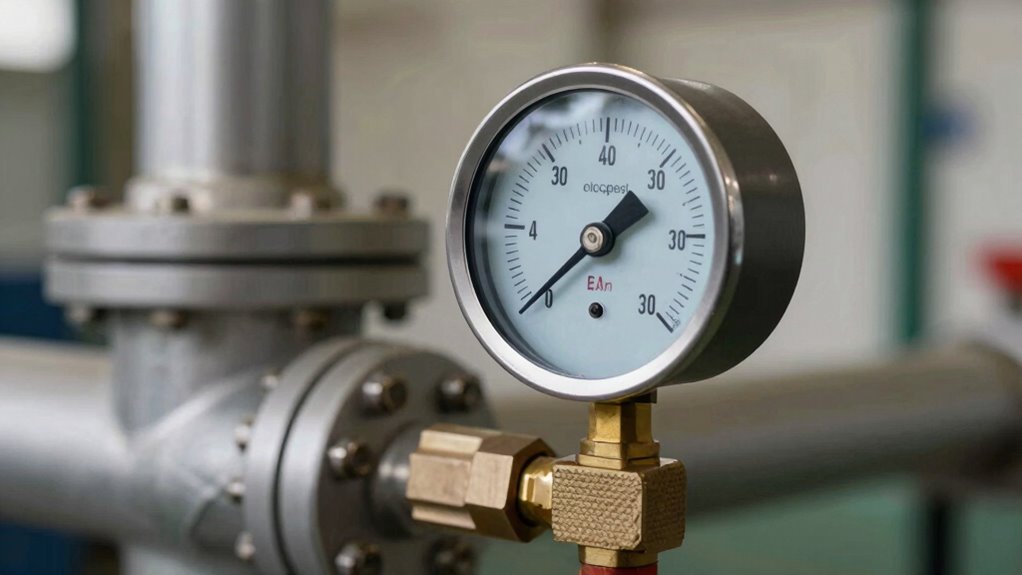
Where should you place a pressure gauge to get the most accurate reading? The answer hinges on understanding proper placement techniques that consider sensor calibration and safety standards. The goal is to guarantee your gauge provides reliable data, so you can make informed decisions without risking safety or equipment damage. Positioning your pressure gauge correctly allows it to measure the true pressure within a system, free from interference or inaccuracies caused by external factors.
First, consider the location within your piping or equipment. The ideal spot is usually near the point of measurement, where pressure fluctuations are most relevant. Avoid installing the gauge at the end of a long pipe run, as pressure drops or surges can distort readings. Instead, place it close to the main pressure source or at a point where the system’s pressure remains stable. This placement reduces the chances of false readings caused by turbulence or localized pressure drops. Proper placement also facilitates easier access for maintenance and calibration. Regular sensor calibration is crucial to maintain accuracy over time, especially if the gauge is exposed to harsh conditions or frequent use.
It’s essential to follow safety standards during installation. Many industries have strict safety protocols about where pressure gauges can be placed, especially in high-pressure or hazardous environments. For example, gauges should be installed in accessible locations, yet protected from accidental impact or exposure to corrosive substances. Using appropriate fittings and ensuring the gauge is rated for the system’s maximum pressure prevents dangerous failures. Also, consider the orientation: vertical mounting often provides more accurate readings and reduces the risk of trapped air or liquids inside the gauge, which could compromise accuracy or cause damage. Proper placement can also help minimize the impact of pressure fluctuations and external influences on the measurement.
Another key factor is guaranteeing the pressure gauge’s sensing element is correctly calibrated. Proper sensor calibration involves verifying the gauge’s accuracy against a known pressure source before installation and periodically afterward. Correct calibration aligns the sensor’s readings with actual pressure values, ensuring consistent and trustworthy data. When placing the gauge, make sure it’s free from vibrations or thermal influences that could interfere with calibration and accuracy. Proper placement not only improves measurement precision but also prolongs the device’s lifespan and ensures compliance with relevant safety standards.
Frequently Asked Questions
How Often Should I Calibrate My Pressure Gauge?
You should calibrate your pressure gauge at least once a year to guarantee accuracy. However, the calibration frequency depends on your maintenance schedule and usage conditions; more frequent checks are needed if it’s exposed to heavy use, vibrations, or extreme temperatures. Regular calibration helps prevent measurement errors, maintains safety, and ensures reliable readings. Make it part of your routine maintenance schedule to keep your gauge functioning properly.
What Types of Pressure Gauges Are Most Accurate?
You should choose digital or bourdon tube gauges for the most accurate readings. These types offer high gauge accuracy and stability over time. To maintain precision, regularly check calibration frequency, especially if you use the gauge often or in demanding conditions. Proper placement enhances accuracy, but investing in high-quality gauges and consistent calibration guarantees you get reliable measurements, reducing errors and improving safety in your systems.
Can Pressure Gauge Placement Affect System Efficiency?
Think of your system as a well-tuned orchestra; if the pressure gauge is misplaced, it’s like a conductor missing cues. Proper placement guarantees accurate readings, directly affecting system responsiveness and maintenance scheduling. When the gauge is correctly positioned, you quickly identify issues, optimizing performance. Conversely, poor placement causes delays, inefficiencies, and costly downtime. So, precise gauge placement is vital for maintaining harmony and efficiency in your system’s operation.
Are Digital Gauges More Reliable Than Analog?
Digital gauges are generally more reliable than analog because they offer better digital accuracy, making precise readings easier. However, analog gauges often boast greater durability, especially in harsh environments, since they can withstand shocks and vibrations better. You should choose based on your needs: if you prioritize accuracy, go digital; if you need durability, analog might be the better option for your system.
What Safety Precautions Are Needed During Gauge Installation?
During gauge installation, prioritize safety by wearing protective gear and guaranteeing the system is depressurized to prevent accidents. Follow proper installation safety protocols, such as securing fittings tightly and avoiding exposure to high-pressure shocks. Additionally, perform calibration procedures carefully to ensure accuracy. Always double-check connections and use appropriate tools to avoid leaks or damage, which can compromise safety and instrument reliability.
Conclusion
So, remember, placing your pressure gauge correctly is key to accurate readings—don’t be like a knight without armor! Whether you’re working on modern machinery or tending to your steam-powered contraption, position it where it can do its job best. Think of it as your trusty compass in the Wild West; without proper placement, it’s just a fancy ornament. Follow these tips, and your gauge will serve you well—no need for a time machine to fix it!