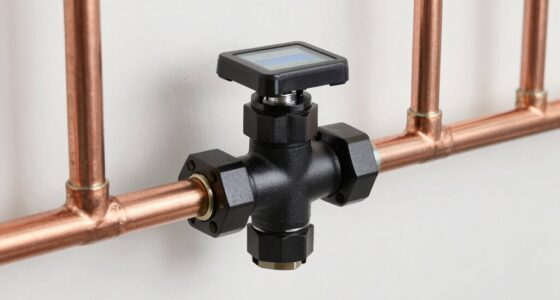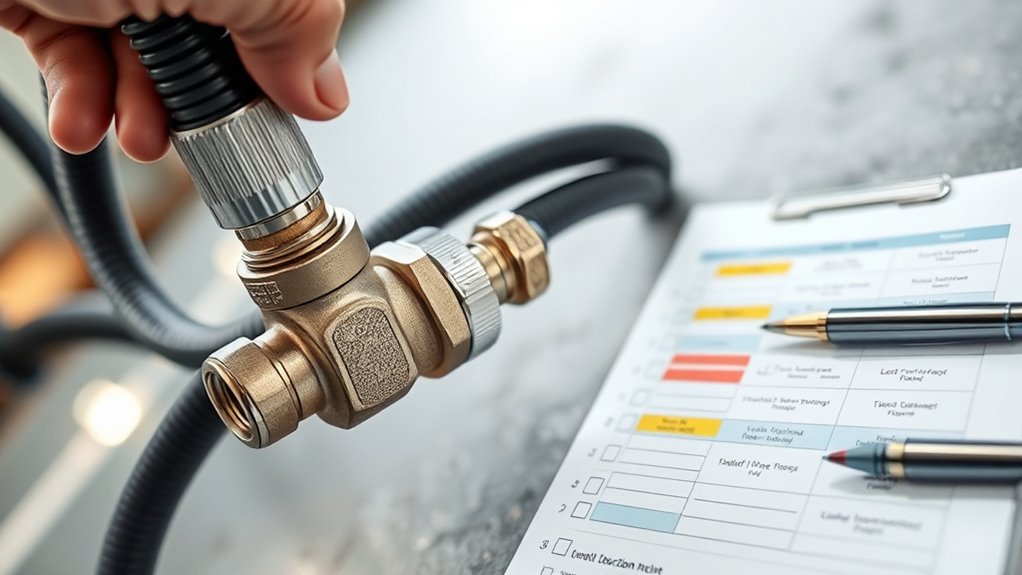

To keep your leak detection and shutoff valves in top shape, follow a regular maintenance routine. Install them correctly, ensure easy access, and clearly label each valve. Conduct monthly inspections for signs of wear, leaks, or corrosion, and lubricate moving parts as needed. Tighten fittings carefully and keep spare parts nearby. Regularly test alarms and sensors. Staying vigilant helps prevent costly damage, and this guide will help you cover all the essential steps for reliable system operation.
Key Takeaways
- Follow manufacturer instructions and local codes during installation for reliable operation.
- Conduct regular inspections for leaks, corrosion, and smooth valve functioning.
- Keep spare parts and lubricants on hand; tighten fittings carefully to prevent damage.
- Ensure valves are easily accessible and clearly labeled for quick emergency shutoff.
- Maintain proper operation of leak detection sensors and update maintenance schedules as needed.
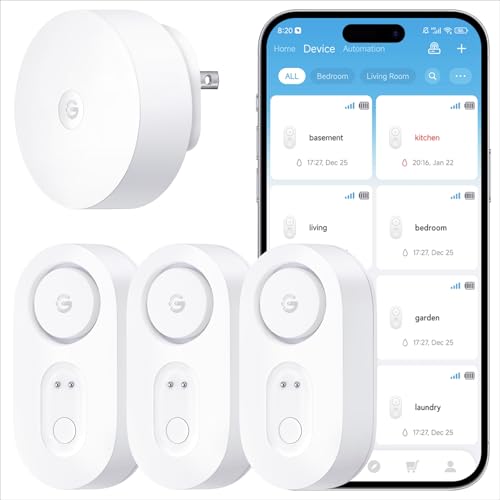
GoveeLife Upgraded Smart Water Leak Detector 1s with High Alarm, 3 Pack
- Long-Range Connectivity: Up to 1804 feet through walls
- Multiple Alert Methods: SMS, app, email notifications
- Loud Alarm: 105 dB sound and flashing light
As an affiliate, we earn on qualifying purchases.
As an affiliate, we earn on qualifying purchases.
Essential Maintenance Tips for Leak Detection and Shutoff Valves

Regularly inspecting your leak detection and shutoff valves is essential for maintaining safety and preventing costly damages. By keeping a close eye on these components, you can catch issues early before they escalate into major problems. When it comes to installation tips, ensure that your valves are installed according to the manufacturer’s instructions and local building codes. Proper installation is crucial for reliable operation and easy access during inspections or emergencies. Use the correct tools and fittings to prevent leaks or damage, and consider labeling each valve clearly for quick identification. Position your valves in accessible locations to facilitate routine maintenance and immediate shutoff if needed.
Creating a maintenance schedule is key to guaranteeing your leak detection and shutoff valves function correctly over time. Set a routine—monthly or quarterly—to check for signs of wear, corrosion, or leaks around the valves. During these inspections, verify that the valves open and close smoothly without resistance, and look for any moisture or corrosion that might indicate a developing problem. It’s also wise to test the leak detection system itself, making sure alarms are functioning and sensors are clean and unobstructed. Regular testing helps you identify faulty components before they cause water damage or system failure.
In addition to visual inspections, maintenance tasks include lubricating moving parts if recommended by the manufacturer and tightening fittings as needed, but avoid over-tightening, which can cause damage. Keep spare parts like washers, seals, or replacement valves on hand for quick repairs. Scheduling these routine checks as part of your maintenance plan guarantees that your system remains reliable and responsive when it matters most. If you notice any irregularities, address them promptly—don’t wait until a leak or failure occurs.
Furthermore, maintaining clear access around your valves is vital. Remove any debris or clutter that could hinder quick shutoff during an emergency. Regularly update your maintenance schedule based on the age of your system and manufacturer recommendations. Staying proactive with inspections and maintenance helps extend the lifespan of your valves and safeguards your property. Remember, the key is consistency—routine checks are your best defense against unexpected water damage and costly repairs. By following proper installation tips and adhering to a solid maintenance schedule, you’ll keep your leak detection and shutoff valves functioning efficiently, giving you peace of mind and protecting your investment.
Regular inspection and maintenance also support the proper functioning of UST projectors and ALR screens, ensuring your home theater setup remains optimal over time.

Two Pack – Repair Kit to replace BrassCraft BCSR01 Multi Turn Valve Stem Repair Kit
- Repairs multi-turn valve stems: Repairs stem of multi-turn valves
- Compatible with angle or straight valves: Install on angle or straight valves
- Simple and quick installation: Quick and easy installation
As an affiliate, we earn on qualifying purchases.
As an affiliate, we earn on qualifying purchases.
Frequently Asked Questions
How Often Should Leak Detection and Shutoff Valves Be Inspected?
You should inspect leak detection and shutoff valves at least once a year as part of your maintenance schedule. Regular inspection guarantees they function properly and helps catch issues early. If you notice any leaks, corrosion, or irregularities, increase inspection frequency. Proper maintenance keeps your system safe and efficient, reducing the risk of costly failures. Always follow manufacturer recommendations for specific inspection intervals tailored to your system’s needs.
What Signs Indicate a Valve Needs Immediate Repair or Replacement?
When your valve starts to whisper trouble, it’s time for action. Look for corrosion inspection signs like rust or pitting, and check if the valve labeling is fading or missing—these are red flags. If the valve becomes hard to turn, leaks, or doesn’t shut off properly, it’s a clear signal you need immediate repair or replacement. Don’t let small issues turn into costly disasters; stay vigilant.
Are There Specific Safety Precautions During Valve Maintenance?
During valve maintenance, you should wear personal protective equipment like gloves and goggles to stay safe from leaks or debris. Always follow emergency shutdown procedures before starting work to prevent accidents. Make certain the area is well-ventilated and clear of hazards. Confirm the system is depressurized and locked out to avoid unexpected releases. These precautions help protect you and ensure a safe, efficient maintenance process.
Can DIY Maintenance Effectively Prevent Major Leaks?
Think of DIY maintenance as your first line of defense against major leaks; it can be quite effective if you follow proper safety precautions. By sticking to DIY safety and maintenance tips, you guarantee your efforts don’t turn into more significant problems. Regular inspections, tightening fittings, and checking for corrosion help catch issues early. Remember, staying cautious and informed is key to preventing costly leaks and keeping your system running smoothly.
What Are the Latest Technological Advancements in Leak Detection?
You’re likely to see smart sensors and AI monitoring leading advancements in leak detection. Smart sensors continuously monitor your plumbing for leaks, alerting you instantly via your smartphone if a problem arises. AI monitoring systems analyze data patterns to predict potential leaks before they happen, enabling proactive maintenance. These innovations help you catch issues early, reduce damage, and save money, making leak detection more accurate and efficient than ever before.

Moen Flo 1-inch Smart Water Shut Off Valve, Smart Home Water Monitor Leak Detector, Wifi Connected, App Enabled Flow Meter and Shutoff, 900-006
- Automatic Water Shutoff: Automatically shuts off water to prevent damage
- Early Leak Detection: Detects leaks before damage occurs
- 24/7 Monitoring: Monitors flow, pressure, and temperature continuously
As an affiliate, we earn on qualifying purchases.
As an affiliate, we earn on qualifying purchases.
Conclusion
By regularly inspecting your leak detection and shutoff valves, you prevent costly water damage and guarantee your system works when you need it most. Some might think it’s too complicated or time-consuming, but with simple maintenance routines, it becomes quick and easy. Stay proactive, follow this checklist, and you’ll keep your home safe and leak-free without hassle. Remember, a little effort now saves a lot of stress later.
GoveeLife Upgraded Smart Water Leak Detector 1s with High Alarm, 3 Pack
- Long-Range Connectivity: Up to 1804 feet through walls
- Multiple Alert Methods: SMS, app, email notifications
- Loud Alarm: 105 dB sound and flashing light
As an affiliate, we earn on qualifying purchases.
As an affiliate, we earn on qualifying purchases.