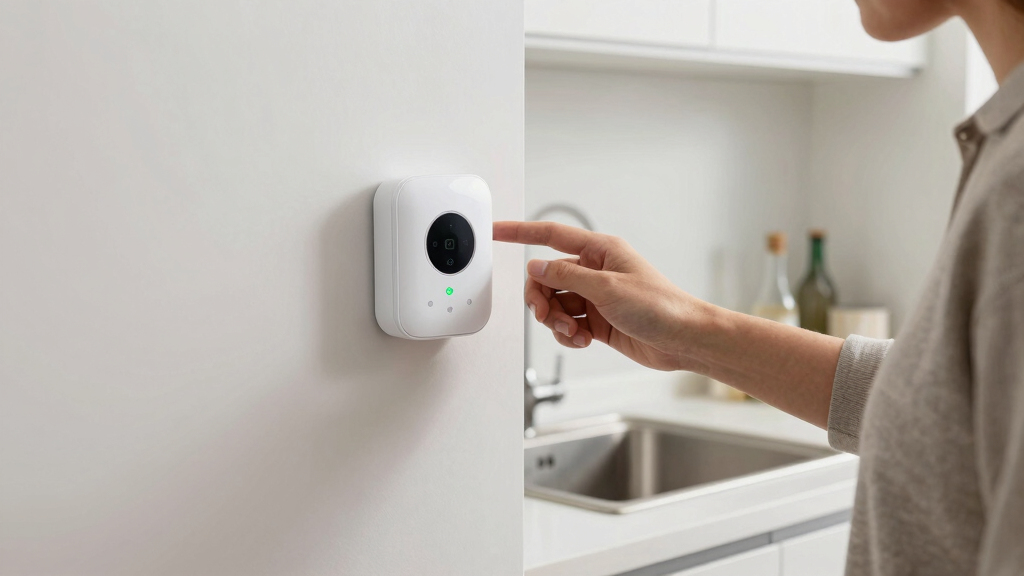
This guide provides step-by-step instructions to help homeowners install and configure smart water leak detectors. These devices detect leaks early, preventing water damage and reducing repair costs. Ideal for those with basic DIY skills, this process involves setting up sensors, connecting them to Wi-Fi, and configuring alerts. You will learn how to protect key areas like bathrooms, kitchens, and laundry rooms effectively and reliably.

GoveeLife Upgraded Smart Water Leak Detector 6 Pack
- ✔ Connectivity Range: 1804 ft
- ✔ Battery Life: 5 years
- ✔ Waterproof Rating: IP67

GoveeLife Upgraded Smart Water Leak Detector 5-Pack
- ✔ Connectivity Range: 1804 ft
- ✔ Battery Life: 5 years
- ✔ Waterproof Rating: IP67

GoveeLife Upgraded Smart Water Leak Detector 4 Pack
- ✔ Connectivity: Sub-1G wireless tech, up to 1804 ft
- ✔ Battery Life: 5 years
- ✔ Waterproof Rating: IP67
Difficulty: Intermediate | Time: 30-60 minutes
What You’ll Need
Tools & Materials:
- Screwdriver
- Smartphone or tablet
- Wi-Fi router
- Power source
Knowledge:
- Basic understanding of Wi-Fi setup
- Ability to use a mobile app
- Basic home wiring or placement skills
Ensure your smartphone is compatible with the sensor app and that your Wi-Fi network is active and stable. Charge or install batteries in the detectors before setup.

GoveeLife Upgraded Smart Water Leak Detector 1s with High Alarm, 6 Pack
- Long-Range Connectivity: Up to 1804 feet through walls
- Multiple Alert Methods: SMS, app, email, and audible alarm
- User-Friendly App: Push notifications, device locator, multi-user alerts
As an affiliate, we earn on qualifying purchases.
GoveeLife Upgraded Smart Water Leak Detector 6 Pack
<p>This model stands out for its impressive wireless range of up to 1804 feet, making it ideal for larger or multi-zone properties. It supports multiple notification methods—SMS, email, app alerts—which ensures you’re promptly informed of leaks, even from a distance. Its IP67 waterproof rating guarantees durability, while a 5-year battery life minimizes maintenance. Compared with smaller packs, this 6-pack provides comprehensive coverage, but the bulkier sensors and the need for a 2.4G Wi-Fi network could be drawbacks for space-constrained or tech-limited homes.</p>
Pros:
- Long-range wireless connectivity up to 1804 feet
- Supports SMS, email, and app notifications
- Durable IP67 waterproof design
- Extended 5-year battery life
Cons:
- Requires 2.4G Wi-Fi, not compatible with 5G networks
- Bulkier sensors may be less discreet
- Limited to specific sensors for gateway pairing
Best for: Homeowners with large properties or multiple critical areas needing extensive leak coverage
Not ideal for: Smaller apartments or homes where discreet sensors are preferred, or homes with only 5G Wi-Fi networks
Bottom line: This pick is best suited for large homes and properties where extensive leak monitoring is critical.
“This pick is best suited for large homes and properties where extensive leak monitoring is critical.”

GoveeLife Upgraded Smart Water Leak Detector 1s with High Alarm, 5 Pack
- Long-Range Connectivity: Up to 1804 feet through walls
- Multiple Alert Methods: SMS, app, email notifications
- High-Volume Alarm: 105 dB sound alert
As an affiliate, we earn on qualifying purchases.
GoveeLife Upgraded Smart Water Leak Detector 5-Pack
<p>Compared with the larger 6-pack, this 5-pack offers a solid balance of coverage and affordability, making it an excellent choice for most homes. It maintains the impressive 1804-foot wireless range and supports flexible notifications, including SMS, email, and app alerts. The IP67 waterproof rating and 5-year battery life ensure reliability over time, but the limited sensor count and the requirement for 2.4G Wi-Fi can be restrictive for homes with multiple leak-prone areas or those relying solely on 5G networks. The alarm volume is adjustable, but some users may find it either too loud or too soft.</p>
Pros:
- Long-range wireless connectivity up to 1804 feet
- Supports multi-channel notifications
- Waterproof IP67 design
- 5-year battery life
Cons:
- Limited to 2.4G Wi-Fi networks
- Sensor quantity may be insufficient for very large homes
- Alarm volume may be inconsistent depending on environment
Best for: Medium-sized homes seeking reliable leak detection without the higher cost of larger packs
Not ideal for: Homes with more than five critical leak points or where 5G Wi-Fi is the only option
Bottom line: This product offers excellent value for typical home coverage, balancing durability and affordability.
“This product offers excellent value for typical home coverage, balancing durability and affordability.”

GoveeLife Upgraded Smart Water Leak Detector 1s with High Alarm, 4 Pack
- Long-Range Connectivity: Up to 1804 feet through walls
- Multiple Alert Methods: SMS, app, email, loud alarm
- User-Friendly App: Instant notifications and device locator
As an affiliate, we earn on qualifying purchases.
GoveeLife Upgraded Smart Water Leak Detector 4 Pack
<p>This 4-pack emphasizes portability and straightforward setup, making it ideal for quick deployment in various home areas. Its wireless range of up to 1804 feet remains impressive, supporting multiple notifications for timely leak alerts. The waterproof IP67 rating and 5-year battery life add to its reliability, but the smaller sensor count may limit coverage for larger homes. Its compact size allows for discreet placement, though some users might find the alarm volume less adaptable, and it requires a 2.4G Wi-Fi network.</p>
Pros:
- Extended wireless range up to 1804 feet
- Supports multiple notification methods
- Compact and easy to install
- 5-year battery life
Cons:
- Limited to 2.4G Wi-Fi networks
- Sensor quantity may be insufficient for large-scale coverage
- Alarm volume may be too loud or too soft for some environments
Best for: Homeowners needing quick, easy-to-install leak detection in smaller or multiple areas
Not ideal for: Large properties with numerous potential leak points or homes relying solely on 5G Wi-Fi
Bottom line: This pick is perfect for users prioritizing simple setup and discreet sensors for smaller or multi-area monitoring.
“This pick is perfect for users prioritizing simple setup and discreet sensors for smaller or multi-area monitoring.”
As an Amazon Associate we earn from qualifying purchases.
Before You Start
Choose locations where leaks are most likely, such as under sinks, near water heaters, or behind appliances. Confirm Wi-Fi coverage in these areas. Disable any existing water shutoff valves or alarms that could interfere with sensor installation.
Step-by-Step Instructions
Step 1: Select appropriate locations for sensors
Identify key areas prone to leaks: under sinks, near water heaters, washing machines, and toilets. Place sensors on the floor close to water sources, avoiding obstructed or high-traffic zones.
Tip: Use multiple sensors for comprehensive coverage, especially in high-risk areas.
Check: Sensors are positioned close to water sources, unobstructed, and accessible for maintenance.
Step 2: Install the water leak detectors
Attach the sensors securely on the floor or baseboard using mounting brackets or double-sided tape if provided. Ensure the sensors are stable and flat on the surface.
Tip: Avoid placing sensors on uneven or wet surfaces that could cause false readings.
Check: Sensors are firmly attached, stable, and positioned correctly in the chosen locations.
Step 3: Insert batteries or connect power
If your sensors are battery-powered, insert fresh batteries following manufacturer directions. For wired models, connect power adapters securely to power outlets.
Tip: Use high-quality batteries for longer lifespan and reliable operation.
Check: Sensors power on and show status indicators (lights or app signals) confirming readiness.
Step 4: Connect sensors to Wi-Fi using the mobile app
Download the manufacturer’s app from your device’s app store. Open the app, create an account if needed, and follow prompts to add new devices. Select your Wi-Fi network and enter the password to connect each sensor.
Tip: Keep sensors close to your router during setup to ensure strong signal. Use 2.4 GHz Wi-Fi if 5 GHz is problematic.
Check: App displays each sensor as connected and online, with status updates visible.
Step 5: Configure alert and notification settings
Within the app, set alert preferences: push notifications, email alerts, or both. Test alert functionality by triggering a sensor to confirm notifications are received.
Tip: Set quiet hours if desired to prevent nuisance alerts during certain times.
Check: Notifications are received on your device after testing the alert feature.
Step 6: Test the system for proper operation
Pour a small amount of water near each sensor to verify detection and alert delivery. Check that your device receives the alert promptly and that the sensor status updates in the app.
Tip: Repeat tests in different areas to ensure coverage and responsiveness.
Check: Sensors detect water and trigger alerts immediately, confirming correct installation.
Common Mistakes to Avoid
- Placing sensors in areas prone to false alarms (wet shoes, high humidity). — Place sensors on flat, dry surfaces away from water splashes or humid environments.
- Using incompatible Wi-Fi bands or weak signals. — Connect sensors to the 2.4 GHz band and ensure stable Wi-Fi coverage in sensor locations.
- Not testing sensors after installation. — Always perform water detection tests to confirm alerts and sensor responsiveness.
Troubleshooting
Problem: Sensor not connecting to Wi-Fi.
Solution: Move the sensor closer to the router during setup, ensure Wi-Fi password is correct, and restart the sensor and router if needed.
Problem: No alerts received after water is detected.
Solution: Check notification settings in the app, verify sensor status is online, and test alert functionality again.
Problem: Sensor shows offline or unresponsive.
Solution: Replace batteries, restart the sensor, or re-add the device in the app.
What Success Looks Like
All sensors are installed securely, connected to Wi-Fi, and show active status in the app. Water detection tests trigger immediate alerts on your device, confirming reliable operation. The system reliably detects leaks and notifies you promptly.
Next Steps
Regularly test sensors monthly to confirm functionality. Clean sensors and check batteries annually. Expand coverage if needed or upgrade to models with more features. Seek support if alerts do not work despite proper setup.
Frequently Asked Questions
How often should I test the sensors?
Test sensors at least once a month by simulating a leak to ensure alerts are functioning properly.
Can I install sensors in outdoor areas?
Most smart leak detectors are designed for indoor use; check manufacturer specifications for outdoor compatibility before installation.
Do I need a smart home hub or additional devices?
Most models connect directly to Wi-Fi and do not require a hub, but verify your model’s requirements before installing.
What if my Wi-Fi goes down?
If your Wi-Fi is offline, sensors will not send alerts. Consider a backup power source or cellular-connected sensors for critical areas.