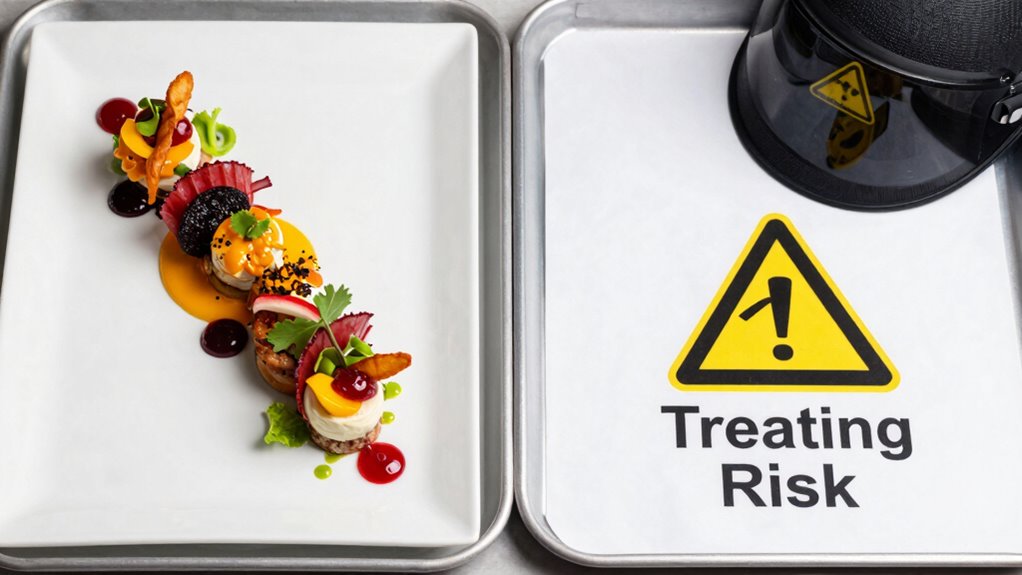

When you treat taste, you’re focusing on satisfying sensory preferences and immediate pleasure, often influenced by emotions. Treating risk, however, involves evaluating safety to prevent harm, requiring analysis and caution. Balancing these guarantees you enjoy flavors without ignoring potential dangers. Recognizing the difference helps you make smarter choices, especially when safety and pleasure collide. By understanding this balance, you can make informed decisions that protect your well-being while still enjoying what you love—if you continue, you’ll see how to apply this in real situations.

Get home appliances delivered free with Prime
- Fast, free delivery on millions of items
- Prime Video, Amazon Music and more included
- Member-only deals all year
Key Takeaways
- Treating taste focuses on sensory enjoyment and emotional satisfaction, while treating risk emphasizes safety and harm prevention.
- Taste is subjective and driven by personal preferences, whereas risk assessment involves objective evaluation of potential dangers.
- Prioritizing taste may lead to immediate gratification, but ignoring risk can cause health or safety issues.
- Balancing both involves considering safety standards alongside flavor preferences for responsible decisions.
- Biodiversity supports safe, sustainable choices by providing diverse options that address both taste and risk considerations.

When making decisions—whether in business, healthcare, or everyday life—it’s vital to distinguish between treating taste and treating risk. Your personal flavor preferences might steer your choices, but understanding how safety considerations influence those choices is equally important. Treating taste involves catering to what you enjoy, what appeals to your palate, and what makes you comfortable. It’s about satisfying your immediate sensory desires, whether that’s craving a sweet dessert or preferring a certain spice level. These preferences are subjective and often emotional, guiding your decisions based on pleasure rather than potential consequences.
On the other hand, treating risk requires a more analytical approach. It involves evaluating safety considerations to prevent harm or adverse outcomes. For example, if you’re choosing a food item, understanding the safety implications—such as allergen content, expiration dates, or potential contamination—is vital. Ignoring these factors in favor of taste can lead to health issues, even if the food tastes excellent. Recognizing the difference helps you prioritize safety without dismissing your preferences entirely. It’s about balancing flavor desires with the potential risks involved.
In many cases, your flavor preferences shape your willingness to accept certain risks. You might love spicy foods, but you should also consider safety considerations like gastrointestinal sensitivity or allergic reactions. If you’re aware of these risks, you can make informed choices—perhaps choosing milder options or moderating intake. This approach allows you to enjoy what you love while still respecting safety boundaries. It’s a delicate balance that requires awareness of both personal taste and the underlying safety factors. Being aware of food safety standards can further enhance your decision-making process.
When making decisions, it’s tempting to focus solely on taste because immediate gratification feels better than contemplating risks. However, neglecting safety considerations can have serious consequences, especially in healthcare or food consumption. For instance, in healthcare, treating a patient’s preferences for comfort must be balanced with medical safety protocols. Similarly, in business, customer preferences drive product development, but safety regulations safeguard against liabilities. Recognizing when to prioritize taste and when to emphasize safety considerations helps you make smarter, more responsible choices.
It’s also important to recognize that biodiversity plays a crucial role in ensuring food safety and sustainability by providing diverse options that reduce reliance on a limited number of crops or species. Ultimately, understanding the difference between treating taste and treating risk empowers you to make balanced decisions. You can enjoy your favorite flavors while respecting the safety considerations that protect your well-being. Whether choosing a meal, a healthcare plan, or a product, this awareness ensures you’re not sacrificing safety for immediate pleasure but instead achieving a thoughtful, well-rounded approach.
As an affiliate, we earn on qualifying purchases.
Frequently Asked Questions
How Do Companies Balance Taste Preferences With Safety Standards?
You balance taste preferences with safety standards by focusing on flavor innovation that appeals to consumers while ensuring compliance with safety regulations. You listen to consumer perception to understand what flavors are popular, then work with scientists to develop safe ingredients that enhance taste without compromising safety. This approach helps you deliver enjoyable products that meet safety standards, fostering trust and satisfaction among your customers.
Can Risk Management Influence Consumer Taste Preferences?
Like a master artist shaping a masterpiece, risk management influences your taste preferences by subtly guiding flavor enhancement, aligning safety with consumer perception. When companies prioritize safety, they often refine ingredients to guarantee trusted quality, which in turn shapes your perception of flavor. This process can lead you to prefer safer options, demonstrating how risk management doesn’t just protect but also molds your taste, creating a delicate balance between safety and satisfaction.
What Role Does Marketing Play in Treating Taste Versus Risk?
Marketing plays a vital role in shaping both flavor influence and safety perception. You can use appealing visuals and messaging to enhance taste appeal, making consumers more likely to choose your product based on flavor. At the same time, marketing can emphasize safety features and quality assurances to build trust. By balancing these aspects, you influence consumer preferences—either by making taste more enticing or by reassuring them about safety.
Are There Ethical Concerns in Prioritizing Taste Over Risk?
Yes, prioritizing taste over risk raises ethical concerns because it can mislead consumers about potential health impacts. When focusing on flavor innovation, you might exploit consumer perception, encouraging them to choose products that could harm their health. It’s essential to weigh the appeal of new flavors against the potential risks, ensuring transparency and honesty. Balancing innovation with ethical responsibility helps protect consumers and fosters trust.
How Do Regulations Differ When Addressing Taste Versus Risk?
Think of regulations as a delicate balancing act, like walking a tightrope over a chasm of flavor conflicts and safety trade-offs. When addressing taste, regulations often permit more leniency, prioritizing consumer preferences and innovation. Conversely, risk-focused rules tighten controls to ensure safety, often at the expense of flavor. You’ll find safety trade-offs are non-negotiable, while flavor conflicts may be managed through guidelines that encourage responsible indulgence without compromising health.
As an affiliate, we earn on qualifying purchases.
Conclusion
Understanding the difference between “treating taste” and “treating risk” helps you make smarter decisions. While taste appeals to your preferences, risk management focuses on safety and long-term benefits. Did you know that nearly 70% of consumers prioritize health over flavor when choosing food? By balancing both, you can enjoy what you love without compromising your well-being. So, next time, consider both taste and risk—your choices will be wiser and more satisfying.
As an affiliate, we earn on qualifying purchases.
As an affiliate, we earn on qualifying purchases.
Columbus Day / Indigenous Peoples' Day Picks
long weekend sales
As an affiliate, we earn on qualifying purchases.