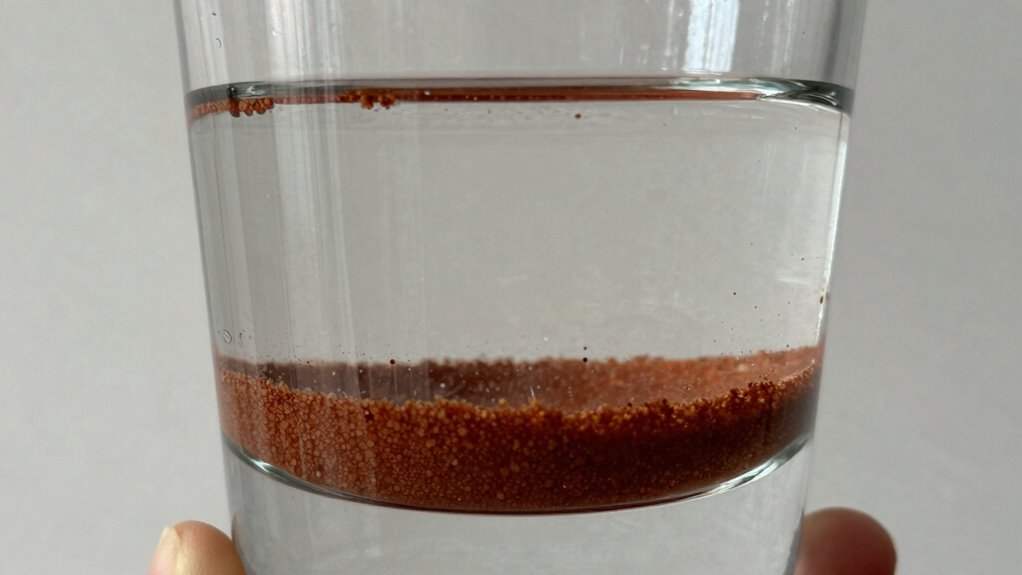

If your water sometimes looks cloudy or discolored, and you notice particles or streaks after running the tap, you may have intermittent sediment problems. Watch for changes in water clarity, especially after heavy rain or drought, and observe if sediment appears sporadically or following weather events. Fluctuations in the water’s appearance signal potential issues. Keep an eye on these signs; staying vigilant can help you catch problems early and learn more about how to fix them.
Key Takeaways
- Notice if water appears cloudy or discolored sporadically, especially after rain or drought.
- Watch for visible particles or streaks in water immediately after running taps.
- Observe fluctuations in water clarity over time, indicating intermittent sediment intrusion.
- Check for sediment buildup after weather changes or seasonal shifts.
- Regularly inspect water for signs of sediment, such as cloudiness or particles, even if infrequent.
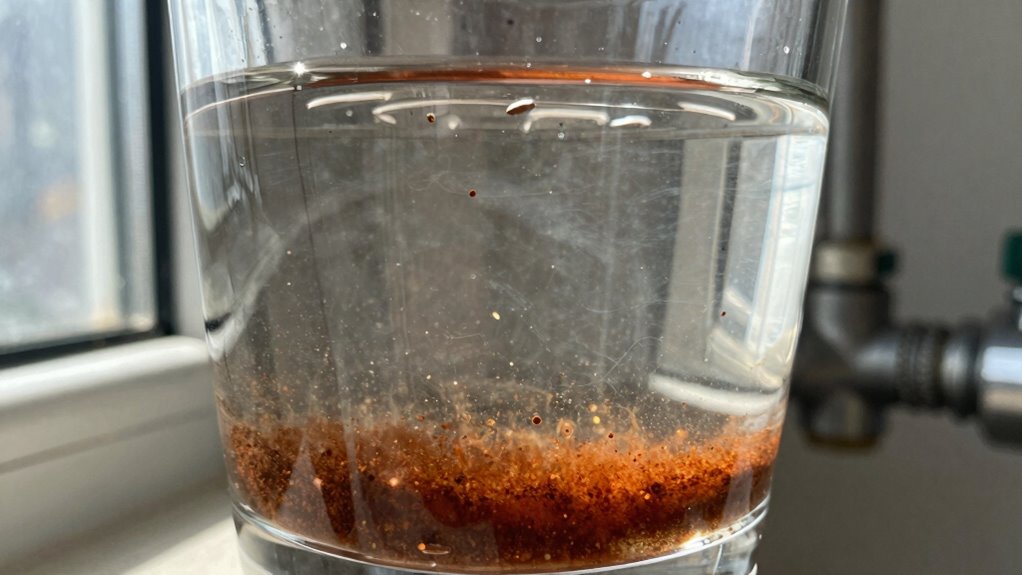
If you notice cloudy or discolored water coming from your taps, it might be a sign that your home has sediment problems. Sediment can enter your water supply from natural sources like underground minerals or from aging pipes corroding over time. Intermittent sediment issues often show up as streaks or particles that cloud your water temporarily, rather than constant discoloration. Recognizing these signs early helps prevent larger problems and ensures your water remains safe and clean.
One of the first steps you can take is to observe how your water behaves over time. Do you see particles only after running the water for a few seconds, or does it happen sporadically? Notice if discoloration appears more after heavy rain or drought periods, which can influence groundwater levels and sediment levels in your supply. These fluctuations often point to sediment being stirred up or entering your pipes intermittently. Regularly checking your water’s clarity can help you catch these issues early. Additionally, understanding intermittent sediment problems can guide you toward more effective solutions. Be aware that fluctuations in groundwater levels can also be caused by seasonal changes, affecting sediment intrusion. Recognizing the signs of sediment buildup early can help you take timely action to prevent long-term damage.
To address and prevent sediment buildup, consider installing a reliable water filtration system. Water filtration can effectively remove particulate matter, improving water clarity and quality. Depending on your specific needs, you might choose a whole-house filtration system or point-of-use filters for specific fixtures. Installing a good filter not only improves taste and appearance but also protects your appliances and plumbing from sediment-related damage. Remember, filters need regular maintenance—changing cartridges or cleaning components—to stay effective. Additionally, choosing filters with appropriate micron ratings ensures that even very small particles are removed, providing better water quality.
Pipe maintenance is equally important in preventing sediment problems. Over time, pipes can corrode or develop mineral deposits, which are then released into your water supply. If you notice sediment appearing intermittently, it might be time to inspect or replace aging pipes. Corroded pipes are more prone to shedding particles, especially when water flow fluctuates. Regular pipe maintenance, including flushing your system and inspecting for signs of corrosion, can significantly reduce the chances of sediment entering your water supply. Additionally, using proper pipe materials can help minimize mineral buildup and corrosion over time. Staying proactive with pipe inspections ensures that potential sediment sources are identified before causing significant issues.
In some cases, your water supplier may have issues with sediment, and addressing this requires coordination with local authorities or water treatment facilities. Still, taking proactive steps—like upgrading your water filtration system and maintaining your pipes—can help manage the problem at home. Being attentive to changes in your water’s appearance and acting promptly ensures you’re not just dealing with symptoms but tackling the root causes of sediment issues. By staying vigilant and maintaining your plumbing and filtration systems, you can keep your water clean and clear, preventing potential damage and health risks. Regular maintenance and awareness of groundwater fluctuations can further help you anticipate and prevent sediment intrusion.

Express Water Whole House Water Filter System, Ultimate Protection, 3-Stage
- Whole House Water Filtration: 3-stage process for entire home
- Comprehensive Contaminant Reduction: Reduces chlorine, heavy metals, and scale
- Durable Deluxe Filter System: Includes stainless steel bracket and stand
As an affiliate, we earn on qualifying purchases.
As an affiliate, we earn on qualifying purchases.
Frequently Asked Questions
Can Sediment Problems Affect Water Taste or Smell?
Sediment problems can definitely affect your water’s taste and smell. When sediment builds up, it can make your water taste earthy or metallic, and sometimes cause a musty odor. To fix this, you should consider sediment removal techniques and upgrade your water filtration system. Proper filtration helps eliminate sediment and improves water quality, ensuring your water tastes clean and fresh, free from any unpleasant odors caused by sediment buildup.
Are Sediment Issues More Common in Certain Types of Homes?
More sediment issues often occur in homes with well water, especially those built in rural areas. About 15% of rural homes experience sediment problems due to age, construction quality, or well maintenance. Homes with older plumbing or poorly maintained wells are more vulnerable. If your home has a well supply, regular well maintenance and prompt inspections can help prevent sediment buildup and guarantee clean, clear water.
How Often Should I Test My Water for Sediment?
You should test your water for sediment levels at least once a year, especially if you notice cloudy water or particles. Regular water testing helps catch sediment issues early, preventing damage to appliances and pipes. If you have well water or notice changes in water clarity, consider testing every six months. Consistent testing guarantees you stay informed about sediment problems and can take prompt action if levels rise.
Do Sediment Problems Impact Water Pressure?
Sediment problems can absolutely impact your water pressure, causing it to drop dramatically or fluctuate wildly. When sediment builds up, it clogs filters and pipes, making your well work overtime. Proper sediment filtration and regular well maintenance keep water flowing smoothly, preventing pressure drops. Neglecting these steps leads to stubborn sediment buildup, which can turn your once-strong water pressure into a frustrating trickle. Keep up with maintenance, and your water stays reliable.
Can Sediment Damage Water Appliances or Fixtures?
Sediment can damage your water appliances and fixtures over time. It causes wear and tear, leading to clogs or malfunctions. Regular sediment removal is essential to prevent this damage. By maintaining your appliances properly and flushing out sediment buildup, you extend their lifespan and keep your fixtures functioning smoothly. Don’t ignore sediment issues; proactive appliance maintenance protects your plumbing and saves you money on costly repairs.

Brita Faucet Mount Water Filter System, Includes 1 Filter, White
- Easy faucet attachment: No tools required for installation
- Healthier, great-tasting water: Reduces impurities for better flavor
- Eco-friendly and cost-saving: Replace up to 1,800 bottles annually
As an affiliate, we earn on qualifying purchases.
As an affiliate, we earn on qualifying purchases.
Conclusion
If you notice cloudy water, low pressure, or sediment in your taps, don’t ignore the signs—they’re your home’s way of waving a red flag. Think of sediment problems as hidden thieves quietly stealing your plumbing’s efficiency. Catch these issues early, and you’ll keep your water clean, your pipes happy, and your home running smoothly. After all, addressing sediment problems now is like tending your garden—you nurture it to flourish and avoid a messy, costly ordeal later.
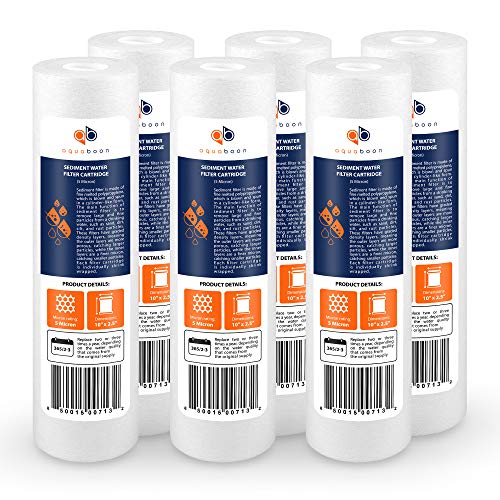
Aquaboon 5 Micron 10 x 2.5 Sediment Filter – Whole House Water Filter Replacement Compatible with Well Water Filters – P5, AP110, WHKF-GD05, 6 Pack
- High-Performance Sediment Filtration: Captures rust, sand, dirt, and sludge
- Universal Fit for Easy Installation: Fits most standard filter housings
- Quick and Simple Replacement: Install in minutes for hassle-free maintenance
As an affiliate, we earn on qualifying purchases.
As an affiliate, we earn on qualifying purchases.

Waterdrop 10UA Under Sink Water Filter System, NSF/ANSI 42 Certified 1 Year
- Affordable Replacement Filters: Less than $25.99 per filter, saves over 50%
- Customer Support: Backed by comprehensive service for quality issues
- Designed for Cold Tap Water: Compatible only with municipal cold water sources
As an affiliate, we earn on qualifying purchases.
As an affiliate, we earn on qualifying purchases.