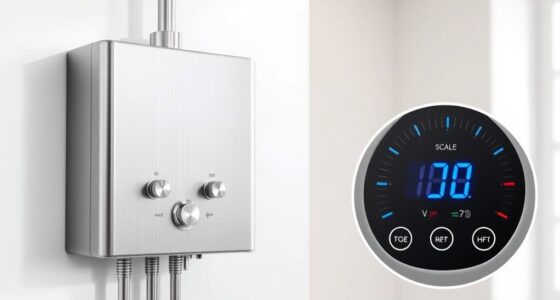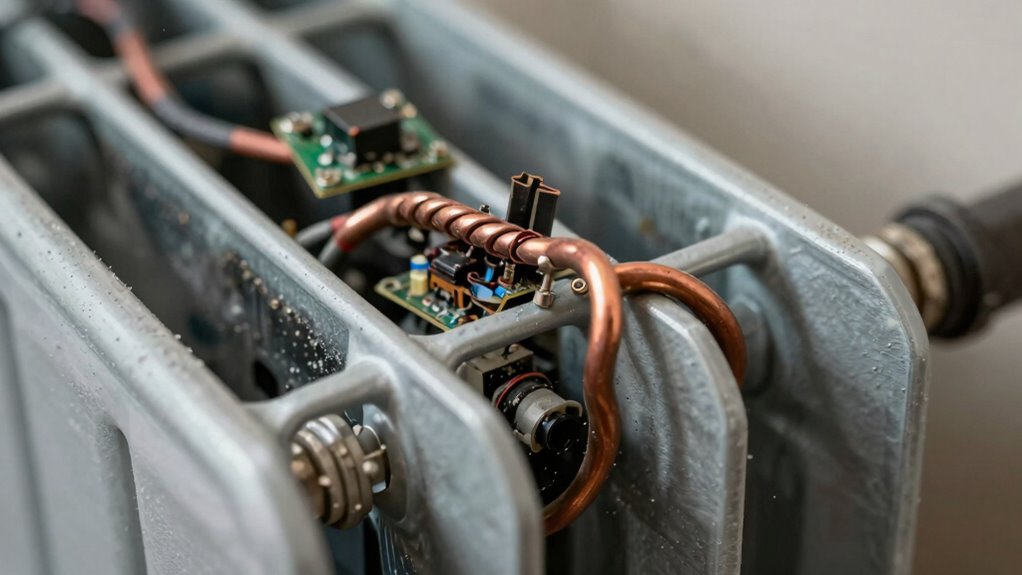

To make LSI simple, focus on identifying related terms that support your main keywords. By weaving these into your content, you can predict how it will perform in search rankings before publishing. This approach helps you craft relevant, all-encompassing content that resonates with user intent while avoiding keyword stuffing. If you want to learn more about how LSI can boost your SEO strategy and prevent failure, keep going—you’re just getting started.

Get home appliances delivered free with Prime
- Fast, free delivery on millions of items
- Prime Video, Amazon Music and more included
- Member-only deals all year
Key Takeaways
- Use LSI keywords to identify related terms that signal scaling issues early.
- Analyze semantic patterns to predict potential heater damage from mineral buildup.
- Incorporate predictive content techniques to evaluate the impact of scale formation.
- Apply semantic analysis to monitor user feedback and detect early signs of heater failure.
- Optimize content around troubleshooting LSI-related signals to prevent heater destruction.
Have you ever wondered how to effectively improve your content’s search engine ranking? The secret lies in mastering keyword optimization and ensuring content relevance. When you focus on these elements, you make it easier for search engines to understand your message and rank it higher. Keyword optimization isn’t just about stuffing keywords into your text; it’s about selecting the right keywords that match what your audience searches for and integrating them naturally. This approach helps your content appear in front of the right people at the right time, increasing your visibility and engagement. Content relevance is equally vital because it guarantees your material provides genuine value to your audience. When your content aligns with what users are looking for, it builds trust and encourages longer visits, which search engines interpret as quality signals.
Understanding LSI, or Latent Semantic Indexing, is key to elevating your SEO game. LSI involves identifying related terms and concepts that support your main keywords. Instead of relying solely on keywords, you weave in these related terms to create a richer, more detailed piece. This not only boosts your keyword optimization efforts but also enhances content relevance. When your content covers related topics and uses natural variations of your main keywords, search engines recognize it as more authoritative and relevant. This strategy helps your content rank higher in search results, especially for competitive terms, and reduces the risk of penalties for keyword stuffing. Additionally, leveraging semantic analysis ensures your content aligns more closely with user intent and search engine algorithms.
Think of LSI as a way to predict the scale of how your content will perform before it even gets published. By incorporating related keywords and semantic phrases, you’re essentially forecasting how well your content aligns with user intent and search queries. This proactive approach allows you to fine-tune your content, making it more comprehensive and aligned with what your audience seeks. It’s like having a roadmap that guides you to cover all necessary angles, ensuring your content isn’t just keyword-rich but genuinely valuable. The more you understand and utilize LSI, the better you can anticipate the impact your content will have on your target audience and search engine rankings.
In brief, mastering keyword optimization and content relevance through LSI techniques is about working smarter, not harder. You don’t need to overuse keywords; instead, focus on creating meaningful, contextually rich content that speaks directly to your audience’s needs. This approach helps you stay ahead of the algorithm updates and keeps your content competitive. By predicting the scale of your content’s performance, you set yourself up for sustained success in search engine rankings, ensuring your heater—and your website—stay warm and functional without risking a meltdown.
As an affiliate, we earn on qualifying purchases.
Frequently Asked Questions
How Does LSI Compare to Traditional Heater Maintenance Methods?
You’ll find that LSI offers a smarter approach than traditional heater maintenance by actively preventing corrosion and scale buildup. With LSI, you can improve energy efficiency, saving you money and reducing wear on your system. Unlike reactive methods, LSI predicts and addresses issues early, keeping your heater running smoothly longer. It’s a proactive solution that enhances performance and extends the lifespan of your equipment.
Can LSI Prevent All Types of Heater Scale Buildup?
You’ll be glad to know that LSI can prevent most types of heater scale buildup, which accounts for up to 80% of heater failures. By using advanced scale prevention techniques, you markedly extend your heater’s longevity. While it’s highly effective, no system can prevent every possible type of scale. Still, LSI offers a proactive approach that minimizes damage and keeps your heater running smoothly longer.
What Are the Initial Costs Associated With Implementing LSI?
The initial costs of implementing LSI include a cost analysis of the equipment or treatment system, which varies based on your heater size and specific needs. You’ll need an upfront investment for installation, which can range from a few hundred to several thousand dollars. While the upfront costs might seem high, they often save money long-term by preventing costly scale buildup and reducing maintenance expenses.
Is LSI Suitable for All Heater Sizes and Types?
LSI is suitable for most heater sizes and types, but you should check heater compatibility first. It’s effective for scaling prevention across various systems, helping you avoid costly damage. Smaller or specialized heaters might need specific LSI formulations, so consult your manufacturer or a professional. Overall, LSI offers a versatile solution to protect your equipment, ensuring efficient operation and reducing maintenance costs over time.
How Often Should LSI Systems Be Checked or Serviced?
A stitch in time saves nine, so you should check your LSI system at least once every six months. Regular maintenance frequency is key to effective scale prevention, ensuring your heater runs smoothly and avoids costly damage. If you notice any performance issues or mineral buildup, don’t delay—schedule a service promptly. Keeping up with maintenance helps catch problems early and extends your heater’s lifespan.
As an affiliate, we earn on qualifying purchases.
Conclusion
By understanding how to predict scale buildup, you can catch problems before they spiral out of control. Don’t wait until your heater’s working overtime or breaks down completely—nip it in the bud now. Think of it as steering clear of a storm before it hits; a little prevention goes a long way. Keep an eye on your system, and you’ll avoid costly repairs, keeping your heater running smoothly and saving you headaches down the road.
As an affiliate, we earn on qualifying purchases.
As an affiliate, we earn on qualifying purchases.
NFL season / tailgating Picks
team gear
As an affiliate, we earn on qualifying purchases.