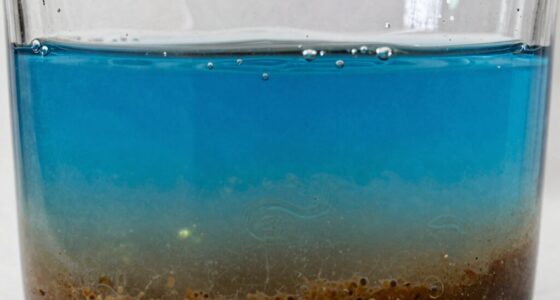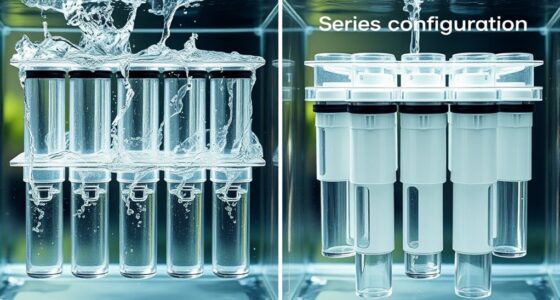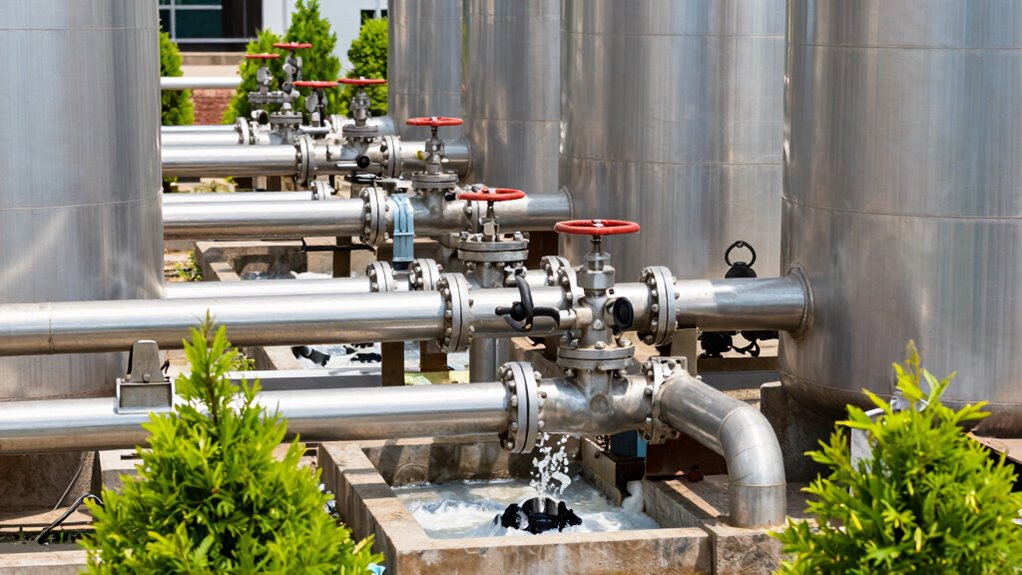

To treat iron and sulfur in your well water effectively, follow a proven sequence: start with oxidation using chlorination or potassium permanganate to convert dissolved minerals into insoluble forms, making them easier to filter out. Next, control microbial activity with regular chlorination to prevent biofilm buildup. Finally, use filtration and aeration systems to remove oxidized particles and maintain water clarity. Mastering these stages will help you achieve cleaner, odor-free water—more details await if you keep exploring.
Key Takeaways
- Implement oxidation using chlorine or potassium permanganate to convert ferrous iron and hydrogen sulfide into insoluble forms.
- Use filtration systems like backwashing filters or oxidizing filters to remove oxidized minerals and particles.
- Target microbial activity by regularly chlorinating to control iron and sulfur bacteria, preventing biofilm formation.
- Incorporate aeration or oxidizing filters for continuous microbial control and oxidation of dissolved minerals.
- Conduct routine water testing and system maintenance to optimize treatment effectiveness and prevent staining and odors.

Iron and sulfur in well water can cause staining, bad odors, and corrosion, making water treatment essential. When these elements are present, they often create unsightly stains on fixtures and laundry, foul smells that linger in your home, and corrosion that damages pipes and appliances. To effectively address these issues, a well-planned treatment process should focus on controlling oxidation and managing microbial activity. These steps are crucial because iron and sulfur bacteria thrive in well environments, converting dissolved minerals into insoluble forms that lead to staining and odors.
Iron and sulfur in well water cause stains, odors, and corrosion, requiring proper treatment to protect your plumbing and fixtures.
The first stage involves oxidation control. Here, you’ll want to introduce oxidizing agents, such as chlorine or potassium permanganate, to convert dissolved ferrous iron and hydrogen sulfide gas into insoluble ferric iron and elemental sulfur. This process makes it easier to remove these contaminants through filtration. Proper oxidation not only clears up water clarity but also prevents staining and reduces odors. Using an oxidizer at this stage is essential because it ensures the iron and sulfur compounds are transformed into forms that can be easily filtered out, setting a clean foundation for subsequent treatment steps.
Simultaneously, microbial management plays a vital role. Iron and sulfur bacteria are naturally occurring microbes that feed on these minerals, producing waste products that cause staining, odors, and corrosion. These bacteria form biofilms inside the well, pipes, and fixtures, making removal more complicated if left unchecked. Regular disinfection with chlorination helps keep microbial populations under control. Maintaining proper chlorine levels discourages bacterial growth, preventing biofilm formation and minimizing the production of undesirable byproducts. Microbial management also involves routine maintenance and monitoring, ensuring bacteria don’t re-establish and compromise your water quality.
Once oxidation control and microbial management are in place, you can move forward with filtration systems designed to remove the oxidized particles and biofilm remnants. Backwashing filters, for example, help keep the system clean and effective. In some cases, additional treatment methods like aeration or oxidizing filters are recommended for ongoing control. It’s important to test your water regularly to adjust treatment parameters as needed, ensuring the processes continue to work efficiently over time. Additionally, understanding the stages of water treatment can help you optimize your system’s effectiveness and longevity.

The Sulfur Eliminator Deluxe Well Water Filter System, Eliminate Rotten Egg & Sulfur Smell, Remove Iron & Sediments, Works on Any Size Well 4" & Above
- Eliminates Rotten Egg Smell: Removes sulfur odors from well water
- Compatible with Any Well Size: Works on wells 4 inches and above
- Lifetime Warranty Included: Warranty valid with annual filter replacement
As an affiliate, we earn on qualifying purchases.
As an affiliate, we earn on qualifying purchases.
Frequently Asked Questions
How Long Does Each Stage of Treatment Typically Take?
Each stage of well treatment usually takes about 1 to 2 days, but it can differ depending on your water quality and corrosion prevention needs. You should schedule water testing before and after each stage to monitor progress and guarantee effective sulfur removal. Keep in mind that some steps may require additional time if issues like iron build-up are severe, so plan accordingly for a thorough, safe treatment process.
Are There Environmental Impacts Associated With Iron/Sulfur Well Treatment?
Environmental risks are associated with iron/sulfur well treatment, especially if not properly managed. You should take steps to prevent contamination of groundwater and surrounding soil by handling chemicals carefully and monitoring the process. While the treatment aims to reduce iron and sulfur issues, improper application can cause environmental impacts. By following best practices and prevention measures, you can minimize risks and protect the environment effectively.
Can Treatment Methods Vary Based on Water Source?
Yes, treatment methods can vary based on your water source because of source variability. You’ll need to customize your treatment approach depending on the specific contaminants and water chemistry. For example, well water with high iron levels may require different filtration or oxidation processes compared to surface water sources. Adjusting your treatment guarantees effective removal of iron and sulfur, minimizing environmental impact and ensuring safe, clean water tailored to your source’s unique characteristics.
What Are the Long-Term Maintenance Requirements?
You need to perform regular maintenance to keep your well system functioning properly. This includes monitoring corrosion prevention measures and adjusting chemical dosage as needed, based on water quality tests. You should also inspect for buildup or corrosion, clean filters, and guarantee treatment chemicals are replenished timely. Consistent upkeep helps prevent system failures, extends equipment lifespan, and maintains water quality over the long term.
Is Professional Consultation Needed for All Well Types?
Yes, you should consult professionals for all well types because each has unique considerations. Well type considerations influence treatment customization, guaranteeing effective and safe solutions. A professional assesses your well’s specific needs, helping you choose the right treatment approach. This personalized guidance minimizes risks, optimizes results, and ensures long-term well health. Don’t skip expert advice—proper consultation is essential for tailored, effective treatment regardless of your well type.

AIO Air Injection Oxidizing Well Water Filter System | 12" x 52" | Iron, Sulfur, and Manganese Oxidizing Water Filter for Whole House Filtration by Oceanic Water Systems
- High Flow Capacity: Suitable for large homes with 3+ bathrooms
- Effective Contaminant Removal: Removes iron, sulfur, manganese, and more
- Long-lasting Filter Media: Media lasts approximately 5 years
As an affiliate, we earn on qualifying purchases.
As an affiliate, we earn on qualifying purchases.
Conclusion
You’ve seen how following the proven stage sequence transforms troublesome iron and sulfur issues. By balancing the process with patience and precision, you empower your well to work wonders. Don’t dodge the intimidating; plunge in with dedication and determination. With the right routine, you’ll restore clarity, curb contamination, and create a clean, confident water supply. Embrace the effort, energize your environment, and enjoy the enduring excellence that expert treatment delivers.

The Sulfur Eliminator Iron Buster Replacement Well Water Filter, Designed For Sulfur Eliminator Deluxe, Can be Used with Any Standard Whole House Canister System, Specialized Iron & Sediment Filter
- Designed for Sulfur Eliminator Deluxe: Compatible with Sulfur Eliminator Deluxe and standard systems
- Advanced Iron and Sediment Removal: Eliminates iron, rust, sediment, and 50 impurities
- Enhances Water Purity: Maintains optimal performance of filtration systems
As an affiliate, we earn on qualifying purchases.
As an affiliate, we earn on qualifying purchases.
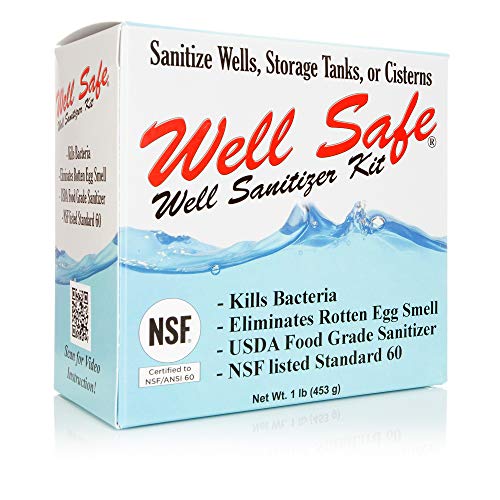
WELL SAFE Well Sanitizer Kit for Well Water Treatment & Sulfur Smell
- Easy to Use: Includes DIY instructions for quick setup
- Odor Removal: Kills bacteria to eliminate sulfur smell
- Cost-Effective: No costly filters or maintenance needed
As an affiliate, we earn on qualifying purchases.
As an affiliate, we earn on qualifying purchases.