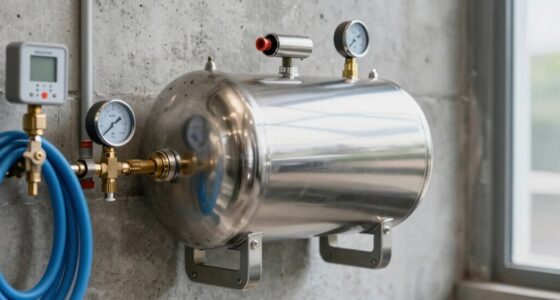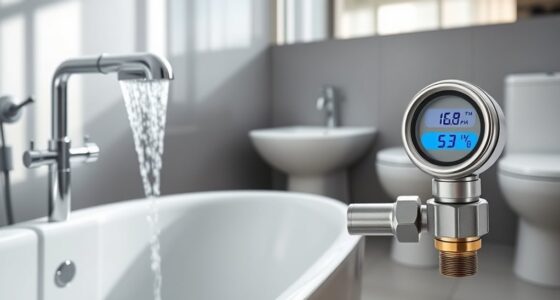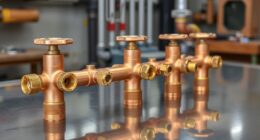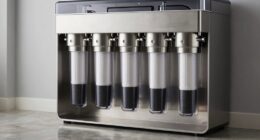

To size your whole-house filter based on bathrooms, a simple rule of thumb is to match the filter’s capacity to the number of bathrooms, as it reflects fixture count and water demand. Typically, more bathrooms mean a larger filter to handle higher flow rates and maintain water quality. Ensuring proper sizing prevents pressure drops and system inefficiencies. Keep in mind that considering flow rate and installation needs helps optimize performance—continue exploring for more detailed guidance.

Get home appliances delivered free — and shop member deals
- Fast, free delivery on millions of items
- Access to Prime Big Deal Days deals on October 6–7
- Prime Video, Amazon Music and more included
Key Takeaways
- The number of bathrooms indicates household water demand, guiding filter size selection.
- A common rule is to size the filter based on the total number of bathrooms for adequate flow capacity.
- Larger filters are recommended for homes with more bathrooms to handle higher peak flow rates.
- Proper sizing ensures consistent water pressure and quality across all fixtures.
- Always consider plumbing setup and space requirements when choosing filter size based on bathroom count.
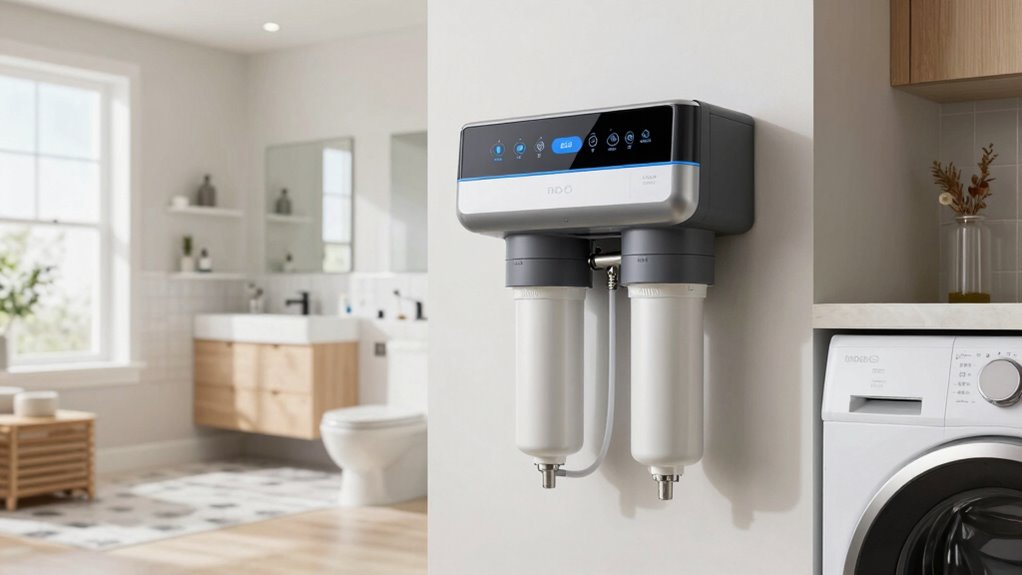
Are you unsure how to choose the right size for your whole-house filter? It’s a common concern, especially when you’re trying to balance effectiveness with budget. The key is understanding that the size of your filter should correspond to the number of bathrooms in your home. This simple rule of thumb helps ensure you have enough capacity to handle your household’s water demands without over- or under-sizing. When selecting a filter, consider the flow rate needed for your entire plumbing system, which is directly affected by the number of bathrooms. More bathrooms generally mean more fixtures and higher water usage, so larger filters are necessary to prevent pressure drops and maintain consistent water quality.
Installation considerations are critical when sizing your whole-house filter. You want to position it in a location that’s accessible for maintenance but also minimizes pressure loss. Remember, a larger filter may require more space and might have different connection sizes, so double-check your plumbing setup before purchasing. Proper installation ensures that the filter functions efficiently and that water flows smoothly through the system, reducing stress on your pipes and appliances. If you’re unsure about the right size, it’s always wise to consult with a professional plumber or water treatment specialist—they can evaluate your home’s specific needs and recommend the most suitable filter size.
Maintenance tips are equally important once your filter is installed. Regularly inspecting and replacing the filter cartridge keeps your water quality high and prolongs the lifespan of the unit. A larger filter typically holds more debris and contaminants, meaning it might not need replacing as frequently as smaller ones, but you still need to follow manufacturer guidelines. Keep an eye on the pressure gauge; a rise in pressure often indicates the filter is clogged and needs servicing. Also, cleaning the filter housing periodically helps prevent buildup and ensures ideal flow. Proper maintenance not only extends the life of your filter but also guarantees your household continues to enjoy clean, safe water.
whole house water filter 2 bathrooms
As an affiliate, we earn on qualifying purchases.
As an affiliate, we earn on qualifying purchases.
Frequently Asked Questions
How Do Water Quality Issues Affect Filter Sizing?
Water quality issues, like high mineralization or pH imbalance, impact filter sizing because they demand more robust filtration. If your water has heavy mineral content, you’ll need a larger filter to handle mineral deposits and prevent clogging. Similarly, pH adjustment features might require specific filter media. Addressing mineralization and pH levels guarantees your filter’s capacity matches your water’s needs, leading to cleaner water and longer-lasting equipment.
Can Multiple Filters Be Combined for Larger Homes?
Ever wonder if combining filters works for larger homes? Yes, you can connect multiple filters, but it affects filter lifespan and installation costs. While it may seem cost-effective, remember that more filters can mean more maintenance and complexity. Properly sizing and installing them guarantees better water quality without unnecessary expenses. Wouldn’t you prefer a tailored solution that balances efficiency and durability for your home’s water system?
What Maintenance Is Required for Whole-House Filters?
You need to regularly maintain your whole-house filter by replacing it according to the manufacturer’s recommendations, usually every 3 to 6 months. Additionally, you should flush the system periodically to prevent buildup and guarantee ideal performance. Check for signs of clogging or reduced water flow, and replace the filter promptly when needed. Proper maintenance keeps your system running efficiently and ensures clean, safe water for your entire home.
How Does Pipe Material Impact Filter Choice?
Pipe material impacts your filter choice through pipe compatibility and material durability. You need to select a filter that fits your pipe type, whether it’s copper, PVC, or PEX, to guarantee proper connection. Durable materials like copper or PEX can handle higher pressure and temperature, making them suitable for certain filters. Always verify your pipe material and compatibility before installing a filter to prevent leaks and ensure ideal performance.
Are There Eco-Friendly Filter Options Available?
You’ll be glad to know eco-friendly options exist for whole-house filtration. These sustainable filters use natural or biodegradable materials, reducing environmental impact. They often feature advanced technology to maximize efficiency while minimizing waste. By choosing eco-friendly options, you support sustainable filtration practices that protect your home’s water quality and the planet. Look for filters labeled as biodegradable, reusable, or made from eco-conscious materials to make a positive difference.
large capacity water filtration system
As an affiliate, we earn on qualifying purchases.
As an affiliate, we earn on qualifying purchases.
Conclusion
Think of sizing your whole-house filter like choosing the right size shoes—you want a perfect fit to keep things comfortable. I once underestimated my filter needs, and my water pressure dropped faster than a shoe slipping off. Now, I follow the simple rule of thumb, and everything runs smoothly, just like a well-fitted shoe. When you size your filter correctly, you’re ensuring clean water flows effortlessly, keeping your home happy and healthy.
install water filter for multiple bathrooms
As an affiliate, we earn on qualifying purchases.
As an affiliate, we earn on qualifying purchases.
water filter with high flow rate
As an affiliate, we earn on qualifying purchases.
As an affiliate, we earn on qualifying purchases.
NFL season / tailgating Picks
team gear
As an affiliate, we earn on qualifying purchases.