You should replace the resin in your water softener when you notice decreased effectiveness, like harder water, higher salt use, and more frequent regeneration cycles. To do this, turn off the system, relieve pressure, and carefully remove the old resin from the tank. Choose high-quality resin, pour it evenly, reconnect everything securely, and run a regeneration cycle to condition the new resin. Keep an eye on signs of resin wear to ensure your system stays efficient—learn more about proper replacement steps below.

Get home appliances delivered free with Prime
- Fast, free delivery on millions of items
- Prime Video, Amazon Music and more included
- Member-only deals all year
Key Takeaways
- Replace resin when water softness declines, hardness increases, or regeneration needs become more frequent.
- Turn off the system, relieve pressure, and disconnect the tank before removing old resin.
- Carefully pour new resin into the tank without overpacking, ensuring even distribution.
- Reconnect the system securely, then run a regeneration cycle immediately to condition the new resin.
- Maintain regular regeneration and monitor water quality to extend resin lifespan and prevent early replacement.
Have you noticed your water softener isn’t working as well as it used to? You might be dealing with a resin that’s lost its effectiveness. The resin in your water softener plays a vital role in removing minerals like calcium and magnesium, which cause hard water. Over time, however, the resin’s lifespan diminishes. This means it can’t trap minerals as efficiently, leading to decreased water quality and the need for more frequent regeneration cycles. Understanding the resin’s replacement frequency is essential to keep your system running smoothly. Typically, the resin in a water softener can last anywhere from 5 to 10 years, but this depends on various factors such as water usage, water quality, and maintenance habits. If you notice your water isn’t softening as it once did, it could be time to think about replacing the resin.
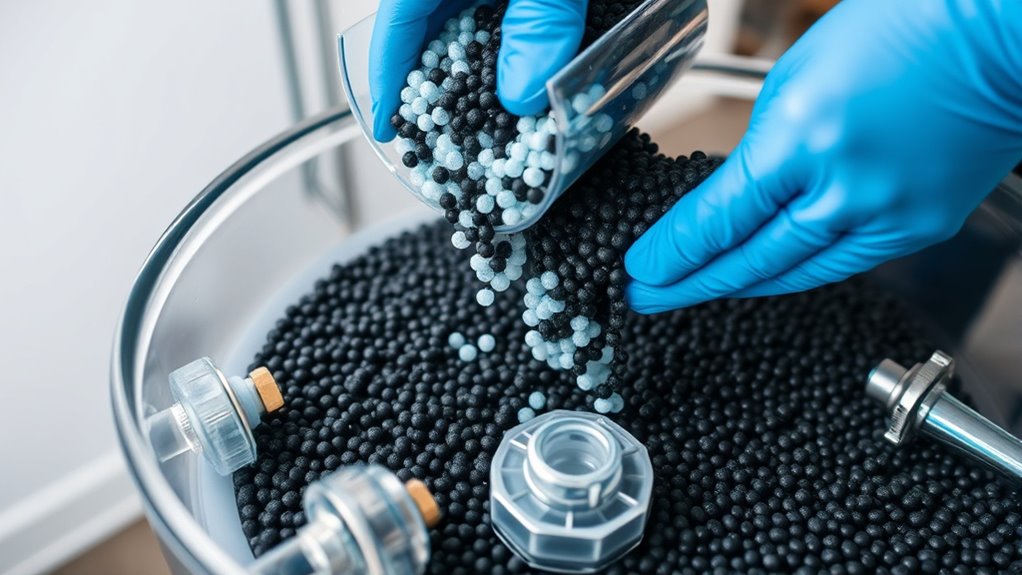
The process of resin replacement isn’t complicated, but it does require some preparation. First, you’ll want to confirm that the resin has indeed reached the end of its lifespan. Signs include a rise in the hardness of your water, increased salt consumption, or the need for more frequent regeneration cycles. Once you’re confident, turn off your water softener and relieve the pressure by running a rinse cycle or opening a nearby faucet. Next, disconnect the tank and carefully remove the old resin. You might see resin beads that look worn or clumped together, which indicates deterioration. When replacing the resin, choose a high-quality, compatible resin product suited for your system. Proper maintenance, such as regular regeneration and avoiding excessive iron or manganese levels, can also help extend the resin’s lifespan. Pour the new resin into the tank, making sure it’s evenly distributed and not packed too tightly. Reconnect everything and turn your water softener back on. It’s a good idea to run a regeneration cycle immediately after replacing the resin to make sure the new beads are properly conditioned and working at full capacity. Keep in mind that the resin’s lifespan can be extended with proper maintenance, such as regular regeneration and avoiding excessive iron or manganese levels that can shorten resin life. By staying attentive to signs of resin fatigue and sticking to recommended replacement intervals, you’ll maintain top-notch softening performance and prolong the efficiency of your water softener. Remember, timely resin replacement not only improves water quality but also helps prevent costly repairs or system failures down the line. Additionally, choosing a resin with high ion exchange capacity can enhance the overall effectiveness and longevity of your system.
Frequently Asked Questions
How Often Should Resin Be Replaced in a Water Softener?
You should replace the resin every 10 to 15 years, depending on its lifespan and your water usage. Regularly check for signs like decreased softening efficiency or increased salt consumption, which indicate it’s time for replacement. Proper maintenance and monitoring guarantee ideal performance. Keep an eye on resin condition, and plan for replacement within this timeframe to maintain soft water quality and prevent system issues.
Can I Replace Resin Myself or Hire a Professional?
Replacing resin in your water softener is like tinkering with a delicate musical instrument—you could be perfectly in tune or cause a discord. While DIY challenges exist, you might prefer professional assistance to make certain the job’s done right, avoiding potential mishaps. If you’re comfortable with plumbing and follow instructions carefully, you can tackle it yourself. Otherwise, calling in a professional guarantees your water stays soft and your system runs smoothly.
What Signs Indicate Resin in My Tank Needs Replacing?
You’ll know your resin needs replacing if you notice signs of fouling, like a decrease in water softening efficiency or increased iron stains. Resin lifespan typically ranges from 10 to 15 years, but fouling or clogging can shorten this. If your water feels slimy, tastes off, or your softener isn’t working well, it’s time to check the resin. Regular maintenance helps prevent premature resin replacement.
Is Resin Replacement Costly Compared to Installing a New System?
Resin replacement is generally less costly than installing a new system, especially if you do a DIY replacement. The cost comparison shows that resin replacement involves purchasing resin and possibly some tools, which is cheaper than buying a whole new water softener. If you’re comfortable with basic DIY tasks, replacing the resin yourself can save you money, but consider professional help if you’re unsure to avoid costly mistakes.
Are There Different Types of Resin Suitable for Specific Water Conditions?
Imagine discovering your water softener isn’t working as expected. Yes, there are different resin types designed for specific water conditions. You might need high-capacity resin for hard water or specialty resins for iron removal. Choosing the right resin guarantees peak performance and longevity. So, assess your water’s unique qualities carefully—matching the resin type to your water conditions is vital for the best results.
Conclusion
Eventually, even the best resin needs a little refresh to keep your water softening smoothly flowing. Think of it as giving your system a gentle nudge to stay happy and efficient. When you notice the water isn’t as soft or your salt usage increases, it’s a sign that it might be time for a little upgrade. With a simple swap, you’ll enjoy silky water again, making your daily routine feel just a little bit more special.
Columbus Day / Indigenous Peoples' Day Picks
long weekend sales
As an affiliate, we earn on qualifying purchases.