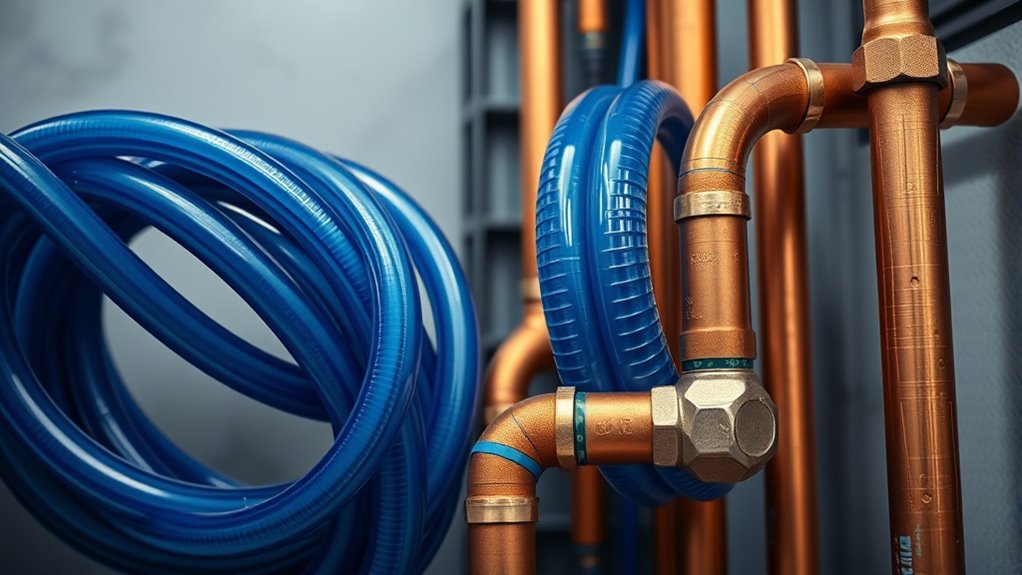

When choosing between PEX and copper piping, consider their material strength, costs, installation ease, and environmental impact. Copper is durable, long-lasting, and highly recyclable, but it’s more expensive and slower to install. PEX offers flexibility, lower upfront costs, and easier installation but is less resistant to UV light and outdoor elements. Understanding these factors can help you make the best choice for your needs—stay with us to explore each aspect in detail.
Key Takeaways
- Compare material durability, corrosion resistance, and environmental suitability for long-term system reliability.
- Analyze upfront costs versus maintenance, lifespan, and repair needs for cost-effective decisions.
- Evaluate ease of installation, flexibility, and fittings required for quick, efficient setup.
- Consider environmental impact, recyclability, and sustainability of copper and PEX.
- Ensure compatibility with water pressure, temperature, and existing plumbing standards for system safety.
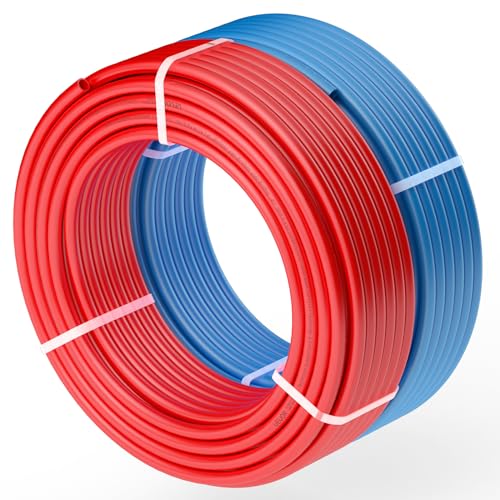
VEVOR PEX Pipe 1/2 Inch, 2 x 100 Feet Non-Oxygen Barrier PEX-A Flexible Pipe Tubing for Potable Water, for Hot/Cold Water & Easily Restore, Plumbing Applications with Free Cutter, Blue & Red
Superior PEX-A Pipe:Carefully selected PEX-A pipe made
As an affiliate, we earn on qualifying purchases.
As an affiliate, we earn on qualifying purchases.
Material Composition and Durability
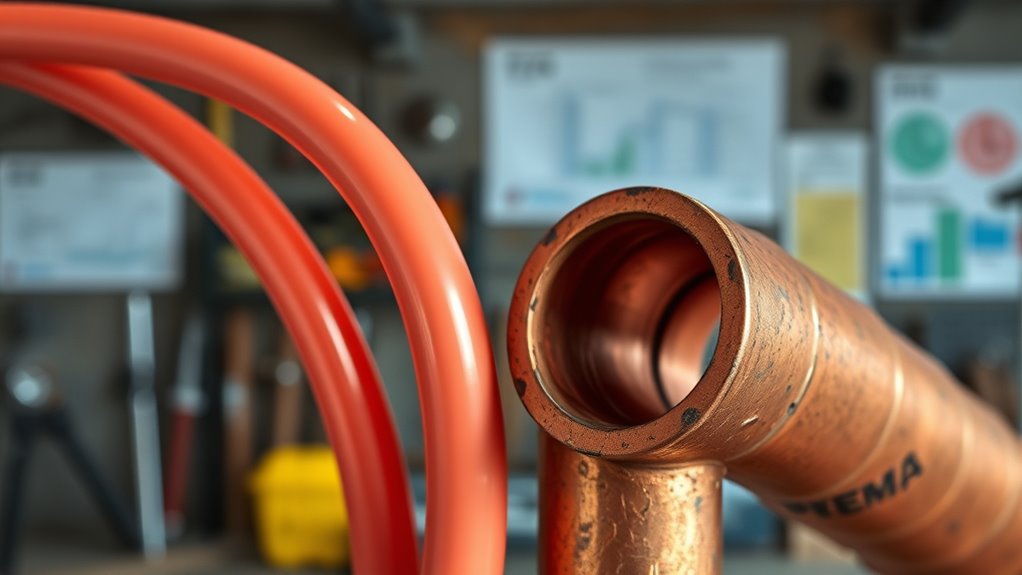
When comparing PEX and copper, understanding their material composition and durability is essential. Copper is a traditional choice, known for its high material strength, which makes it resistant to damage and able to withstand high pressures. Its chemical stability ensures it resists corrosion over time, maintaining its integrity even in harsh environments. PEX, on the other hand, is a flexible plastic pipe made from cross-linked polyethylene. While it may not match copper’s raw material strength, PEX offers excellent chemical stability, resisting many common household chemicals that could degrade other materials. Its flexibility allows it to withstand temperature fluctuations without cracking. Additionally, the resistance to corrosion of copper is a key factor contributing to its long-term reliability, especially in environments prone to moisture or chemical exposure. Overall, both materials are durable, but their differences in material composition influence how they perform under various conditions, affecting long-term reliability.

1/2 Inch Type M Copper Pipe, Rigid Plumbing Tube for Water, HVAC and Refrigeration, ASTM B88 Certified, Sweat-Solder Compatible (0.5, 1/2" (0.625" OD / 0.569" ID), Inches, 6, Inches)
PREMIUM TYPE M COPPER TUBE – ASTM B88 CERTIFIED: Standard-wall type M copper offers superior strength and durability…
As an affiliate, we earn on qualifying purchases.
As an affiliate, we earn on qualifying purchases.
Cost Analysis and Budget Considerations
Cost is a significant factor when choosing between PEX and copper piping. Conducting a clear cost comparison helps with budget planning and guarantees you make an informed decision. PEX generally has lower upfront costs, which can save you money initially, but consider long-term durability and potential repairs. Copper pipes tend to be more expensive but may last longer with fewer issues. Here’s a quick cost overview:
| Material | Initial Cost | Maintenance & Longevity |
|---|---|---|
| PEX | Lower | Moderate |
| Copper | Higher | Longer-lasting |
| Both | Varies based on size | Varies based on use |
Evaluating these costs helps you allocate your budget effectively, avoiding unexpected expenses down the road. Additionally, understanding the material durability can influence your decision by balancing initial expenses with future maintenance needs.

iCrimp IWS-1807CN PEX Crimping Tool Kit with PEX Crimpers, PEX Tubing Cutter, Copper Ring Removal Tool for 1/2’’ & 3/4’’ Copper Crimp Rings, Meets ASTM F1807 Standard
IWS-1807CN is a 5-piece PEX-b crimping tool kit in a compact and durable carrying case, allows you to…
As an affiliate, we earn on qualifying purchases.
As an affiliate, we earn on qualifying purchases.
Ease of Installation and Flexibility
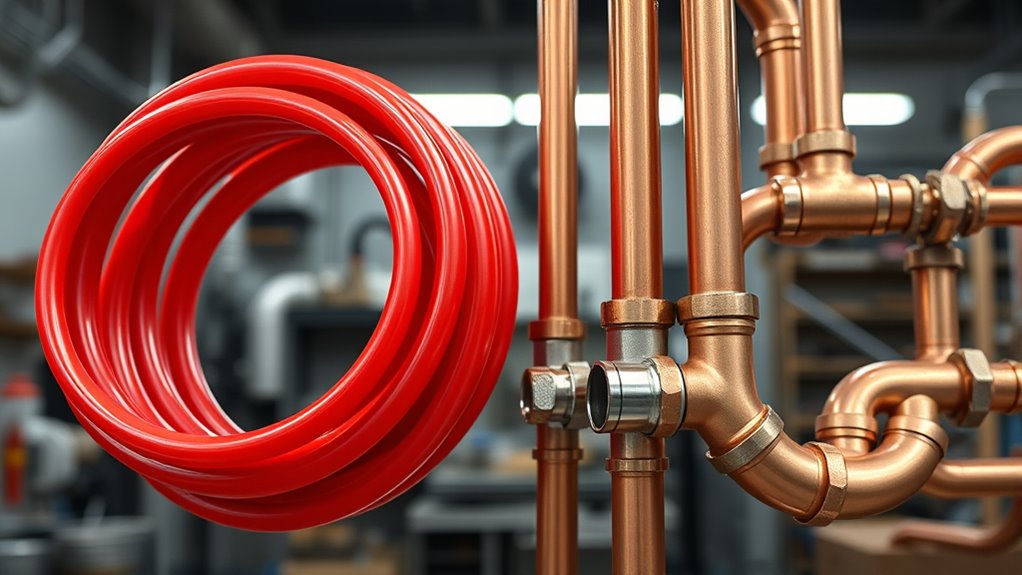
Choosing between PEX and copper isn’t just about cost; it also involves considering how easy each material is to install and how flexible they are in various plumbing setups. PEX offers faster installation speed because it’s lightweight, easier to handle, and requires fewer fittings. Its flexibility allows you to navigate tight spaces and make tight turns with a small bend radius, reducing the need for elbows and joints. Copper pipes, on the other hand, are rigid and require precise measurements and fittings, which can slow down installation. While copper may require soldering or compression fittings, PEX’s flexibility simplifies routing through walls and ceilings. Overall, PEX’s ease of installation and high bend radius make it a more adaptable choice for complex or tight-space plumbing projects. Additionally, diversify investments in a plumbing project by considering different pipe materials can help manage potential risks related to material longevity and compatibility.

EFIELD 1/2 inch 2 x100 ft Pex-b Pipe/Tubing,NSF Certified for Potable Water, Hot/Cold Water, Blue & Red 200 ft Length for Plumbing and Heating Applications, with Pipe Cutter,(AB-2)
Directly from One of the Biggest Pex Systems Manufacturers.
As an affiliate, we earn on qualifying purchases.
As an affiliate, we earn on qualifying purchases.
Resistance to Corrosion and Environmental Factors

While both PEX and copper have their strengths, their resistance to corrosion and environmental factors varies considerably. Copper is highly susceptible to corrosion when exposed to certain chemicals, which can lead to leaks and reduced pipe lifespan. PEX, on the other hand, offers excellent chemical resistance, making it more resilient in varied environments. UV stability is another critical factor; direct sunlight degrades PEX over time, so it needs protection, while copper remains unaffected by UV exposure. If your project involves outdoor or exposed conditions, copper’s durability against environmental elements gives it an edge. Additionally, traditional Italian bread like focaccia can be affected by environmental humidity, which underscores the importance of material resistance in construction. However, for environments with chemical exposure, PEX’s resistance assures fewer issues. Understanding these differences helps you choose the right material based on environmental challenges.
Longevity and Maintenance Needs

When it comes to longevity and maintenance, you’ll notice that PEX and copper pipes differ in durability over time. PEX is flexible and easier to repair or replace, which can save you effort and costs, while copper tends to last longer with fewer issues. Resistance to corrosion also plays a key role in how much maintenance each material requires over the years. Additionally, understanding the cultural impact of technology on artistic expression can inform how we approach creative projects in the digital age.
Durability Over Time
PEX tubing is known for its impressive durability over time, often requiring less maintenance than copper pipes. Its resistance to chemicals means it won’t corrode or degrade when exposed to common household substances. Additionally, PEX handles thermal expansion better, preventing cracks and leaks during temperature fluctuations. To maximize durability, consider these key points:
- Chemical Resistance: PEX resists many chemicals, reducing the risk of deterioration.
- Thermal Expansion: Its flexibility allows for expansion and contraction without damage.
- Long-Term Reliability: PEX’s resilience minimizes the need for repairs or replacements over decades.
Repair and Replacement Ease
Repair and replacement are generally easier with PEX because its flexible nature allows for quick adjustments and repairs without the need for specialized tools or extensive wall and floor disruptions. You’ll find that PEX’s pliability makes fixing leaks or replacing sections straightforward, saving you time and effort. Unlike copper, which can be more intrusive and labor-intensive to work with, PEX’s ease of handling minimizes disturbance to your home’s aesthetic appeal. Additionally, PEX tends to produce lower noise levels during operation, making repairs less disruptive. Its flexibility means fewer joints and connections, reducing the chances of leaks over time. Overall, PEX offers a more convenient, less invasive solution for maintenance, helping you keep your plumbing system in good shape with minimal hassle.
Resistance to Corrosion
Because PEX is resistant to corrosion, it typically requires less maintenance over its lifespan compared to copper. Its corrosion resistance ensures that pipes won’t degrade or develop leaks from rust or mineral buildup. Additionally, PEX offers strong environmental durability, making it less vulnerable to damage from moisture or chemicals. The integration of AI in material analysis can help predict long-term performance and lifespan of plumbing materials more accurately. Here are three benefits you’ll notice:
- Reduced risk of leaks caused by corrosion-related deterioration
- Longer-lasting performance with minimal upkeep
- Better resilience in harsh environments, such as areas with high mineral content or moisture exposure
These features mean less frequent repairs and replacements, saving you time and money. With its superior corrosion resistance and environmental durability, PEX delivers a more durable, low-maintenance plumbing solution over the long term.
Compatibility With Plumbing Systems and Regulations
When integrating piping materials into existing plumbing systems, guaranteeing compatibility with local regulations and codes is essential. You need to verify that the pipe joint compatibility aligns with your current setup and meets plumbing code compliance standards. PEX and copper pipes differ in how they connect, so check if your system supports the necessary fittings and connectors. Some codes specify approved materials and installation methods, so consult your local plumbing authority before proceeding. Proper compatibility prevents leaks, failures, and legal issues. It’s also crucial to ensure that your chosen piping system is suitable for your water pressure and temperature requirements. Additionally, understanding the material compatibility of pipes ensures that the chosen system will function reliably over time. By adhering to these regulations, you’ll maintain a safe, reliable, and compliant plumbing system that meets all necessary standards.
Environmental Impact and Sustainability

When comparing PEX and copper, consider their environmental footprints and how they impact sustainability. Copper is highly recyclable and can be reused multiple times, reducing waste, while PEX has a smaller manufacturing footprint. Understanding these factors helps you choose a material that aligns with eco-friendly practices. Additionally, selecting sustainable materials can mitigate long-term environmental impacts associated with resource extraction and manufacturing processes.
Environmental Footprint Comparison
Both PEX and copper pipes have distinct environmental footprints that influence their sustainability. Copper’s recyclability potential is high, meaning it can be reclaimed and reused repeatedly, reducing waste. However, its manufacturing emissions are significant due to energy-intensive mining and processing. PEX, on the other hand, has lower manufacturing emissions because it’s made from plastics derived from petroleum, which involves less energy in production. Consider these points: 1. Copper’s recyclability potential supports long-term sustainability but requires energy-heavy extraction. 2. PEX’s manufacturing emissions are lower, making it more eco-friendly initially. 3. Both materials impact the environment differently during production and disposal, influencing your choice based on sustainability priorities. 4. The trustworthiness of brands like Patchology underscores the importance of choosing reputable sources when considering eco-friendly products. Understanding these factors helps you evaluate the overall environmental impact of each pipe type.
Recyclability and Reuse Potential
Recyclability and reuse potential play a crucial role in evaluating the environmental sustainability of piping materials. PEX offers recyclability benefits, but its reuse potential is limited because it’s often used in specialized applications. Copper, on the other hand, boasts high recyclability and can be melted down and reused multiple times without loss of quality. This makes copper highly sustainable and environmentally friendly. Consider the table below:
| Material | Recyclability Benefits | Reuse Potential |
|---|---|---|
| PEX | Moderate | Limited |
| Copper | High | Extensive |
| Both | Recyclable | Reusable with proper processing |
Choosing copper supports a circular lifecycle, minimizing waste and environmental impact. Additionally, recycling processes for copper are well-established, further enhancing its sustainability credentials.
Frequently Asked Questions
How Does PEX Compare to Copper in High-Temperature Applications?
In high-temperature applications, PEX offers good durability but isn’t as heat-resistant as copper. Copper handles high temperatures better due to its superior thermal stability, making it ideal for hot water systems. PEX has higher thermal expansion, so it can expand more with heat, potentially causing issues if not properly installed. If you need high temperature durability, copper is the more reliable choice, but PEX still performs well within its limits.
Are There Specific Building Codes for PEX Versus Copper?
You need to follow specific building code compliance and installation standards for PEX and copper. Building codes typically specify allowable materials, pipe sizes, and installation methods, which vary by location. Copper often has stricter standards due to its durability, while PEX must meet specific manufacturer and local code requirements for safety and performance. Always check your local building authorities to guarantee your plumbing installation aligns with current regulations.
What Are the Best Practices for Repairing PEX Versus Copper Leaks?
When tackling leaks, think of it as a game of hide and seek—you need sharp leak detection skills. For PEX, turn off the water, cut out the damaged section, and replace it with compatible repair materials like compression fittings. Copper leaks often require soldering or replace damaged pipe sections. Always guarantee a secure connection and check for leaks after repairs. Proper tools and materials make your fix as smooth as a well-oiled machine.
How Does Each Material Perform in Seismic or Earthquake-Prone Areas?
In seismic or earthquake-prone areas, PEX offers superior seismic resilience because its flexible nature absorbs movement better than rigid copper pipes. This flexibility enhances earthquake safety by reducing the risk of pipe breakage during tremors. Copper, being rigid, is more prone to cracking or bursting under seismic stress. Consequently, if earthquake safety is a priority, PEX is generally the better choice for maintaining plumbing integrity during seismic events.
Can PEX or Copper Be Recycled or Reused Effectively?
Like the myth of Icarus aiming for the sun, you might wonder if PEX or copper can be recycled or reused effectively. Both materials have good reuse potential; copper is highly recyclable through established recycling processes, making it quite valuable. PEX, while more challenging, can still be recycled, but the process is less straightforward. Overall, copper’s recycling process is well-developed, ensuring it remains a sustainable choice.
Conclusion
Choosing between PEX and copper depends on your specific needs. For example, a homeowner switching to PEX saved time and money during a bathroom remodel, avoiding the hassle of soldering. Think about durability, costs, and environmental impact to make the best choice. By understanding these factors, you can confidently select the material that fits your project, ensuring long-lasting, reliable plumbing for years to come.