
TL;DR

Get home appliances delivered free with Prime
- Fast, free delivery on millions of items
- Prime Video, Amazon Music and more included
- Member-only deals all year
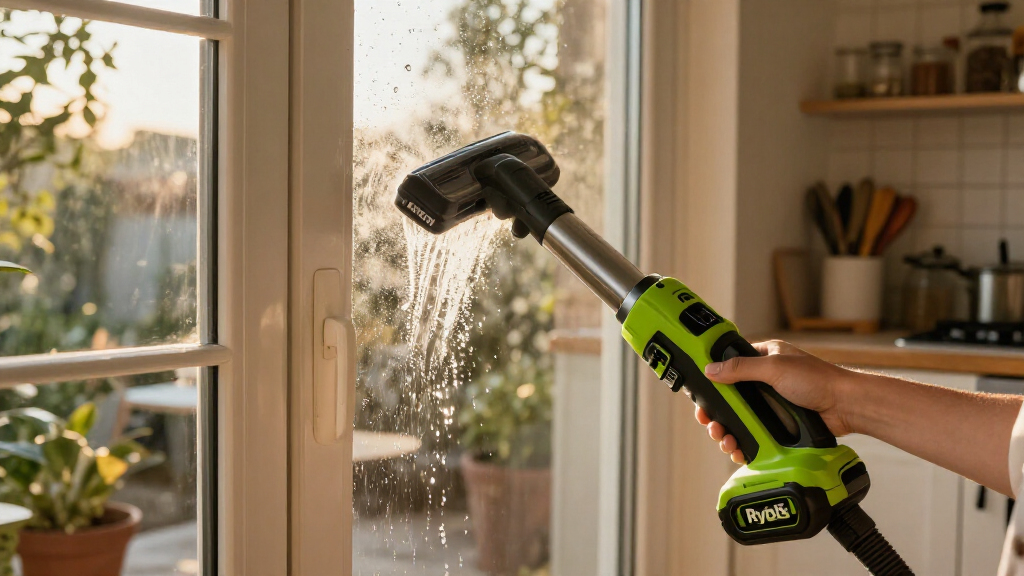
Ryobi plans to launch the PCL750B 18V One+ Window Vacuum at Home Depot in November 2026 for $69.97 as a bare tool. It uses an 11-inch squeegee to collect cleaning liquid and Ryobi 18V batteries, but the reviewer has not tested Ryobi’s model; performance claims draw on experience with another brand’s vacuum.
Ryobi plans to release its PCL750B 18V One+ Window Vacuum at Home Depot in November 2026, priced at $69.97 as a bare tool. The product is designed to collect cleaning liquid from glass and other smooth surfaces, and it runs on Ryobi’s 18V One+ batteries; the reviewer who reported the announcement said they had not yet tested Ryobi’s model.
The vacuum uses an 11-inch squeegee to guide liquid toward intake vents, where the tool draws it into a holding container. Cleaning involves a separate spray bottle and microfiber pad: users wet the surface, loosen dirt with the pad, then pass the vacuum over the glass to collect the remaining liquid. The container can be emptied and rinsed when full.
According to the report by Pro Tool Reviews, the battery sits behind an IPX4-rated door intended to protect it from water or cleaning solution. The tool is compatible with Ryobi 18V One+ packs up to 6.0Ah, according to the report. As a bare-tool sale, the stated $69.97 price does not include a battery or charger.
The reviewer said the PCL750B is covered by a two-year warranty and is expected to be sold online and in select local Home Depot stores. Ryobi’s model had not been tested by the reviewer at the time of the report, so the article’s assessment of cleaning performance is based on the product information and the reviewer’s use of a different brand’s window vacuum.
Where a Window Vacuum Fits
The announcement adds a dedicated glass-cleaning tool to Ryobi’s 18V One+ battery system. For households or facilities that already own compatible batteries, using an existing pack may avoid buying a separate battery-powered appliance. The reviewer also points to the option of swapping packs rather than pausing to recharge, which could matter when cleaning many windows or other glass surfaces.
The tool’s usefulness depends on the surface and the amount of buildup. The report says window vacuums are suited to smooth, flat, accessible surfaces, including windows, mirrors, shower doors, glass stovetops, countertops and tile. Regularly cleaned commercial glass—such as office or restaurant doors—may be a more practical use than heavily soiled exterior windows. That distinction matters: a vacuum that collects cleaning liquid is not a substitute for scrubbing away thick outdoor grime.
Price and battery compatibility provide a clearer basis for comparing the product than the promised result. The report’s reviewer expects a streak-free finish based on experience with another model, but that is not a confirmed test result for Ryobi’s vacuum. Buyers will need independent testing or hands-on reviews to judge its actual suction, ease of use and finish quality.
Products Worth Considering

Philips Hue Essential Starter Kit with Bridge and 4 E26 Smart Bulbs

Philips Hue White and Color Ambiance Smart Light Starter Kit, 2 A19 Bulbs with Hub

Hisense 65-inch U6 Pro Mini-LED 4K UHD Smart Fire TV
As an affiliate, we earn on qualifying purchases.
How the Two-Step Cleaning Works
Window vacuums are used after a surface has been sprayed and wiped with a cleaning pad. In the process described for Ryobi’s system, the pad first loosens debris while the glass remains wet; the squeegee and vacuum then remove the liquid. The reviewer said cleaning solutions made for window vacuums can remain wet longer than products such as Windex, giving the vacuum time to collect the fluid before it dries.
That explanation reflects the reviewer’s experience with a Karcher window vacuum, not a test of Ryobi’s PCL750B. The report compares the two products’ general setup and says Ryobi uses replaceable One+ battery packs rather than an integrated battery. It also cautions against using this kind of tool on vehicle glass, where curves and hard-to-reach corners can leave streaks or haze, and on exterior windows with heavy buildup.
“A window vacuum can genuinely save time and effort in your cleaning chores.”
— Pro Tool Reviews reviewer
Performance Still Awaits Testing
The product’s real-world cleaning performance remains unverified in the supplied report. The reviewer expects it to work well based on the design and experience with another window vacuum, but has not tested the Ryobi model. No independent results are provided for suction strength, streaking, cleaning time, container capacity or how long a battery lasts during use.
The supplied information also does not specify whether the spray bottle and microfiber pad are included in the retail package, which One+ battery packs are recommended, or whether the November release date could change. The report names Home Depot as the retailer and says availability is expected online and in select local stores, but does not identify participating locations.
Home Depot Launch Is Planned
Ryobi’s PCL750B is scheduled to reach Home Depot in November 2026 at a stated price of $69.97 before the cost of any separately needed battery or charger. The report says it will be offered online and in select local stores and carry a two-year warranty.
Until the launch, the key developments to watch are confirmation of the final availability and package contents, followed by hands-on testing of the vacuum. Those details should help buyers assess whether its performance and battery setup justify adding it to a cleaning routine.
Key Questions
When will Ryobi’s 18V One+ Window Vacuum be available?
The PCL750B is scheduled for November 2026 at Home Depot, according to the supplied report. It is expected online and in select local stores.
How much does the Ryobi window vacuum cost?
The reported price is $69.97 as a bare tool. The supplied information does not say whether a battery or charger is included; buyers should check the package details before purchasing.
How does the window vacuum clean glass?
First, users spray the surface and wipe it with a microfiber cleaning pad. They then pass the vacuum’s 11-inch squeegee over the wet surface to collect the liquid in a holding container.
Has Ryobi’s model been tested for streak-free results?
Not in the supplied report. Its reviewer said they had not yet used Ryobi’s version; expectations about streak-free cleaning are based on experience with another brand’s window vacuum.
What surfaces is it intended for?
The report describes window vacuums as suited to smooth, flat, accessible surfaces, such as household windows, mirrors and shower doors. It cautions that vehicle glass and heavily soiled exterior windows can be poor fits.
Source: protoolreviews.com