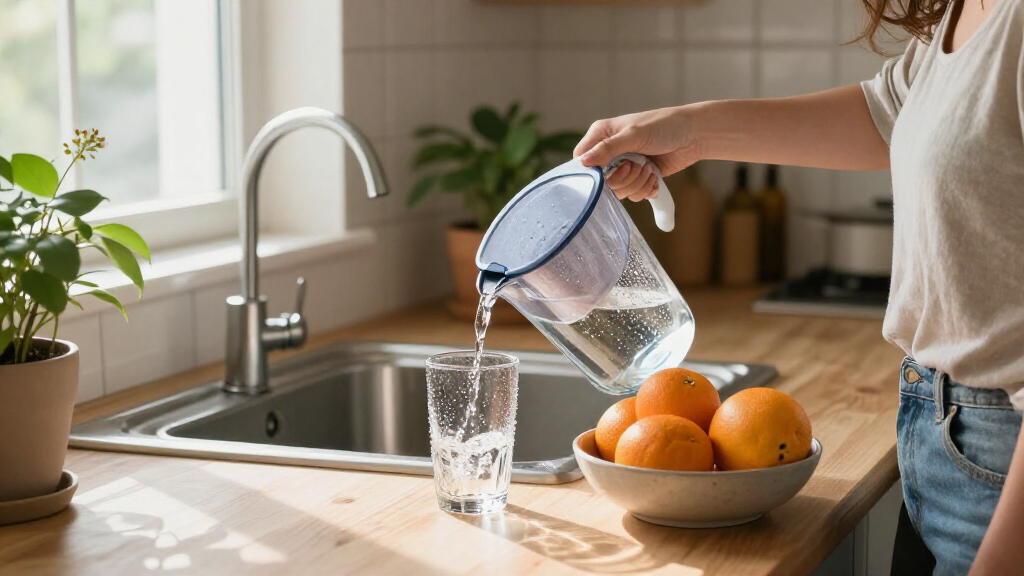

Filtered water bottle pitchers can improve the taste of tap water without installing a separate system, but the best choice depends on how much water you use and what you want a filter to address. My best overall pick is the Brita Large 10-Cup Elite Pitcher for its useful household capacity and replaceable Elite filter. The ZeroWater 10-Cup Ready-Pour stands out for buyers who want a TDS meter, while the LifeStraw Home Glass Pitcher is a distinctive choice for shoppers prioritizing a glass vessel. The main tradeoffs are capacity versus fridge space, lower upkeep versus more involved filtration, and plastic versus glass construction. Read on for the full comparison and help matching a pitcher or dispenser to your routine.

Get home appliances delivered free with Prime
- Fast, free delivery on millions of items
- Prime Video, Amazon Music and more included
- Member-only deals all year
Complete the kit


Key Takeaways
- The Brita Large Elite leads for everyday household use because its 10-cup format balances serving capacity with a pitcher footprint.
- ZeroWater’s TDS-meter models offer a visible way to track dissolved solids, but the meter does not identify every contaminant or certify water safety.
- Dispenser capacity changes the routine: the 22- and 32-cup ZeroWater and 35-cup Waterdrop models suit heavier use, but take more space and can be awkward to refill.
- Compact pitchers trade fewer refills for easier storage: the Brita Metro and 7-cup Waterdrop models fit smaller households or fridges better than large dispensers.
- Material and filter claims deserve separate attention: the LifeStraw glass pitcher changes the vessel choice, while shoppers comparing contaminant reduction should check each model’s current certified claims and replacement-filter availability.
| Brita Large 10-Cup Elite Water Filter Pitcher with 1 Filter, White |  | Best Overall for Long Filter Life | Capacity: 10 cups | Material: BPA-free plastic | Filter method: Activated carbon | VIEW LATEST PRICE | See Our Full Breakdown |
| ZeroWater 10-Cup Ready-Pour Water Filter Pitcher with TDS Meter |  | Best for TDS Monitoring | Capacity: 10 cups | Filtration: 5-stage ion exchange | Included components: Pitcher, water filter, and TDS meter | VIEW LATEST PRICE | See Our Full Breakdown |
| ZeroWater 22-Cup Ready-Read Water Filter Dispenser |  | Best High-Capacity TDS-Monitoring Dispenser | Capacity: 5.2 liters (22 cups) | Filtration: 5-stage ion exchange | Certified reductions: Lead, PFOA/PFOS, chromium, and mercury | VIEW LATEST PRICE | See Our Full Breakdown |
| Waterdrop PT-72W Glass Water Filter Pitcher, 7-Cup, White |  | Best Glass Option | Capacity: 7 cups | Material: Glass with plastic inner liner | Filtration: 5-stage activated carbon, carbon block, and ion exchange resin | VIEW LATEST PRICE | See Our Full Breakdown |
| Waterdrop PT-05B-L 7-Cup Water Filter Pitcher, Blue | 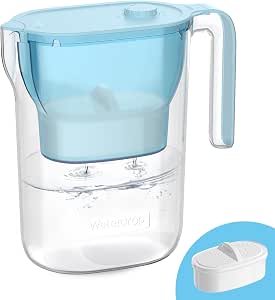 | Best Long-Rated Filter Life in a Compact Pitcher | Capacity: 7 cups | Material: BPA-free, lead-free plastic | Filter type: Activated carbon fiber | VIEW LATEST PRICE | See Our Full Breakdown |
| Brita Large 10-Cup Water Filter Pitcher with 1 Filter, Bright White |  | Best Everyday Family Pitcher | Capacity: 10 cups | Material: Plastic; BPA-free | Included filter: 1 | VIEW LATEST PRICE | See Our Full Breakdown |
| Waterdrop WFD-40L 35-Cup Water Filter Dispenser, Black |  | Best High-Capacity Dispenser | Capacity: 8.2 liters; 35 cups total, including 19 cups in the body | Dimensions: 14.4 × 5.5 × 10.2 inches | Weight: 4.2 pounds | VIEW LATEST PRICE | See Our Full Breakdown |
| Brita Metro 6-Cup Water Filter Pitcher with SmartLight Indicator, Fiery Red | 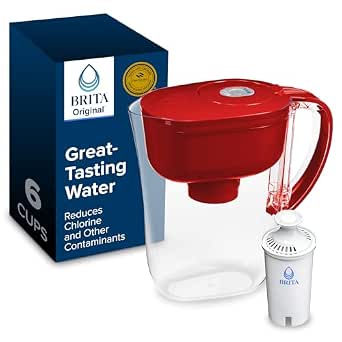 | Best Compact Mini-Fridge Pick | Capacity: 6 cups | Color: Fiery Red | Material: BPA-free plastic | VIEW LATEST PRICE | See Our Full Breakdown |
| LifeStraw Home Glass Water Filter Pitcher, 7-Cup, White |  | Best for Broader Contaminant Filtration | Capacity: 1.68 liters; 7 cups | Material: Borosilicate glass | Dimensions: 5.8 × 5.8 × 11.25 inches | VIEW LATEST PRICE | See Our Full Breakdown |
| Brita Metro 6-Cup Water Filter Pitcher with 1 Standard Filter, White | 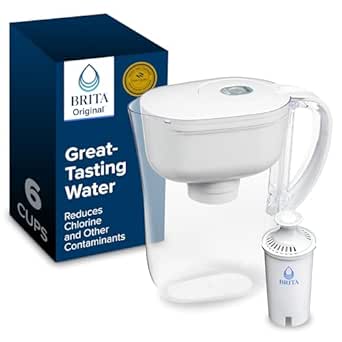 | Best Simple Compact Pick | Capacity: 6 cups | Material: BPA-free plastic | Included filter: 1 Standard filter | VIEW LATEST PRICE | See Our Full Breakdown |
| Clearly Filtered 10-Cup BPA-Free Water Filter Pitcher |  | Best for Broad Contaminant Reduction | Capacity: 80 fl oz (10 cups; approximately 2.4 L) | Material: Medical-grade Tritan; BPA-free and BPS-free | Filtration method: Affinity Filtration | VIEW LATEST PRICE | See Our Full Breakdown |
| Waterdrop PT-07B 10-Cup Water Filter Pitcher, Blue |  | Best for Low-Fuss Refrigerator Use | Capacity: 2.4 liters (10 cups) | Color: Blue | Dimensions: 10 × 5 × 10.1 in | VIEW LATEST PRICE | See Our Full Breakdown |
| ZeroWater 32-Cup Ready-Read 5-Stage Water Filter Dispenser |  | Best for High-Volume TDS Reduction | Capacity: 32 cups (7.5 liters) | Filtration: 5-stage ion exchange | Certifications: IAPMO certified to reduce lead, PFOA/PFOS, chromium, and mercury | VIEW LATEST PRICE | See Our Full Breakdown |
| filtered water bottle pitcher | Capacity | Dimensions | Material | Filter life |
|---|---|---|---|---|
| Brita Large 10-Cup Elite Water | 10 cups | 10.94 × 5.59 × 10.47 in | BPA-free plastic | 120 gallons or about 6 months |
| ZeroWater 10-Cup Ready-Pour Wa | 10 cups | 11.63 × 5.93 × 11 in | BPA-free plastic | — |
| ZeroWater 22-Cup Ready-Read Wa | 5.2 liters (22 cups) | 5.5 × 10.4 × 11.3 in | BPA-free plastic | — |
| Waterdrop PT-72W Glass Water F | 7 cups | 8.1 × 5.9 × 8.5 in | Glass with plastic inner liner | Up to 100 gallons or 2 months |
| Waterdrop PT-05B-L 7-Cup Water | 7 cups | — | BPA-free, lead-free plastic | Up to 3 months or 200 gallons |
| Brita Large 10-Cup Water Filte | 10 cups | 10.7 × 5.4 × 10.1 inches | Plastic; BPA-free | 40 gallons or approximately 2 months |
| Waterdrop WFD-40L 35-Cup Water | 8.2 liters; 35 cups total, including 19 cups in the body | 14.4 × 5.5 × 10.2 inches | — | Up to 200 gallons or 2 months |
| Brita Metro 6-Cup Water Filter | 6 cups | 10.12 × 10.04 × 4.82 inches | BPA-free plastic | 40 gallons or about 2 months |
| LifeStraw Home Glass Water Fil | 1.68 liters; 7 cups | 5.8 × 5.8 × 11.25 inches | Borosilicate glass | — |
| Brita Metro 6-Cup Water Filter | 6 cups | 9.1 × 4.6 × 9.7 inches | BPA-free plastic | 40 gallons or about 2 months |
| Clearly Filtered 10-Cup BPA-Fr | 80 fl oz (10 cups; approximately 2.4 L) | 10.87 × 5.25 × 11.4 in | Medical-grade Tritan; BPA-free and BPS-free | Up to 100 gallons; approximately 4 months |
| Waterdrop PT-07B 10-Cup Water | 2.4 liters (10 cups) | 10 × 5 × 10.1 in | — | Up to 200 gallons or 3 months |
| ZeroWater 32-Cup Ready-Read 5- | 32 cups (7.5 liters) | 13.13 × 6 × 10.38 in | BPA-free plastic | — |
More Details on Our Top Picks
Brita Large 10-Cup Elite Water Filter Pitcher with 1 Filter, White
The Brita Large Elite is a strong fit for households that want a refrigerator-friendly pitcher without frequent filter changes. Its included Elite filter is rated for 120 gallons or about six months, longer than the Waterdrop PT-05B-L’s stated maximum of three months, and it reduces 99% of lead while helping reduce chlorine taste and odor. The 10-cup capacity suits everyday family use, while the electronic indicator provides a reminder without requiring a separate meter. The tradeoff is its narrower filtration emphasis: unlike the ZeroWater 10-Cup Ready-Pour, it does not come with a TDS meter or the same listed contaminant certifications. Its 0.05-gpm maximum flow rate is also relatively slow, so refilling takes patience. Choose it for convenient routine use, not for TDS tracking.
Pros:- 10-cup capacity fits in most refrigerators
- Included Elite filter is rated for 120 gallons or about six months
- Reduces 99% of lead and helps reduce chlorine taste and odor
- Electronic filter-change indicator simplifies replacement tracking
Cons:- Maximum flow rate is 0.05 gpm, so filtration can feel slow
- Does not include a TDS meter or the ZeroWater 10-Cup Ready-Pour’s listed IAPMO contaminant certification
- Elite filters are not compatible with Brita Stream pitchers and dispensers
Best for: Households seeking a refrigerator-sized 10-cup pitcher with a long filter interval and an electronic replacement reminder.
Not ideal for: Buyers who want a TDS reading, faster dispensing, or compatibility with Brita Stream pitchers and dispensers.
- Capacity:10 cups
- Material:BPA-free plastic
- Filter method:Activated carbon
- Included filter:1 Brita Elite filter
- Filter life:120 gallons or about 6 months
- Dimensions:10.94 × 5.59 × 10.47 in
- Maximum flow rate:0.05 gpm
- Warranty:Limited 1-year
Our verdict“Choose the Brita Large Elite if you want a practical 10-cup fridge pitcher with a long-rated filter life and a simple electronic reminder.”
ZeroWater 10-Cup Ready-Pour Water Filter Pitcher with TDS Meter
The ZeroWater 10-Cup Ready-Pour makes sense for buyers who want more than a taste-focused filter: its five-stage ion-exchange system reduces dissolved solids, and IAPMO certification covers reduction of lead, PFOA/PFOS, chromium, and mercury. The included TDS meter gives you a practical way to check dissolved-solids readings and help judge when a filter needs replacement. That gives it a different purpose from the Brita Large Elite, which offers a longer stated filter interval and an electronic indicator but no TDS meter. A quick-fill spigot and comfort-grip handle also make serving easier. The tradeoffs are a 10-cup limit and reliance on replacement filters; the meter is a monitoring aid, not a substitute for checking what contaminants matter in your water.
Pros:- TDS meter helps monitor dissolved-solids readings and filter replacement
- IAPMO certified to reduce lead, PFOA/PFOS, chromium, and mercury
- Five-stage ion-exchange filtration reduces dissolved solids
- Quick-fill spigot and comfort-grip handle support convenient serving
Cons:- 10-cup capacity may require frequent refilling for larger households
- Requires replacement filters, with replacement timing guided by water conditions and meter readings
- TDS readings do not identify specific contaminants
Best for: People who want to monitor dissolved-solids readings and prioritize reduction of the contaminants listed in the IAPMO certification.
Not ideal for: Large households that need more than 10 cups ready at once, or buyers seeking a long interval between filter replacements.
- Capacity:10 cups
- Filtration:5-stage ion exchange
- Included components:Pitcher, water filter, and TDS meter
- Certifications:IAPMO certified to reduce lead, PFOA/PFOS, chromium, and mercury
- Material:BPA-free plastic
- Dimensions:11.63 × 5.93 × 11 in
- Weight:16 oz
- Installation:Freestanding
Our verdict“Pick this ZeroWater pitcher if TDS monitoring and its listed contaminant reductions matter more to you than a longer filter interval or larger capacity.”
ZeroWater 22-Cup Ready-Read Water Filter Dispenser
For a shared kitchen, the ZeroWater 22-Cup Ready-Read offers more ready-to-serve water than the 10-cup ZeroWater Ready-Pour pitcher, while keeping the same central appeal: five-stage ion-exchange filtration and a TDS meter to help track dissolved-solids readings and filter replacement. Its stated certification covers reduction of lead, PFOA/PFOS, chromium, and mercury. The larger 5.2-liter capacity means fewer refill cycles when several people use filtered water throughout the day. This is a countertop dispenser rather than a compact fridge pitcher, though, so it needs a suitable spot and more room than the Brita Large Elite. The product information also lists a corded electric power source despite describing a built-in meter; buyers should clarify the actual setup before choosing it. The filter must be changed when the meter reads 006.
Pros:- 22-cup capacity reduces the need for frequent refills compared with the 10-cup Ready-Pour
- Built-in TDS meter helps track readings and the stated filter-change threshold
- IAPMO certified to reduce lead, PFOA/PFOS, chromium, and mercury
- BPA-free plastic dispenser includes one five-stage filter
Cons:- Countertop dispenser needs more dedicated space than the Brita Large Elite pitcher
- Filter replacement is indicated when the meter reads 006
- Product information lists a corded electric power source, which may not match expectations for a dispenser with a built-in meter
Best for: Families or shared kitchens that want a larger countertop supply, TDS monitoring, and the listed IAPMO-certified contaminant reductions.
Not ideal for: Buyers with limited counter space, anyone seeking a small refrigerator pitcher, or shoppers who need a clear, consistent account of power requirements.
- Capacity:5.2 liters (22 cups)
- Filtration:5-stage ion exchange
- Certified reductions:Lead, PFOA/PFOS, chromium, and mercury
- TDS meter:Built in
- Filter change indicator:Meter reading 006
- Material:BPA-free plastic
- Dimensions:5.5 × 10.4 × 11.3 in
- Included components:Dispenser, one 5-stage filter, and TDS meter
Our verdict“Choose the ZeroWater 22-Cup dispenser when serving capacity and TDS monitoring take priority over refrigerator storage and a compact footprint.”
Waterdrop PT-72W Glass Water Filter Pitcher, 7-Cup, White
The Waterdrop PT-72W is the clear choice in this group for buyers who prefer a glass-bodied pitcher over the BPA-free plastic used by the Brita Large Elite and Waterdrop PT-05B-L. Its seven-cup capacity is more compact than those 10-cup options, which can suit a smaller household or refrigerator shelf but means more frequent refills. The five-stage filter is certified to NSF/ANSI 42, 53, and 372 and reduces several listed substances, including chlorine, mercury, copper, cadmium, and PFOA/PFOS. Its stated 8.5-ounce-per-minute flow rate is quicker than the Brita Elite’s listed maximum. The tradeoffs are practical: this pitcher is not dishwasher-safe, has a plastic inner liner, and does not reduce TDS. Its filter life is up to two months, shorter by calendar time than the Brita Elite’s six-month rating.
Pros:- Glass pitcher body offers an alternative to the plastic Brita Large Elite and Waterdrop PT-05B-L
- Filter is certified to NSF/ANSI 42, 53, and 372
- Rated flow rate of 8.5 oz per minute is faster than the Brita Large Elite’s listed maximum
- Five-stage filtration targets chlorine and several other listed contaminants
Cons:- Seven-cup capacity is smaller than the 10-cup Brita and ZeroWater pitchers
- Not dishwasher-safe and includes a plastic inner liner
- Does not reduce TDS and filter life is up to two months
Best for: Buyers who prefer a glass pitcher and want certified reduction of the listed taste, odor, and contaminant concerns in a smaller format.
Not ideal for: Households wanting a large-capacity pitcher, dishwasher-safe cleanup, TDS reduction, or a longer calendar-based filter interval.
- Capacity:7 cups
- Material:Glass with plastic inner liner
- Filtration:5-stage activated carbon, carbon block, and ion exchange resin
- Filter certifications:NSF/ANSI 42, 53, and 372
- Filter life:Up to 100 gallons or 2 months
- Maximum flow rate:0.25 liters per minute (8.5 oz per minute)
- Dimensions:8.1 × 5.9 × 8.5 in
- Dishwasher-safe:No
- TDS reduction:No
Our verdict“Choose the Waterdrop PT-72W if a glass pitcher and certified filtration matter more than larger capacity, dishwasher cleanup, or TDS reduction.”
Waterdrop PT-05B-L 7-Cup Water Filter Pitcher, Blue
The Waterdrop PT-05B-L pairs a compact seven-cup size with a filter rated for up to 200 gallons or three months, giving it a distinct advantage for buyers who want fewer replacements by volume than the Waterdrop PT-72W’s 100-gallon rating. Its mechanical filter-life recorder offers a simple reminder without the electronic indicator found on the Brita Large Elite. The pitcher uses BPA-free, lead-free plastic and an activated carbon fiber filter that reduces chlorine, taste, and odor and helps reduce PFOA/PFOS and other contaminants. That makes it a straightforward everyday taste-improvement option, not a TDS-focused system: like the PT-72W, it does not reduce TDS. The 200-gallon figure is an upper limit that varies with water conditions and use, and the seven-cup capacity remains smaller than the 10-cup Brita and ZeroWater pitchers.
Pros:- Filter rated for up to 200 gallons, higher than the PT-72W’s 100-gallon rating
- Mechanical recorder helps track filter life without batteries
- BPA-free, lead-free plastic construction
- NSF/ANSI 42 and 372 certifications
Cons:- Does not reduce TDS
- Seven-cup capacity is smaller than the Brita Large Elite and ZeroWater 10-Cup Ready-Pour
- Actual filter life varies with water conditions and usage
Best for: Small households seeking a lightweight seven-cup plastic pitcher with a mechanical reminder and a high stated gallon capacity per filter.
Not ideal for: Buyers who want TDS reduction, a glass pitcher, or a larger reservoir for frequent group use.
- Capacity:7 cups
- Material:BPA-free, lead-free plastic
- Filter type:Activated carbon fiber
- Filter life:Up to 3 months or 200 gallons
- Certifications:NSF/ANSI 372 and 42
- Included components:Water filter pitcher system, replacement filter, and user manual
- Weight:0.95 kg
- Model number:WD-PT-05B-L
Our verdict“Pick the Waterdrop PT-05B-L if you want a compact plastic pitcher with a mechanical filter reminder and a high stated gallon rating, but do not need TDS reduction.”
Brita Large 10-Cup Water Filter Pitcher with 1 Filter, Bright White
The 10-cup capacity makes this a more practical shared-kitchen choice than the 6-cup Brita Metro: fewer refills serve a household, while its refrigerator-friendly footprint keeps chilled water close at hand. Its activated-carbon filter targets chlorine taste and odor plus listed metals, making it a straightforward option for improving potable tap water rather than treating it as a purifier. The locking easy-fill lid also helps keep refilling manageable. Compared with the Waterdrop WFD-40L dispenser, this Brita takes up less vertical space and has a simpler pitcher format, but it holds much less water. The main upkeep tradeoff is the 40-gallon, roughly two-month filter life; buyers wanting longer stated capacity should compare the Waterdrop, while those needing broader contaminant reduction should look beyond this model.
Pros:- 10-cup capacity reduces refill frequency compared with the 6-cup Brita Metro
- Reduces chlorine taste and odor along with several listed metals
- Locking easy-fill lid and refrigerator-shelf fit
- BPA-free plastic pitcher includes one filter
Cons:- Included Standard filter is rated for about 40 gallons or two months
- Offers less reserve capacity than the 35-cup Waterdrop dispenser
- Pitcher reservoir and lid may vary
Best for: Small households that want a familiar, refrigerator-stored pitcher with more capacity than a compact 6-cup model.
Not ideal for: Large households that want a shared high-capacity reservoir or buyers seeking filtration for bacteria, parasites, or a broad range of contaminants.
- Capacity:10 cups
- Material:Plastic; BPA-free
- Included filter:1
- Filter life:40 gallons or approximately 2 months
- Compatible filters:Brita Standard and Longlast
- Purification method:Granular activated carbon
- Dimensions:10.7 × 5.4 × 10.1 inches
- Weight:2.29 pounds
Our verdict“Choose this Brita for everyday chilled water in a small household, but pick a dispenser for substantially higher capacity.”
Waterdrop WFD-40L 35-Cup Water Filter Dispenser, Black
If repeated refilling is the main frustration, the 35-cup capacity gives this Waterdrop a clear advantage over the Brita Large 10-Cup pitcher. Its slim, gravity-fed shape is designed to make that volume easier to fit on a refrigerator shelf, though the stated dimensions still merit checking against your fridge. The activated carbon fiber filter reduces chlorine and odors, and the built-in replacement indicator offers a useful reminder. Its filter is rated for up to 200 gallons or two months, so the stated calendar interval may matter more than the larger gallon figure for regular users. Unlike the LifeStraw Home Glass pitcher, this model is not presented as a bacteria or parasite filter, and it does not lower TDS. I’d choose it for volume and convenient dispensing, not broad purification.
Pros:- 35-cup total capacity holds substantially more than standard pitchers
- Slim format is designed to use refrigerator space efficiently
- Filter indicator helps track replacement timing
- Activated carbon fiber filtration reduces chlorine and odors
Cons:- Does not lower TDS
- Large dimensions may not fit every refrigerator shelf
- Filter is rated for two months despite its higher stated gallon capacity
Best for: Families or shared kitchens that want a large chilled-water supply and a dispenser-style tap instead of frequent pitcher refills.
Not ideal for: Buyers with shallow refrigerator shelves, or anyone seeking TDS reduction or filtration for bacteria and parasites.
- Capacity:8.2 liters; 35 cups total, including 19 cups in the body
- Dimensions:14.4 × 5.5 × 10.2 inches
- Weight:4.2 pounds
- Filtration method:Gravity filtration with activated carbon fiber
- Filter life:Up to 200 gallons or 2 months
- Flow rate:Filters water within 5 minutes
- Certifications:NSF 42 and NSF 372
- Materials:Lead-free, BPA-free, food-grade materials
- Maximum supported TDS:600 ppm
Our verdict“Pick the Waterdrop when shared-kitchen capacity matters more than compact pitcher handling or broader contaminant filtration.”
Brita Metro 6-Cup Water Filter Pitcher with SmartLight Indicator, Fiery Red
The 6-cup capacity and compact form make this red Brita a better fit for dorm rooms, offices, and mini-fridges than the Brita Large 10-Cup pitcher. It filters potable tap water for chlorine taste and odor, copper, mercury, and cadmium, while the SmartLight indicator takes some guesswork out of tracking the included Standard filter. That convenience does not extend the filter’s life: replacement is still due at about 40 gallons or two months. Compared with the white Brita Metro, the core function and capacity are similar; the distinctive choice here is the Fiery Red finish, not a different filtration tier. This is a simple taste-improvement pitcher, not a treatment option for unsafe water, and its small reservoir means frequent refills for more than one regular drinker.
Pros:- Compact 6-cup size fits most mini-fridges
- SmartLight indicator signals when the filter needs changing
- Reduces chlorine taste and odor, copper, mercury, and cadmium
- BPA-free pitcher includes one Standard filter
Cons:- Small capacity requires frequent refilling in shared kitchens
- Standard filter lasts about 40 gallons or two months
- Intended for potable water only
Best for: Students, solo renters, and office users who need a compact pitcher that fits most mini-fridges and want a filter-change reminder.
Not ideal for: Households with several daily users or anyone needing filtration beyond the listed reductions for potable tap water.
- Capacity:6 cups
- Color:Fiery Red
- Material:BPA-free plastic
- Dimensions:10.12 × 10.04 × 4.82 inches
- Weight:1.4 pounds
- Filter life:40 gallons or about 2 months
- Included filter:1 Standard filter
- Maximum water TDS level:500 ppm
Our verdict“Choose this Metro for a compact, filter-indicator-equipped pitcher in a mini-fridge, not for serving a group.”
LifeStraw Home Glass Water Filter Pitcher, 7-Cup, White
The LifeStraw Home is the lineup’s standout for buyers who want more than taste improvement: its membrane microfilter is described as filtering bacteria, parasites, and microplastics, while its carbon and ion-exchange stage targets lead, PFAS, and other contaminants. That makes it a different kind of choice from the Brita Metro, which is aimed at improving potable tap water’s taste and reducing a shorter list of substances. Its borosilicate glass body avoids a plastic pitcher, retains essential minerals, and comes with a silicone base, but it also calls for more careful handling than the plastic Brita models. Capacity is only seven cups, and the two filter stages have separate schedules: the carbon filter lasts about two months, while the membrane is rated for a year. Buyers prioritizing convenience or larger volume may prefer the Waterdrop dispenser.
Pros:- Filters listed bacteria, parasites, microplastics, lead, and PFAS
- Retains essential minerals while improving taste
- Borosilicate glass body includes a silicone base
- Membrane microfilter is rated for 264 gallons or one year
Cons:- Glass requires more careful handling than the plastic Brita pitchers
- Carbon and ion-exchange filter lasts about 40 gallons or two months
- Seven-cup capacity is smaller than the Brita Large and Waterdrop dispenser
Best for: Buyers who want a glass pitcher and filtration that includes listed microbes and contaminants beyond chlorine taste and odor.
Not ideal for: People who prefer a lightweight, low-care plastic pitcher, need a large reservoir, or want to avoid replacing a carbon filter about every two months.
- Capacity:1.68 liters; 7 cups
- Material:Borosilicate glass
- Dimensions:5.8 × 5.8 × 11.25 inches
- Weight:0.7 kg
- Purification method:Activated carbon and microfiltration membrane
- Membrane microfilter life:264 gallons or 1 year
- Carbon and ion-exchange filter life:40 gallons or 2 months
- Included components:Glass pitcher, silicone base, filter housing, carbon filter, membrane filter
Our verdict“Choose the LifeStraw when broader listed contaminant filtration and glass construction outweigh capacity and filter-maintenance simplicity.”
Brita Metro 6-Cup Water Filter Pitcher with 1 Standard Filter, White
This white Brita Metro keeps the compact 6-cup format of the red SmartLight model but suits buyers who want a plain finish and a simple easy-fill pitcher. It reduces chlorine taste and odor, copper, mercury, and cadmium in potable tap water, and its included Standard filter is rated for about 40 gallons or two months. Compared with the Brita Large 10-Cup, it takes up less space and is easier to place in a mini-fridge, but its smaller reservoir means more refills. The red Metro adds a SmartLight filter indicator; this listing also specifies one, so the main stated distinction is color and the supplied dimensions rather than a different filtration method. Like the other Brita pitchers here, it is for potable water and does not offer the broader microbe filtration described for the LifeStraw Home.
Pros:- Compact 6-cup design fits most mini-fridges
- Reduces chlorine taste and odor, copper, mercury, and cadmium
- SmartLight indicator signals when to replace the filter
- Easy-fill lid and one Standard filter are included
Cons:- Six-cup capacity is limited for multiple daily users
- Standard filter needs replacement about every two months
- For use with potable water only
Best for: Solo users or couples who want a basic white pitcher for a mini-fridge and prefer a compact footprint over serving capacity.
Not ideal for: Families or shared kitchens that need fewer refills, and buyers seeking filtration for bacteria, parasites, or unsafe water.
- Capacity:6 cups
- Material:BPA-free plastic
- Included filter:1 Standard filter
- Filter life:40 gallons or about 2 months
- Filter change indicator:SmartLight
- Reduced substances:Chlorine taste and odor, copper, mercury, cadmium
- Dimensions:9.1 × 4.6 × 9.7 inches
- Temperature range:32–85 °F
Our verdict“Choose this white Metro for compact everyday use if you value refrigerator fit over the larger reserve of the Brita Large.”
Clearly Filtered 10-Cup BPA-Free Water Filter Pitcher
The Clearly Filtered 10-Cup stands out among these pitchers for the breadth of its stated filtration targets: its Affinity Filtration Technology is reported to target more than 386 contaminants, including fluoride, lead, PFAS, arsenic, and microplastics, while retaining beneficial minerals. That makes it a more fitting choice for buyers focused on a wider range of contaminants than the Waterdrop PT-07B, which uses activated carbon and does not lower TDS. Its 80-ounce capacity also suits a household that wants fewer refills without stepping up to the much larger ZeroWater 32-Cup dispenser. The tradeoff is upkeep: the filter is rated for up to 100 gallons, or about four months, and replacement is part of the routine. Choose it for its stated target range, not for TDS reduction, which the product information does not claim.
Pros:- Reported to target more than 386 contaminants, including fluoride, lead, PFAS, arsenic, and microplastics
- 80-ounce capacity balances fewer refills with a smaller footprint than the ZeroWater 32-Cup dispenser
- Medical-grade Tritan is BPA-free and BPS-free
- Filter is rated for up to 100 gallons or approximately four months
Cons:- Filter replacement is still needed about every four months
- The product information does not claim TDS reduction
- Its 10-cup capacity is far below the ZeroWater 32-Cup dispenser
Best for: Households seeking a countertop pitcher with a broad stated contaminant target list and an 80-ounce capacity.
Not ideal for: Buyers who specifically want TDS reduction or a large dispenser-style reservoir; this pitcher is a 10-cup model and no TDS-reduction claim is provided.
- Capacity:80 fl oz (10 cups; approximately 2.4 L)
- Material:Medical-grade Tritan; BPA-free and BPS-free
- Filtration method:Affinity Filtration
- Contaminants targeted:386+
- Filter life:Up to 100 gallons; approximately 4 months
- Certifications and testing:NSF/ANSI standards 42 and 372; independently tested
- Dimensions:10.87 × 5.25 × 11.4 in
- Weight:2.8 lb
Our verdict“Choose the Clearly Filtered pitcher if a broad stated contaminant target list matters more to you than TDS reduction or dispenser-sized capacity.”
Waterdrop PT-07B 10-Cup Water Filter Pitcher, Blue
The Waterdrop PT-07B is the everyday-use pick here: its hands-free lid, refrigerator-friendly dimensions, and LED filter indicator make filling and tracking routine maintenance simpler. Compared with the Clearly Filtered 10-Cup, its stated filtration scope is narrower: activated carbon helps reduce chlorine, odor, PFOA/PFOS, and some metals, but it does not lower TDS. The 10-cup capacity matches that Clearly Filtered pitcher, while its filter is rated for up to 200 gallons but about three months, so the stated time interval is shorter despite the higher gallon figure. NSF/ANSI 42 and 372 certification is part of its profile, but buyers should not read that as a claim to remove every contaminant. Pick it for convenient everyday use, not broad-spectrum treatment or TDS reduction.
Pros:- Hands-free lid supports convenient filling and pouring
- LED indicator provides a visible filter-change reminder
- Compact 10 × 5 × 10.1-inch size is designed for refrigerator use
- Certified to NSF/ANSI 42 and 372
Cons:- Does not lower TDS
- Filter replacement is specified at about three months, even with a 200-gallon rating
- Its stated reduction scope is narrower than the Clearly Filtered 10-Cup pitcher
Best for: People who want a 10-cup refrigerator pitcher with simple dispensing, an LED filter reminder, and reduction of chlorine taste and odor.
Not ideal for: Buyers seeking TDS reduction or a broad stated target list that includes fluoride, arsenic, and microplastics.
- Capacity:2.4 liters (10 cups)
- Color:Blue
- Dimensions:10 × 5 × 10.1 in
- Filtration method:Activated carbon
- Certifications:NSF/ANSI 42 and 372
- Filter life:Up to 200 gallons or 3 months
- Maximum flow rate:0.5 gpm
- Temperature range:41–100 °F
Our verdict“Choose the Waterdrop PT-07B for convenient refrigerator storage and everyday chlorine and odor reduction, but skip it if TDS reduction is a priority.”
ZeroWater 32-Cup Ready-Read 5-Stage Water Filter Dispenser
For households that need a shared supply, the ZeroWater 32-Cup Ready-Read offers much more capacity than the 10-cup Clearly Filtered and Waterdrop pitchers. Its five-stage ion-exchange filtration is designed to reduce total dissolved solids, and the included TDS meter gives a practical signal for filter changes—useful because the listed filter life is 73 days rather than a fixed gallon figure. It is also IAPMO certified to reduce lead, PFOA/PFOS, chromium, and mercury. That focus differs from the Clearly Filtered pitcher’s broader stated target list, which includes fluoride and microplastics. The tradeoff is a larger countertop format and a heavier, 5.5-pound unit; it is less suited to refrigerator storage or buyers who only need a personal pitcher. Filter replacement remains part of ongoing use.
Pros:- 32-cup capacity serves more people between refills than the 10-cup pitchers in this group
- Five-stage ion-exchange filtration is designed to reduce TDS
- Included TDS meter helps indicate when the filter needs changing
- IAPMO certified to reduce lead, PFOA/PFOS, chromium, and mercury
Cons:- Countertop dispenser is much larger than a standard refrigerator pitcher
- Listed filter life is 73 days, so periodic replacement is required
- The provided product information does not specify replacement-filter cost
Best for: Families or shared kitchens that want a large countertop water supply, TDS reduction, and a meter to help track filter changes.
Not ideal for: Small households, refrigerator-only users, or anyone with limited counter space who does not need 32 cups of filtered water at once.
- Capacity:32 cups (7.5 liters)
- Filtration:5-stage ion exchange
- Certifications:IAPMO certified to reduce lead, PFOA/PFOS, chromium, and mercury
- Included components:Dispenser, 1 filter, TDS meter
- Dimensions:13.13 × 6 × 10.38 in
- Weight:5.5 lb
- Material:BPA-free plastic
- Filter life cycle:73 days
Our verdict“Choose this ZeroWater dispenser if high capacity and TDS reduction matter more than refrigerator storage or a compact footprint.”

How We Picked
I compared these 13 filtered water pitchers and countertop dispensers on the factors that shape everyday use: usable capacity, fridge footprint, pour and refill convenience, filter-monitoring approach, vessel material, and ongoing filter maintenance. I also looked at how clearly a product’s stated filtration claims can be matched to a buyer’s water concerns. A TDS meter can indicate a change in dissolved-solids readings, but it cannot establish that water is safe or show which specific substances are present.
The ranking favors balanced, broadly useful choices first, then options with a more specific advantage such as higher capacity, smaller size, glass construction, or a distinct filtration approach. Similar models are separated by practical differences—such as a standard versus Elite filter or pitcher versus dispenser format—not by color alone. Buyers should verify current filter compatibility, replacement guidance, and independently certified contaminant-reduction claims for the exact model they plan to buy.
| filtered water bottle pitcher | Material |
|---|---|
| Brita Large 10-Cup Elite Water | BPA-free plastic |
| ZeroWater 10-Cup Ready-Pour Wa | BPA-free plastic |
| ZeroWater 22-Cup Ready-Read Wa | BPA-free plastic |
| Waterdrop PT-72W Glass Water F | Glass with plastic inner liner |
| Waterdrop PT-05B-L 7-Cup Water | BPA-free, lead-free plastic |
| Brita Large 10-Cup Water Filte | Plastic; BPA-free |
| Waterdrop WFD-40L 35-Cup Water | — |
| Brita Metro 6-Cup Water Filter | BPA-free plastic |
| LifeStraw Home Glass Water Fil | Borosilicate glass |
| Brita Metro 6-Cup Water Filter | BPA-free plastic |
| Clearly Filtered 10-Cup BPA-Fr | Medical-grade Tritan; BPA-free and BPS-free |
| Waterdrop PT-07B 10-Cup Water | — |
| ZeroWater 32-Cup Ready-Read 5- | BPA-free plastic |
Factors to Consider When Choosing Filtered Water Bottle Pitchers
Before choosing a model, match the pitcher to your water, household routine, and storage space. A bigger capacity or more elaborate filter is not automatically a better fit; the right choice is the one you can maintain and whose documented claims match your needs.
Match Filtration Claims to Your Water
Start with your local water quality report or, for a private well, an appropriate water test. Then compare the specific contaminants you care about with the exact reduction claims and certifications listed for the pitcher and its replacement filter. A general phrase such as “advanced filtration” does not tell you which substances a filter reduces. A TDS reading is also limited: it measures dissolved material broadly and does not identify individual contaminants. Avoid paying for a feature that does not address your concern, and do not treat a pitcher as a substitute for treatment required by a water advisory or test result.
Choose Capacity by Daily Use, Not the Number on the Box
Pitcher capacity can describe the vessel rather than the amount of filtered water ready at once, so check how the reservoir and filtered chamber work. Estimate daily drinking and cooking needs, then decide how often you are willing to refill. A compact model may be easier to lift and store, but it can run dry quickly in a busy household. Large dispensers reduce refill frequency yet need counter or refrigerator space and may be harder to move when full. If your household’s use varies, a mid-size pitcher often offers a more manageable compromise than the largest format.
Account for Filter Replacement and Flow
Filter upkeep includes more than the replacement interval: check the compatible cartridge, how replacement is signaled, and whether the manufacturer gives clear instructions for priming or setup. A fast-pouring design is convenient when several people share a pitcher, while a slower process may be an acceptable tradeoff if a particular filter approach better matches your needs. Do not assume that an electronic light or meter measures every aspect of filter performance; indicators can track time or a limited reading rather than confirm contaminant removal. Look up current replacement guidance before buying, since changing requirements can affect the effort of ownership. Skipping replacements can undermine the product’s intended performance.
Measure the Fridge and Check How You Pour
Measure the shelf where the pitcher will live, including height clearance and space around the door. A large dispenser can be convenient on a counter but inconvenient if it blocks a work area or cannot fit on the intended refrigerator shelf. Check whether the handle, lid, and spout allow a controlled pour, especially if the pitcher will be lifted often or used by children. A dispenser with a tap avoids repeated lifting, though it needs a stable place and enough clearance beneath the spout. Buying for the actual storage location prevents a high-capacity model from becoming a daily nuisance.
Decide Whether Glass or Plastic Fits Your Routine
Glass can appeal to shoppers who prefer its feel and appearance, but it adds weight and calls for more care around sinks and crowded refrigerator shelves. Plastic vessels are generally lighter and easier to handle, though buyers may want to check the specific material information and care instructions. A full pitcher weighs more than an empty one, so consider who will refill it and how far it must be carried. Also check whether the lid and reservoir can be cleaned easily; narrow spaces can make routine washing less convenient. Choose based on handling and maintenance, not material preference alone.
Compare Total Ownership, Not Just the Pitcher
The pitcher is only one part of the purchase: replacement filters, availability, storage, and the effort needed to change them all affect long-term fit. Confirm that the correct cartridge is easy to identify and that the manufacturer provides a clear replacement schedule for your usage. A specialized filter may be worthwhile when its documented claims suit a particular water concern, but a simpler model may make more sense if your main goal is better-tasting municipal tap water. Avoid stocking up on cartridges before confirming model compatibility. The most practical choice is one you can keep supplied and maintain on schedule.
Frequently Asked Questions
Does a TDS meter tell me whether my filtered water is safe?
No. A TDS meter gives a broad reading of dissolved solids; it does not identify which substances are present or confirm that harmful contaminants are absent. It can be useful for observing changes in a ZeroWater model’s reading, but it is not a substitute for a water test or a filter certification. If you have a specific concern, check a local water report or arrange testing and match the result to a filter’s documented claims. Follow public-health guidance if your water is under an advisory.
Should I choose a pitcher or a countertop dispenser?
Choose a pitcher if you want something easy to lift, store in a refrigerator, and refill at the sink. A countertop or refrigerator dispenser is better suited to households that use a lot of filtered water and want to reduce repeated pouring from a smaller vessel. Dispensers need a stable location, room beneath the tap, and enough clearance for refilling. Their larger capacity can also make cleaning or moving them more cumbersome. Measure the intended spot and think about who will refill the unit before choosing.
Is the Brita Elite filter interchangeable with a standard Brita filter?
Do not assume that filters are interchangeable across every Brita pitcher. Check the exact pitcher model’s compatibility information and the instructions for the replacement cartridge you plan to use. The Elite and standard filters have different product names and may have different stated claims or replacement guidance. Confirming compatibility before purchase helps avoid buying a cartridge that will not fit or suit the pitcher. Compare the documented claims for the exact filter, rather than relying on the brand name alone.
Is a glass water filter pitcher a better choice than plastic?
Glass is not automatically better for filtration; its main difference is the vessel material and the handling experience. The LifeStraw Home Glass Pitcher may appeal to shoppers who specifically want glass, while a lighter plastic pitcher can be simpler to lift and store. Glass is heavier and can break if dropped or knocked against a hard surface. Compare the filter’s claims separately from the body material, since one does not establish the performance of the other. Choose the material that suits your kitchen and cleaning routine.
How can I tell whether one of these pitchers addresses a contaminant I care about?
Find the exact pitcher and replacement-filter model, then review its current performance data and any applicable independent certification. Check that the named contaminant appears in the documented reduction claims; broad wording about filtration is not enough. For municipal water, your local water quality report can help identify which issues merit attention. For well water or a known concern, use appropriate testing and consult relevant health guidance. If the documentation does not cover your concern, choose a treatment method that does rather than relying on a general-purpose pitcher.
Conclusion
For most households seeking a practical balance of capacity and everyday convenience, I’d start with the Brita Large 10-Cup Elite Pitcher as the best overall pick. The Brita Large 10-Cup standard-filter pitcher is the best value-minded choice within the lineup for shoppers who prefer a straightforward setup, while the LifeStraw Home Glass Pitcher is the premium-style pick for buyers who specifically want a glass vessel. Beginners who want a familiar, uncomplicated pitcher can start with the standard Brita Large; those who want a smaller footprint should compare the Brita Metro and 7-cup Waterdrop pitchers. For high-volume use, look to the Waterdrop 35-Cup or larger ZeroWater dispensers, and choose a ZeroWater TDS-meter model if that reading is useful to your routine—not as proof of safety. Before deciding, confirm that the filter’s documented claims match your water needs and that the capacity fits your storage space.