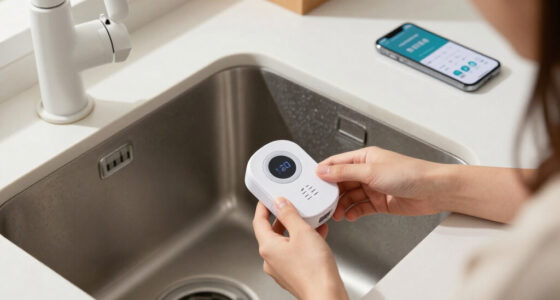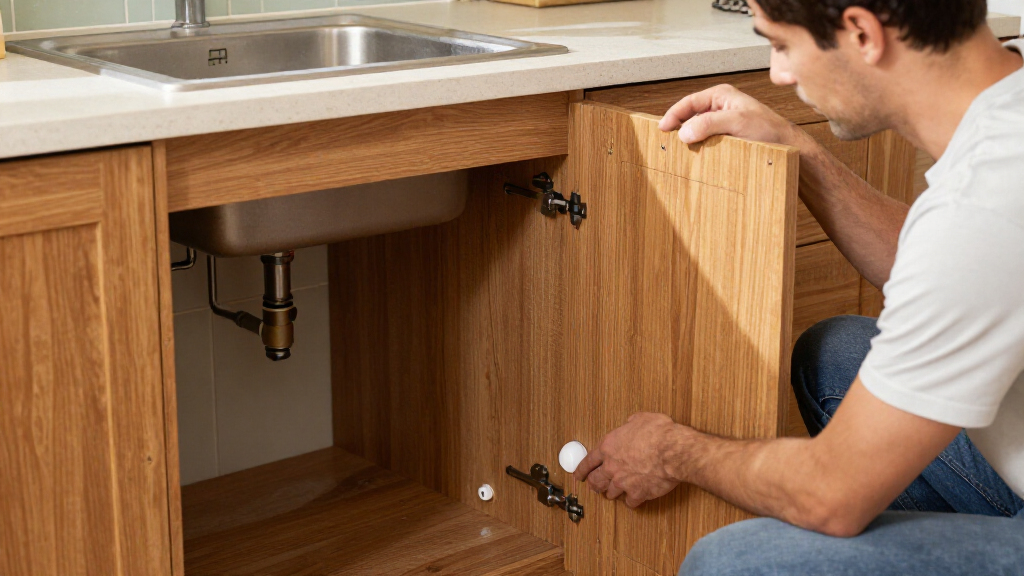

Smart home leak sensors are small, cheap insurance against some of the most expensive damage a house can suffer — a burst washing machine hose or a failed water heater can cost thousands before you even notice. After comparing 14 of the most popular options, the YoLink Water Leak Sensor 4 Kit stands out as the best overall pick thanks to its exceptional wireless range and battery life, while the GoveeLife 105 dB 5-Pack is the standout value for covering an entire home on a budget, and the Moen Flo detectors earn the premium slot with professional-grade reliability. The main tradeoffs in this category come down to hub-versus-hubless designs, alert speed when you’re away from home, and how many sensors you actually need to cover high-risk spots. Keep reading for the full breakdown of what separated the top picks from the rest.

Get home appliances delivered free with Prime
- Fast, free delivery on millions of items
- Prime Video, Amazon Music and more included
- Member-only deals all year
Complete the kit


Key Takeaways
- Hub-based systems (YoLink, Tapo, Aqara, X-Sense) consistently delivered faster and more reliable remote alerts than standalone Wi-Fi sensors, because alerts route through a dedicated gateway rather than each sensor competing for home Wi-Fi.
- GoveeLife dominates this lineup with six of the fourteen slots, but the models are not interchangeable — the Detector 2 line adds rechargeable batteries and extended probe cables, while the budget 105 dB 5-pack skips app connectivity entirely and relies on a loud local alarm only.
- Long-range wireless was the single biggest differentiator: YoLink’s LoRa-based range covers detached garages, crawlspaces, and multi-story homes where standard Wi-Fi sensors like the D-Link dropped connections.
- Buying in multi-packs changed the value math dramatically — the YoLink 6-pack and GoveeLife 6-packs brought per-sensor costs down enough to cover laundry rooms, water heaters, sump pumps, and under-sink cabinets all at once.
- Moen Flo is the only option here built to integrate with whole-home water monitoring and automatic shutoff, which justifies its premium positioning for buyers protecting high-value properties.
| GoveeLife Water Leak Detector with Adjustable 105 dB Alarm, 5-Pack |  | Best Value for Multi-Room Coverage | Pack quantity: 5 | Maximum alarm volume: 105 dB | Alarm settings: 4 adjustable volume settings | VIEW LATEST PRICE | See Our Full Breakdown |
| Stechro Wi-Fi Water Leak Detector Kit with App Alerts, 4 Sensors and Gateway |  | Best Complete Starter Kit | Connectivity: 2.4 GHz Wi-Fi via included gateway | App: TUYA | Included sensors: 4 | VIEW LATEST PRICE | See Our Full Breakdown |
| YoLink Water Leak Sensor 4 Kit with Hub, 6-Pack |  | Best Overall | Package contents: 1 YoLink Hub and 6 Leak Sensor 4 units | Alarm volume: 105 dB | Connectivity: LoRa | VIEW LATEST PRICE | See Our Full Breakdown |
| D-Link Wi-Fi Water Leak Detector Starter Kit with Two Sensors |  | Best for Perimeter Leak Coverage | Included sensors: 2 (1 plug-in master with cable, 1 battery pod) | Sensing cable length: 1.5 ft. (plus 3 ft. extension) | Siren volume: 100 dB | VIEW LATEST PRICE | See Our Full Breakdown |
| Moen Flo Wi-Fi Water Leak Detectors, 3-Pack |  | Best for Whole-Home Water Protection | Quantity: 3 detectors | Connectivity: 2.4 GHz Wi-Fi | Alerts: Moen Smart Water Network app notifications | VIEW LATEST PRICE | See Our Full Breakdown |
| X-Sense Wi-Fi Water Leak Detector Kit with 3 Sensors and Base Station (SWS54) | 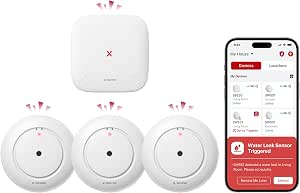 | Best Kit for Full-Coverage Alarms | Sensors: 3 | Detection probes: 2 upper and 4 bottom probes per sensor | Detection depth: As shallow as 0.4 mm | VIEW LATEST PRICE | See Our Full Breakdown |
| GoveeLife Smart Water Leak Detector with 4.92 ft Cable |  | Best for Hard-to-Reach Spots | Cable length: 4.92 ft | Detection modes: Water alarm and water-level detection | Connectivity: 915 MHz Sub-1G; gateway requires 2.4 GHz Wi-Fi | VIEW LATEST PRICE | See Our Full Breakdown |
| Tapo Smart Water Leak Detector T300 (Requires Tapo Hub) |  | Best for Fast Response | Model: T300 | Detection: Dual-side sensing with 6 sensor probes | Response time: As fast as 1 second | VIEW LATEST PRICE | See Our Full Breakdown |
| Aqara Zigbee Water Leak Sensor, 3-Pack |  | Best for Smart Home Automations | Pack size: 3 sensors | Connectivity: Zigbee | Required hub: Aqara Hub, sold separately | VIEW LATEST PRICE | See Our Full Breakdown |
| GoveeLife Smart Water Leak Detector, 5-Pack |  | Best Value for Multi-Room Coverage | Pack size: 5 sensors | Connectivity range: Up to 1,804 ft (550 m) | Alarm volume: Up to 105 dB; four volume levels | VIEW LATEST PRICE | See Our Full Breakdown |
| GoveeLife Upgraded Smart Water Leak Detector, 4 Pack |  | Best Value for Long-Range Coverage | Pack size: 4 sensors | Wireless range: Up to 1,804 feet through up to 5 walls | Alarm volume: Up to 105 dB, adjustable across 4 levels | VIEW LATEST PRICE | See Our Full Breakdown |
| GoveeLife Smart Water Leak Detector 2, 4-Pack |  | Best for Smart Home Integration | Pack size: 4 detectors | Connectivity: Wi-Fi gateway; 2.4 GHz | Wireless range: Up to 1,968.5 feet (LoRa) | VIEW LATEST PRICE | See Our Full Breakdown |
| GoveeLife Smart Water Leak Detector 2, 6-Pack |  | Best for Whole-Home Coverage | Pack size: 6 detectors | Wireless technology: LoRa | Maximum range: 1,968 feet | VIEW LATEST PRICE | See Our Full Breakdown |
| GoveeLife Upgraded Smart Water Leak Detector, 6 Pack |  | Best Premium Protection for Large Homes | Quantity: 6 sensors | Wireless range: Up to 1,804 feet through up to 5 walls | Alarm volume: Up to 105 dB, adjustable across 4 levels | VIEW LATEST PRICE | See Our Full Breakdown |
| smart home leak sensor | Water resistance | Alarm volume | Battery life | Connectivity |
|---|---|---|---|---|
| GoveeLife Water Leak Detector | IP67 | — | Up to 5 years (built-in) | — |
| Stechro Wi-Fi Water Leak Detec | IP66 | Adjustable up to 120 dB | Up to 3 years | 2.4 GHz Wi-Fi via included gateway |
| YoLink Water Leak Sensor 4 Kit | — | 105 dB | — | LoRa |
| D-Link Wi-Fi Water Leak Detect | — | — | — | Wi-Fi; no hub required |
| Moen Flo Wi-Fi Water Leak Dete | — | — | — | 2.4 GHz Wi-Fi |
| X-Sense Wi-Fi Water Leak Detec | IP66 | 120 dB | — | — |
| GoveeLife Smart Water Leak Det | IP67 (per description) | 105 dB | Up to 5 years (6 AAA included) | 915 MHz Sub-1G; gateway requires 2.4 GHz Wi-Fi |
| Tapo Smart Water Leak Detector | IP67 | 90 dB, adjustable | Up to 3 years | — |
| Aqara Zigbee Water Leak Sensor | IP67 | — | — | Zigbee |
| GoveeLife Smart Water Leak Det | IP67 | Up to 105 dB; four volume levels | Up to 5 years | — |
| GoveeLife Upgraded Smart Water | IP67 | Up to 105 dB, adjustable across 4 levels | Up to 5 years | — |
| GoveeLife Smart Water Leak Det | IP66 | 100 dB | — | Wi-Fi gateway; 2.4 GHz |
| GoveeLife Smart Water Leak Det | — | Up to 100 dB | Over 5 years under normal usage | — |
| GoveeLife Upgraded Smart Water | IP67 | Up to 105 dB, adjustable across 4 levels | Up to 5 years | — |
More Details on Our Top Picks
GoveeLife Water Leak Detector with Adjustable 105 dB Alarm, 5-Pack
For shoppers who want bare-bones leak detection in every risky spot without paying for smart features they may not use, this five-pack makes the most sense. The standout here is the adjustable 105 dB alarm — four volume settings mean you can crank it up for a basement water heater or tone it down for a laundry room near bedrooms, a flexibility the fixed-volume YoLink Leak Sensor 4 doesn’t offer. The IP67 rating and two probe sets per unit also mean these survive accidental splashes rather than dying at the first contact, which matters under a sink. The tradeoff is upfront honesty about smart features: phone alerts require the separate H5044 gateway, and it won’t work with H5040 or H5043 hubs, so anyone who already owns GoveeLife gear needs to check compatibility. Compared with the Stechro kit, which includes its gateway, this is cheaper to start but more expensive if you want remote alerts.
Pros:- Four adjustable volume settings up to 105 dB let you tune alarms per room
- Two sensor probe sets per detector catch leaks from more than one angle
- Built-in battery rated for up to five years eliminates replacement chores
- IP67 waterproof housing survives direct splashes and damp environments
Cons:- Remote phone monitoring requires the separately sold H5044 gateway
- Not compatible with H5040 or H5043 gateways, which trips up existing GoveeLife owners
Best for: Homeowners covering five leak-prone spots at once who mainly rely on loud local alarms and don’t need app alerts on day one
Not ideal for: Anyone who wants phone notifications out of the box — the gateway is a separate purchase, and older GoveeLife hubs won’t work
- Pack quantity:5
- Maximum alarm volume:105 dB
- Alarm settings:4 adjustable volume settings
- Sensor probes:2 sets per detector
- Battery life:Up to 5 years (built-in)
- Required gateway:GoveeLife H5044 (not included)
- Water resistance:IP67
Our verdict“The most cost-effective way to blanket a home in loud, durable leak alarms — as long as you can live without app alerts or buy the gateway later.”
Stechro Wi-Fi Water Leak Detector Kit with App Alerts, 4 Sensors and Gateway
Unlike the GoveeLife 5-pack, which holds its gateway back as a separate purchase, this Stechro kit ships with everything needed for app-based monitoring on day one: four sensors, a gateway, and included AAA batteries. That completeness is its core appeal. The 120 dB maximum alarm is the loudest in this lineup, and 32 ringtones plus one-touch mute give it more flexibility than the fixed alarms on the Moen Flo detectors. The gateway supports up to 24 sensors, so a growing system won’t need new hardware. The catch is layered: it’s limited to 2.4 GHz Wi-Fi, and the alert experience is tiered — app push notifications are free, but SMS, phone calls, and email alerts sit behind a subscription. Battery life tops out around three years, shorter than the five-year claims from GoveeLife and YoLink, and IP66 is one notch below the GoveeLife’s IP67.
Pros:- Gateway, four sensors, and batteries all included — nothing else to buy to start
- Alarm adjustable up to 120 dB with 32 ringtones and one-touch mute
- Gateway supports up to 24 sensors for future expansion
- Detects both floor flooding and slow drips, covering two failure modes
Cons:- No 5 GHz Wi-Fi support, which can complicate setup on modern mesh routers
- SMS, phone, and email alerts require a paid subscription beyond free app pushes
- Up to 3-year battery life trails the five-year ratings of competitors
Best for: First-time smart home buyers who want sensors, gateway, and batteries in one box with app alerts working immediately
Not ideal for: Homes with mesh networks that only broadcast 5 GHz, or anyone unwilling to pay a subscription for SMS and phone-call alerts
- Connectivity:2.4 GHz Wi-Fi via included gateway
- App:TUYA
- Included sensors:4
- Maximum sensors per gateway:24
- Alarm volume:Adjustable up to 120 dB
- Water resistance:IP66
- Battery:2 AAA alkaline per sensor (included)
- Battery life:Up to 3 years
Our verdict“The easiest one-box entry into app-connected leak detection, provided you’re satisfied with free push notifications and a 2.4 GHz network.”
YoLink Water Leak Sensor 4 Kit with Hub, 6-Pack
This kit earns the top spot because it solves the problem that quietly defeats most leak sensors: unreliable communication between sensor and hub. Using LoRa instead of Wi-Fi, these sensors reach up to 2,034 feet in open air — enough to cover a detached garage, crawlspace, or second floor without dropouts, something the Wi-Fi-dependent Stechro kit and Moen Flo can’t guarantee far from the router. Alerts arrive via app, email, and text with no subscription, a contrast to Stechro’s paywalled SMS tier. The differentiator is YoLink Control-D2D: sensors can trigger compatible YoLink devices locally even during an internet outage, turning detection into potential automatic response. Six sensors plus a hub that supports 300+ devices makes this a foundation for a whole smart water system. Tradeoffs exist — each sensor needs two AAA batteries that will eventually need replacing, unlike GoveeLife’s sealed five-year cells, and real-world range will fall short of open-air figures, especially through concrete.
Pros:- LoRa range up to 2,034 ft. in open air reaches outbuildings and dead zones
- App, email, and SMS/text alerts included with no subscription fee
- YoLink Control-D2D enables local automations during internet outages
- Hub supports 300+ devices, building a platform rather than a one-off kit
Cons:- Six AAA batteries per pair of sensors will eventually need replacement
- Open-air range shrinks meaningfully through walls, floors, and concrete
Best for: Owners of larger or multi-story homes who want dependable long-range coverage, multi-channel alerts, and outage-proof automations
Not ideal for: Apartment dwellers wanting a minimal setup — six sensors, a hub, and LoRa infrastructure is overkill for a single bathroom and kitchen
- Package contents:1 YoLink Hub and 6 Leak Sensor 4 units
- Alarm volume:105 dB
- Connectivity:LoRa
- Wireless range:Up to 2,034 ft. in open air
- Alerts:App, email, and SMS/text
- Local control:YoLink Control-D2D
- Battery:2 AAA per sensor
- Typical battery life:Up to 5 years
- Hub capacity:300+ YoLink devices
Our verdict“The most capable and future-proof kit here — worth the AAA battery maintenance if you want long-range reliability and alerts that don’t depend on a subscription or a working internet connection.”
D-Link Wi-Fi Water Leak Detector Starter Kit with Two Sensors
The D-Link starter kit takes a different detection philosophy from every puck-style sensor here. Instead of sensing only where the device sits, its master unit uses a 1.5 ft. sensing cable plus a 3 ft. extension — a physical line you can run along the base of a water heater or across a basement floor seam, catching water anywhere along its length rather than at a single point. That makes it better for long, linear risk zones where placing three or four GoveeLife pucks would be clumsy. The remote pod runs on AAA batteries and squeezes into tight spots like under a dishwasher, and the whole system scales to 17 monitored areas. Alerts are layered — siren, LED strobe, phone push, and Google Assistant announcements — so a leak gets noticed even if your phone is silenced. Drawbacks: the master unit must plug into an outlet, the pods need battery swaps around every two years, and legacy D-Link sensors from earlier kits won’t pair with it.
Pros:- Sensing cable with extension monitors an entire line, not just a single point
- Four alert channels: siren, LED strobe, phone notification, and Google Assistant
- Expandable from 2 to 17 monitored areas without extra hubs
- No hub required — connects directly over Wi-Fi
Cons:- Master unit needs a nearby power outlet, limiting placement flexibility
- Remote pods require AAA battery replacement roughly every 2 years
- Incompatible with several legacy D-Link water sensor models
Best for: Homeowners protecting specific linear zones — water heater pans, basement wall runs, sump perimeters — where a sensing cable beats spot sensors
Not ideal for: Existing D-Link water sensor owners, since DCH-161-US, DCH-S1621KT, and DCH-S163 legacy sensors are incompatible
- Included sensors:2 (1 plug-in master with cable, 1 battery pod)
- Sensing cable length:1.5 ft. (plus 3 ft. extension)
- Siren volume:100 dB
- Maximum monitored areas:17
- Connectivity:Wi-Fi; no hub required
- Smart home integration:Google Assistant
- Remote pod battery life:Up to 2 years on AAA batteries
Our verdict“The smart pick when your risk is a long wet-prone zone rather than a spot — cable-based detection covers ground that puck sensors can’t.”
Moen Flo Wi-Fi Water Leak Detectors, 3-Pack
These Moen detectors make the most sense as components of a larger water-defense system rather than standalone sensors. Their defining strength is integration with the Moen Flo Smart Water Shutoff (sold separately): pair these detectors with that valve, and a leak under the washing machine can trigger an automatic water shutdown for the entire house — a response no other product in this lineup offers natively, not even the automation-capable YoLink kit. Detection is straightforward moisture monitoring with app notifications through the Moen Smart Water Network, and the three-pack spreads coverage across typical hot spots. But judged purely as sensors, they look thin next to the Stechro or D-Link kits: there’s no built-in audible alarm mentioned, alerts ride on a 2.4 GHz Wi-Fi connection with no alternative channel, and the real payoff — automatic shutoff — demands a separate, substantial hardware investment. If you’re not committed to the Moen ecosystem, the value proposition weakens considerably.
Pros:- Seamless integration with Moen Flo Smart Water Shutoff for automatic response
- Continuous moisture monitoring with instant app notifications
- Three detectors in one pack cover multiple risk points
- Expands across the full Moen Smart Water Network
Cons:- The automatic-shutoff capability depends on the separately sold Flo valve
- Requires a 2.4 GHz Wi-Fi network with no alternate alert channels
- No loud built-in siren comparable to the 100-120 dB alarms on rival kits
Best for: Owners of (or shoppers planning to buy) the Moen Flo Smart Water Shutoff who want detectors that can trigger automatic whole-home water cutoff
Not ideal for: Budget-conscious buyers seeking standalone sensors with loud local alarms and multi-channel alerts — cheaper kits deliver more per dollar
- Quantity:3 detectors
- Connectivity:2.4 GHz Wi-Fi
- Alerts:Moen Smart Water Network app notifications
- Compatibility:Moen Flo Smart Water Shutoff (sold separately)
- Detection type:Continuous moisture monitoring
Our verdict“Buy these as part of a Moen Flo ecosystem, not as standalone sensors — the payoff is automated water shutoff, and without the valve they’re outclassed by cheaper kits.”
X-Sense Wi-Fi Water Leak Detector Kit with 3 Sensors and Base Station (SWS54)
This option stands out for its dual-alarm design: both the sensors and the base station sound off together at 120 dB, which is louder than the Tapo T300’s 90 dB and matters in a large house where a single puck under a sink can go unheard. The twin probe arrangement — two upper probes for drips, four bottom probes for pooling water as shallow as 0.4 mm — gives it an edge over flat-bottom sensors that only catch standing water. Compared with the GoveeLife 5-Pack, this kit trades raw sensor count for a dedicated base station that relays alerts to phones and can be shared with up to 12 users, making it a better fit for shared households. The tradeoff is connectivity: it only works on 2.4 GHz Wi-Fi, and the 1,804 ft range is quoted for open areas, so walls and floors will cut into it.
Pros:- Sensors and base station sound alarms together at 120 dB
- Upper probes catch drips while bottom probes detect pooling water as shallow as 0.4 mm
- Alert sharing with up to 12 users suits families and property managers
- IP66-rated sensors hold up in moisture-prone spots
Cons:- 2.4 GHz Wi-Fi only, with no 5 GHz support
- The 1,804 ft wireless range applies to open areas and shrinks indoors
Best for: Homeowners covering multiple rooms who want both local and phone alerts loud enough to hear anywhere in the house
Not ideal for: Households running only 5 GHz networks, since the base station won’t connect without 2.4 GHz Wi-Fi
- Sensors:3
- Detection probes:2 upper and 4 bottom probes per sensor
- Detection depth:As shallow as 0.4 mm
- Alarm volume:120 dB
- Wireless range:Up to 1,804 ft (550 m) in open areas
- Wi-Fi compatibility:2.4 GHz only
- Water resistance:IP66
- App access sharing:Up to 12 users
Our verdict“This kit makes the most sense for buyers who want maximum-volume, dual-source alarms and whole-house app coverage out of one box.”
GoveeLife Smart Water Leak Detector with 4.92 ft Cable
The 4.92-foot cable probe is the whole story here: instead of placing the sensor body where water collects, you snake the probe into a sump pit, behind a water heater, or under a crawlspace and keep the main unit accessible. No other entry in this lineup offers that flexibility — the X-Sense SWS54 and Aqara 3-Pack both require the sensor itself to sit at the leak point. The selectable modes add real value too: water-level detection can warn you before a sump overflows rather than after the floor is wet. Alerts arrive via app, SMS, and email, which is more notification redundancy than the Tapo T300 provides. The tradeoff is ecosystem lock-in — it needs a GoveeLife gateway on 2.4 GHz Wi-Fi — and the listing is muddled on whether the housing is IP66 or IP67, so treat the waterproofing claim cautiously.
Pros:- Cable probe reaches sump pits, water heaters, and other enclosed spaces
- Dual modes cover both leak alarms and rising water-level warnings
- App, SMS, and email alerts plus a 105 dB audible alarm
- Stated battery life of up to five years on included AAA batteries
Cons:- Requires a GoveeLife gateway limited to 2.4 GHz Wi-Fi
- Conflicting IP66/IP67 ratings in the listing create uncertainty about waterproofing
Best for: Homeowners monitoring sump pits, water heaters, or tight crawlspace corners where a standard puck sensor physically can’t go
Not ideal for: Buyers who don’t already own or want to buy a GoveeLife gateway, since the sensor is unusable without one
- Cable length:4.92 ft
- Detection modes:Water alarm and water-level detection
- Connectivity:915 MHz Sub-1G; gateway requires 2.4 GHz Wi-Fi
- Maximum range:550 meters
- Alerts:App, SMS, email, flashing light, and audible alarm
- Alarm volume:105 dB
- Battery life:Up to 5 years (6 AAA included)
- Water resistance:IP67 (per description)
- Compatibility:Alexa, Google, smartphone
Our verdict“This is the pick when the place you need to monitor is somewhere a normal sensor simply can’t sit.”
Tapo Smart Water Leak Detector T300 (Requires Tapo Hub)
Speed is this sensor’s differentiator: six dual-side probes trigger an alarm in as little as one second, faster than most competitors in this roundup respond, and that gap matters when a burst supply line is flooding a floor. The Tapo T300 is also the easiest to live with long-term, running on two ordinary AAA batteries with a stated life of up to three years and an IP67 housing that handles humid, dusty utility rooms. Compared with the GoveeLife 5-Pack, it’s quieter at an adjustable 90 dB versus 105 dB, so it’s better suited to alerting your phone than waking a heavy sleeper across the house. The main hurdle is structural: it does nothing without a separate Tapo Hub, and real-world battery life often lands short of the three-year claim depending on temperature and Wi-Fi conditions.
Pros:- 1-second alarm response with six dual-side probes
- Instant app notifications for leaks and low battery even when away
- Up to 3 years of battery life on replaceable AAA cells
- IP67 waterproof and dustproof housing
Cons:- Non-functional without a separately purchased Tapo Hub
- Battery life can fall short of the 3-year claim depending on conditions
Best for: Buyers already in the TP-Link Tapo ecosystem who want near-instant detection and simple AAA battery maintenance
Not ideal for: Anyone starting from scratch who doesn’t want to buy a hub just to run a single leak sensor
- Model:T300
- Detection:Dual-side sensing with 6 sensor probes
- Response time:As fast as 1 second
- Alarm volume:90 dB, adjustable
- Battery:2x AAA replaceable
- Battery life:Up to 3 years
- Water resistance:IP67
- Hub required:Yes (Tapo Hub, sold separately)
Our verdict“A strong choice for Tapo households that prioritize reacting to leaks the moment they start.”
Aqara Zigbee Water Leak Sensor, 3-Pack
Where most sensors in this roundup just alert you, the Aqara 3-Pack plugs into a broader automation system: a detected leak can trigger the Aqara Hub alarm, shut off water through compatible valves, or fire routines across Apple HomeKit, Google Home, and Alexa. That multi-platform support is something neither the GoveeLife options nor the Tapo T300 can match, making this the pick for buyers who already run a smart home rather than just wanting a leak alarm. The compact, wire-free pucks detect water as shallow as 0.5 mm and place almost anywhere. The constraints are real, though — you need an Aqara Hub, third-party Zigbee dongles aren’t officially supported, and the sensor must sit within roughly 33 feet of the hub, a far shorter leash than the X-Sense SWS54’s long-range link.
Pros:- Works with Apple HomeKit, Google Home, and Alexa through an Aqara Hub
- Leaks can trigger hub alarms and other Aqara automations
- Compact, wire-free placement with no screws or wiring
- IP67 housing with rust-proof exterior coating
Cons:- Aqara Hub required and sold separately
- Third-party Zigbee hubs and USB dongles not officially supported
- Effective range of only about 33 ft from the hub
Best for: Smart home enthusiasts on HomeKit, Alexa, or Google who want leaks to trigger automations, not just notifications
Not ideal for: Buyers wanting a standalone kit, since it requires an Aqara Hub and doesn’t officially support third-party Zigbee hubs
- Pack size:3 sensors
- Connectivity:Zigbee
- Required hub:Aqara Hub, sold separately
- Detection depth:0.5 mm (0.02 in)
- Wireless range:Up to 10 m (33 ft) from Aqara Hub
- Water resistance:IP67
- Installation:No wiring or screws required
Our verdict“The right pick if leaks should be one input in a larger smart home rather than a standalone alarm.”
GoveeLife Smart Water Leak Detector, 5-Pack
Five sensors in one box makes this the cheapest path per monitored location in this lineup, letting you cover a water heater, washing machine, dishwasher, fridge line, and a bathroom sink at once — something the three-sensor X-Sense SWS54 and Aqara 3-Pack can’t match without buying more units. Alerts go out via app, SMS, and email, and the 105 dB adjustable alarm with four volume levels is louder than the Tapo T300, plus the app can silence a tripped sensor or help you find a specific device among the five. Stated battery life stretches to five years, and each sensor carries an IP67 rating. The catch mirrors the cabled GoveeLife model: everything routes through a gateway limited to 2.4 GHz Wi-Fi, which you’ll need to source separately, and ten AAA batteries will eventually need replacing across the fleet.
Pros:- Five sensors cover multiple rooms and appliances from a single purchase
- App, SMS, and email alerts with a 105 dB adjustable alarm
- Stated battery life of up to 5 years with batteries included
- App-based silence and device-finding features simplify managing multiple sensors
Cons:- Requires a GoveeLife gateway limited to 2.4 GHz Wi-Fi
- Ten AAA batteries across the set will eventually need replacement
Best for: Budget-minded homeowners who want to blanket several appliances and rooms with leak sensors at once
Not ideal for: Buyers with no GoveeLife gateway and no interest in adding one, or households on 5 GHz-only networks
- Pack size:5 sensors
- Connectivity range:Up to 1,804 ft (550 m)
- Alarm volume:Up to 105 dB; four volume levels
- Battery life:Up to 5 years
- Batteries:10 AAA included
- Control method:App
- Water resistance:IP67
- Gateway requirements:2.4 GHz Wi-Fi; compatible with GoveeLife H5059/H5830 sensors
Our verdict“The most sensible buy for stretching one purchase across every leak-prone spot in a typical house.”
GoveeLife Upgraded Smart Water Leak Detector, 4 Pack
Sub-1G wireless is the standout here, pushing sensor signals up to 1,804 feet and through as many as five walls — a meaningful step up for people whose water heater sits in a far corner of a basement or crawlspace. Compared with the GoveeLife Smart Water Leak Detector 2, 4-Pack, this version trades a bit of raw range for a higher IP67 waterproof rating and a louder, adjustable 105 dB alarm you can silence from the app instead of fumbling with a wet sensor. Alerts arrive by app, SMS, and email, so a leak can reach you even when notifications are muted. The tradeoff: it leans on a compatible GoveeLife gateway limited to 2.4 GHz Wi-Fi, and unlike the Detector 2 line, there’s no native Alexa or Google voice integration listed.
Pros:- Sub-1G signal reaches up to 1,804 feet through up to five walls
- Adjustable alarm up to 105 dB with app-based silencing
- IP67 waterproofing tolerates direct splashes and damp floors
- Triple alert channels: app, SMS, and email
Cons:- Requires a compatible GoveeLife H5059/H5830 gateway to get remote alerts
- Gateway is limited to 2.4 GHz Wi-Fi networks only
- No listed voice-assistant integration unlike the Detector 2 series
Best for: Homeowners covering a basement, garage, and laundry room spread across multiple walls who want loud local alarms and remote alerts without a large upfront spend
Not ideal for: Buyers who want voice-assistant control or a hubless Wi-Fi setup — this kit needs the gateway and lacks the voice integration of the Detector 2 line
- Pack size:4 sensors
- Wireless range:Up to 1,804 feet through up to 5 walls
- Alarm volume:Up to 105 dB, adjustable across 4 levels
- Battery life:Up to 5 years
- Notifications:App, SMS, and email
- Gateway compatibility:GoveeLife H5059/H5830 sensors
- Gateway Wi-Fi:2.4 GHz
- Water resistance:IP67
Our verdict“This pick makes the most sense for buyers who need wall-penetrating range and a loud, app-silenceable alarm at a four-sensor budget.”
GoveeLife Smart Water Leak Detector 2, 4-Pack
Where this kit pulls ahead of the Upgraded 4-Pack is ecosystem support: Alexa, Google Assistant, and IFTTT compatibility means leaks can trigger voice announcements or automations, not just a phone buzz. LoRa connectivity stretches the range slightly further at 1,968.5 feet, and the six sensor probes per detector — two on top for drips from above, four below for rising water — catch leak angles single-probe sensors miss. Compared with the Tapo Smart Water Leak Detector T300, it supports a much larger network, expanding up to 100 sensors off one gateway. The compromises are familiar: the water resistance drops to IP66 rather than IP67, the alarm peaks at 100 dB, and remote alerts still funnel through a 2.4 GHz-only gateway. Batteries arriving in the box is a small but appreciated touch for a five-plus-year deployment.
Pros:- Works with Alexa, Google Assistant, and IFTTT for automations and voice alerts
- Six probes per detector catch both overhead drips and floor-level water
- Single gateway supports up to 100 sensors for future expansion
- AAA batteries included, rated for over five years
Cons:- IP66 rating is a step below the Upgraded line’s IP67
- Gateway handles only 2.4 GHz Wi-Fi
- No gateway means no remote alerts at all
Best for: Smart-home enthusiasts who already run Alexa or Google routines and want leak alerts woven into automations, with room to scale to many more sensors later
Not ideal for: Anyone wanting a standalone Wi-Fi sensor — without the gateway and a 2.4 GHz network, remote notifications don’t function
- Pack size:4 detectors
- Connectivity:Wi-Fi gateway; 2.4 GHz
- Wireless range:Up to 1,968.5 feet (LoRa)
- Alerts:SMS, app, email, and audible alarm
- Alarm volume:100 dB
- Sensor probes:2 top and 4 bottom per detector
- Water resistance:IP66
- Power source:8 included AAA alkaline batteries
- Maximum sensors supported:Up to 100
Our verdict“If your home runs on Alexa or Google and you want leak detection that plugs into routines and grows over time, this is the kit to build around.”
GoveeLife Smart Water Leak Detector 2, 6-Pack
Six sensors in one box is the real argument here — enough to cover a water heater, washing machine, dishwasher, refrigerator line, basement corner, and a bathroom sink without buying add-on packs piecemeal. It shares the Detector 2 platform’s LoRa range (1,968 feet), Alexa and Google support, and multi-channel SMS, app, and email alerts, so functionally it mirrors the Detector 2, 4-Pack — the difference is purely coverage-per-dollar and fewer orphan sensors to manage. Against something like the YoLink Water Leak Sensor 4 Kit, the included 12 AAA batteries rated for five-plus years simplify rollout. The honest drawbacks carry over too: IP66 rather than IP67 housing, a 100 dB alarm, and a gateway that speaks only 2.4 GHz Wi-Fi. For larger homes, those compromises are easier to accept than for a single-room setup.
Pros:- Six detectors cover every major appliance and fixture in one purchase
- LoRa range up to 1,968 feet reaches detached basements and sheds
- Alexa, Google Assistant, and IFTTT support
- All 12 AAA batteries included with a five-year-plus rated life
Cons:- IP66 rating falls short of the Upgraded line’s IP67
- 2.4 GHz-only gateway limits router compatibility
- Overkill in cost and sensor count for small spaces
Best for: Owners of larger homes or rentals who want to blanket every major water source in one purchase rather than expanding a starter kit
Not ideal for: Apartment dwellers or anyone with just one or two leak-prone spots — half the sensors would sit unused in a drawer
- Pack size:6 detectors
- Wireless technology:LoRa
- Maximum range:1,968 feet
- Alerts:SMS, app, and email
- Alarm volume:Up to 100 dB
- Battery life:Over 5 years under normal usage
- Power source:12 included AAA alkaline batteries
- Compatible devices:Alexa, Google Assistant, IFTTT
- Wi-Fi support:2.4 GHz
Our verdict“Buy this if you’re protecting an entire property at once; skip it if a smaller kit would leave sensors gathering dust.”
GoveeLife Upgraded Smart Water Leak Detector, 6 Pack
This is the most defensible pick in the lineup when failure isn’t an option: six sensors, the IP67 waterproof rating the Detector 2 line lacks, and the loudest alarm here at an adjustable 105 dB. The volume control matters more than it sounds — you can keep a basement sensor loud enough to hear upstairs while muting a bedroom-adjacent unit to a tolerable level, all from the app. Compared with the Upgraded 4-Pack, you get two extra sensors for properties with more ground to cover; compared with the Detector 2, 6-Pack, you trade voice-assistant integration and a few feet of range for better water resistance and a louder siren. The same two friction points remain: it needs a GoveeLife H5059/H5830 gateway, and that gateway is 2.4 GHz-only, so mesh networks on 5 GHz need a fallback band.
Pros:- IP67 waterproofing, the highest rating among these GoveeLife kits
- Adjustable 105 dB alarm with app-based silencing
- Six-sensor coverage for whole-property deployment
- Signal penetrates up to five walls across 1,804 feet
Cons:- Requires a compatible GoveeLife gateway for any remote alerting
- Gateway supports 2.4 GHz Wi-Fi only
- No listed Alexa, Google, or IFTTT integration
Best for: Homeowners with finished basements, sump pumps, or expensive flooring who want maximum sensor count plus the toughest water resistance available
Not ideal for: Buyers whose priority is voice control or IFTTT automations — the Detector 2 series handles ecosystems this model doesn’t list
- Quantity:6 sensors
- Wireless range:Up to 1,804 feet through up to 5 walls
- Alarm volume:Up to 105 dB, adjustable across 4 levels
- Battery life:Up to 5 years
- Alerts:App, SMS, and email
- Water resistance:IP67
- Compatible sensors:GoveeLife H5059/H5830
- Wi-Fi requirement:2.4 GHz
Our verdict“For buyers matching large-home coverage with the best water resistance and loudest alarm in this group, this six-pack justifies its premium positioning.”

How We Picked
I evaluated every sensor through the lens that actually matters during a leak: how fast you find out, and whether the alert reaches you when you’re not home. That meant prioritizing alert reliability (app push, SMS, and local alarm), wireless range and connectivity strength, battery life and replaceability, and expandability — whether a starter kit can grow into full-home coverage without buying a second ecosystem. I also weighed sensor design, since a top-entry probe cable under an appliance catches drips a flat puck can miss.
The ranking logic follows risk coverage. Systems with dedicated hubs and long-range radios (YoLink, X-Sense, Tapo) ranked higher than standalone Wi-Fi pucks because they keep working at the edges of your property where leaks hide. Budget GoveeLife multi-packs earned their positions on pure value and alarm loudness, while Moen Flo claimed the premium slot on integration depth. Ecosystem lock-in was treated as a real cost — a sensor that requires a proprietary hub only makes sense if that hub fits your existing smart home.
| smart home leak sensor | Battery life | Water resistance |
|---|---|---|
| GoveeLife Water Leak Detector | Up to 5 years (built-in) | IP67 |
| Stechro Wi-Fi Water Leak Detec | Up to 3 years | IP66 |
| YoLink Water Leak Sensor 4 Kit | — | — |
| D-Link Wi-Fi Water Leak Detect | — | — |
| Moen Flo Wi-Fi Water Leak Dete | — | — |
| X-Sense Wi-Fi Water Leak Detec | — | IP66 |
| GoveeLife Smart Water Leak Det | Up to 5 years (6 AAA included) | IP67 (per description) |
| Tapo Smart Water Leak Detector | Up to 3 years | IP67 |
| Aqara Zigbee Water Leak Sensor | — | IP67 |
| GoveeLife Smart Water Leak Det | Up to 5 years | IP67 |
| GoveeLife Upgraded Smart Water | Up to 5 years | IP67 |
| GoveeLife Smart Water Leak Det | — | IP66 |
| GoveeLife Smart Water Leak Det | Over 5 years under normal usage | — |
| GoveeLife Upgraded Smart Water | Up to 5 years | IP67 |
Factors to Consider When Choosing Smart Home Leak Sensors
Choosing between smart home leak sensors comes down to where your water risks actually are and how you want to be notified. These are the factors that shaped this ranking — and the mistakes that leave buyers with sensors that fail exactly when they need them.Hub or No Hub: The First Decision
The biggest structural choice is whether the sensors connect directly to your Wi-Fi or through a dedicated hub, and it affects everything else. Hubless sensors like most standalone GoveeLife and D-Link models are simpler to set up and have no extra hardware cost, but each one depends on your home Wi-Fi reaching the spot where the leak will happen — often a basement corner or crawlspace with a weak signal. Hub-based systems like YoLink, Tapo, and Aqara add an upfront cost and one more device on your network, but they use low-power radios that penetrate floors and concrete far better. A common mistake is buying hubless sensors for a detached garage or deep basement, then discovering they silently go offline. If your risk points are far from your router, budget for a hub-based system from the start.
Remote Alerts Matter More Than the Alarm
A loud local alarm only helps if someone is home to hear it, and most catastrophic leaks happen when nobody is. That’s why app alerts, SMS, and email notifications separate real protection from a noisy gadget. Check whether remote alerts require a hub or subscription — some budget sensors advertise app control but only push notifications through a gateway sold separately, which trips up buyers who assumed the sensor worked standalone. Also look at how the system handles alert redundancy: the best setups ping you through multiple channels, so a failed push notification doesn’t mean a flooded floor goes unnoticed for eight hours. If you travel frequently or own a rental property, this is the factor worth paying more for.
Sensor Count and Placement Strategy
Buyers routinely underestimate how many sensors they need. One detector under the kitchen sink does nothing for the washing machine hose, water heater drain pan, sump pit, refrigerator line, or toilet supply — and those are the five spots where most damage occurs. Multi-packs exist for exactly this reason, and the per-sensor price in this roundup drops sharply between 3-packs and 6-packs. A practical approach: list every water-using appliance and fixture in your home before shopping, then buy a kit that covers all of them plus one spare. Buying a small starter kit and piecemeal singles later almost always costs more than a single larger kit.
Probe Cables Versus Flat Pucks
Sensor shape determines where a detector can physically work. Flat puck-style sensors like the Aqara and most GoveeLife models sit on a floor and detect water pooling around them — fine for under sinks and next to water heaters. Models with extension probe cables, like the GoveeLife cable version, let you place the sensor body somewhere accessible while the sensing tip reaches into a tight spot: inside a drain pan, behind a washing machine, or along a baseboard where a puck won’t fit. Neither design is universally better, but mismatched placement is one of the most common reasons a sensor misses a slow leak. Match the form factor to the actual gap you’re trying to monitor.
Battery Life and Maintenance Reality
A leak sensor with a dead battery is worse than no sensor, because it creates false confidence. Coin-cell sensors typically run one to two years, and the best models send low-battery warnings through the app months before failure — check for this feature, because some budget options only chirp locally. Rechargeable models like the GoveeLife Detector 2 line trade convenience for one more thing to remember; if a sensor lives under a water heater, a two-year coin cell you replace once is often less hassle than quarterly charging. Also verify whether batteries are replaceable at all, since a sealed unit is effectively disposable. Build a simple annual reminder to check battery status across all your sensors.
Smart Home Ecosystem Fit
If you already run Alexa, Google Home, Home Assistant, or Apple Home, compatibility should shape your choice more than any single sensor spec. Aqara’s Zigbee sensors integrate cleanly into Home Assistant and Apple setups, Tapo fits naturally into an existing TP-Link smart home, and Moen Flo pairs with professional water monitoring ecosystems. Buying a sensor outside your ecosystem means alerts live in yet another app, automations won’t trigger, and you’re managing one more platform for a device you’ll rarely think about. The mistake to avoid is treating leak sensors as an isolated purchase — they’re most valuable when they can trigger routines, notify through your chosen assistant, or interact with a smart water shutoff valve.
Frequently Asked Questions
Do I need a hub for my leak sensors to send alerts when I’m away from home?
It depends on the sensor design, and this is where buyers most often get tripped up. Standalone Wi-Fi sensors like most D-Link models connect directly to your router and push alerts with no hub, which works well — as long as your Wi-Fi signal reaches the sensor’s location. Hub-based systems like YoLink, Tapo, and Aqara route alerts through a gateway, which adds cost but uses long-range, low-power radios that reach basements, crawlspaces, and detached buildings far more reliably. Note that some sensors advertise app alerts but only deliver them through an optional hub, so check the fine print before assuming standalone capability. If your risk spots are within strong Wi-Fi range, hubless is fine; if they’re at the edges of your property, a hub pays for itself the first time it works when Wi-Fi wouldn’t.
How many leak sensors do I actually need for a typical house?
For a standard single-family home, most security professionals suggest six to ten sensors covering every point where water enters or exits a fixture. The priority spots are the water heater, washing machine, refrigerator ice-maker line, sump pump, dishwasher, and under every sink with a supply line — those account for the overwhelming majority of household floods. Toilets and HVAC condensate drains are secondary but worthwhile if you’ve had issues before. This is why the 6-pack kits in this roundup, like the YoLink 4 Kit with 6-pack sensors and the GoveeLife 6-packs, tend to be better long-term value than 3-sensor starters. A good rule: every appliance with a hose or supply valve gets a sensor, full stop.
Why are there so many GoveeLife models, and which one should I choose?
GoveeLife appears six times in this roundup because the brand sells several genuinely different product lines, not just repackaged versions. The 105 dB 5-pack is a local-alarm-only option — loud siren, no app, lowest cost — best for renters or as a supplement to a smart system. The standard Smart Water Leak Detector 5-pack adds Wi-Fi app alerts, while the Upgraded versions improve battery access and detection design. The Detector 2 line is the most refined, with rechargeable batteries, better build quality, and support for external probe cables for tight spaces. If you want set-and-forget simplicity, pick the standard smart 5-pack; if you’re monitoring under appliances where a charging port is hard to reach, stick with replaceable coin cells instead of the rechargeable line.
Are more expensive sensors like the Moen Flo actually worth the extra cost?
For most homes, budget sensors provide the core protection — detection and notification — at a fraction of the price, so the premium options need to offer something structural to justify themselves. Moen Flo’s advantage is ecosystem depth: its detectors are designed to work alongside whole-home flow monitoring and automatic water shutoff, meaning a detected leak can trigger the water supply to close without you lifting a finger. That capability matters most for vacation homes, rental properties you don’t visit weekly, or homes with a history of major plumbing failures. If you’re not buying into the shutoff ecosystem, a Moen detector alone does roughly the same job as a well-placed YoLink or Tapo sensor for less money. Pay for the premium when you’re buying a system, not a sensor.
Can leak sensors catch slow drips, or only major floods?
Most sensors detect any water bridging their contact points, so even a slow drip pooling under a sink will trigger them — but only if the water reaches the sensor. That physical placement reality is why slow leaks are actually harder to catch than floods: a drip running down a pipe’s back side may never touch a puck sitting on the floor beneath it. Models with remote probe cables, like the GoveeLife cable version, solve this by letting you place the sensing tip directly at the suspected drip point while the body stays accessible. For slow-leak protection, position sensors at the low point where water will accumulate, and use probes around hose connections and valve bodies where seepage starts. No sensor detects moisture it never touches, so placement strategy matters as much as sensitivity.
Conclusion
After comparing all fourteen options, my recommendations split cleanly by buyer type. For best overall, the YoLink Water Leak Sensor 4 Kit wins on range, battery life, and multi-channel alerts — it’s the system most likely to actually reach you during a leak at the edge of your property. The best value pick is the GoveeLife Smart Water Leak Detector 5-Pack, which covers five high-risk spots with app alerts for what a single premium sensor costs elsewhere. For best premium, the Moen Flo 3-Pack makes sense when you’re building toward whole-home monitoring and automatic shutoff rather than buying a sensor in isolation. Beginners should start with the Tapo T300 if they already own TP-Link gear, or the basic GoveeLife 105 dB pack if they just want loud, simple protection with zero setup. For specific needs: the Aqara 3-Pack is the pick for Home Assistant and Apple Home users, the GoveeLife cable model handles tight appliance spaces with its probe, and the X-Sense kit is a strong mid-range hub alternative if YoLink’s pricing doesn’t fit. Whichever you choose, the deciding factor should be coverage: a sensor under every appliance beats one expensive sensor under one.