TL;DR

Get home appliances delivered free — and shop member deals
- Fast, free delivery on millions of items
- Access to Prime Big Deal Days deals on October 6–7
- Prime Video, Amazon Music and more included
Smart home water leak detectors sense water at a sensor or flag unusual water flow, then send an alert; systems with a compatible shutoff valve can also close the main supply. Start with sensors near leak-prone appliances and fixtures, check how alerts behave without Wi-Fi, and test batteries and notifications regularly.
A washing-machine hose can turn a quiet laundry room into a shallow lake while you’re asleep. A smart home water leak detector can alert you when water appears, and some systems can shut off the supply before a small leak spreads.
Here’s how the main types work, where to put them, and what to check before you buy. The key is to match coverage and alerts to your home, rather than assume one gadget can protect every pipe and appliance.
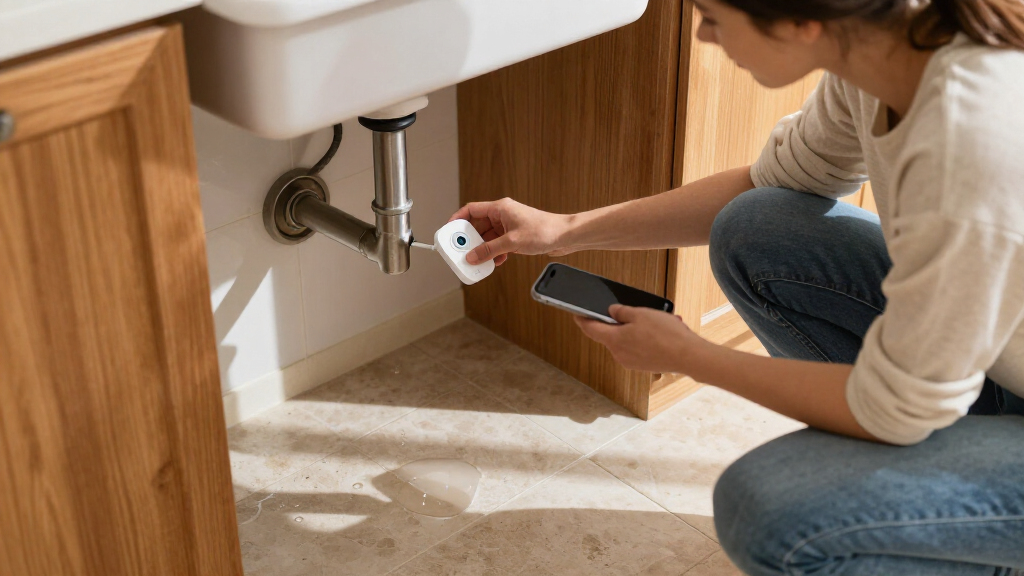
Place point sensors low near washing machines, dishwashers, sinks, toilets, water heaters, and other leak-prone fixtures.
Use rope sensors for longer areas and whole-home flow monitors to flag some unusual or hidden water use.
A basic sensor alerts you; automatic shutoff requires a compatible valve and configured system.
Check local alarm behavior, battery warnings, Wi-Fi needs, subscriptions, and app privacy before choosing a device.
Test sensors and phone alerts on the manufacturer’s schedule, and keep up with plumbing and appliance maintenance.
What a leak detector can catch—and what it can’t
Smart home water leak detectors sense unwanted water and alert you through a local alarm, a phone notification, or both. Some systems also close a compatible valve on the main water line. The distinction matters: a sensor can shorten the time before you learn about a leak, but it does not necessarily stop water from flowing. Without a person nearby or an automatic valve, the water may continue until someone responds.
A point sensor works like a smoke alarm assigned to one patch of floor. It reacts only when water reaches its contact area, so placement determines which leaks it can catch. A whole-home flow monitor watches water use through the main line and may flag a steady, unusual flow that suggests a hidden leak. That wider view can reveal a problem behind a wall or under a floor, but it may not identify its source, and unusual use is not proof of a leak.
These are monitoring tools, not guarantees against water damage. A leak outside a sensor’s coverage, a lost connection, or a dead battery can leave a gap between the problem and your response. The practical choice is to combine the type of detection with the protection you need: a point sensor for a known trouble spot, broader flow monitoring for some hidden leaks, and a configured shutoff valve when stopping incoming water matters. None replaces maintenance or catches every failure.
Choose the sensor type that fits your leak risks
Smart home water leak detectors include point sensors, rope sensors, whole-home flow monitors, and automatic shutoff systems. They cover different failure patterns, so the most expensive or broadest option is not automatically the best fit. A sensor beside a washing machine can catch water on that floor, while a flow monitor may notice persistent water use elsewhere but provide less certainty about its location. If a burst pipe could run for hours while you are away, an alarm alone depends on someone hearing and responding; a compatible shutoff system can add a direct response.
| Type | What it detects | Good fit |
|---|---|---|
| Point sensor | Water touching one sensor | Under a sink or beside a water heater |
| Rope or cable sensor | Water along the cable | Around a washer or across a basement floor |
| Whole-home flow monitor | Unusual water flow through the main line | Some hidden or continuous leaks |
| Automatic shutoff system | A detected leak paired with valve control | Homes that sit empty for long stretches |
A cable sensor routed behind a washing machine can cover more floor than one puck, though the cable still has to cross the route water is likely to take. A main-line monitor watches more broadly, but it may require plumbing work and can flag water use without pinpointing a dripping supply line. Automatic shutoff can limit how long water flows, but it adds valve compatibility, installation, and the possibility that a false trigger interrupts water service. Compare what each system senses and what it can do next with the losses you most want to prevent.
Place sensors where a leak will reach them early
Smart home water leak detectors work best when they sit low near fixtures and appliances with water connections. Start with your washing machine, dishwasher, sinks, toilets, and water heater; add the basement, utility room, or sump-pump area if a leak there could go unnoticed. Water spreads along the floor, so a sensor near the likely source may alert sooner than one placed where a puddle eventually collects. A sensor hidden on a high shelf cannot detect that spread.
Walk through your home and look for braided supply hoses, drain connections, and appliances that run while you’re out. A sensor near the washing-machine hose can catch a drip before it reaches the hallway, while one under the kitchen sink can catch a loose fitting in a dark cabinet. These locations matter because the leak may start where no one routinely looks; catching it at the source can reduce both the time water runs and the area it reaches. That small placement choice often matters more than adding a sensor to a dry, low-risk room.
Set sensors on a clean, flat surface and follow the manufacturer’s instructions. Avoid spots where routine splashes or condensation will trigger repeated alarms. Too many nuisance alerts can teach people to ignore or mute them, which weakens the system precisely when a real leak occurs. A sensor beside a shower may therefore be less useful than one near a hidden supply connection. For larger areas, a rope sensor can trace an appliance perimeter or a vulnerable stretch of basement floor, trading the simplicity of one puck for longer coverage.
In a home with a water heater in the basement and laundry upstairs, two well-placed sensors may cover more meaningful risks than several clustered in one room. Coverage depends on location: point sensors only react when water reaches them, so think about where a puddle would travel first and whether anything on the floor could divert it.
Check how alerts behave when Wi-Fi drops
Smart home water leak detectors may use a siren, a phone app, text, email, or a connected home hub to alert you. Wi-Fi models can often contact an app directly, while other devices rely on a hub or smart-home platform. The alert path determines whether a leak can reach you when you are away: a local siren may help someone at home, while remote notifications depend on power, network access, and correctly configured accounts. Before buying, check which features need the internet and which alarms still work locally during an outage.
Imagine a leak starts at 2 a.m. while your router has lost power. A built-in siren may still sound in the house, but your phone may receive nothing until the connection returns. That makes offline behavior a practical coverage question: if the house is empty, a local alarm alone may not prompt a response. A drained battery, muted notification, or app setting can also interrupt remote alerts, so test the route from sensor to phone instead of assuming setup worked.
Some devices connect to smart-home routines and can trigger other connected equipment, but compatibility varies by network, hub, and platform. Integration can make an alert easier to act on, but it also creates more links that must work together. App-connected products may collect device, usage, or account data, and privacy practices differ. Read the product’s current privacy terms and confirm that the device supports your home network before you build a system around it.
Add automatic shutoff when a warning alone is not enough
A basic leak sensor warns you; an automatic shutoff system can close the home’s water supply when it detects a serious leak. That difference matters if you travel often or leave a second home empty: an alert only limits damage when someone receives it and can act, while a configured valve can respond even when nobody is nearby. The system needs a compatible motorized valve and must be configured to operate it.
For instance, a sensor by a water heater might detect a leak and tell you to call for help, while a paired shutoff system could stop incoming water sooner. That response can limit the amount of water available to feed a leak, but it does not repair the failed hose or fitting, and it can interrupt water service if triggered incorrectly. Valve compatibility and installation matter too. Some main-line devices require plumbing work, so hire a licensed plumber when the design or local requirements call for it.
Before paying for shutoff, compare the full system cost: sensors, hub, valve, installation, and any subscription tied to alerts or service. Check which core functions work without a recurring fee and whether settings and valve operation are affected by a power outage. More automation adds a response step, but it also adds cost and setup requirements; it does not detect every leak or replace appliance checks. It is most useful when the value of limiting unattended water flow justifies those tradeoffs.
Test the system so an alert reaches you in time
Smart home water leak detectors need working power, clean sensors, and a verified alert path to be useful. Check the battery type and low-battery warning, keep contact points unobstructed, and follow the maker’s test instructions. A sensor that has sat untouched for years may have a flat battery or an app that no longer sends notifications. Testing matters because a device can appear installed and ready while a break in power or connectivity quietly prevents it from helping.
Use this simple routine when you install the system, then repeat it on the manufacturer’s schedule:
- Test each sensor using the maker’s approved method, and confirm its local alarm works.
- Check your phone or hub to see that the alert arrives at the account you actually monitor.
- Review power and connection, including battery status and what the device does when Wi-Fi is unavailable.
- Clear dust and obstructions from sensors, then return them to their intended positions.
For example, send a test alert before leaving for a weekend trip, not after you return to a damp basement. Testing the full path checks more than the sensor: it confirms the notification reaches a device or account you are likely to notice. If the product includes temperature or humidity sensing, treat those as separate features; they may provide useful clues but do not guarantee protection from frozen pipes or moisture damage.
Use detectors as one layer of water protection
A leak detector can help you respond faster, but it cannot replace regular plumbing maintenance, appliance checks, or homeowners insurance. A point sensor may miss water that never reaches its floor contact, and a flow monitor may flag unusual use without identifying the source. Every system also depends on sensible placement and working power. Its value is in shortening the time between a problem starting and someone responding, not in making plumbing failures impossible.
For a practical example, check washer hoses and visible fittings while you test the sensor nearby; the detector adds an early warning, while the inspection can catch wear before a leak starts. If you spot a persistent drip, swelling cabinet wood, or a damp patch, investigate promptly or contact a qualified plumbing professional. Monitoring and maintenance work together: one helps surface problems, and the other can prevent or address failures the sensor cannot handle.
Frequently Asked Questions
Do smart water leak detectors work without Wi-Fi?
Some models can still sound a local alarm when Wi-Fi is down, but app alerts and remote features generally need a working connection. Check the specific model’s offline behavior and test it before relying on it.
Will a leak detector automatically stop the water?
A basic sensor usually sends an alert but does not stop the flow. Automatic shutoff requires a compatible motorized valve and a system set up to close it when a leak is detected.
Can a leak detector find hidden leaks?
A point sensor only detects water when it reaches its contact area. A whole-home flow monitor may flag continuous or unusual water use, but it may not identify the leak’s location or catch every small leak.
How many leak sensors should I put in my home?
That depends on your layout and the number of leak-prone spots. Start near appliances and fixtures with water connections, then add basement or utility-room coverage where a leak could go unnoticed; a flow monitor can provide broader monitoring.
Do smart leak detectors need a subscription?
Some devices provide core alerts without a subscription, while others charge for selected services or features. Check the current terms and compare the full cost, including sensors, hubs, valves, and installation.
Conclusion
Start with the places in your home where a leak could spread before you notice it, then choose sensors that cover those spots and test that their alerts reach you. If your home sits empty for long periods, weigh a compatible automatic shutoff system against its full installation and service cost.
A small sensor on a dry floor is easy to forget; the same sensor beside a loose hose can buy you the minutes that keep a drip from becoming a lake.
NFL season / tailgating Picks
team gear
As an affiliate, we earn on qualifying purchases.