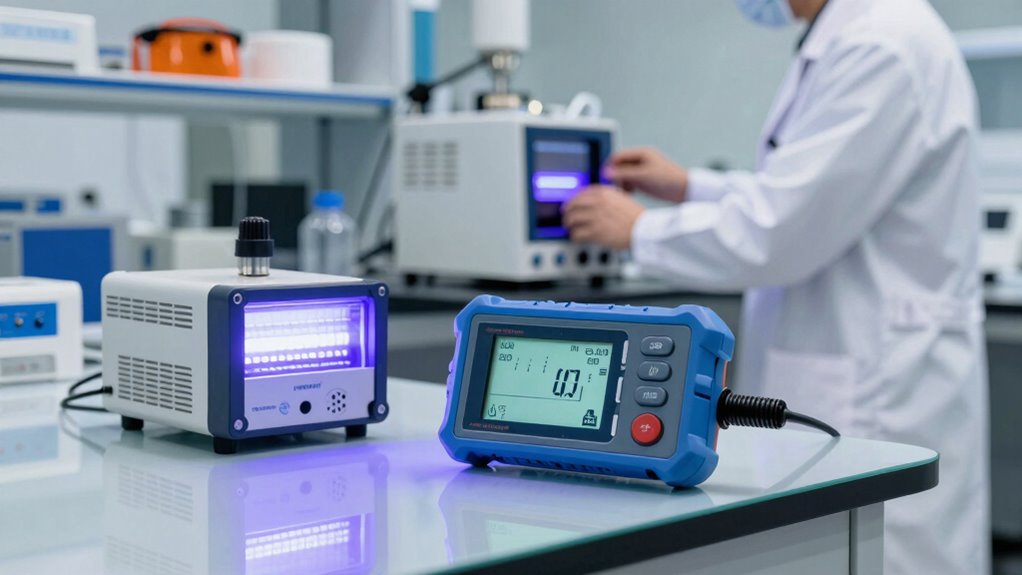
Choosing the right UV light intensity meter for UV systems depends on your specific application—whether for industrial curing, laboratory testing, or environmental monitoring. The LS128 UV Power Meter stands out as the best overall, offering precise readings across a broad UV spectrum. For those needing portability, the Extech UV505 Pocket UV-AB Light Meter provides a compact, reliable solution. Meanwhile, the UV-340A Calibrated Digital UV Sensor excels in laboratory environments with highly accurate measurements. Each of these options comes with tradeoffs—some prioritize accuracy, others usability or versatility. Keep reading for a detailed breakdown to help you find the best fit for your UV measurement needs.

Get home appliances delivered free — and shop member deals
- Fast, free delivery on millions of items
- Access to Prime Big Deal Days deals on October 6–7
- Prime Video, Amazon Music and more included
Complete the kit


Key Takeaways
- The top-ranked meters combine broad spectral measurement with high accuracy, essential for professional UV system calibration.
- Portability and ease of use vary significantly; compact models are ideal for fieldwork, while larger units suit lab settings.
- Calibration and measurement range are critical; cheaper models often compromise on these features, affecting reliability.
- Price reflects build quality and measurement precision—investing more generally guarantees better performance.
- Certain models are better suited for specific UV wavelengths (UVA, UVB, UVC) depending on your application focus.
| LS128 UV Power Meter Radiometer UV Intensity Energy Meter for UV LED 365-405nm | 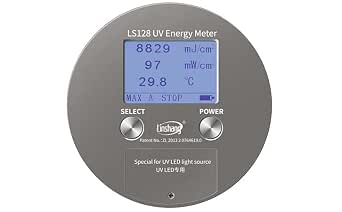 | Best Overall for Precision UV Measurement | Weight: 1.1 pounds | Measurement Range: 365-405nm | Measurement Modes: Manual and automatic | VIEW ON AMAZON | See Our Full Breakdown |
| UVC and UVA Light Meter for UV Index and Irradiance Testing |  | Best for Laboratory and Industrial UV Index Testing | Dimensions: 13.54 x 9.06 x 2.32 inches | Weight: 1.58 pounds | Batteries: 3 AAA batteries (included) | VIEW ON AMAZON | See Our Full Breakdown |
| LS125 UV Light Meter Test Ultraviolet Power UV Intensity Energy for 365nm 395nm UVA LED UVB UVC |  | Best for Versatile UV Testing with Multi-Probe Compatibility | Probes: 9 different UV probes | Display Units: Multiple units selectable | Data Storage: 9 measurement data sets | VIEW ON AMAZON | See Our Full Breakdown |
| Triplett UVLT150 UV AB Light Meter |  | Best for Simple UVA and UVB Measurement | Dimensions: 5.3 x 1.9 x 0.2 inches | Weight: 3.2 ounces | Manufacturer: Triplett Test Equipment | VIEW ON AMAZON | See Our Full Breakdown |
| UV Intensity Meter Four Channel UV Radiometer for Curing and Printing |  | Best for Industrial UV Curing and Printing Applications | Spectral Range: UVC: 230-280nm, UVB: 280-315nm, UVA: 315-400nm, UVV: 395-445nm | Power Measuring Range: 0 – 2000 mW/cm² | Energy Measuring Range: 0 – 999999 mJ/cm² | VIEW ON AMAZON | See Our Full Breakdown |
| Extech UV505 Pocket UV-AB Light Meter – Compact UVA/UVB Light Intensity Meter |  | Best Overall for Portable UVA/UVB Measurement | Dimensions: 1.9 x 1 x 5.2 inches | Weight: 3.2 ounces | Batteries: 2 AAA (included) | VIEW ON AMAZON | See Our Full Breakdown |
| UV Light Meter Test for Ultraviolet Power and Intensity (LS125+UVA-X0) |  | Best for Versatile UV Spectrum Testing with Data Recording | Probes: 9 different UV probes | Measurement Units: Multiple units selectable | Data Storage: 9 measurement data sets | VIEW ON AMAZON | See Our Full Breakdown |
| PerfectPrime Light Meter (UV Light) |  | Best Compact UV Light Meter for Photography and Scientific Use | Package Dimensions: 8.35 x 6.22 x 2.4 inches | Item Weight: 7.4 ounces | Batteries: 2 AA (required) | VIEW ON AMAZON | See Our Full Breakdown |
| UV Light Meter for Ultraviolet Intensity & Exposure Testing – Calibrated Digital UV Sensor for Laboratory, Industrial & Environmental Monitoring – UV-340A |  | Best for High-Precision UV Intensity and Exposure Testing | Measuring Range (Low): 1999 uW/cm^2 | Measuring Range (High): 19990 uW/cm^2 | Resolution (Low): 1 uW/cm^2 | VIEW ON AMAZON | See Our Full Breakdown |
| uv light intensity meter for uv system | Measurement Range |
|---|---|
| LS128 UV Power Meter Radiomete | 365-405nm |
| UVC and UVA Light Meter for UV | UVB, UVC, UVA |
| LS125 UV Light Meter Test Ultr | UV 365nm, 395nm, UVA, UVB, UVC |
| Triplett UVLT150 UV AB Light M | — |
| UV Intensity Meter Four Channe | — |
| Extech UV505 Pocket UV-AB Ligh | Dual-sensor technology for UVA & UVB |
| UV Light Meter Test for Ultrav | Varies by probe |
| PerfectPrime Light Meter | — |
| UV Light Meter for Ultraviolet | — |
More Details on Our Top Picks
LS128 UV Power Meter Radiometer UV Intensity Energy Meter for UV LED 365-405nm
The LS128 UV Power Meter stands out for its high-precision measurement within the 365-405nm range, making it ideal for detailed UV LED testing. Compared with the LS125 UV Light Meter, it offers more advanced data interfaces and report generation capabilities, but its complex interface might challenge newcomers. Its durability in high-temperature environments and connectivity to PC software provide added value for labs and industrial settings. However, the device’s weight and learning curve could be drawbacks for portable or casual use. This meter is best suited for professionals who need accurate, detailed UV data and are comfortable with a more sophisticated interface.
Pros:- High-precision measurement with fast response
- Multiple data interfaces for comprehensive analysis
- Durable design resistant to high temperatures
- PC software compatibility for report export
Cons:- Complex interface may require training
- Limited to UV range 365-405nm, not suitable for other wavelengths
- Relatively heavy for portable use
Best for: UV testing professionals requiring detailed data and long-term durability in high-temperature settings
Not ideal for: Casual hobbyists or field technicians seeking a lightweight, simple device for quick measurements
- Weight:1.1 pounds
- Measurement Range:365-405nm
- Measurement Modes:Manual and automatic
- Interfaces:Maximum values, RT, temperature and power curves
- Temperature Resistance:Up to 100°C
- Connectivity:PC software compatible
Our verdict“This pick is perfect for detailed UV LED measurement in professional or industrial environments where accuracy and data management are priorities.”
UVC and UVA Light Meter for UV Index and Irradiance Testing
The UVC and UVA Light Meter offers broad spectral testing for UVB, UVC, and UVA sources, making it suitable for precise irradiance and UV index assessments. Unlike the LS138 UV Energy Meter, it’s calibrated for consistent readings across multiple UV types, though it’s not designed for sunlight UV testing, which limits its versatility. Its CE certification ensures safety and reliability for industrial and lab environments, but it requires batteries and may not be as portable for outdoor use. This device is best for technicians and scientists focusing on UV source validation and safety compliance in controlled settings.
Pros:- Accurate testing of UVB, UVC, and UVA irradiance
- Calibrated sensors for dependable data
- CE certified for safety and quality
- Suitable for long-term industrial use
Cons:- Not suitable for sunlight UV testing
- Requires 3 AAA batteries for operation
Best for: Laboratory or industrial users needing reliable UV irradiance and UV index measurements across multiple wavelengths
Not ideal for: Outdoor users or casual testers who need portable, sunlight-specific UV measurements
- Dimensions:13.54 x 9.06 x 2.32 inches
- Weight:1.58 pounds
- Batteries:3 AAA batteries (included)
- Certifications:CE
- Measurement Range:UVB, UVC, UVA
- First Available:July 1, 2024
Our verdict“This meter suits professionals who need precise, multi-wavelength UV measurements in lab or industrial environments, but it’s less suited for outdoor or casual use.”
LS125 UV Light Meter Test Ultraviolet Power UV Intensity Energy for 365nm 395nm UVA LED UVB UVC
The LS125 UV Light Meter excels in versatility, supporting nine different UV probes to cover a broad spectrum, from 365nm to UVC wavelengths. It offers real-time data, automatic probe recognition, and multiple units for flexible measurement, making it a strong choice for scientific and industrial applications. Compared with the Triplett UVLT150, which is more simplified, the LS125 provides more detailed data management but requires AAA batteries that may need frequent replacement. Its complex interface might be daunting for beginners, but it stands out for users needing multi-wavelength testing in varied conditions. This device is ideal for advanced laboratories and industrial setups where measurement flexibility is essential.
Pros:- Compatible with nine different UV probes
- Accurate digital measurement with data recording
- Automatic probe recognition and multiple unit options
- Real-time statistics for precise testing
Cons:- Requires AAA batteries, which may need frequent replacement
- Complex interface challenging for novices
Best for: Scientists and industrial operators requiring multi-wavelength UV testing with detailed data recording
Not ideal for: Beginners or casual users seeking an easy-to-use, straightforward UV meter
- Probes:9 different UV probes
- Display Units:Multiple units selectable
- Data Storage:9 measurement data sets
- Power Source:4 AAA batteries
- Automatic Shutdown:After 10 minutes of inactivity
- Measurement Range:UV 365nm, 395nm, UVA, UVB, UVC
Our verdict“This multi-probe compatible meter suits experienced users needing comprehensive UV measurement across multiple wavelengths, though it may be complex for casual testing.”
Triplett UVLT150 UV AB Light Meter
The Triplett UVLT150 offers straightforward measurement of UVA and UVB rays, making it suitable for industrial, medical, and research environments that need quick, reliable readings. Its backlit LCD enhances visibility in low-light conditions, and features like zeroing and data hold improve usability. Compared with the more feature-rich LS125, it lacks multi-probe compatibility and advanced data interfaces, which might limit its use for complex testing scenarios. Its compact size and included carrying case make it portable, but its limited measurement spectrum restricts its applicability outside UVA and UVB ranges. This device is best for users who prioritize ease of use and quick readings over detailed data management.
Pros:- Simple, reliable UVA and UVB measurement
- Backlit LCD for easy reading
- Includes zeroing, data hold, and auto power off
- Portable with carrying case
Cons:- Limited to UVA and UVB, not suitable for UVC or broader spectra
- No rugged or waterproof design for outdoor use
Best for: Industrial or medical users requiring fast, reliable UVA/UVB measurements in the field or lab
Not ideal for: Researchers needing multi-wavelength testing or detailed data analysis
- Dimensions:5.3 x 1.9 x 0.2 inches
- Weight:3.2 ounces
- Manufacturer:Triplett Test Equipment
- Item Model:UVLT150
- Available:October 23, 2024
Our verdict“This meter is a good choice for quick, dependable UVA/UVB readings where simplicity and portability matter most.”
UV Intensity Meter Four Channel UV Radiometer for Curing and Printing
The UV Intensity Meter Four Channel UV Radiometer provides comprehensive UV analysis across UVA, UVB, UVV, and UVC wavelengths, making it ideal for curing processes and printing industries. Its ability to measure energy and intensity in real time, along with temperature and test duration monitoring, sets it apart from simpler UV meters like the LS128. The inclusion of PC software enhances data analysis and report generation, but the device’s size and weight limit portability for field use. Its professional-grade features justify its higher price point, though casual users might find it overly complex. This meter is best for technicians and operators in industrial settings requiring detailed, multi-parameter UV testing and documentation.
Pros:- Measures multiple UV wavelengths simultaneously
- Real-time temperature and test duration monitoring
- Includes PC software for detailed reporting
- Suitable for complex industrial applications
Cons:- Requires 2 AAA batteries, which may need frequent replacement
- Larger size and weight reduce portability
Best for: Industrial professionals in curing, printing, or coating industries needing multi-channel UV analysis
Not ideal for: Casual hobbyists or small-scale users looking for a portable, simple UV meter
- Spectral Range:UVC: 230-280nm, UVB: 280-315nm, UVA: 315-400nm, UVV: 395-445nm
- Power Measuring Range:0 – 2000 mW/cm²
- Energy Measuring Range:0 – 999999 mJ/cm²
- Temperature Range:-55°C to +125°C
- Sampling Speed:2048 times/second
- Dimensions:120mm diameter x 13mm thickness
Our verdict“This professional-grade UV radiometer is ideal for industrial environments demanding detailed, multi-wavelength UV analysis and comprehensive data management.”
Extech UV505 Pocket UV-AB Light Meter – Compact UVA/UVB Light Intensity Meter
The Extech UV505 stands out as the most versatile and portable option in this lineup, especially suited for on-the-go measurement of UVA and UVB light levels. Its dual sensors enable simultaneous readings of both UV spectra, making it more comprehensive than single-spectrum meters like the PerfectPrime Light Meter. The backlit LCD ensures clear visibility in various environments, and data capture features like peak hold and min/max add valuable functionality. However, its limited scope to UVA and UVB means it can’t handle UVC or broader UV spectrum testing, unlike the UV Light Meter for Ultraviolet Intensity & Exposure Testing. The reliance on 2 AAA batteries is a minor inconvenience, but the lack of connectivity options could limit data management for advanced users. Overall, this meter offers a compact, reliable choice for field technicians and lab personnel needing quick, accurate UVA/UVB readings without fuss.
Pros:- Compact and lightweight, perfect for portable use
- Measures both UVA and UVB simultaneously for comprehensive testing
- Backlit display ensures clear readings in all lighting conditions
- Includes useful data features like peak hold and min/max
Cons:- Limited to UVA and UVB spectrum, no UVC measurement
- No connectivity options for data transfer or remote monitoring
- Requires 2 AAA batteries, which may need frequent replacement
Best for: Field technicians and lab workers needing portable, dual-spectrum UVA/UVB measurements
Not ideal for: Users requiring UVC measurement or advanced data connectivity, as this model focuses solely on UVA and UVB
- Dimensions:1.9 x 1 x 5.2 inches
- Weight:3.2 ounces
- Batteries:2 AAA (included)
- Measurement Range:Dual-sensor technology for UVA & UVB
- Display:Backlit LCD
- Features:Peak hold, min/max, zero function, auto power off
Our verdict“This is an excellent choice for professionals who need quick, reliable UVA/UVB measurements on the move.”
UV Light Meter Test for Ultraviolet Power and Intensity (LS125+UVA-X0)
The LS125+UVA-X0 excels in providing a broad range of UV measurements across multiple wavelengths, making it ideal for professional environments needing detailed spectral analysis. Its nine different UV probes allow testing from 365nm to UVC, surpassing basic models like the PerfectPrime Light Meter which offers limited spectral data. The automatic probe recognition and multiple measurement units streamline workflow, while data recording and maximum value locking support thorough analysis. However, its interface may be complex for beginners, and it depends on 4 AAA batteries, which could be a concern for long-term use. Unlike the UV Light Meter for Ultraviolet Intensity & Exposure Testing, it lacks high-precision calibration certificates, but it offers broader spectral coverage. This meter makes the most sense for labs, industrial settings, or research where detailed UV spectral data is crucial.
Pros:- Supports multiple UV probes for comprehensive spectral analysis
- Automatic probe recognition simplifies setup
- Data storage for up to 9 measurement sets
- Multiple measurement units for flexible reporting
Cons:- Requires 4 AAA batteries, which may need frequent replacement
- Complex interface may challenge beginners
- No built-in calibration certificate
Best for: Laboratory professionals and industrial users requiring versatile UV spectrum testing and detailed data logging
Not ideal for: Casual users or those needing simple, quick UV intensity checks without spectral detail
- Probes:9 different UV probes
- Measurement Units:Multiple units selectable
- Data Storage:9 measurement data sets
- Power Source:4 AAA batteries
- Auto Shutoff:After 10 minutes
- Measurement Range:Varies by probe
Our verdict“This multi-probe UV meter offers broad spectral testing suited for detailed UV research and industrial applications.”
PerfectPrime Light Meter (UV Light)
The PerfectPrime Light Meter offers a straightforward, portable solution for measuring UV light levels, especially suitable for photographers and scientific amateurs. Its compact size and lightweight design make it easy to carry around, and it operates on 2 AA batteries, broadly available and simple to replace. Compared with more feature-rich meters like the UV Light Meter for Ultraviolet Intensity & Exposure Testing, this model provides less detailed specifications, and its measurement accuracy or range isn’t clearly defined, which could be problematic in precise applications. Nonetheless, it’s a practical choice for quick assessments in controlled environments or hobbyist projects. The limited information on its technical capabilities suggests it’s best suited for casual or educational use rather than professional, high-precision tasks.
Pros:- Lightweight and highly portable
- Simple operation with 2 AA batteries
- Suitable for quick UV light level assessments in photography
- Compact size fits easily into camera bags or pockets
Cons:- Limited information on measurement accuracy and range
- No detailed specifications or calibration data
- Potentially limited applicability for scientific or industrial needs
Best for: Photographers and hobbyists needing a portable UV light measurement device for casual use
Not ideal for: Professionals requiring high accuracy, detailed specs, or broad spectrum UV measurement
- Package Dimensions:8.35 x 6.22 x 2.4 inches
- Item Weight:7.4 ounces
- Batteries:2 AA (required)
- Department:Photography/Adults
- Date First Available:April 5, 2023
Our verdict“This compact UV meter is ideal for casual photographers or hobbyists who need basic UV light readings on the go.”
UV Light Meter for Ultraviolet Intensity & Exposure Testing – Calibrated Digital UV Sensor for Laboratory, Industrial & Environmental Monitoring – UV-340A
The UV Light Meter for Ultraviolet Intensity & Exposure Testing is tailored for professionals demanding high accuracy and reliability, such as laboratory researchers or industrial inspectors. Its calibration certificate and high-resolution LCD display deliver precise measurements across the UVA and UVB spectrum from 290 nm to 390 nm, outperforming basic models like the Extech UV505 in accuracy. The separate UV probe adds flexibility, allowing measurements in hard-to-reach places. However, its need for a 9V battery and the absence of data logging or connectivity limit long-term data management. This instrument is less suited for casual users or those needing broad-spectrum UV testing beyond 290-390 nm, but it excels where precise, calibrated readings are critical for compliance or scientific research.
Pros:- High accuracy with calibration certificate ensures reliable results
- Separate UV probe offers flexible positioning
- Wide measurement spectrum covering UVA and UVB
- Clear LCD display for easy reading
Cons:- Requires a 9V battery, which may be less convenient
- No built-in data logging or wireless connectivity
- Limited to 290-390 nm range, not suitable for UVC or broader spectra
Best for: Research labs and industrial environments requiring calibrated, high-accuracy UV measurements
Not ideal for: General consumers or hobbyists who do not need professional calibration or high-precision data
- Measuring Range (Low):1999 uW/cm^2
- Measuring Range (High):19990 uW/cm^2
- Resolution (Low):1 uW/cm^2
- Resolution (High):10 uW/cm^2
- Accuracy:±(4% FS + 2 dgt)
- Sensor Spectrum:290 nm to 390 nm
Our verdict“This high-precision UV meter is ideal for professionals needing dependable, calibrated measurements with flexible probe positioning.”
How We Picked
My evaluation focused on key factors relevant to UV light intensity measurement: measurement accuracy, spectral range, build quality, ease of use, calibration features, and value for money. I compared these products based on their technical specifications, user reviews, and overall design to determine which offer the best balance of performance and usability. Products are ranked to serve different needs—from professional lab-grade meters to portable options for field use—ensuring a range of choices for various budgets and applications.Factors to Consider When Choosing Uv Light Intensity Meter For Uv Systems
Selecting the right UV light intensity meter involves understanding several key factors that impact measurement reliability and usability. Beyond specs, it’s vital to consider the spectral range, calibration options, and how the device fits into your workflow. Making the right choice can prevent costly errors and ensure accurate UV system monitoring, especially in sensitive or regulated environments.Spectral Range and Wavelength Compatibility
Different UV meters are calibrated for specific wavelength ranges, such as UVA, UVB, or UVC. It’s essential to match the device’s spectral sensitivity with your UV source to obtain accurate readings. Using a meter outside its optimal range can lead to misleading results, which might compromise your UV system’s performance or safety. Consider your primary application—whether for curing, sterilization, or research—and select a meter that covers the relevant spectrum.
Measurement Accuracy and Calibration
Accuracy is paramount in UV measurement, especially in professional or regulatory contexts. Look for meters with traceable calibration certificates or those that offer easy calibration options. Cheaper, uncalibrated models might seem appealing but can produce unreliable data, leading to errors in process control. Investing in a high-precision, calibrated device ensures your measurements are consistent over time and comparable across different settings.
Portability and Ease of Use
Your workflow determines whether portability matters. Field technicians benefit from compact, lightweight meters that can be used on-site without fuss. Conversely, lab environments may prioritize larger, more feature-rich models with detailed display options and advanced settings. Always consider user interface design—clear display, intuitive controls, and straightforward operation can save time and reduce measurement errors.
Build Quality and Durability
UV measurement often occurs in challenging environments—outdoors, industrial setups, or laboratories. Choosing a device with durable construction, protective casing, and reliable sensors extends its lifespan and maintains measurement integrity. Some models include waterproofing or dust resistance, which are crucial in specific settings. Cheaper units might not withstand harsh conditions, leading to frequent replacements or inaccurate readings over time.
Price and Value
While budget options are tempting, they often sacrifice measurement precision, durability, or calibration features. Higher-priced meters typically deliver more accurate, consistent data and longer-lasting build quality. Consider your measurement requirements—if you need precision for compliance or critical applications, investing in a premium model pays off. For casual or non-critical use, a mid-range device might provide adequate performance at a better price point.
Frequently Asked Questions
How do I know if a UV light meter is suitable for my specific UV wavelength needs?
The key is to check the spectral range the meter can measure. Some models are designed specifically for UVA, UVB, or UVC wavelengths. If your application involves sterilization, UVC meters are necessary; for curing processes, UVA or UVB meters might suffice. Always verify the device’s spectral sensitivity against your UV source to ensure accurate readings. If the source emits across multiple ranges, consider a meter with a wider spectral range or multiple sensors.
Can I use a general UV light meter for calibrating UV sterilization systems?
Using a dedicated UV light meter with high accuracy and traceable calibration is essential for sterilization processes. General or low-cost meters may provide approximate readings but lack the precision needed for compliance and safety standards. A calibrated, professional-grade meter ensures your sterilization systems are functioning correctly, avoiding under- or over-exposure that could compromise safety or efficiency.
How often should I calibrate my UV light meter?
Calibration frequency depends on usage intensity and environmental conditions, but a common recommendation is at least once a year for professional applications. If you use the meter frequently or in critical environments, more frequent calibration—every 3-6 months—may be necessary. Always follow the manufacturer’s guidelines and consider professional calibration services to maintain measurement integrity over time.
Are portable UV meters accurate enough for professional laboratory use?
Many portable meters now offer high accuracy and are suitable for professional use, provided they are properly calibrated and meet industry standards. However, for highly sensitive or regulated testing, laboratory-grade, benchtop devices with advanced features and certified calibration are preferable. Always check the specifications and calibration certifications before relying on a portable device for critical measurements.
What is the main tradeoff when choosing a less expensive UV light meter?
Lower-cost meters often sacrifice measurement accuracy, spectral range, or build quality. They may lack proper calibration options or durable construction, leading to unreliable data over time. While suitable for casual or non-critical applications, these models can introduce errors if used in professional settings. Investing in a slightly more expensive, calibrated device can prevent costly mistakes and ensure consistent, reliable measurements.
Conclusion
For those requiring the highest accuracy and durability, the LS128 UV Power Meter stands out as the best overall choice. Budget-conscious users or field technicians will find the Extech UV505 Pocket UV-AB Light Meter offers excellent portability at a reasonable price. Researchers and laboratories should consider the UV-340A Calibrated Digital UV Sensor for precision measurements. Beginners or casual users can start with simpler, less expensive models, but should be aware of their limitations. Ultimately, matching your specific UV system needs with the right features ensures reliable, precise measurements every time.NFL season / tailgating Picks
team gear
As an affiliate, we earn on qualifying purchases.