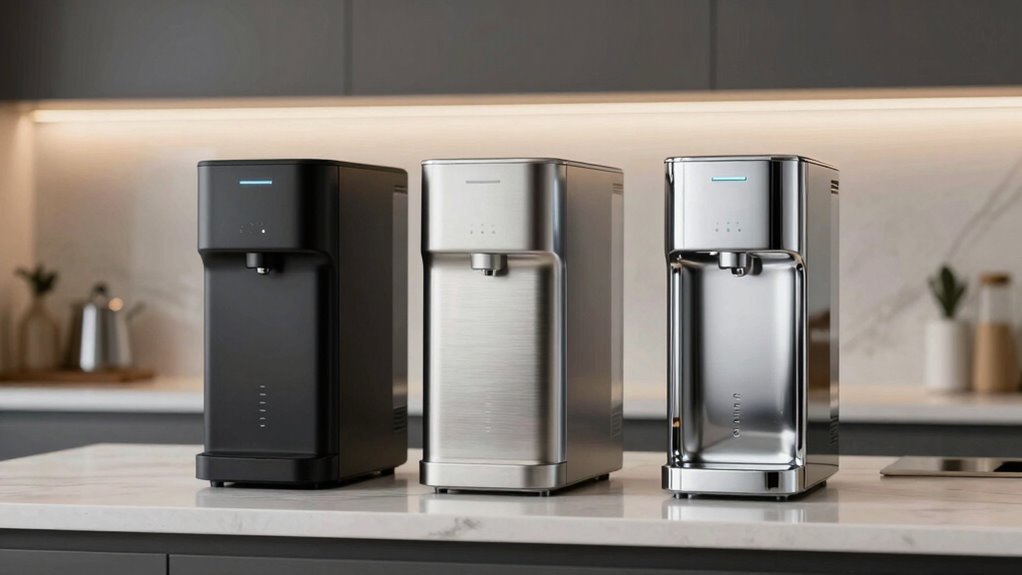

If you’re seeking the best template-assisted crystallization water conditioners for 2026, I recommend the Premiersoft Salt-Free Whole House Water Softener, the Scale Prevention Water Conditioner System, and the Scale Salt-Free Water Conditioner with a 15 GPM capacity. These systems effectively prevent scale build-up, are eco-friendly, and require minimal maintenance. They’re ideal for small to mid-sized homes and support ongoing water quality. Continue exploring to discover which one suits your needs best.
Key Takeaways
- Focus on systems with durable TAC media beads that resist deterioration for long-term effectiveness.
- Prioritize models supporting flow rates up to 24 GPM for larger households and higher demand.
- Look for eco-friendly, salt-free systems that require minimal maintenance and no electricity.
- Compare costs and features to optimize budget while ensuring reliable scale prevention and water conditioning.
- Consider user reviews and expert ratings for the top-rated Template Assisted Crystallization systems for 2026.
| Premiersoft Salt-Free Whole House Water Softener |  | Best Salt-Free Solution | Flow Rate: 12 GPM | Installation Type: Pipe-in/pipe-out connections | Treatment Technology: TAC (Template Assisted Crystallization) | VIEW LATEST PRICE | See Our Full Breakdown |
| Scale Prevention Water Conditioner System |  | Most Powerful Flow Rate | Flow Rate: 24 GPM | Installation Type: Pipe-in/pipe-out connections | Treatment Technology: TAC (Template Assisted Crystallization) | VIEW LATEST PRICE | See Our Full Breakdown |
| Scale Salt Free Water Conditioner 15 GPM Whole House System |  | Best Budget-Friendly Option | Flow Rate: 15 GPM | Installation Type: Two connections, pipe-in/pipe-out | Treatment Technology: TAC (Template Assisted Crystallization) | VIEW LATEST PRICE | See Our Full Breakdown |
More Details on Our Top Picks
Premiersoft Salt-Free Whole House Water Softener
Are you looking for a low-maintenance, eco-friendly water conditioner that’s perfect for a small to mid-sized home? The Premiersoft Salt-Free Whole House Water Softener is an excellent choice. Designed for homes with 2-4 bathrooms, it offers a 12 GPM flow rate and actively prevents scale buildup without salt or chemicals. Its simple, installation-friendly design requires no electricity or backwashing, making it practically maintenance-free. Using TAC technology, it creates seed crystals that dissolve existing scale and stop new deposits. This system protects your pipes and appliances, extends their lifespan, and maintains water quality effortlessly, all while being environmentally friendly.
- Flow Rate:12 GPM
- Installation Type:Pipe-in/pipe-out connections
- Treatment Technology:TAC (Template Assisted Crystallization)
- Suitable for Whole House:Yes (2-4 bathrooms)
- Salt-Free:Yes
- Chemical Use:No chemicals or salt needed
- Additional Feature:Physical water treatment method
- Additional Feature:No electricity needed
- Additional Feature:Low maintenance design
Scale Prevention Water Conditioner System
If you’re seeking a reliable solution to prevent lime scale buildup in your home’s plumbing and appliances, the Scale Prevention Water Conditioner System offers an effective, salt-free option. It uses Template Assisted Crystallization (TAC) technology with etched porcelain beads that convert dissolved calcium and magnesium into microscopic crystals. These crystals don’t stick to surfaces, stopping scale formation and even dissolving existing buildup. The system supports whole-house flow rates up to 24 GPM and requires no electricity or salt, making it simple to install and maintain. It preserves essential minerals and enhances energy efficiency, helping your pipes and appliances last longer without the health concerns linked to traditional softeners.
- Flow Rate:24 GPM
- Installation Type:Pipe-in/pipe-out connections
- Treatment Technology:TAC (Template Assisted Crystallization)
- Suitable for Whole House:Yes
- Salt-Free:Yes
- Chemical Use:No chemicals or salt needed
- Additional Feature:Supports up to 1000 ppm TDS
- Additional Feature:Freestanding with adapters
- Additional Feature:No electrical power required
Scale Salt Free Water Conditioner 15 GPM Whole House System
The Scale Salt Free Water Conditioner, 15 GPM Whole House System, stands out as an ideal choice for homeowners seeking an effective, maintenance-friendly solution to prevent lime scale buildup. It actively prevents scale from forming on pipes, fixtures, and appliances, and can even remove existing scale. Plus, it cuts soap and detergent use by around 50%, leading to cleaner laundry and brighter colors. Installation is straightforward, with just two connections and no complex wiring. It saves energy by preventing scale insulation, extends appliance lifespan, and maintains water mineral balance without adding sodium. Overall, it’s a cost-effective, eco-friendly way to improve water quality across your entire home.
- Flow Rate:15 GPM
- Installation Type:Two connections, pipe-in/pipe-out
- Treatment Technology:TAC (Template Assisted Crystallization)
- Suitable for Whole House:Yes
- Salt-Free:Yes
- Chemical Use:No chemicals or salt needed
- Additional Feature:Reduces soap/detergent use
- Additional Feature:Eliminates hard water stains
- Additional Feature:Maintains mineral balance
Factors to Consider When Choosing a Template Assisted Crystallization Water Conditioner
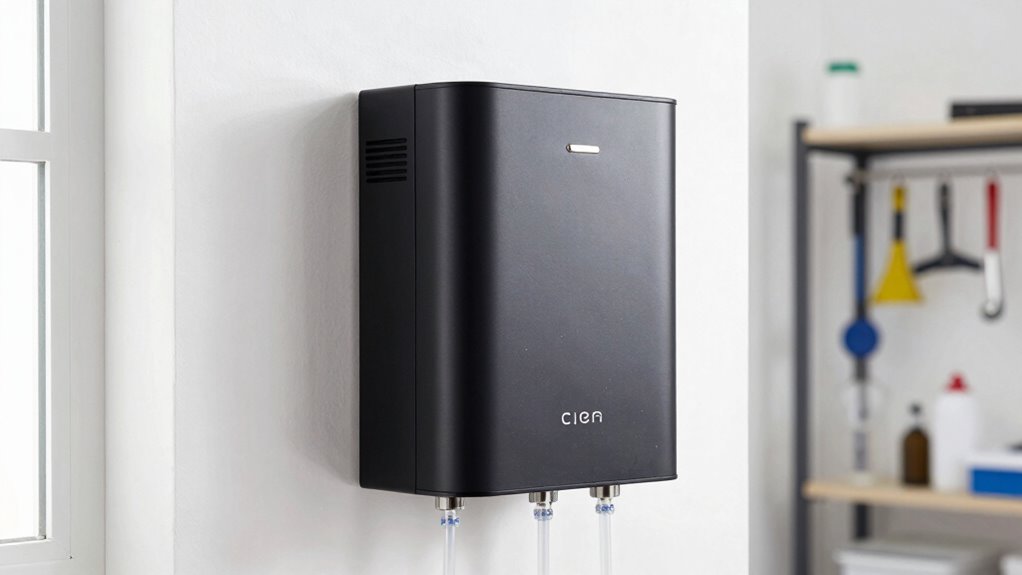
When selecting a template assisted crystallization water conditioner, I consider factors like water flow rate needs and system capacity to guarantee it matches my household’s consumption. I also look for models that are easy to install and maintain, so I don’t face unnecessary hassle. Finally, I compare the treatment technologies to choose one that offers the best efficiency for my water quality.
Water Flow Rate Needs
Choosing a template assisted crystallization water conditioner requires careful attention to your household’s water flow rate needs. You want to ensure the system’s capacity matches your peak water demand to avoid pressure drops or ineffective scale prevention. First, measure your home’s maximum simultaneous water usage—think showers, laundry, and faucets running together. For larger households or high water consumption, look for systems with a flow rate of at least 15-24 GPM. An undersized system can cause reduced water pressure or fail to prevent scale buildup effectively. It’s also essential to match the flow rate specifications with your plumbing size and water usage patterns. Doing so guarantees your conditioner operates efficiently, providing consistent water quality without sacrificing pressure or performance.
System Capacity Compatibility
To guarantee your water conditioner effectively prevents scale buildup, it’s essential to match its capacity with your household’s peak water demand. This means ensuring the system’s flow rate aligns with your home’s maximum water use, preventing under- or over-treatment. Check the maximum TDS level the conditioner supports—most handle up to 1000 ppm—so it’s compatible with your water source. Consider your household size; systems rated for 12 GPM or 24 GPM should suit smaller or larger homes respectively. Also, verify that the media tank size and flow rate match your typical water usage patterns, especially if you have multiple bathrooms or fixtures. Proper capacity matching ensures the system works efficiently, providing reliable scale prevention without unnecessary strain or reduced lifespan.
Installation Simplicity Level
Installing a Template Assisted Crystallization (TAC) water conditioner is generally straightforward, especially since most systems are designed for easy DIY setup. They typically involve simple pipe-in and pipe-out connections, which means you don’t need special tools or plumbing skills. Most systems don’t require electrical power, backwashing, or drainage, reducing installation complexity. To guarantee a smooth process, it’s important to check that the system’s dimensions and connection points fit your existing plumbing. Clear instructions and minimal component adjustments make installation hassle-free. Proper placement within the water line is vital to maximize treatment efficiency and prevent scale buildup. Overall, these features make TAC systems accessible for homeowners who want effective water conditioning without complicated or time-consuming installation steps.
Maintenance Requirements
When considering a TAC water conditioner, it’s helpful to comprehend the maintenance involved to guarantee it keeps working effectively. Most TAC systems are designed to be low-maintenance, often needing only periodic media replacement or regeneration. They generally don’t require electricity, backwashing, or chemical additives, which means less ongoing work for you. The media inside typically lasts several years, depending on your water usage and quality, reducing the frequency of replacement. Routine inspections and flushing are recommended to ensure the system functions properly over time. Maintenance frequency varies based on water hardness and household consumption, but overall, these systems involve minimal intervention. This ease of upkeep makes TAC conditioners a convenient and reliable choice for maintaining water quality with little effort.
Treatment Technology Types
Choosing the right TAC water conditioner involves understanding the different treatment technology types available. TAC systems use specially etched porcelain or mineral beads to create microscopic crystals in water. This process transforms dissolved minerals like calcium and magnesium into stable, low-energy crystals that don’t stick to surfaces, preventing scale buildup. Unlike traditional water softeners, TAC doesn’t remove minerals; instead, it modifies their form, maintaining mineral content while reducing scaling issues. These systems operate without electricity, chemicals, or salt, making them low-maintenance and environmentally friendly options. The crystalline process not only prevents new deposits but also dissolves existing scale on pipes and appliances. When selecting a TAC system, it’s essential to contemplate how this technology will fit your specific water conditions and maintenance preferences.
Durability and Longevity
Since high-quality TAC media beads are built to withstand continuous water flow, they play a crucial role in ensuring the system’s durability over time. These beads are designed to resist deterioration, maintaining effectiveness for years with minimal degradation. Proper installation and regular maintenance further extend the system’s lifespan, preventing early failure. Because TAC systems lack moving parts and chemicals, they offer low maintenance requirements and increased reliability. Systems rated for higher flow rates and water TDS levels tend to have more robust construction, enhancing longevity. Regular monitoring of system performance and timely media replacement are essential to avoid premature failure and ensure consistent scale prevention. Overall, investing in durable materials and proper upkeep guarantees a long-lasting, effective water conditioning solution.
Cost and Budget Fit
Considering your budget is essential when selecting a template assisted crystallization water conditioner, as costs can vary substantially based on system features and flow rates. Prices generally range from a few hundred to over a thousand dollars, depending on the system’s capacity and complexity. Keep in mind that initial purchase price isn’t the only expense—installation and ongoing maintenance also add to the total cost. Systems with higher flow rates, like 24 GPM, tend to be more expensive upfront than smaller units designed for 2-4 bathrooms. However, investing in a pricier model may pay off in the long run through greater durability and fewer replacement needs. Comparing the total ownership costs guarantees you choose a system that fits your budget while adequately meeting your household’s water treatment needs.
Frequently Asked Questions
How Long Does It Take to See Results After Installation?
You’ll usually see results within a few days after installing a template-assisted crystallization water conditioner. I noticed improved water quality and scale reduction in my home within a week. Keep in mind, factors like water usage and mineral levels can influence how quickly you see benefits. Just be patient, and you’ll start noticing less buildup and softer water fairly soon after installation.
Is Maintenance Required for Template Assisted Crystallization Systems?
Yes, maintenance is generally required for template assisted crystallization systems, but it’s minimal. I recommend regularly checking the system’s filter and resin lifespan, which varies by water usage. Most units need an annual rinse or filter replacement to keep performance excellent. Staying on top of these simple tasks ensures your water stays clean and your system works efficiently, saving you time and potential costly repairs down the line.
Can These Conditioners Remove Existing Limescale Buildup?
No, these conditioners can’t remove existing limescale buildup. They work by converting dissolved calcium and magnesium into harmless crystals that prevent new scale from forming. If you’re dealing with existing limescale, you’ll need to use descaling solutions or physically remove the buildup first. Once that’s done, a crystallization system can help keep your pipes and appliances free of future scale formation.
Are They Effective in Well Water With High Mineral Content?
Yes, I’ve found that template assisted crystallization (TAC) conditioners are quite effective in well water with high mineral content. They work by transforming excess minerals into harmless crystals, preventing scale buildup. While they don’t remove minerals or contaminants, they considerably reduce scaling issues, helping protect plumbing and appliances. I recommend pairing them with other filtration methods if you’re concerned about removing specific impurities, but they’re a solid choice for managing hard well water.
What Is the Typical Lifespan of a TAC Water Conditioner?
A typical TACS water conditioner lasts about 10 to 15 years with proper maintenance. I recommend checking the manufacturer’s guidelines and scheduling regular inspections to guarantee peak performance. The lifespan depends on water quality and usage levels, but generally, these systems are quite durable. I’ve found that staying up-to-date with filter replacements and periodic cleanings helps extend the lifespan and keeps your water crystal-clear and soft.
Conclusion
Choosing the right template assisted crystallization water conditioner is like finding the perfect key for your lock—once it fits, everything runs smoothly. I remember installing mine and noticing the difference immediately—no more buildup, just clear, soft water flowing effortlessly. It’s like giving your home a fresh breath of life. With the right system, you’ll enjoy hassle-free maintenance and cleaner pipes, making your water treatment feel like a well-choreographed dance rather than a chore.