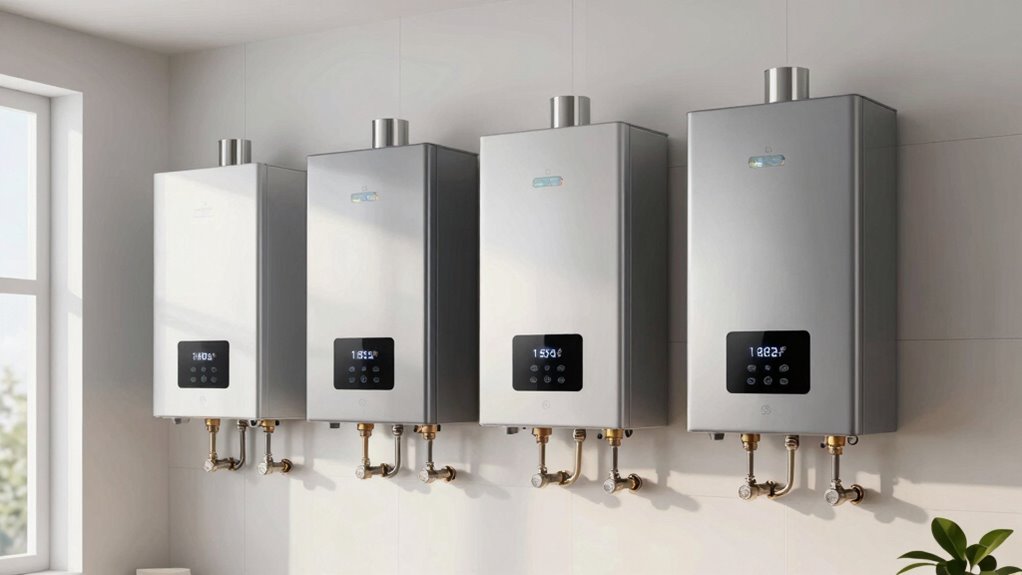

When selecting a non condensing tankless water heater for a medium home, the key factors include capacity, efficiency, and installation flexibility. The best overall pick is the Rinnai RU199iN for its high flow rate and reliability, while the Rheem RTG Series 7.0 GPM offers a solid outdoor solution at a lower price point. Buyers often face tradeoffs between capacity, energy efficiency, and whether the unit is condensing or non condensing. Continue reading to see how these options compare and find the best fit for your home.

Get home appliances delivered free with Prime
- Fast, free delivery on millions of items
- Prime Video, Amazon Music and more included
- Member-only deals all year
Complete the kit


Key Takeaways
- Capacity needs are the primary driver; higher GPM models better serve medium homes with multiple bathrooms.
- Non condensing models tend to be simpler and cheaper but may have lower efficiency compared to condensing units.
- Indoor versus outdoor installation impacts space requirements and ease of access for maintenance.
- Gas type (natural gas vs. propane) influences choice depending on existing home infrastructure.
- Top models balance flow rate and durability, but tradeoffs exist between upfront cost and long-term efficiency.
| Rheem RTG Series 7.0 GPM Natural Gas Tankless Water Heater Outdoor, 160,000 BTUs, High Efficiency |  | Best Overall for Large, Outdoors-Ready Homes | Flow Rate: 7.0 GPM | BTU Output: 160,000 BTUs | Efficiency: 0.82 UEF | VIEW ON AMAZON | See Our Full Breakdown |
| Rinnai RU199iN Condensing Tankless Hot Water Heater, 11 GPM, Natural Gas, Indoor Installation |  | Best for High-Flow Indoor Performance with Energy Savings | Flow Rate: 11 GPM | Gas Type: Natural Gas | Efficiency: ENERGY STAR qualified | VIEW ON AMAZON | See Our Full Breakdown |
| Rheem RTG Series 8.4 GPM Natural Gas Tankless Water Heater Indoor |  | Best for Medium to Large Indoor Homes with High Demand | Flow Rate: 8.4 GPM at 35°F rise | BTU: 180,000 BTUs | Efficiency: 0.82 UEF | VIEW ON AMAZON | See Our Full Breakdown |
| Rheem RTG Series 7.0 GPM Liquid Propane Tankless Water Heater Indoor |  | Best for Propane-Using Larger Homes Needing Hot Water | Flow Rate: 7.0 GPM | BTU: 160,000 | Efficiency: 0.82 UEF | VIEW ON AMAZON | See Our Full Breakdown |
| Rinnai RE199iN Non-Condensing Natural Gas Tankless Water Heater |  | Best for Supporting Multiple Fixtures with Reliability | Flow Rate: Up to 9.8 GPM | BTU: 199,000 | Warranty: 15-year heat exchanger, 5-year parts, 1-year labor | VIEW ON AMAZON | See Our Full Breakdown |
| Rheem RTGH Series 8.4 GPM Natural Gas Tankless Water Heater Indoor, 157,000 BTUs, High Efficiency, Condensing, Ultra-Low NOx |  | Best Overall for Large, High-Demand Homes | Flow Rate: 8.4 GPM | BTUs: 157,000 | Efficiency: 0.93 UEF | VIEW ON AMAZON | See Our Full Breakdown |
| Rheem RTG Series 7.0 GPM Liquid Propane Tankless Water Heater Outdoor |  | Best for Outdoor, Budget-Conscious Large Homes | Flow Rate: 7.0 GPM | BTUs: 160,000 | Efficiency: 0.82 UEF | VIEW ON AMAZON | See Our Full Breakdown |
| non condensing tankless water heater for medium home | Flow Rate | Installation | Warranty | Efficiency |
|---|---|---|---|---|
| Rheem RTG Series 7.0 GPM Natur | 7.0 GPM | Outdoor | 15-year heat exchanger, 5-year parts | 0.82 UEF |
| Rinnai RU199iN Condensing Tank | 11 GPM | Indoor | 15-year heat exchanger, 5-year parts, 1-year labor | ENERGY STAR qualified |
| Rheem RTG Series 8.4 GPM Natur | 8.4 GPM at 35°F rise | Indoor, direct vent | 15-year heat exchanger, 5-year parts | 0.82 UEF |
| Rheem RTG Series 7.0 GPM Liqui | 7.0 GPM | Indoor, wall-mount | 15-year heat exchanger, 5-year parts | 0.82 UEF |
| Rinnai RE199iN Non-Condensing | Up to 9.8 GPM | Indoor, wall-mounted | 15-year heat exchanger, 5-year parts, 1-year labor | — |
| Rheem RTGH Series 8.4 GPM Natu | 8.4 GPM | Indoor, direct vent | 15-year heat exchanger, 5-year parts | 0.93 UEF |
| Rheem RTG Series 7.0 GPM Liqui | 7.0 GPM | Outdoor | 15-year heat exchanger, 5-year parts | 0.82 UEF |
More Details on Our Top Picks
Rheem RTG Series 7.0 GPM Natural Gas Tankless Water Heater Outdoor, 160,000 BTUs, High Efficiency
This outdoor model stands out for delivering reliable, continuous hot water for large households, especially those with multiple bathrooms, thanks to its 7.0 GPM flow rate and 160,000 BTUs. Compared to the indoor Rheem RTG Series, this unit eliminates space concerns but sacrifices indoor installation flexibility. Its outdoor design makes it less suitable for colder climates unless paired with additional freeze protection. The energy efficiency (0.82 UEF) and safety features like freeze and flame protection provide peace of mind, though the upfront cost and need for professional outdoor installation are notable tradeoffs.
Pros:- Provides endless hot water for large households
- Energy-efficient operation reduces utility bills
- Compact outdoor design with easy wall mounting
- Robust safety features and durable construction
Cons:- Requires professional outdoor installation
- Limited to outdoor use, not suitable for indoor setups
- Higher initial purchase price compared to traditional tanks
Best for: Families with large, outdoor spaces that need high capacity and live in moderate climates
Not ideal for: Homeowners in colder regions or those preferring indoor units with more control options
- Flow Rate:7.0 GPM
- BTU Output:160,000 BTUs
- Efficiency:0.82 UEF
- Installation:Outdoor
- Safety Features:Freeze protection, flame failure protection
- Warranty:15-year heat exchanger, 5-year parts
Our verdict“This outdoor unit suits large families needing high capacity outside, but isn’t ideal for indoor or cold climate needs.”
Rinnai RU199iN Condensing Tankless Hot Water Heater, 11 GPM, Natural Gas, Indoor Installation
The Rinnai RU199iN excels in delivering up to 11 GPM, making it ideal for large homes with multiple simultaneous hot water demands. It surpasses the indoor Rheem RTG Series in flow capacity, supporting several fixtures at once, thanks to its advanced recirculation technology. Its ENERGY STAR qualification and durable build promise long-term savings and reliability. However, the higher purchase price and need for professional installation, along with WiFi monitoring requiring an extra module, are considerations. This model offers a powerful indoor solution for those prioritizing high flow rates and energy efficiency.
Pros:- Supports multiple fixtures simultaneously with high flow rate
- Energy-efficient and ENERGY STAR qualified
- Space-saving indoor design
- Long warranty coverage for peace of mind
Cons:- Requires professional installation and potential extra costs
- WiFi monitoring needs additional module
- Higher upfront investment compared to smaller units
Best for: Homeowners with large indoor spaces who want high hot water capacity and energy efficiency
Not ideal for: Small households or those on a tight budget due to its cost and installation complexity
- Flow Rate:11 GPM
- Gas Type:Natural Gas
- Efficiency:ENERGY STAR qualified
- Installation:Indoor
- Warranty:15-year heat exchanger, 5-year parts, 1-year labor
- WiFi Monitoring:Available with Controlr module (not included)
Our verdict“This high-capacity indoor model suits large households seeking energy efficiency and robust performance, but at a higher initial cost.”
Rheem RTG Series 8.4 GPM Natural Gas Tankless Water Heater Indoor
This indoor Rheem RTG model offers 8.4 GPM, striking a balance between flow capacity and space efficiency. It outperforms the 7.0 GPM outdoor Rheem RTG in flow, making it more suitable for homes with multiple bathrooms, yet it remains less powerful than the 11 GPM Rinnai. Its high efficiency (0.82 UEF) and space-saving design make it a practical choice for those needing reliable hot water without the bulk of traditional tanks. Its non-condensing design is simpler but slightly less efficient than condensing models, and its higher cost reflects its performance level. It’s a solid middle ground for indoor applications with moderate to high demand.
Pros:- Provides ample hot water for multiple bathrooms
- Energy-efficient operation reduces costs
- Compact, space-saving wall-mount design
- Includes safety features like freeze protection
Cons:- Requires professional installation
- Non-condensing design may be less efficient than condensing models
- Initial cost can be high relative to simpler units
Best for: Families needing reliable indoor hot water for multiple bathrooms without requiring the highest flow capacity
Not ideal for: Large households with very high simultaneous hot water needs or those wanting condensing efficiency
- Flow Rate:8.4 GPM at 35°F rise
- BTU:180,000 BTUs
- Efficiency:0.82 UEF
- Installation:Indoor, direct vent
- Warranty:15-year heat exchanger, 5-year parts
Our verdict“This indoor model balances capacity and space efficiency, making it well-suited for medium to large homes with multiple bathrooms.”
Rheem RTG Series 7.0 GPM Liquid Propane Tankless Water Heater Indoor
This indoor propane model offers 7.0 GPM, fitting well for medium to large homes that rely on propane rather than gas or electric sources. It aligns with the 7.0 GPM outdoor Rheem unit but adds propane versatility for homes in areas without natural gas access. Its digital temperature control and safety features ensure reliable performance, though users should be aware that indoor venting and professional installation are required, alongside potentially higher upfront costs. Compared with electric or condensing options, this unit emphasizes fuel flexibility but sacrifices some efficiency benefits of condensing technology.
Pros:- Provides reliable hot water for multiple fixtures
- Energy-efficient with significant savings
- Space-efficient wall-mount design
- Precise digital temperature control
Cons:- Requires indoor venting and professional setup
- Higher initial cost compared to traditional tank heaters
- Limited to propane fuel source
Best for: Propane-powered homes needing reliable hot water with space efficiency
Not ideal for: Homes with natural gas supply or those looking for condensing efficiency
- Flow Rate:7.0 GPM
- BTU:160,000
- Efficiency:0.82 UEF
- Fuel Type:Liquid Propane
- Installation:Indoor, wall-mount
- Warranty:15-year heat exchanger, 5-year parts
Our verdict“This propane indoor model suits homes that depend on propane and need dependable, space-efficient hot water delivery.”
Rinnai RE199iN Non-Condensing Natural Gas Tankless Water Heater
The Rinnai RE199iN offers up to 9.8 GPM, making it a strong choice for households with several fixtures running simultaneously. It surpasses the 7.0 GPM Rheem outdoor unit in flow capacity, ideal for larger families that need dependable hot water across multiple bathrooms. Its compact wall-mounted design and LED diagnostics contribute to ease of installation and maintenance. While it provides reliable performance and industry-leading warranties, the non-condensing design makes it slightly less efficient than condensing models, and the setup requires venting and professional installation, which can add to costs.
Pros:- Supports multiple fixtures simultaneously
- Long-lasting with industry-leading warranty
- Compact, space-efficient design
- LED diagnostics facilitate maintenance
Cons:- Requires professional installation and venting
- WiFi monitoring needs separate module
- Slightly less efficient than condensing counterparts
Best for: Large households needing high flow rates and long-lasting reliability in an indoor unit
Not ideal for: Homes seeking condensing efficiency or with limited venting options
- Flow Rate:Up to 9.8 GPM
- BTU:199,000
- Warranty:15-year heat exchanger, 5-year parts, 1-year labor
- Installation:Indoor, wall-mounted
- Control Compatibility:Rinnai Controlr module (sold separately)
Our verdict“This indoor, high-flow model is ideal for large families prioritizing reliability and long-term durability over maximum efficiency.”
Rheem RTGH Series 8.4 GPM Natural Gas Tankless Water Heater Indoor, 157,000 BTUs, High Efficiency, Condensing, Ultra-Low NOx
This Rheem RTGH model stands out for its high flow rate of 8.4 GPM, making it ideal for large households with multiple bathrooms. Compared to the smaller Rheem RTG Series 7.0 GPM indoor model, it offers significantly more hot water capacity, but this comes with a more complex installation process and requires dedicated indoor space and venting. Its high efficiency (0.93 UEF) helps reduce energy bills, while ultra-low NOx emissions meet strict environmental standards. The digital temperature control allows precise adjustments, ensuring comfort for all users. However, the need for professional installation and indoor venting can be barriers for some. This pick is best suited for big families or multi-bathroom homes where continuous hot water and efficiency are priorities, and space for indoor installation is available.
Pros:- Provides endless hot water for large households
- High efficiency reduces energy bills
- Ultra-low NOx emissions for environmental compliance
- Precise digital temperature control
Cons:- Requires professional installation and indoor venting
- Bulkier setup needs dedicated space
Best for: Large households with high water demand and dedicated indoor space for installation
Not ideal for: Small homes or renters unable to accommodate venting and indoor setup
- Flow Rate:8.4 GPM
- BTUs:157,000
- Efficiency:0.93 UEF
- Installation:Indoor, direct vent
- Emissions:Ultra-low NOx
- Warranty:15-year heat exchanger, 5-year parts
Our verdict“This model makes the most sense for big families seeking reliable, high-capacity hot water with energy efficiency, provided indoor installation is feasible.”
Rheem RTG Series 7.0 GPM Liquid Propane Tankless Water Heater Outdoor
This Rheem RTG outdoor model provides a reliable 7.0 GPM flow rate, suitable for medium to large homes where outdoor installation is possible. Unlike the indoor RTGH, it eliminates the need for venting and indoor space, simplifying installation, but it sacrifices a bit of capacity and efficiency (0.82 UEF). Its outdoor design makes it durable against weather conditions, yet it requires clear outdoor space and protection from extreme elements. Compared to the indoor Rheem RTGH, this model offers easier setup but less energy efficiency and slightly lower hot water output. It’s a good choice for families wanting a straightforward, outdoor solution without the complexity of indoor venting, especially where space is limited or outdoor installation is preferred.
Pros:- Provides continuous hot water for multiple fixtures
- No indoor venting needed, simplifying installation
- Durable outdoor design with weather resistance
- Easy wall mounting process
Cons:- Slightly lower efficiency than indoor models
- Requires outdoor space and weather protection
- Potentially higher upfront cost for outdoor setup
Best for: Families needing outdoor installation with moderate to high water demand
Not ideal for: Homes with limited outdoor space or in harsh climates without proper weather protection
- Flow Rate:7.0 GPM
- BTUs:160,000
- Efficiency:0.82 UEF
- Fuel Type:Liquid Propane
- Installation:Outdoor
- Warranty:15-year heat exchanger, 5-year parts
Our verdict“This outdoor propane model offers a straightforward, space-saving solution for large homes where outdoor installation is practical and preferred.”

How We Picked
These products were selected based on their capacity to serve medium-sized homes, with a focus on non condensing operation for simplicity and cost-effectiveness. Performance metrics such as flow rate, energy efficiency, and durability were key factors, along with installation options and user reviews. We prioritized models that are well-regarded for reliability and ease of maintenance, and ranked them to highlight differences in capacity, efficiency, and price. Our evaluation aimed to identify units that offer a good balance of performance and value for homeowners seeking non condensing solutions.| non condensing tankless water heater for medium home | Installation |
|---|---|
| Rheem RTG Series 7.0 GPM Natur | Outdoor |
| Rinnai RU199iN Condensing Tank | Indoor |
| Rheem RTG Series 8.4 GPM Natur | Indoor, direct vent |
| Rheem RTG Series 7.0 GPM Liqui | Indoor, wall-mount |
| Rinnai RE199iN Non-Condensing | Indoor, wall-mounted |
| Rheem RTGH Series 8.4 GPM Natu | Indoor, direct vent |
| Rheem RTG Series 7.0 GPM Liqui | Outdoor |
Factors to Consider When Choosing Non Condensing Tankless Water Heater For Medium Home
Choosing the right non condensing tankless water heater for a medium home involves several considerations beyond basic specs. It’s essential to understand how capacity, efficiency, and installation factors intertwine with your household’s specific needs. Making a mistake such as underestimating peak demand or ignoring space constraints can lead to higher costs or insufficient hot water supply. This guide covers key factors to help you make an informed decision, balancing upfront cost with long-term performance.Capacity and Flow Rate
Capacity, measured in GPM (gallons per minute), determines how many fixtures can run simultaneously without a drop in water temperature. For medium homes, a unit providing 7-8 GPM generally suffices, but larger households with multiple bathrooms should consider higher flow rates. Avoid choosing a model with too low a capacity, which can lead to lukewarm showers during peak usage. Conversely, overestimating needs can lead to unnecessary expense and energy use. It’s best to match the unit’s capacity to your household’s typical hot water demand.
Efficiency and Energy Use
Non condensing units tend to be less complex and cheaper initially, but may have lower efficiency than condensing models. Look for units with good energy factors (EF) or uniform energy factors (UEF), which indicate how well the heater converts gas into hot water. While non condensing models are simpler and easier to maintain, they often vent directly outside without recovering heat from exhaust gases. Consider your long-term energy costs and whether the upfront savings outweigh potential higher operating costs.
Installation Location and Space
Indoor units require space for proper ventilation and access for maintenance, which can be a challenge in smaller or cluttered areas. Outdoor models eliminate indoor space concerns but must be rated for weather exposure and freezing temperatures in colder climates. Think about your home’s layout and climate when choosing between indoor and outdoor units. Proper installation is vital for performance and safety, so factor in available space and local regulations.
Fuel Type and Compatibility
Most medium home tankless units run on natural gas or propane, and selecting the right type hinges on your existing infrastructure. Natural gas is often more economical if available, but propane may be necessary in rural or off-grid locations. Confirm your home’s fuel supply and compatibility before purchasing. Remember, switching fuel types later can be costly and complicated, so choose a model that aligns with your current setup.
Cost, Maintenance, and Longevity
Price varies widely between models, with higher-capacity and more efficient units often commanding higher initial costs. Non condensing models tend to have fewer components, which can reduce maintenance needs, but regular inspections are still recommended. Consider the long-term durability of materials and manufacturer warranties. Investing in a slightly more expensive, reliable unit can pay off through lower maintenance costs and longer lifespan.
Frequently Asked Questions
Can a non condensing tankless water heater handle simultaneous hot water needs in a medium home?
Yes, but only if the unit’s flow rate matches your household’s peak demand. For example, a 7-8 GPM unit can typically support multiple bathrooms running simultaneously, but exceeding that capacity may cause temperature fluctuations. Carefully assess your household’s typical hot water use to select a model that can comfortably handle simultaneous fixtures without issue.
Is a non condensing tankless water heater more affordable to install than a condensing model?
Generally, yes. Non condensing units have simpler venting requirements and fewer components, which often results in lower installation costs. However, it’s important to account for potential higher operating costs over time due to lower efficiency. Make sure to factor in both upfront and ongoing expenses when choosing between the two types.
Will a non condensing heater work efficiently in colder climates?
Non condensing units can operate in colder climates, but their efficiency may decrease, and they may require additional insulation or heating options. Outdoor models need weatherproofing, and indoor units should be installed in well-ventilated, heated spaces. In very cold regions, condensing models with better heat recovery might be more suitable for consistent performance.
How often should I perform maintenance on a non condensing tankless water heater?
Routine maintenance typically includes flushing the system annually to prevent mineral buildup and inspecting vents and filters. Non condensing units are generally simpler to maintain than condensing models, but regular upkeep ensures optimal operation and longevity. Always follow the manufacturer’s recommendations for specific maintenance schedules.
Is it worth paying extra for a high-capacity non condensing heater for my medium home?
It depends on your household’s hot water demand. If multiple bathrooms are used simultaneously or you anticipate future expansion, investing in a higher-capacity unit can prevent shortages and temperature drops. However, for typical medium homes, a well-chosen 7-8 GPM unit often provides a good balance between cost and performance without unnecessary overspending.
Conclusion
For most medium home owners, the Rinnai RU199iN stands out as the best overall choice thanks to its high flow rate and reliability. Those prioritizing upfront savings should consider the Rheem RTG Series 7.0 GPM, while buyers seeking premium efficiency might lean toward models like the Rinnai RE199iN. Beginners or small households can start with more straightforward, lower-capacity units, but larger families or those with higher demand should opt for units with greater flow rates. Overall, matching capacity and installation needs with your budget will lead to the best long-term satisfaction.