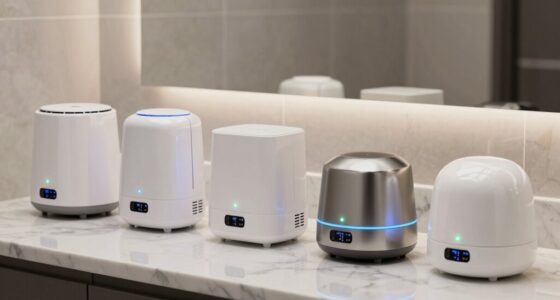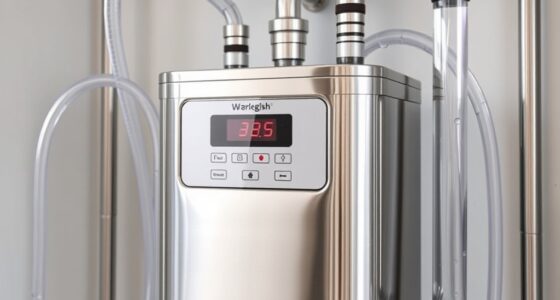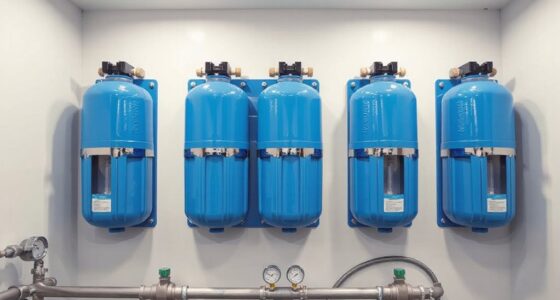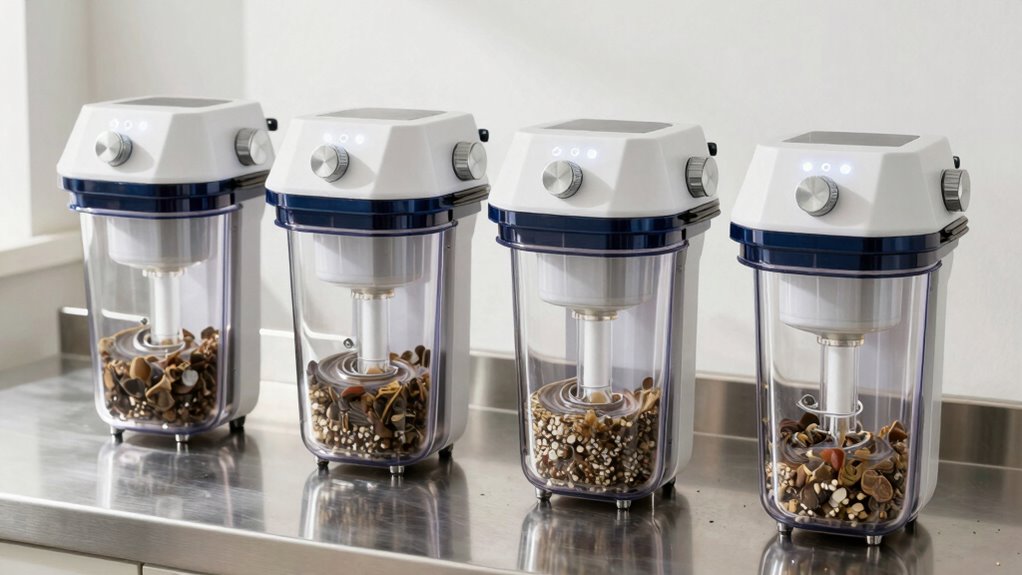
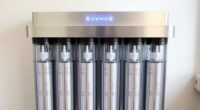
For a backwashing filter for organic matter, the key distinction is whether you need a compact 5,000 L/h unit or a model with a 10,000 L/h option. My strongest all-around candidate is the Automatic Backwashing Drum Microfilter, because its two flow choices make it easier to match a pond or tank. The NYANS 5000 L/H is a clearer fit for a modest freshwater tank, while the first 200-mesh rotary drum filter emphasizes automatic waste discharge and a stainless-steel screen.

Get home appliances delivered free with Prime
- Fast, free delivery on millions of items
- Prime Video, Amazon Music and more included
- Member-only deals all year
All five listed products are rotary drum microfilters intended for freshwater. Their mesh screens capture suspended particles, including some organic debris such as fish waste and uneaten food; they do not replace biological filtration or remove dissolved organic compounds. I rank the dual-capacity models ahead of single-capacity choices for flexibility, then distinguish the similar listings by the information each provides. The tradeoffs are flow capacity, fit, and listing clarity, not a proven difference in filtration performance.
Complete the kit


Key Takeaways
- Best overall flexibility: The Automatic Backwashing Drum Microfilter lists both 5,000 and 10,000 L/h versions, so buyers can match capacity more closely to system needs.
- Best specified for smaller tanks: NYANS identifies a 200–500 L freshwater tank range and 75-micron filtration, giving small-system buyers clearer fit guidance.
- Best for automatic waste discharge: The 200-mesh rotary drum listing explicitly names automatic sewage discharge, but its voltage details need confirmation.
- Best dual-size alternative: Fully Automatic Backwash Filter provides two flow options and inlet sizes, though it offers little differentiation from the other dual-capacity listings.
- Best straightforward 75-micron option: Automatic Backwash Filter Rotary Drum Filter 75 Micron has two stated capacities, but does not give a specific tank range or noise figure.
| Automatic Backwash Filter, Rotary Drum Microfilter with 200 Mesh Stainless Steel Screen, Self-Cleaning Water Filtration System for Fish Ponds, Aquariums and Aquaculture AC 110-220V |  | Best for automatic solids discharge | Screen: 200-mesh stainless steel | Maximum flow: 5,000 L/h | Power: 30 W pump power listed | VIEW ON AMAZON | See Our Full Breakdown |
| NYANS Automatic Backwash Rotary Drum Microfilter (5000 L/H) |  | Best for smaller freshwater tanks | Filtration: 75 microns; 200-mesh stainless steel also listed | Maximum flow: 5,000 L/h | Suitable tank size: 200–500 L | VIEW ON AMAZON | See Our Full Breakdown |
| Automatic Backwashing Drum Microfilter |  | Best overall for capacity flexibility | Filtration: 75 microns | Flow options: 5,000 or 10,000 L/h | Power: 30 W (5,000 L/h); 60 W (10,000 L/h) | VIEW ON AMAZON | See Our Full Breakdown |
| Fully Automatic Backwash Filter |  | Best for buyers comparing two model sizes | Filtration: 75 microns; 200-mesh screen also listed | Flow options: 5,000 or 10,000 L/h | Power: 30 W (S); 60 W (M) | VIEW ON AMAZON | See Our Full Breakdown |
| Automatic Backwash Filter Rotary Drum Filter 75 Micron | | Best straightforward dual-flow alternative | Filtration: 75 microns | Screen material: Stainless steel | Flow options: 5,000 or 10,000 L/h | VIEW ON AMAZON | See Our Full Breakdown |
| backwashing filter for organic matter | Power | Water type | Dimensions | Filtration |
|---|---|---|---|---|
| Automatic Backwash Filter | 30 W pump power listed | Freshwater | 30 × 20 × 17 cm | — |
| NYANS Automatic Backwash Rotar | 30 W | Freshwater | 30 × 20 × 17 cm | 75 microns; 200-mesh stainless steel also listed |
| Automatic Backwashing Drum Mic | 30 W (5,000 L/h); 60 W (10,000 L/h) | Freshwater | 11.81 × 7.87 × 6.69 in (S); 15.74 × 11.81 × 9.84 in (M) | 75 microns |
| Fully Automatic Backwash Filte | 30 W (S); 60 W (M) | Freshwater | 11.81 × 7.87 × 6.69 in (S); 15.74 × 11.81 × 9.84 in (M) | 75 microns; 200-mesh screen also listed |
| Automatic Backwash Filter Rota | 30 W (S); 60 W (M) | Freshwater | 11.81 × 7.87 × 6.69 in (S); 15.74 × 11.81 × 9.84 in (M) | 75 microns |
More Details on Our Top Picks
Automatic Backwash Filter, Rotary Drum Microfilter with 200 Mesh Stainless Steel Screen, Self-Cleaning Water Filtration System for Fish Ponds, Aquariums and Aquaculture AC 110-220V
This listing earns its place for buyers who want the backwash process to move captured solids out of the filter, rather than merely cleaning the screen. It specifies a 200-mesh stainless steel screen, automatic sewage discharge, and up to 5,000 L/h. Those features suit a freshwater pond or aquarium where suspended debris is the main mechanical-filtration concern. Compared with NYANS, it highlights waste discharge rather than a 75-micron rating and a stated tank range.
The product is compact at 30 × 20 × 17 cm and lists 40 dB operation, which may help when equipment sits near an indoor aquarium. The main caution is a voltage discrepancy: the title says AC 110–220V, while the specifications state 24V. I would verify the power supply and included transformer before choosing it. It is also listed for freshwater only, and its single stated flow ceiling offers less sizing flexibility than the 5,000/10,000 L/h models.
Pros:- Automatic sewage discharge is explicitly listed.
- Stainless-steel screen is specified at 200 mesh.
- Maximum flow is listed as 5,000 L/h.
- Compact body and 40 dB noise figure are provided.
Cons:- Voltage information conflicts between title and specifications.
- Freshwater-only listing excludes saltwater systems.
- No larger flow option is specified.
Best for: Freshwater pond or aquarium owners who prioritize an automatic waste-discharge feature and need a listed flow rate up to 5,000 L/h.
Not ideal for: Saltwater users, buyers needing a 10,000 L/h option, or anyone unable to confirm the operating voltage before purchase.
- Screen:200-mesh stainless steel
- Maximum flow:5,000 L/h
- Power:30 W pump power listed
- Voltage:24 V in specs; title also states AC 110–220 V
- Water type:Freshwater
- Noise:40 dB(A)
- Dimensions:30 × 20 × 17 cm
- Inlet/outlet:25 mm
Our verdict“Choose this model when automatic debris discharge matters most, but confirm its voltage and power arrangement before ordering.”
NYANS Automatic Backwash Rotary Drum Microfilter (5000 L/H)
NYANS is the most clearly framed option for a modest aquarium: its listing names 200–500 L tanks, a 5,000 L/h maximum flow, and 75-micron filtration. That tank-size guidance makes it easier to assess than the listings that provide capacity choices without a comparable system range. Its dual-mode timing/manual control also gives the owner a stated way to trigger or schedule operation, while automatic cleaning is intended to reduce routine screen scrubbing.
Against the first product, NYANS gives a more precise filtration figure but does not foreground automatic sewage discharge. Its 200-mesh stainless-steel description appears alongside the 75-micron figure; buyers should confirm how the manufacturer defines those specifications rather than assuming they mean identical screen performance. The unit is freshwater-only, and the 5,000 L/h model may not be enough for a larger pond once real plumbing resistance and system turnover are accounted for.
Pros:- Lists 75-micron filtration and stainless-steel mesh.
- Provides a stated 200–500 L tank range.
- Includes timing and manual control modes in the description.
- Lists 40 dB(A) operation and 25 mm inlet size.
Cons:- Only the 5,000 L/h version is specified here.
- Freshwater-only use limits application.
- Mesh and micron details should be clarified with the seller.
Best for: Freshwater aquarium owners with a system in the listed 200–500 L range who value explicit filtration and tank-size details.
Not ideal for: Large pond owners, saltwater keepers, or buyers who need a stated 10,000 L/h version or clearly documented waste-discharge routing.
- Filtration:75 microns; 200-mesh stainless steel also listed
- Maximum flow:5,000 L/h
- Suitable tank size:200–500 L
- Power:30 W
- Control:Timing/manual dual mode
- Water type:Freshwater
- Noise:40 dB(A)
- Dimensions:30 × 20 × 17 cm
Our verdict“For a smaller freshwater setup, NYANS offers the clearest sizing guidance, though its capacity and screen specifications deserve confirmation.”
Automatic Backwashing Drum Microfilter
This is my strongest general-purpose pick because it is offered in 5,000 and 10,000 L/h versions. Rather than making every buyer choose the smaller class, it gives pond and aquaculture owners a route to a higher-capacity model with a larger inlet. Both options list 75-micron stainless-steel filtration and automatic cleaning, bringing the key organic-solids function together with a useful sizing choice.
Compared with NYANS, this listing is better suited to buyers who may need more throughput than a compact aquarium setup can use. The tradeoff is less guidance about tank volume: flow options alone do not say what a particular pond will achieve after pipe length, elevation, and other equipment are factored in. The product is specified for freshwater, and it requires standard pipe connectors, so I would verify connector compatibility and installed flow rather than selecting solely by the maximum figure.
Pros:- Two flow-rate versions provide a choice of capacity.
- 75-micron stainless-steel screen targets fine suspended solids.
- Lists matching 25 mm and 32 mm inlet sizes.
- Automatic self-cleaning is intended to reduce manual screen maintenance.
Cons:- No specific tank or pond volume range is given.
- Standard pipe connectors are required and may need separate sourcing.
- Freshwater-only specification rules out saltwater systems.
Best for: Freshwater pond or aquaculture buyers who want to choose between 5,000 and 10,000 L/h models with 75-micron screening.
Not ideal for: Saltwater users, buyers seeking a stated tank-volume recommendation, or owners who want plumbing fittings confirmed as included.
- Filtration:75 microns
- Flow options:5,000 or 10,000 L/h
- Power:30 W (5,000 L/h); 60 W (10,000 L/h)
- Inlet sizes:25 mm or 32 mm
- Screen material:Stainless steel
- Water type:Freshwater
- Weight:6.6 lb (5,000 L/h); 13.2 lb (10,000 L/h)
- Dimensions:11.81 × 7.87 × 6.69 in (S); 15.74 × 11.81 × 9.84 in (M)
Our verdict“The most adaptable listing for freshwater buyers who need to size up, provided they confirm actual system flow and plumbing fit.”
Fully Automatic Backwash Filter
This listing covers much the same ground as the overall pick: 75-micron stainless-steel filtration, automatic cleaning, and 5,000 or 10,000 L/h sizes. It also gives inlet diameters, power requirements, dimensions, weights, and a 40 dB noise figure. That makes the product practical to compare against available space and plumbing before purchase, even though the listing does not supply a recommended pond volume.
I place it below the Automatic Backwashing Drum Microfilter because the stated core capabilities are very close, while the other listing spells out the connector requirement and presents its capacity options with clearer buying context. This is not evidence that one filters better; the provided data do not establish that. The main concern here is fit and installation: model dimensions are described as subject to measurement variation, and buyers need to confirm the right size and connectors. Like the others, it is freshwater-only.
Pros:- Offers 5,000 and 10,000 L/h model sizes.
- Lists 75-micron filtration and stainless-steel screen material.
- Provides inlet, power, dimensions, and weight details by model.
- 40 dB noise figure helps with placement planning.
Cons:- No tank or pond-volume guidance is provided.
- Installation requires careful matching of fittings and model size.
- Its supplied details closely overlap with other listings.
Best for: Freshwater owners who want a two-size drum filter and appreciate listed dimensions, weight, inlet size, and noise information.
Not ideal for: Saltwater users or buyers who need a recommended system volume, included fittings, or a clearly differentiated advantage over similar listings.
- Filtration:75 microns; 200-mesh screen also listed
- Flow options:5,000 or 10,000 L/h
- Power:30 W (S); 60 W (M)
- Inlet sizes:25 mm (S); 32 mm (M)
- Noise:40 dB
- Water type:Freshwater
- Weight:6.6 lb (S); 13.2 lb (M)
- Dimensions:11.81 × 7.87 × 6.69 in (S); 15.74 × 11.81 × 9.84 in (M)
Our verdict“A useful two-capacity alternative when its listed dimensions and connection size suit your setup, but it has no clearly stated filtration advantage over similar models.”
Automatic Backwash Filter Rotary Drum Filter 75 Micron
This model is a no-frills alternative for buyers who already know they want a rotary drum with 75-micron stainless-steel screening and a choice of 5,000 or 10,000 L/h. Its listing states the corresponding 25 mm and 32 mm inlets, power draw, size, and weight, so a buyer can compare the two formats against an existing equipment area. Automatic cleaning is intended to limit manual screen work while capturing suspended particles.
Against the higher-ranked dual-capacity options, it supplies fewer placement cues: there is no listed noise level or tank-volume range. The product description also gives no distinctive control mode or waste-discharge detail to set it apart from its near matches. I would treat it as a specification-led alternative, not as a demonstrably better filter. It is designed for freshwater, and the stated flow should be checked against the full system rather than treated as guaranteed operating output.
Pros:- Lists 75-micron stainless-steel filtration.
- Offers 5,000 and 10,000 L/h versions.
- Provides model-specific inlet sizes and power.
- Includes dimensions and weights for both sizes.
Cons:- Does not state a suitable tank or pond volume.
- Noise level is not supplied.
- Freshwater-only use excludes saltwater applications.
Best for: Freshwater pond and aquarium owners who have already chosen a flow class and need a basic 75-micron drum-filter configuration.
Not ideal for: Saltwater systems, buyers who need noise or tank-size guidance, or shoppers looking for a clearly documented feature advantage.
- Filtration:75 microns
- Screen material:Stainless steel
- Flow options:5,000 or 10,000 L/h
- Power:30 W (S); 60 W (M)
- Inlet sizes:25 mm (S); 32 mm (M)
- Weight:6.6 lb (S); 13.2 lb (M)
- Dimensions:11.81 × 7.87 × 6.69 in (S); 15.74 × 11.81 × 9.84 in (M)
- Water type:Freshwater
Our verdict“A reasonable alternative when its flow class and pipe size match your system, though the listing gives less guidance than the leading picks.”

How We Picked
I ranked these filters for one narrow job: mechanically capturing suspended organic matter in freshwater ponds, aquariums, and aquaculture systems, then shedding collected debris through an automatic cleaning cycle. A rotary drum screen can reduce visible solids reaching later stages, but it is not a complete organic-waste treatment system. It does not establish biological conversion of ammonia, and the supplied descriptions do not claim removal of dissolved organics.
My main ranking factors were screen detail, available flow choices, fit information, and practical operating details. Models listing 75-micron filtration and a 10,000 L/h size option earn an edge for buyers who need finer particle capture or more headroom, while a specified 200–500 L tank range makes NYANS easier to place in a smaller setup. I also noted when the listing spells out automatic waste discharge, noise, power, or connector sizes.
Several entries share nearly identical specs and descriptions. I do not treat repeated claims as proof of better build quality or performance; their order reflects the usefulness and specificity of the supplied information. All five are described as freshwater-only, so none is a sound pick for a saltwater system based on the provided details. I also flag uncertain or incomplete specifications instead of assuming they are interchangeable. Before buying, confirm actual flow under your plumbing conditions, included fittings, voltage, and how the backwash waste is routed.
Factors to Consider When Choosing Backwashing Filter For Organic Matter
To choose a backwashing filter for organic matter, match the screen and operating flow to the solids your system produces, then check that cleaning waste can leave the unit. These products are mechanical prefilters: they can catch suspended particles, but they are not a substitute for biological media, water changes, or treatment aimed at dissolved waste.
Know what organic matter the screen can catch
Food fragments, fish waste, and other suspended particles can be intercepted by a fine drum screen. A 75-micron rating gives a more directly stated particle threshold than a mesh count alone, though actual capture also depends on the screen condition and water flow. Mesh terminology can vary, so when a listing gives both microns and mesh, ask the seller how those figures correspond. Dissolved organic compounds pass through a mechanical screen; a backwash filter will not remove them simply because it cleans itself.
Size flow for the whole system
The listed 5,000 and 10,000 L/h figures are product capacity claims, not a guarantee of delivered flow in a particular installation. Pipe diameter, bends, lift, pump output, and connected equipment all affect circulation. The dual-capacity models offer more choice, while NYANS adds a stated 200–500 L tank range for its 5,000 L/h version. Use your system’s required turnover and operating conditions to select a model, and avoid assuming that a larger maximum is automatically better for a small tank.
Treat backwash and waste routing as part of the setup
Automatic screen cleaning reduces manual brushing, but the captured solids still need a route out of the system. The first product explicitly lists automatic sewage discharge; the other listings describe self-cleaning cycles without the same level of discharge detail. Before buying, check how often cleaning is triggered, where waste water exits, what drainage is needed, and whether controls are timed, manual, or automatic. A backwash feature only helps remove organic solids if debris is actually flushed away.
Check freshwater limits, power, and connections
Every supplied description identifies freshwater use, so I would not select any of these for saltwater without written confirmation from the manufacturer. Match the filter inlet to your pipework: the smaller versions list 25 mm connections and larger versions commonly list 32 mm. Confirm whether adapters are included. Pay particular attention to the first product’s conflicting voltage details; its title and specification table do not agree. Verify the correct power supply before installation.
Frequently Asked Questions
Can a backwashing filter remove organic matter from pond water?
It can capture some suspended organic solids, such as food scraps and fish waste, when particles are large enough for its screen. Backwashing then clears collected debris from the screen, provided the waste outlet is routed correctly. It does not remove dissolved organic compounds or replace biological filtration, so view it as one mechanical stage in a broader water-treatment setup.
Is 75-micron filtration better than a 200-mesh screen?
A micron figure states a nominal particle size, while mesh describes openings through a count-based screen specification. The terms are not safely interchangeable without a stated conversion and test method. NYANS and several dual-capacity listings describe both 75 microns and 200 mesh; confirm the manufacturer’s exact screen specification if particle capture is your deciding factor.
Which of these filters suits a small aquarium?
NYANS gives the clearest small-system guidance because it names a 200–500 L freshwater tank range for its 5,000 L/h model. That range is a starting point, not a substitute for checking required turnover and the filter’s real flow after plumbing losses. Buyers with a smaller aquarium should also confirm whether the unit can operate suitably at their pump flow.
Do these filters work in saltwater aquariums?
The supplied details describe all five products as freshwater-only, so I would not recommend them for a saltwater setup without explicit manufacturer approval. Saltwater compatibility depends on materials, seals, electrical design, and corrosion resistance, none of which is confirmed for these listings. Ask the seller for written confirmation before considering use outside freshwater.
Does automatic backwashing mean the filter needs no maintenance?
No. Automatic cleaning can reduce manual screen scrubbing, but the owner still needs to inspect the drum, confirm the waste outlet remains clear, and maintain pumps and plumbing. The backwash system also needs a suitable drain route. Check the product’s cleaning controls and service instructions, since the listings do not give full maintenance schedules or detailed waste-water requirements.
Conclusion
For most freshwater pond owners comparing these listings, I would start with the Automatic Backwashing Drum Microfilter because its 5,000 and 10,000 L/h choices make capacity matching less restrictive. Choose NYANS for a smaller tank when its stated 200–500 L range fits your setup, and consider the first rotary drum option if automatic waste discharge is your priority—after resolving its voltage conflict. The two other dual-capacity listings are alternatives when their connection sizes and physical dimensions suit your installation.
Skip all five for saltwater unless the manufacturer confirms compatibility, and do not rely on a drum screen alone to control dissolved waste or biological load. Before placing an order, I would verify actual operating flow, screen specification, fittings, voltage, and waste routing. Those details matter more to successful organic-solids removal than a maximum flow figure viewed by itself.