
Among these under-sink water filtration systems, I would put the Waterdrop TSU 3-Stage Ultra Filtration System first for households seeking a compact, tankless filter without reverse osmosis. The Waterdrop G3P600 stands out for buyers who want high-capacity tankless reverse osmosis, while the CuZn UC-200 suits those who value long intervals between filter changes. The main tradeoff is between simpler filtration with less wastewater and reverse osmosis systems designed for broader contaminant reduction but with more installation and maintenance demands. Faucet compatibility, cabinet space, and the contaminants you need to address matter as much as the filter format. Read on for how each option compares and which one best fits your kitchen.

Get home appliances delivered free with Prime
- Fast, free delivery on millions of items
- Prime Video, Amazon Music and more included
- Member-only deals all year
Complete the kit


Key Takeaways
- Filtration type changes the job: The roundup includes ultrafiltration, conventional carbon-based filters, and reverse osmosis, so buyers should match the system to their water report rather than assume every filter removes the same contaminants.
- Tankless RO leads on capacity and footprint: The Waterdrop G3P600, LoopDrops CR1200, ANGEL X2, and iSpring RO10001F offer tankless RO designs, while the APEC ROES-50X and iSpring RCC7AK-BN use storage tanks that need cabinet room.
- Long filter life trades against flexibility: The CuZn UC-200 and Waterdrop UA-5Y are built around extended service intervals, but buyers should check what each filter is certified to reduce and whether its replacement schedule fits their water quality.
- Not every system needs a dedicated faucet: Models such as the 3M Aqua-Pure with faucet and iSpring US31 present a different installation choice from systems that connect to an existing faucet or require a separate one.
- Extra stages do not automatically mean a better fit: Alkaline and multi-stage RO systems add treatment steps, but buyers still need to verify contaminant claims, replacement parts, and the space and upkeep they require.
| Waterdrop TSU 3-Stage Ultra Filtration Under-Sink Water Filter System | 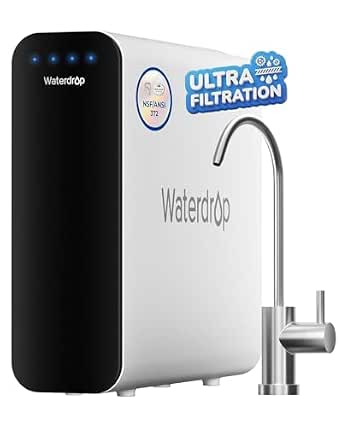 | Best Overall for Mineral-Retaining Filtration | Filtration method: Ultrafiltration, activated carbon, and carbon block | Stages: 3 | Maximum flow rate: 1.05 GPM | VIEW LATEST PRICE | See Our Full Breakdown |
| Waterdrop WD-TSA-UF 0.01 μm Under-Sink Ultrafiltration Water Filter System |  | Best for Quick DIY Filter Changes | Filtration accuracy: 0.01 μm | Filtration stages: Product information lists 8-stage and 9-stage filtration | Filter configuration: 3 filters | VIEW LATEST PRICE | See Our Full Breakdown |
| LoopDrops CR1200 Tankless Reverse Osmosis Water Filtration System |  | Best for TDS Reduction Without a Storage Tank | Purification method: Reverse osmosis, activated carbon, and sediment filtration | Filtration stages: 9 | Maximum flow rate: 0.69 GPM | VIEW LATEST PRICE | See Our Full Breakdown |
| Waterdrop TSA 3-Stage Under-Sink Water Filter System |  | Best High-Flow Pick Without an Included Faucet | Filtration stages: 8 | Number of filters: 3 | Maximum flow rate: 1.5 GPM | VIEW LATEST PRICE | See Our Full Breakdown |
| 3M Aqua-Pure Under-Sink Drinking Water Filtration System with Faucet (3MDW301-F) |  | Best Certified Carbon-Block Option | Model: 3MDW301-F | Filtration method: Dual-stage activated carbon block | Certifications: NSF Standards 42, 53, and 401 | VIEW LATEST PRICE | See Our Full Breakdown |
| ANGEL X2 7-Stage Tankless Reverse Osmosis Water Filter System, 700 GPD |  | Best for High Output in a Compact RO System | Filtration: 7-stage reverse osmosis and activated carbon | RO membrane pore size: 0.0001 μm | Capacity: 700 GPD | VIEW LATEST PRICE | See Our Full Breakdown |
| iSpring US31 3-Stage Under-Sink Water Filter System with Faucet |  | Best for Straightforward, Mineral-Retaining Filtration | Model: US31 | Filtration: 3-stage PP, GAC, and CTO | Capacity: 10,000 gallons | VIEW LATEST PRICE | See Our Full Breakdown |
| CuZn UC-200 Under-Sink Water Filter, 5-Year Filter Life |  | Best for Long Filter Life Without a New Faucet Hole | Model: UC-200 | Filtration stages: 3 | Filter media: Micro sediment membranes, KDF-55, coconut shell carbon | VIEW LATEST PRICE | See Our Full Breakdown |
| Waterdrop G3P600 Tankless Reverse Osmosis Water Filter System, 600 GPD |  | Best Smart-Faucet RO System | Filtration: 8-stage reverse osmosis | Daily production capacity: 600 gallons | Pure-to-drain ratio: 2:1 | VIEW LATEST PRICE | See Our Full Breakdown |
| Waterdrop 10UA Under Sink Water Filter System | 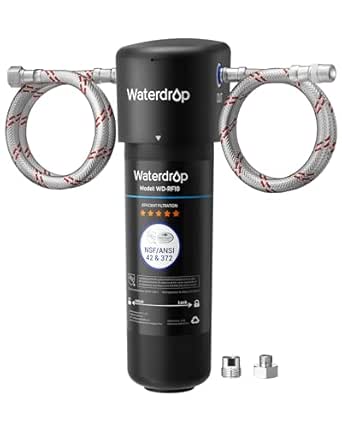 | Best Compact Pick for Municipal Water | Filtration method: Activated carbon | Compatible water source: Cold municipal tap water | Listed certifications: NSF/ANSI 42 and 372 | VIEW LATEST PRICE | See Our Full Breakdown |
| iSpring RCC7AK-BN 6-Stage Alkaline Reverse Osmosis Water Filtration System |  | Best for Alkaline Remineralization | Filtration stages: 6 | Daily production capacity: Up to 75 gallons | Certification: NSF/ANSI 58 | VIEW LATEST PRICE | See Our Full Breakdown |
| iSpring RO10001F Tankless Reverse Osmosis Water Filter |  | Best Compact Tankless RO | Purification method: Reverse osmosis | Maximum flow rate: 0.69 GPM | Dimensions: 17.7 × 7.1 × 10.3 in | VIEW LATEST PRICE | See Our Full Breakdown |
| Waterdrop UA-5Y 5-Year Under-Sink Water Filter System |  | Best Low-Maintenance Carbon Filter | Filtration method: 0.5 μm activated carbon block | Filter life: Up to 5 years | Listed certification: NSF/ANSI 372 lead-free compliance | VIEW LATEST PRICE | See Our Full Breakdown |
| AquaTru Under-Sink Alkaline Reverse Osmosis Water Filter System |  | Best for Broad Certified Contaminant Reduction | Purification method: Four-stage reverse osmosis | Contaminant reduction: Up to 84 contaminants | Certification: IAPMO certified to NSF/ANSI standards | VIEW LATEST PRICE | See Our Full Breakdown |
| APEC Water ROES-50X 5-Stage Under-Sink Reverse Osmosis System with Extra Filters, 50 GPD |  | Best DIY Tank-Based RO Value | Filtration stages: 5 | Daily capacity: 50 gallons | Purification method: Activated carbon and reverse osmosis | VIEW LATEST PRICE | See Our Full Breakdown |
| under sink water filtration system | Dimensions | Maximum flow rate | Filter life |
|---|---|---|---|
| Waterdrop TSU 3-Stage Ultra Fi | 14.81 × 4.68 × 13.97 inches | 1.05 GPM | — |
| Waterdrop WD-TSA-UF 0.01 μm Un | — | 1.5 GPM | 10PP: up to 6 months; 10GC: 8–12 months; 10UF: up to 12 months |
| LoopDrops CR1200 Tankless Reve | 17.9 × 6.8 × 12.5 inches | 0.69 GPM | Up to 2–3 years, depending on water quality and usage |
| Waterdrop TSA 3-Stage Under-Si | — | 1.5 GPM | — |
| 3M Aqua-Pure Under-Sink Drinki | — | 0.75 GPM | — |
| ANGEL X2 7-Stage Tankless Reve | 14.17 × 4.72 × 14.49 in | 0.5 GPM | RO membrane: 2–3 years; CFII and NAC filters: 9–12 months |
| iSpring US31 3-Stage Under-Sin | 13 × 5.3 × 14.2 in | 1 GPM | Up to 12 months |
| CuZn UC-200 Under-Sink Water F | 5.5 × 14 × 5.5 in | — | 5 years |
| Waterdrop G3P600 Tankless Reve | 18.12 × 5.67 × 17.72 in | — | — |
| Waterdrop 10UA Under Sink Wate | 3.9 × 3.6 × 12.3 in | 2.5 GPM | Up to 12 months or 11,000 gallons |
| iSpring RCC7AK-BN 6-Stage Alka | 15.5 × 16 × 18 in | — | — |
| iSpring RO10001F Tankless Reve | 17.7 × 7.1 × 10.3 in | 0.69 GPM | Up to 2 years |
| Waterdrop UA-5Y 5-Year Under-S | 3.9 × 3.6 × 16.7 in | 1.33 gpm | Up to 5 years |
| AquaTru Under-Sink Alkaline Re | 11 × 16.25 × 20 in | — | Pre/Carbon: up to 6 months; RO: up to 2 years; VOC Carbon: up to 1 year |
| APEC Water ROES-50X 5-Stage Un | 15.5 × 5.25 × 17 in | 0.03 gpm | — |
More Details on Our Top Picks
Waterdrop TSU 3-Stage Ultra Filtration Under-Sink Water Filter System
The Waterdrop TSU is my balanced pick for municipal-water households that want a dedicated drinking-water faucet without moving to reverse osmosis. Its 0.01-micron ultrafiltration membrane and carbon stages target chlorine, PFAS, odor, and other listed contaminants while retaining dissolved minerals; unlike the LoopDrops CR1200, it does not reduce TDS. The TSU also avoids the drain connection and wastewater associated with RO, and its included brushed-nickel faucet gives the installation a more finished look than the Waterdrop TSA, which does not include one. A filter-life indicator helps track replacements across cartridges lasting 6, 12, and 24 months. The tradeoffs are its lower 1.05 GPM maximum flow, required countertop drilling, and limited compatibility: it is for municipal cold water, not untreated well water or hot water.
Pros:- 0.01-micron ultrafiltration and carbon stages target chlorine, PFAS, odor, and other listed substances
- Retains dissolved minerals and does not require an RO drain line or power
- Included brushed-nickel faucet and filter-life indicator
- Staggered cartridge lifespans of 6, 12, and 24 months
Cons:- Separate faucet installation requires countertop drilling
- Does not reduce TDS
- Limited to municipal cold water; unsuitable for well water and hot water
Best for: Households on municipal cold water that want a separate faucet, mineral retention, and no RO drain line.
Not ideal for: Renters who cannot drill a countertop, well-water users, and buyers who want dissolved-solids reduction.
- Filtration method:Ultrafiltration, activated carbon, and carbon block
- Stages:3
- Maximum flow rate:1.05 GPM
- Capacity:2,200 gallons
- Filter lifespans:PP: 6 months; CT: 12 months; UF: 24 months
- Dimensions:14.81 × 4.68 × 13.97 inches
- Water compatibility:Municipal cold water; 35–100 °F; up to 700 PPM TDS; does not reduce TDS
- Installation:Under sink; separate faucet requires countertop drilling
- Certification and materials:IAPMO NSF/ANSI 372 certified; lead-free and BPA-free
Our verdict“Choose the TSU if you want mineral-retaining filtration with an included faucet and can accommodate countertop drilling.”
Waterdrop WD-TSA-UF 0.01 μm Under-Sink Ultrafiltration Water Filter System
The WD-TSA-UF suits buyers who value straightforward cartridge changes and a brisk pour more than a bundled faucet. Its push-to-connect fittings and twist-and-lock filters are designed to simplify installation and maintenance, while the listed 1.5 GPM maximum flow exceeds the TSU’s 1.05 GPM. Three filters use 0.01 μm ultrafiltration to target chlorine, taste and odor, fluoride, heavy metals, rust, sediment, and particles while retaining dissolved minerals. That makes it a different choice from the LoopDrops CR1200: the Waterdrop avoids RO wastewater but leaves TDS unchanged. Product information describes the system as both eight- and nine-stage, so I would focus on the three-filter configuration and stated membrane performance rather than the stage count. It does not include a faucet in the supplied details, and its municipal-cold-water limits rule out untreated well water and hot water.
Pros:- 0.01 μm ultrafiltration targets fine particles and a range of listed contaminants
- Up to 1.5 GPM maximum flow rate
- Push-to-connect installation and twist-and-lock filter changes
- Retains dissolved minerals without an RO drain line
Cons:- Does not reduce TDS
- Not suitable for hot water; well water requires pre-filtration
- Coconut-shell activated carbon may not suit people with coconut allergies
Best for: DIY-minded municipal-water users who want fast flow, mineral retention, and twist-and-lock cartridge changes.
Not ideal for: Buyers seeking TDS reduction, a system explicitly supplied with a dedicated faucet, or filtration for untreated well water.
- Filtration accuracy:0.01 μm
- Filtration stages:Product information lists 8-stage and 9-stage filtration
- Filter configuration:3 filters
- Maximum flow rate:1.5 GPM
- Filter life:10PP: up to 6 months; 10GC: 8–12 months; 10UF: up to 12 months
- Installation:Under sink; push-to-connect fittings and twist-and-lock filters
- Water compatibility:Municipal cold water; lower temperature limit 35 °F
- Faucet connections:1/2-inch or 3/8-inch female NPT
- TDS reduction:Does not reduce TDS
Our verdict“Pick the WD-TSA-UF for a high-flow, mineral-retaining system with simple cartridge changes, provided your source is municipal cold water.”
LoopDrops CR1200 Tankless Reverse Osmosis Water Filtration System
The LoopDrops CR1200 is the clear choice in this group for buyers who want reverse osmosis and TDS reduction in a tankless under-sink setup. Its nine filtration stages target TDS alongside sediment, chlorine, taste, and odor, unlike the Waterdrop TSU and TSA systems, which retain minerals and do not reduce TDS. The 3:1 pure-to-drain ratio is a stated water-saving feature, while a maximum 0.69 GPM flow gives it a different performance profile from the faster 1.5 GPM Waterdrop TSA. The tankless format saves the cabinet space a storage tank would occupy, though the unit still needs under-sink plumbing and a drain connection. Filter life is listed as up to 1,930 gallons and 2–3 years, with actual replacement timing dependent on source-water quality and use.
Pros:- Reverse osmosis reduces TDS, unlike the ultrafiltration systems in this group
- Nine filtration stages target sediment, chlorine, taste, and odor as well
- Tankless design saves space compared with a storage-tank RO system
- 3:1 pure-to-drain ratio and included faucet
Cons:- Maximum flow rate of 0.69 GPM is below the Waterdrop TSA’s listed 1.5 GPM
- Requires under-sink water-line and drain connections
- Filter life varies with source-water quality and usage
Best for: Households that want RO-based TDS reduction, a dedicated included faucet, and a tankless cabinet layout.
Not ideal for: Buyers who want mineral retention, the fastest possible dispense rate, or a system that avoids drain-line plumbing.
- Purification method:Reverse osmosis, activated carbon, and sediment filtration
- Filtration stages:9
- Maximum flow rate:0.69 GPM
- Capacity:1,930 gallons
- Filter life:Up to 2–3 years, depending on water quality and usage
- Pure-to-drain ratio:3:1
- Dimensions:17.9 × 6.8 × 12.5 inches
- Included components:RO system, faucet, pre-installed filter, tubing, accessories, and user manual
- Water-contact materials:Tested to NSF/ANSI/CAN 372 requirements
Our verdict“Choose the CR1200 if TDS reduction is a priority and you can accept RO plumbing and a lower listed flow rate.”
Waterdrop TSA 3-Stage Under-Sink Water Filter System
The Waterdrop TSA makes sense when fast dispensing and mineral retention matter more than having every installation component in the box. Its three filters are described as providing eight filtration stages and target residual chlorine, fluoride, PFAS, and sediment in municipal cold water. At a listed 1.5 GPM maximum flow, it matches the WD-TSA-UF and is faster on paper than the TSU’s 1.05 GPM; unlike that TSU, though, the TSA does not include a dedicated faucet. Twist-lock replacement filters are a practical advantage for routine maintenance, and the system connects to compatible 3/8- or 1/2-inch cold-water lines. It retains minerals rather than reducing TDS, so buyers seeking dissolved-solids reduction should look to the LoopDrops CR1200 instead. Untreated well water and hot water are outside its stated use.
Pros:- 1.5 GPM maximum flow rate
- Targets chlorine, fluoride, PFAS, and sediment while retaining minerals
- Twist-lock filters support simpler cartridge replacement
- Compatible with 3/8-inch or 1/2-inch cold-water connections
Cons:- No faucet is included
- Does not reduce TDS
- Designed for municipal cold water, not untreated well water or hot water
Best for: Municipal-water households with a compatible existing faucet who want high flow and tool-light filter changes.
Not ideal for: Buyers needing a faucet in the box, TDS reduction, or a system for hot water or untreated well water.
- Filtration stages:8
- Number of filters:3
- Maximum flow rate:1.5 GPM
- Filter lifespans:6 months, 8–12 months, and 12–18 months
- Water source:Municipal tap water
- Water temperature:Cold water only
- Compatible connections:3/8-inch or 1/2-inch
- Faucet included:No
- Certification:NSF/ANSI 42; CT filter passed IAPMO certification
Our verdict“The TSA fits buyers who already have a suitable faucet and want high-flow filtration without switching to reverse osmosis.”
3M Aqua-Pure Under-Sink Drinking Water Filtration System with Faucet (3MDW301-F)
The 3M Aqua-Pure is the lineup’s strongest fit for buyers who prioritize documented standards and targeted carbon-block filtration over ultrafiltration’s fine membrane or RO’s TDS reduction. Its dual-stage carbon-block system is certified to NSF Standards 42, 53, and 401 and is listed to reduce sediment, chlorine taste and odor, chloramine, lead, VOCs, and other contaminants. The included dedicated faucet avoids the extra faucet purchase that the Waterdrop TSA leaves to the buyer, while a quick-change cartridge with a built-in shut-off valve is designed to make replacement less involved. Its 0.75 GPM maximum flow is below the Waterdrop TSA’s 1.5 GPM, and the 1,000-gallon capacity means cartridge replacement comes sooner than the TSU’s stated 2,200-gallon capacity. It does not provide RO-style TDS reduction.
Pros:- NSF certified to Standards 42, 53, and 401
- Dual-stage carbon block targets chlorine, chloramine, lead, VOCs, sediment, and other listed contaminants
- Dedicated faucet is included
- Quick-change cartridge has a built-in shut-off valve
Cons:- 0.75 GPM maximum flow is lower than the Waterdrop TSA’s listed 1.5 GPM
- 1,000-gallon capacity calls for cartridge replacement sooner than the TSU’s stated capacity
- Under-sink plumbing installation is required and the system does not reduce TDS
Best for: Buyers who want a dedicated faucet, certified carbon-block filtration, and a cartridge designed for quick changes.
Not ideal for: Households seeking TDS reduction, a higher listed flow rate, or longer capacity between cartridge replacements.
- Model:3MDW301-F
- Filtration method:Dual-stage activated carbon block
- Certifications:NSF Standards 42, 53, and 401
- Capacity:1,000 gallons
- Maximum flow rate:0.75 GPM
- Operating pressure:25–125 psi
- Temperature range:40–100 °F
- Dimensions and weight:4.75 × 4.75 × 15.79 inches; 5.6 pounds
- Installation and included components:Under sink, cold-water line to dedicated faucet; head/bracket, DW311 cartridge, manual, and faucet included
Our verdict“Choose the 3M Aqua-Pure for certified carbon-block filtration and easier cartridge changes, not for TDS reduction or the highest flow.”
ANGEL X2 7-Stage Tankless Reverse Osmosis Water Filter System, 700 GPD
The ANGEL X2 suits households that want reverse osmosis filtration without giving up cabinet space to a storage tank. Its 7-stage process uses a 0.0001 μm RO membrane and activated carbon to target listed contaminants including PFAS, lead, chlorine, and TDS. With a stated capacity of 700 GPD, it has more listed daily output than the Waterdrop G3P600, though its 0.5 GPM flow rate is only modestly higher than that model’s 0.42 GPM. Quick-change cartridges make routine filter swaps simpler, and three cartridges are included. The tradeoff is installation: this system needs a drain connection and a countertop hole for its dedicated faucet. Check faucet thickness too, since the standard fitting supports countertops up to 0.79 inches.
Pros:- Tankless design frees space that a storage tank would occupy.
- 700 GPD stated capacity and 0.5 GPM maximum flow rate.
- Quick-change filters require no tools, and three cartridges are included.
- Listed CSA testing references NSF/ANSI standards 58, 42, and 372.
Cons:- Installation requires an under-sink drain outlet and a countertop faucet hole.
- The standard faucet fits countertops only up to 0.79 inches thick; thicker surfaces need an extended faucet.
Best for: Households seeking tankless RO filtration, high stated daily capacity, and tool-free filter changes, with room for a dedicated faucet and drain connection.
Not ideal for: Renters or kitchens without a usable faucet hole, under-sink drain outlet, or compatible faucet-countertop thickness.
- Filtration:7-stage reverse osmosis and activated carbon
- RO membrane pore size:0.0001 μm
- Capacity:700 GPD
- Maximum flow rate:0.5 GPM
- Pure-to-drain ratio:2.5:1
- Dimensions:14.17 × 4.72 × 14.49 in
- Filter life:RO membrane: 2–3 years; CFII and NAC filters: 9–12 months
- Supported feed-water TDS:Up to 1000 ppm
Our verdict“Choose the ANGEL X2 if you want a compact tankless RO system with high stated output and can accommodate its dedicated faucet and drain requirements.”
iSpring US31 3-Stage Under-Sink Water Filter System with Faucet
The iSpring US31 is a practical choice for improving taste and reducing chlorine, sediment, rust, and odors while leaving dissolved minerals in the water. Its PP, GAC, and CTO stages are a simpler fit for buyers who do not want reverse osmosis; unlike the ANGEL X2 or Waterdrop G3P600, it does not reduce TDS. That distinction also means this is not the pick for anyone specifically seeking RO-style dissolved-solids reduction. The 1 GPM flow rate supports ordinary kitchen use, and the transparent first-stage housing lets you inspect sediment buildup without opening it. The included brushed nickel faucet gives it a finished setup, but installation still takes cabinet space and plumbing work. Filter life is listed as up to 12 months, with a one-year manufacturer warranty.
Pros:- Three-stage PP, GAC, and CTO filtration targets sediment, chlorine, rust, odors, and bad taste.
- Retains natural minerals rather than reducing TDS.
- 1 GPM maximum flow rate and up to 12-month stated filter life.
- Transparent first-stage housing makes sediment buildup visible.
Cons:- Does not reduce TDS, unlike the ANGEL X2 and Waterdrop G3P600.
- Requires under-sink installation and the space and plumbing access that entails.
Best for: Homeowners on municipal water who want better-tasting water, sediment and chlorine reduction, and retained minerals without an RO system.
Not ideal for: Buyers who need TDS reduction, RO filtration, or a system that avoids under-sink installation.
- Model:US31
- Filtration:3-stage PP, GAC, and CTO
- Capacity:10,000 gallons
- Filter life:Up to 12 months
- Maximum flow rate:1 GPM
- Dimensions:13 × 5.3 × 14.2 in
- Faucet finish:Brushed nickel
- Warranty:1 year
- TDS reduction:Does not reduce TDS
Our verdict“Pick the US31 for mineral-retaining taste and sediment filtration, but choose an RO model if reducing TDS is a priority.”
CuZn UC-200 Under-Sink Water Filter, 5-Year Filter Life
The CuZn UC-200 stands apart for buyers who want an under-sink filter with an unusually long stated service interval and no countertop drilling. It connects inline to an existing kitchen or bathroom faucet, while its three media stages—micro sediment membranes, KDF-55, and coconut shell carbon—are listed to reduce PFAS, PFOA/PFOS, lead, and chlorine. Compared with the iSpring US31, the UC-200 is the more convenient fit when adding a separate faucet is unwelcome; the iSpring offers a dedicated faucet and visible first-stage housing instead. The main limitation is shared by many non-RO filters: it does not reduce TDS and retains beneficial minerals. Its 5-year filter life can mean fewer replacement cycles, but confirm that the inline connection suits your faucet and available cabinet layout.
Pros:- Five-year stated filter life reduces the frequency of cartridge replacements.
- Three-stage media targets listed PFAS, PFOA/PFOS, lead, and chlorine.
- Inline installation requires no drilling and includes installation parts.
- Retains beneficial minerals in the water.
Cons:- Does not reduce TDS, unlike the ANGEL X2 and Waterdrop G3P600.
- Requires a compatible connection to an existing kitchen or bathroom faucet.
Best for: Homeowners who want a long-life inline filter, prefer using their existing faucet, and want to avoid drilling a countertop.
Not ideal for: Buyers seeking TDS reduction, reverse osmosis, or a system with a separate dedicated drinking-water faucet.
- Model:UC-200
- Filtration stages:3
- Filter media:Micro sediment membranes, KDF-55, coconut shell carbon
- Listed reductions:PFAS, PFOA/PFOS, lead, chlorine
- Filter life:5 years
- Installation:Inline faucet connection; no drilling required
- Dimensions:5.5 × 14 × 5.5 in
- TDS reduction:Does not reduce TDS
Our verdict“Choose the UC-200 if avoiding a new faucet hole and reducing filter-change frequency matter more than TDS reduction.”
Waterdrop G3P600 Tankless Reverse Osmosis Water Filter System, 600 GPD
The Waterdrop G3P600 makes its case with information at the faucet: its smart display tracks TDS and filter life, so users can check system status without opening the cabinet or guessing when a filter is due. Its 8-stage RO process targets TDS and listed contaminants such as chlorine, fluoride, and lead. Against the ANGEL X2, the G3P600 has a slightly lower stated capacity—600 versus 700 GPD—but adds faucet monitoring and a 2:1 pure-to-drain ratio. The tankless body saves storage-tank space, though at 18.12 × 5.67 × 17.72 inches and 31 pounds it needs a careful cabinet-fit check. It also requires electricity, which can rule it out where no under-sink outlet is available. Tool-free filter replacement is a welcome maintenance shortcut.
Pros:- 8-stage reverse osmosis filtration targets TDS and listed contaminants.
- Smart faucet displays TDS and filter-life information.
- Tankless design avoids a separate storage tank, and filters change without tools.
- 600 GPD stated capacity and a 2:1 pure-to-drain ratio.
Cons:- Requires an under-sink electrical outlet.
- Its 31-pound, 18.12 × 5.67 × 17.72-inch system needs cabinet space planning.
- Stated daily capacity is lower than the ANGEL X2’s 700 GPD.
Best for: Households wanting tankless RO filtration with at-a-glance TDS and filter-life information at the dedicated faucet.
Not ideal for: Kitchens without an under-sink electrical outlet or with limited cabinet height, depth, or installation access.
- Filtration:8-stage reverse osmosis
- Daily production capacity:600 gallons
- Pure-to-drain ratio:2:1
- Flow rate:0.42 GPM
- Dimensions:18.12 × 5.67 × 17.72 in
- Weight:31 lb
- Installation:Under sink; requires electricity
- Maximum supported TDS:1500 ppm
- Certifications:NSF/ANSI 42, 58, and 372; FCC; EU and UKCA standards
Our verdict“Choose the G3P600 if smart faucet monitoring is worth more to you than the ANGEL X2’s higher stated capacity.”
Waterdrop 10UA Under Sink Water Filter System
The Waterdrop 10UA is a space-conscious alternative for buyers who want an under-sink carbon filter rather than reverse osmosis. Its compact 3.9 × 3.6 × 12.3-inch body uses activated carbon to reduce listed chlorine, PFAS, PFOA, and PFOS while retaining dissolved minerals. That puts it closer to the iSpring US31 and CuZn UC-200 than to the TDS-reducing ANGEL X2 and Waterdrop G3P600. The 10UA’s twist-and-lock fittings and push-to-connect design can simplify installation and cartridge changes, and its 0.75 GPM tested flow rate suits routine kitchen use. It is specified for cold municipal tap water, not well water or hot water. Check faucet compatibility before buying: some connections may need a suitable female-threaded connector.
Pros:- Compact housing fits more easily in crowded under-sink cabinets.
- Activated carbon is listed to reduce chlorine, PFAS, PFOA, and PFOS while retaining minerals.
- Twist-and-lock and push-to-connect fittings simplify installation and replacement.
- Up to 12 months or 11,000 gallons of stated filter life.
Cons:- Designed for cold municipal tap water, not well water or hot water.
- Does not reduce TDS, unlike the ANGEL X2 and Waterdrop G3P600.
- Some faucet connections may require a compatible female-threaded connector.
Best for: People with cold municipal tap water who need a compact, mineral-retaining filter and want straightforward cartridge changes.
Not ideal for: Well-water users, anyone needing hot-water filtration or TDS reduction, and buyers with incompatible faucet connections.
- Filtration method:Activated carbon
- Compatible water source:Cold municipal tap water
- Listed certifications:NSF/ANSI 42 and 372
- Filter life:Up to 12 months or 11,000 gallons
- Tested flow rate:0.75 GPM at 60 psi
- Maximum flow rate:2.5 GPM
- Dimensions:3.9 × 3.6 × 12.3 in
- Connections:3/8-inch line; includes 3/8-to-1/2-inch adapter
- Maximum supported TDS:700 ppm
Our verdict“Choose the 10UA for compact, mineral-retaining filtration on municipal water, but look elsewhere if you need RO treatment or well-water compatibility.”
iSpring RCC7AK-BN 6-Stage Alkaline Reverse Osmosis Water Filtration System
I’d choose the RCC7AK-BN when reverse osmosis filtration plus a remineralization stage matters more than saving cabinet space. Its six-stage process includes alkaline remineralization, while the NSF/ANSI 58 certification gives buyers a specific system-level standard to check. At up to 75 gallons per day, it also has greater stated production capacity than the APEC ROES-50X, though both use a storage tank and need room under the sink. The top-mounted faucet design and DIY-oriented connections may ease installation, but they do not remove the need to fit the tank and filter assembly into the cabinet. I’d skip this if a tankless footprint or fewer routine filter changes is the priority; its listed filter cycle is six months.
Pros:- Six filtration stages include alkaline remineralization after RO treatment.
- NSF/ANSI 58 certification applies to the system.
- Stated capacity of up to 75 gallons per day exceeds the APEC ROES-50X’s 50 GPD.
- Top-mounted faucet design and included tools support DIY installation.
Cons:- Storage tank and filter assembly take up under-sink cabinet space.
- Listed six-month filter cycle means recurring maintenance.
- Requires a dedicated installation rather than a simple faucet-mounted connection.
Best for: Households seeking an under-sink RO system with alkaline remineralization, a dedicated faucet, and a stated 75-gallon daily capacity.
Not ideal for: People with crowded sink cabinets or buyers who want a tankless system and less frequent filter maintenance.
- Filtration stages:6
- Daily production capacity:Up to 75 gallons
- Certification:NSF/ANSI 58
- Purification methods:Reverse osmosis, alkaline, activated carbon, and carbon block
- Dimensions:15.5 × 16 × 18 in
- Operating pressure:70 psi
- Filter life cycle:6 months
- Included:RO system, brushed nickel faucet, storage tank, and extra tool set
Our verdict“Choose the RCC7AK-BN if you want certified RO filtration with alkaline remineralization and have room for its tank and scheduled filter changes.”
iSpring RO10001F Tankless Reverse Osmosis Water Filter
The RO10001F is the space-conscious RO choice here: its listed height is just 7.1 inches, unlike the tank-based iSpring RCC7AK-BN, which needs room for both its unit and storage tank. Its composite filter is specified to last up to two years, and the 3:1 pure-to-drain ratio makes water use part of the comparison rather than an afterthought. The tradeoff is that this system needs a corded electrical connection, so a compact cabinet alone is not enough; the outlet and installation layout must work too. Leak detection and timeout protection add safeguards, while the 0.69 GPM maximum flow rate may suit regular kitchen use. I’d pass if you prefer a non-electric setup or want replacement filter selection to be straightforward, since the correct filter model must be chosen separately.
Pros:- 7.1-inch height can fit some low-clearance cabinets that cannot accommodate a tank-based RO setup.
- Composite filter life is listed as up to two years.
- 3:1 pure-to-drain ratio limits wastewater relative to systems with less favorable stated ratios.
- Leak detection and timeout protection add operational safeguards.
Cons:- Requires a corded electrical connection under the sink.
- Replacement filter model must be selected separately.
- Tankless installation may not suit buyers who prefer stored water rather than on-demand production.
Best for: Apartment dwellers and homeowners with limited vertical cabinet space who have a nearby outlet and want tankless RO filtration.
Not ideal for: Buyers without an accessible under-sink electrical connection or those who want a non-electric system with a storage tank.
- Purification method:Reverse osmosis
- Maximum flow rate:0.69 GPM
- Dimensions:17.7 × 7.1 × 10.3 in
- Filter life:Up to 2 years
- Capacity:1,000 gallons
- Pure-to-drain ratio:3:1
- Operating pressure range:15–60 psi
- Power source:Corded electric
Our verdict“Pick the RO10001F for compact, tankless RO filtration if your cabinet has power and you are comfortable sourcing the correct replacement filter.”
Waterdrop UA-5Y 5-Year Under-Sink Water Filter System
I’d shortlist the Waterdrop UA-5Y for municipal water when the goal is reducing listed taste, odor, and particulate concerns without installing reverse osmosis. Its 0.5 μm activated carbon block retains minerals, needs no electricity, and has a stated filter life of up to five years. That gives it a very different upkeep profile from the iSpring RCC7AK-BN, whose RO stages call for more frequent filter changes and whose tank takes additional cabinet room. The distinction matters: the UA-5Y is not an RO system, and its NSF/ANSI 372 certification covers lead-free compliance rather than confirming the listed filtration performance. It is also not recommended for well water. I’d choose it for a municipal supply and skip it if RO treatment or well-water compatibility is required.
Pros:- Stated filter life of up to five years reduces replacement frequency.
- Activated carbon filtration retains minerals while targeting listed contaminants.
- Runs without electricity and is specified for silent operation.
- Slim 3.9-inch width may simplify placement compared with larger tank-based RO systems.
Cons:- Not recommended for well water.
- NSF/ANSI 372 indicates lead-free compliance, not the stated filtration performance.
- At 16.7 inches tall, it may not fit cabinets with limited vertical clearance.
Best for: Households on municipal tap water seeking a non-electric carbon filter with long stated filter life and mineral retention.
Not ideal for: Well-water users or buyers who specifically want reverse osmosis or certification of the system’s contaminant-reduction claims.
- Filtration method:0.5 μm activated carbon block
- Filter life:Up to 5 years
- Listed certification:NSF/ANSI 372 lead-free compliance
- Maximum flow rate:1.33 gpm
- Dimensions:3.9 × 3.6 × 16.7 in
- Water compatibility:Municipal tap water; not recommended for well water
- Power source:Mechanical; no electricity required
- Warranty:5-year prorated replacement warranty
Our verdict“Choose the UA-5Y for municipal water and infrequent filter changes, but not as a substitute for an RO system or a well-water filter.”
AquaTru Under-Sink Alkaline Reverse Osmosis Water Filter System
The AquaTru Under-Sink system stands out for the breadth of its stated reduction claims paired with IAPMO certification to NSF/ANSI standards. Its four-stage RO design is certified to reduce up to 84 contaminants, including lead, fluoride, microplastics, and PFAS. That makes it a more certification-focused choice than the iSpring RCC7AK-BN, whose listed NSF/ANSI 58 certification is narrower in scope. AquaTru also includes a 1.7-gallon tank, dedicated faucet, leak detection with automatic shutoff, and filter and battery alerts. Those safeguards and alerts add useful oversight, but the system still needs cabinet space, a corded connection, and scheduled filter replacements. The pre/carbon filter is listed for up to six months, while the RO filter lasts up to two years. I’d skip it if you need a tankless or non-electric arrangement.
Pros:- IAPMO certification to NSF/ANSI standards covers reduction of up to 84 contaminants.
- Named reduction targets include lead, fluoride, microplastics, and PFAS.
- Leak detection can trigger automatic water shutoff.
- Includes a dedicated faucet, storage tank, and filter-change alerts.
Cons:- Corded electric operation adds a power requirement under the sink.
- Storage tank and system need substantial cabinet space.
- Pre/carbon filter replacement is listed at up to six-month intervals.
Best for: Households prioritizing certified reduction of a broad range of named contaminants and wanting leak shutoff plus maintenance alerts.
Not ideal for: Buyers seeking a tankless, non-electric system or those without space for a 1.7-gallon storage tank.
- Purification method:Four-stage reverse osmosis
- Contaminant reduction:Up to 84 contaminants
- Certification:IAPMO certified to NSF/ANSI standards
- Storage capacity:1.7 gallons
- Dimensions:11 × 16.25 × 20 in
- Power source:Corded electric
- Filter life:Pre/Carbon: up to 6 months; RO: up to 2 years; VOC Carbon: up to 1 year
- Included components:Unit, filters, storage tank, dedicated faucet, tubing, installation kit, and RO sanitizer
Our verdict“Choose AquaTru if certified, broad contaminant reduction and leak safeguards matter more than a compact or non-electric installation.”
APEC Water ROES-50X 5-Stage Under-Sink Reverse Osmosis System with Extra Filters, 50 GPD
The APEC ROES-50X is the straightforward tank-based RO pick for buyers who want a complete installation package rather than a compact, powered system. It includes a brushed nickel faucet, storage tank, installation kit, and filter set; color-coded tubing and quick-connect fittings can make a DIY setup easier to follow. Its five-stage process has a stated capacity of 50 gallons per day, below the iSpring RCC7AK-BN’s 75 GPD, so I’d favor the iSpring when greater stated output and alkaline remineralization matter. APEC instead offers NSF 58 certification and supports incoming water up to 2,000 ppm TDS according to the supplied specifications. The listed 0.03 GPM maximum flow rate is modest, and the tank and assembly need cabinet space. Filter changes range from six to 24 months depending on incoming water quality.
Pros:- Includes faucet, storage tank, installation kit, and filter set.
- Quick-connect fittings and color-coded tubing support DIY installation.
- NSF 58 certification is listed for the system.
- Maximum supported water TDS is specified as 2,000 ppm.
Cons:- Stated 50 GPD capacity is lower than the iSpring RCC7AK-BN’s 75 GPD.
- Listed maximum flow rate is 0.03 GPM.
- Storage tank and filters require under-sink cabinet space and periodic changes.
Best for: DIY-minded households wanting a tank-based RO kit with faucet, tank, installation hardware, and a stated 50 GPD capacity.
Not ideal for: Buyers who need high on-demand flow, a tankless footprint, or alkaline remineralization built into the system.
- Filtration stages:5
- Daily capacity:50 gallons
- Purification method:Activated carbon and reverse osmosis
- Certifications:NSF 372 and NSF 58
- Maximum flow rate:0.03 gpm
- Operating pressure:40–85 psi
- Maximum supported water TDS:2,000 ppm
- Filter life cycle:Up to 2 years; replacement timing depends on incoming water quality
- Dimensions:15.5 × 5.25 × 17 in
Our verdict“Choose the ROES-50X for a complete DIY tank-based RO package, but favor a higher-capacity or tankless alternative if flow or cabinet space is your priority.”

How We Picked
I compared these systems as under-sink solutions, not as interchangeable filters. The main criteria were filtration approach and clearly stated reduction claims, expected filter maintenance, installation and faucet requirements, tank or tankless layout, and practical demands on cabinet space. I also looked at whether a system’s design makes sense for the problem a buyer is trying to solve, from routine taste and odor concerns to choosing reverse osmosis for broader treatment needs.
The ranking favors useful balance: a capable filtration approach, manageable ownership, and a clear fit for common kitchens. Tankless RO models rank well for buyers who need RO performance with less storage-tank space, while simpler filters can be better choices when lower complexity, fewer components, or longer service intervals matter more. Specialized options appear lower when their extra stages or installation needs serve a narrower group. Buyers should confirm current certification details and local water conditions before choosing, since product names and stage counts alone do not establish contaminant performance.
Factors to Consider When Choosing Under Sink Water Filtration Systems
I would start with the water problem and the constraints under your sink, then compare replacement needs and installation details. Those checks can prevent the common mistake of buying a powerful system that does not fit your plumbing—or a simple filter that does not address your main concern.
Match the filtration method to your water report
Before choosing a filter, identify the contaminants you want to reduce using a municipal water report or a laboratory test for private-well water. Carbon-based systems, ultrafiltration, and reverse osmosis do not remove identical substances, so a longer stage count is not a substitute for a contaminant-specific claim. Check the exact model’s performance documentation and any applicable independent certification, including the contaminant and conditions covered. Reverse osmosis can be a fit when your target calls for it, but it can also produce reject water and call for more upkeep than a simpler filter. If the main issue is taste or odor, a multi-stage RO unit may add complexity you do not need. Choose based on documented reduction, not the broad promise of “cleaner water.”
Measure the cabinet and map the plumbing
Measure usable cabinet height, width, and depth after accounting for the disposal, plumbing, and stored supplies. A tankless system can free space compared with a tank-style RO unit, but its filter housing and connections still need room for installation and replacement. Check whether the unit needs a dedicated faucet, connects to an existing faucet, or requires a specific feed connection. Faucet drilling may be difficult on some counters, while an included faucet can affect the kitchen’s appearance and installation plan. Look for clear instructions about power, drain connections, and any required water-pressure range before ordering. A physical fit check is more dependable than judging from product photos.
Compare upkeep by replacement parts, not just intervals
Filter-life claims are useful only when paired with replacement availability, cost, and the conditions used to estimate service life. A long-life cartridge can reduce how often you work under the sink, but its usefulness depends on your water quality and household consumption. Multi-stage systems may have several cartridges with different replacement schedules, so note which parts need changing and whether replacements are easy to identify. RO units also need attention to their membrane and prefilters, and stored-water models may call for sanitation as part of maintenance. Check whether the manufacturer provides a clear schedule and replacement part numbers. A simpler system with more frequent changes can be easier to manage than a complex one with staggered service tasks.
Decide whether reverse osmosis fits your priorities
Reverse osmosis is a treatment choice, not a default upgrade for every kitchen. It can make sense when your target contaminants and the system’s documented claims support that choice, but it usually brings more components and maintenance than a basic under-sink filter. Tank-style models hold treated water and need room for a storage tank; tankless models reduce that storage footprint but still need a suitable power and plumbing setup. Some households also prefer remineralization or alkaline stages, while others would rather keep the system simpler. Do not assume alkaline treatment neutralizes every drawback or adds a health benefit; check what the stage is designed to do. Weigh the specific water concern against wastewater, space, and upkeep.
Check faucet compatibility and daily use
Think about how you use filtered water: drinking, cooking, filling bottles, or supplying a larger household throughout the day. The stated capacity of an RO system can help frame expected output, but actual flow depends on installation conditions and water pressure. A system with a separate faucet keeps filtered water distinct from the main tap, while a compatible existing-faucet setup can simplify the countertop layout. Confirm whether the included faucet matches your sink holes and finish preferences, or whether it is sold separately. If several people will use the system, ease of access and refill speed may matter more than a compact filter body. Check the model’s instructions for any limits on water temperature or use.
Pay more only for a feature you will use
A higher-stage count, digital display, tankless housing, or alkaline cartridge can be worthwhile when it solves a specific problem for your household. Those features can also add parts to maintain or more installation steps, so they should not be treated as automatic signs of better filtration. A long-life filter may appeal to a low-maintenance buyer, while someone who wants RO may prioritize documented reduction and output instead. Compare the full ownership picture: replacement filters, access to parts, installation needs, and whether the system’s claims match your water. Avoid choosing by headline capacity or “years of life” alone. The best value is the system that covers your needs without paying for unused features.
Frequently Asked Questions
Should I choose reverse osmosis or an under-sink carbon or ultrafiltration system?
I would choose by the contaminants identified in your water and the system’s documented reduction claims. Carbon and ultrafiltration systems can suit buyers seeking a simpler setup, but they do not perform the same job as reverse osmosis. RO may be the better match for certain water concerns, though it adds maintenance and can send some water to the drain. Check the exact model documentation rather than relying on “multi-stage” or “purification” wording. If you use well water, test it first so the system is selected for actual conditions.
Will a tankless reverse osmosis system fit in a small sink cabinet?
Tankless designs can save the space a storage tank would occupy, but they are not automatically small enough for every cabinet. Measure around the disposal, shutoff valves, and existing plumbing, then compare those measurements with the unit and filter access requirements. Leave room to remove cartridges later; a unit that fits only when tightly wedged may be difficult to maintain. Also check whether the model requires an outlet or drain connection nearby. If the cabinet is crowded, compare a compact non-RO filter as well as tankless RO.
Can I install one of these systems without drilling a hole for a new faucet?
That depends on the specific model and your existing faucet setup. Some systems include a dedicated faucet, while others may connect to a compatible existing faucet or need a separate outlet. Read the installation guide for the exact model before assuming the included hardware will work with your sink. If your counter is stone or you cannot drill it, confirm the system’s approved alternatives with the manufacturer. A faucet adapter should not be treated as compatible unless the instructions say so.
Are five-year or long-life filters a better choice for a low-maintenance household?
Long service intervals can reduce how often you change cartridges, which may suit households that want fewer maintenance tasks. The stated interval is still an estimate tied to water quality and usage, so it may not reflect your home’s conditions. Confirm which contaminants the filter is documented to reduce and whether the whole system or only one cartridge has the extended life. Check replacement availability before buying, since a long interval is not useful if the part is hard to source. Follow the manufacturer’s replacement guidance rather than stretching a filter beyond its stated limit.
Do I need an alkaline or remineralization stage after reverse osmosis?
No, it is a preference and system-design choice rather than a requirement for every household. Some buyers like the taste profile of water after remineralization, while others prefer fewer stages and simpler maintenance. Check what the specific cartridge adds and how often it needs replacement; the word “alkaline” alone does not establish a health advantage. If taste is your concern, compare the system’s stated function with your preferences and local water. Keep the primary contaminant reduction claims separate from claims about pH or mineral content.
Conclusion
For a balanced under-sink setup, my best overall pick is the Waterdrop TSU 3-Stage Ultra Filtration System, while the best value direction is a simpler option such as the Waterdrop 10UA when its documented filtration matches your needs. Buyers seeking a higher-capacity tankless RO setup should compare the Waterdrop G3P600 with the LoopDrops CR1200 and ANGEL X2; the best premium fit depends on which model’s documented performance and installation suit their water and cabinet. For beginners, the 3M Aqua-Pure with faucet or iSpring US31 offers a more straightforward format than a multi-stage RO system. Choose the CuZn UC-200 or Waterdrop UA-5Y for a long-interval maintenance priority, and look to the APEC ROES-50X or iSpring RCC7AK-BN if a tank-style RO setup better suits your preferences and space. Before buying, confirm the system’s claims against your water report and check the installation requirements.