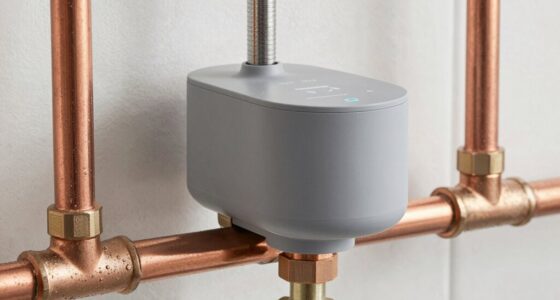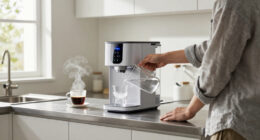
For most homes seeking a connected drinking water upgrade, I’d start with the GE GXWH70M for whole-house leak detection, while the Waterdrop G3P600 stands out for tankless under-sink reverse osmosis and the DREO RO Water Filter 112 for countertop convenience. These systems solve different problems: some treat water at one faucet, while others address the whole home, and not every model offers the same kind of smart monitoring. The main tradeoffs are installation space, water waste, treatment capacity, and how much maintenance you’re willing to manage. I compare all 15 options by their fit, features, and upkeep below. Continue reading for the full breakdown and help matching a system to your home.

Get home appliances delivered free with Prime
- Fast, free delivery on millions of items
- Prime Video, Amazon Music and more included
- Member-only deals all year
Complete the kit


Key Takeaways
- The lineup splits between point-of-use systems for drinking water and whole-house systems for water entering the home; choosing the wrong coverage can leave your main concern untreated.
- The GE GXWH70M and iSpring WF150K emphasize smart valve functions, while many reverse osmosis and gravity models focus on filtration without comparable whole-home monitoring.
- Tankless RO models such as the Waterdrop G3P600, G3P800, and VIOMI V8 Pro prioritize compact storage and higher stated output, but require under-sink space, plumbing access, and filter replacement.
- Countertop options like the DREO RO Water Filter 112 and Bluevua RO100ROPOT-UV avoid permanent installation, while gravity filtration works without a powered connection but asks for more manual handling.
- Whole-house filtration, water softening, and drinking-water purification address different water concerns; the GE GXMD30W adds softening, while RO systems target water at a dedicated drinking tap.
| DREO Reverse Osmosis Water Filter System Countertop (RO Water Filter 112, 3L) | 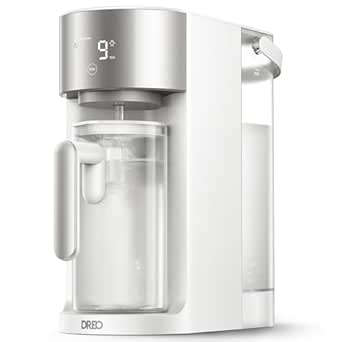 | Best for Small Kitchens | Filtration: 7-in-1 reverse osmosis | Tank and pitcher: 3L tank + 1.1L pitcher | Dimensions: 14.5 × 6.7 × 13.4 in | VIEW LATEST PRICE | See Our Full Breakdown |
| Waterdrop G3P600 Tankless Reverse Osmosis Water Filter System with Silver Faucet |  | Best for High-Volume RO | Filtration stages: 8 | Daily capacity: Up to 600 gallons | Pure-to-drain ratio: 2:1 | VIEW LATEST PRICE | See Our Full Breakdown |
| iSpring RCC7AK-BN 6-Stage Alkaline Reverse Osmosis Water Filtration System, 75 GPD |  | Best for Mineral Remineralization | Filtration stages: 6 | Maximum flow rate: 75 gallons per day (284 liters per day) | Installation: Under sink | VIEW LATEST PRICE | See Our Full Breakdown |
| Waterdrop TSU 0.01 Micron Ultra Filtration Under Sink Water Filter System | 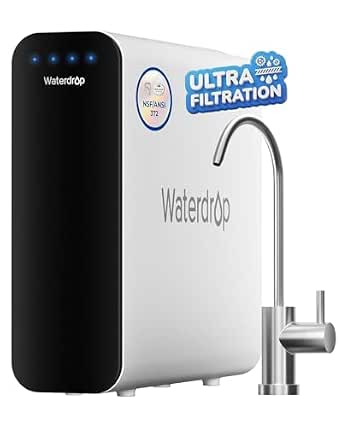 | Best for Keeping Minerals in Tap Water | Filtration method: Ultrafiltration, activated carbon, and carbon block | Filter pore size: 0.01 micron | Maximum flow rate: 1.05 GPM | VIEW LATEST PRICE | See Our Full Breakdown |
| HQUA WF3-01 3-Stage Whole House Water Filtration System | 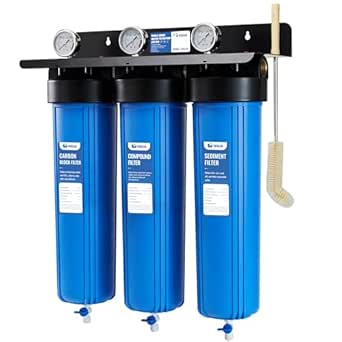 | Best for Whole-Home Treatment | Filtration stages: 3 | Filter size: 20 × 5.5 in | Maximum flow rate: 15 gpm | VIEW LATEST PRICE | See Our Full Breakdown |
| VIOMI V6 Pro 600 GPD Tankless Under-Sink Reverse Osmosis Water Filtration System |  | Best Smart RO Balance | Filtration: 9-stage reverse osmosis and carbon block | Capacity: Up to 600 GPD | Pure-to-drain ratio: 3:1 | VIEW LATEST PRICE | See Our Full Breakdown |
| GE GXWH70M Smart Whole House Water Filtration System with Leak Detection |  | Best for Leak Monitoring | Model: GXWH70M | Installation point: Whole-house water entry point | Fittings: 3/4-inch push-to-connect; 1-inch pipe requires additional fittings | VIEW LATEST PRICE | See Our Full Breakdown |
| VIOMI V8 Pro 800 GPD Tankless Under-Sink Reverse Osmosis Water Filtration System |  | Best High-Capacity Smart RO | Filtration: 9-stage reverse osmosis and carbon block | Capacity: Up to 800 GPD | Pure-to-drain ratio: 3:1 | VIEW LATEST PRICE | See Our Full Breakdown |
| Purewell 3-Stage Gravity Water Filter System, 2.25 Gallon Stainless Steel Countertop with 2 Filters |  | Best for Off-Grid Simplicity | Capacity: 2.25 gallons | Filtration method: Activated carbon, silver ion, and hollow fiber UF membrane | Pore size: 0.01 microns | VIEW LATEST PRICE | See Our Full Breakdown |
| GE Smart Water Softener with Integrated Filtration, 30,000 Grain, GXMD30W |  | Best for Whole-Home Hard Water | Grain capacity: 30,000 grains | Recommended household size: Up to 6 people | Purification method: Ion exchange | VIEW LATEST PRICE | See Our Full Breakdown |
| Whole House Water Filter System with 9 Filters, 0.5 Micron 3-Stage Filtration |  | Best for Easy Filter Changes | Filtration stages: 3: PP sediment, GAC carbon, and CTO carbon block | Flow rate: 15 GPM | Capacity: 10,000 gallons | VIEW LATEST PRICE | See Our Full Breakdown |
| Bluevua RO100ROPOT-UV Countertop Reverse Osmosis Water Filter System |  | Best for Portable Countertop Purification | Filtration: 6-stage reverse osmosis with UV and remineralization | RO membrane: 0.0001 μm | Carafe capacity: 1,700 ml | VIEW LATEST PRICE | See Our Full Breakdown |
| Express Water Ultimate Protection 3-Stage Whole House Water Filter System |  | Best for Heavy-Metal and Scale Reduction | Filtration stages: 3 | Purification methods: Activated carbon, KDF, and polyphosphate | Maximum flow rate: 17 GPM | VIEW LATEST PRICE | See Our Full Breakdown |
| Waterdrop G3P800 Tankless Reverse Osmosis Water Filter System |  | Best for High-Volume Under-Sink RO | Filtration stages: 10-stage | Capacity: 800 GPD | Pure-to-drain ratio: 3:1 | VIEW LATEST PRICE | See Our Full Breakdown |
| iSpring WF150K Whole House Water Filtration System with Smart Valve |  | Best for Automated Whole-Home Backwashing | Purification method: Granular activated carbon | Maximum flow rate: 15 GPM | Maximum supported TDS: 500 ppm | VIEW LATEST PRICE | See Our Full Breakdown |
| smart water filtration systems for home | Dimensions | Capacity | Installation |
|---|---|---|---|
| DREO Reverse Osmosis Water Fil | 14.5 × 6.7 × 13.4 in | — | — |
| Waterdrop G3P600 Tankless Reve | — | — | Under sink |
| iSpring RCC7AK-BN 6-Stage Alka | 15.5 × 16 × 18 in | — | Under sink |
| Waterdrop TSU 0.01 Micron Ultr | 14.81 × 4.68 × 13.97 in | 2200 gallons | Under sink |
| HQUA WF3-01 3-Stage Whole Hous | 31 × 23 × 8 in | 100,000 gallons | — |
| VIOMI V6 Pro 600 GPD Tankless | — | Up to 600 GPD | Tankless under-sink; corded electric |
| GE GXWH70M Smart Whole House W | — | — | — |
| VIOMI V8 Pro 800 GPD Tankless | — | Up to 800 GPD | Tankless under-sink; corded electric |
| Purewell 3-Stage Gravity Water | — | 2.25 gallons | — |
| GE Smart Water Softener with I | — | — | — |
| Whole House Water Filter Syste | 14 × 13 × 10 inches | 10,000 gallons | — |
| Bluevua RO100ROPOT-UV Countert | 10.9 × 15.4 × 14.3 inches | — | Countertop; no plumbing required |
| Express Water Ultimate Protect | 29 × 8.5 × 30 inches | 100,000 gallons | Freestanding |
| Waterdrop G3P800 Tankless Reve | 18.12 × 5.67 × 17.72 inches | 800 GPD | Under sink |
| iSpring WF150K Whole House Wat | 11 × 11 × 63.5 inches | 10 gallons | — |
More Details on Our Top Picks
DREO Reverse Osmosis Water Filter System Countertop (RO Water Filter 112, 3L)
The DREO is the simplest fit for a one- or two-person home that wants reverse osmosis without plumbing changes. Its countertop, installation-free design pairs a 7-in-1 process with real-time TDS readings, an auto-fill sensor, and self-cleaning, so daily use involves less guesswork and upkeep. Compared with the Waterdrop G3P600, it gives up high-volume, under-sink dispensing but avoids a permanent installation and electrical connection beneath the cabinet. The tradeoff is its 3L tank: it suits a compact household, but frequent refills may frustrate families or anyone filling several bottles at once. Filter replacement is also part of ownership, with a stated six-month cycle. I’d choose it for convenience and a small footprint, rather than for whole-house coverage or maximum output.
Pros:- Countertop setup avoids plumbing changes
- Real-time TDS monitoring and filter-life indicators make upkeep easier to track
- Auto-fill and self-cleaning features reduce routine attention
- A 3:1 pure-to-drain ratio limits water waste compared with less efficient RO designs
Cons:- The 3L tank is small for families or frequent bottle filling
- Replacement filters are needed about every six months
- Countertop placement uses kitchen workspace
Best for: One- or two-person households and renters who want countertop RO filtration without under-sink installation
Not ideal for: Families or high-volume users who would need to refill the 3L tank frequently
- Filtration:7-in-1 reverse osmosis
- Tank and pitcher:3L tank + 1.1L pitcher
- Dimensions:14.5 × 6.7 × 13.4 in
- Weight:9.5 lbs
- Filter life:6 months / 265 gallons (1000L)
- Pure-to-drain ratio:3:1
- Maximum input TDS:500 ppm
- Certification:NSF/ANSI 58 standards (SGS tested)
Our verdict“Choose the DREO if you want easy-to-place RO filtration for a small household and can work with a compact tank.”
Waterdrop G3P600 Tankless Reverse Osmosis Water Filter System with Silver Faucet
For a household that wants fast, frequent RO dispensing, the G3P600 is the most output-focused choice in this group. It is rated for up to 600 gallons per day, and its smart faucet shows TDS and filter life where you draw water. That makes routine filling more convenient than the DREO countertop system, whose smaller tank is better suited to one or two people. The G3P600 also saves tank space beneath the sink, though its cabinet still needs room for the unit and an electrical connection. Its 2:1 pure-to-drain ratio means some water is sent to drain, and under-sink installation is a bigger commitment than countertop setup. I’d rank it for busy kitchens that value steady access and live status information over portability.
Pros:- Rated capacity of up to 600 gallons per day supports frequent use
- Smart faucet displays TDS and filter life at the point of use
- Tankless layout frees cabinet space otherwise used by a storage tank
- Tool-free filter changes simplify routine replacement
Cons:- Requires an electrical connection beneath the sink
- The unit needs substantial cabinet clearance
- Its 2:1 pure-to-drain ratio sends water to drain during filtration
Best for: Busy households that want high daily RO output and a faucet that displays water and filter status
Not ideal for: Renters or kitchens without under-sink electrical access and enough cabinet space for installation
- Filtration stages:8
- Daily capacity:Up to 600 gallons
- Pure-to-drain ratio:2:1
- Flow rate:0.42 gpm
- Installation:Under sink
- Power:Corded electric
- Maximum supported TDS:1500 ppm
- Filter shelf life:24 months
- Certifications:NSF/ANSI 42, 58, and 372
Our verdict“Pick the G3P600 if your household draws lots of RO water and has the cabinet space and power for an under-sink system.”
iSpring RCC7AK-BN 6-Stage Alkaline Reverse Osmosis Water Filtration System, 75 GPD
The iSpring suits buyers who want under-sink RO with a remineralization stage and no electrical connection. Its six-stage filtration includes alkaline treatment, which adds a distinct finishing step compared with the Waterdrop G3P600, a tankless system built around high output and a display faucet. The iSpring instead includes a storage tank and a brushed nickel faucet, so it takes cabinet space but keeps water available without powered dispensing. Its stated maximum flow is 75 gallons per day, far below the Waterdrop’s 600-gallon rating, making it a less compelling fit for heavy use. Quick-fit connections and a top-mounted faucet can help with DIY setup, while the transparent first-stage housing makes visible buildup easier to spot. Plan for periodic filter changes and room for both the unit and tank.
Pros:- Six filtration stages include alkaline remineralization
- NSF/ANSI 58 certification
- Operates without electricity
- Top-mounted faucet and quick-fit connections can simplify DIY installation
Cons:- Storage tank and system require under-sink space
- Rated maximum flow of 75 gallons per day is modest beside the Waterdrop G3P600
- Filters need periodic replacement
Best for: Homeowners seeking a non-electric under-sink RO system with a storage tank and an alkaline remineralization stage
Not ideal for: High-volume households that want tankless dispensing or a much higher rated daily capacity
- Filtration stages:6
- Maximum flow rate:75 gallons per day (284 liters per day)
- Installation:Under sink
- Power:No power needed
- Certification:NSF/ANSI 58
- Maximum supported TDS:750 ppm
- Operating pressure:70 psi
- Dimensions:15.5 × 16 × 18 in
- Filter life cycle:6 months
Our verdict“Choose the iSpring if you want tank-based RO with remineralization and can spare cabinet space for its system and storage tank.”
Waterdrop TSU 0.01 Micron Ultra Filtration Under Sink Water Filter System
The TSU is the pick for buyers who want to reduce selected contaminants while keeping the minerals in their tap water. Its 0.01-micron ultrafiltration and carbon stages target chlorine, PFAS, heavy metals, and odors, while the system produces no wastewater and needs no electricity. That sets it apart from the iSpring RCC7AK-BN and Waterdrop G3P600, both of which use RO and reduce TDS. The TSU’s defining limitation is that it does not reduce TDS, so it is not a substitute for RO when dissolved solids are the buyer’s concern. Its slim under-sink body and lifespan reminder panel suit a municipal-water setup, but installation calls for a separate faucet and countertop drilling. It is also not intended for hot water or well water.
Pros:- Retains essential minerals rather than reducing TDS
- Produces no wastewater and requires no electricity
- Slim under-sink design suits tighter cabinets
- Lifespan reminder panel helps track filter changes
Cons:- Does not reduce Total Dissolved Solids
- Separate faucet installation requires countertop drilling
- Not suitable for hot water or well water applications
Best for: Municipal-water households that want chlorine and odor reduction while retaining minerals and avoiding wastewater
Not ideal for: People who want TDS reduction, use well water, or cannot drill for a separate faucet
- Filtration method:Ultrafiltration, activated carbon, and carbon block
- Filter pore size:0.01 micron
- Maximum flow rate:1.05 GPM
- Capacity:2200 gallons
- Filter lifespans:UF: 24 months; CT: 12 months; PP: 6 months
- Power:Mechanical water pressure
- Dimensions:14.81 × 4.68 × 13.97 in
- Installation:Under sink
- Certification:IAPMO NSF/ANSI 372
Our verdict“Pick the TSU for municipal tap water when mineral retention and wastewater-free filtration matter more than TDS reduction.”
HQUA WF3-01 3-Stage Whole House Water Filtration System
The HQUA takes a different approach from the countertop and under-sink picks: it treats water at the home’s supply, with a 15 gpm maximum flow rate and a stated capacity of 100,000 gallons. Its three stages use carbon block and ion exchange, with the supplied description listing reductions for heavy metals, chlorine, sediment, and odors. Compared with the Waterdrop TSU, which serves a single under-sink faucet, the HQUA is intended to cover household water use more broadly. That reach comes with a larger installation footprint: the unit is 31 inches tall and weighs 44 pounds, and cartridge upkeep is manual. Pressure gauges and filter timers help track maintenance, but this is a system for buyers comfortable planning a whole-house installation, not someone seeking a quick countertop drinking-water setup.
Pros:- Whole-house configuration treats water at the supply rather than one faucet
- 15 gpm maximum flow rate
- Pressure gauges and filter timers help monitor maintenance
- Bracket-mounted or free-standing installation options
Cons:- At 44 lbs and 31 inches tall, it is bulky to install and position
- Cartridge replacement and monitoring require manual upkeep
- Whole-house installation is a larger project than fitting an under-sink unit such as the Waterdrop TSU
Best for: Homeowners seeking filtration at the household water supply and able to accommodate a large, manually maintained unit
Not ideal for: Renters, small homes without a suitable installation area, or buyers who only need a compact drinking-water filter
- Filtration stages:3
- Filter size:20 × 5.5 in
- Maximum flow rate:15 gpm
- Capacity:100,000 gallons
- Dimensions:31 × 23 × 8 in
- Weight:44 lbs
- Power:Manual / no power
- Temperature range:40–125 °F
- Purification methods:Carbon block and ion exchange
Our verdict“Choose the HQUA if you want supply-level filtration throughout the home and have space and installation support for a large system.”
VIOMI V6 Pro 600 GPD Tankless Under-Sink Reverse Osmosis Water Filtration System
The VIOMI V6 Pro pairs a 600 GPD reverse-osmosis system with a smart LED faucet that displays TDS and filter life, plus app monitoring. That makes routine status checks easier than with the iSpring RCC7AK-BN, which uses a conventional tank-based setup. Its stated 3:1 pure-to-drain ratio and refrigerator or ice-maker compatibility also suit households that want filtered water at both the sink and the fridge. The V8 Pro offers higher stated output at 800 GPD, but the V6 is the more sensible fit when that extra capacity is unnecessary. The tradeoff is a powered, drilled under-sink installation, and refrigerator tubing is not included. Choose it for connected monitoring and strong daily output, provided the cabinet has room and an outlet.
Pros:- Smart faucet displays TDS and filter life, with additional app monitoring
- Stated 600 GPD capacity suits households with regular filtered-water demand
- 3:1 pure-to-drain ratio
- Can supply a compatible refrigerator or ice maker
Cons:- Installation requires drilled holes and a standard outlet
- A dedicated outlet may be needed when a garbage disposer is present
- Refrigerator connection tubing is not included
Best for: Households wanting app monitoring, a live TDS display, and filtered water for both the kitchen faucet and refrigerator
Not ideal for: Renters or kitchens without an accessible outlet, since installation needs power and drilled holes
- Filtration:9-stage reverse osmosis and carbon block
- Capacity:Up to 600 GPD
- Pure-to-drain ratio:3:1
- Filter life:Up to 2 years
- Installation:Tankless under-sink; corded electric
- Maximum supported water TDS:800 ppm
- Dimensions and weight:16.3 × 5 × 12.8 in; 20.1 lb
- Certifications:NSF/ANSI 42, 53, 58, and 372
Our verdict“Choose the V6 Pro for connected under-sink RO monitoring and refrigerator compatibility if 600 GPD is enough for your household.”
GE GXWH70M Smart Whole House Water Filtration System with Leak Detection
The GE GXWH70M is the lineup’s choice for monitoring water at the home’s entry point. Its Wi-Fi alerts can flag possible leaks or a running faucet, and remote shutoff gives owners a way to respond when they are away. That is a different job from the HQUA WF3-01 whole-house filter: the GE’s defining advantage is connected water-use oversight, while filtration depends on a separately purchased compatible cartridge. Push-to-connect fittings and tool-free filter changes simplify routine handling, though the system still needs a Wi-Fi signal at the installation location. Buyers with 1-inch pipe also need additional fittings. Because no filter is included and replacements are specified every three months, this makes most sense for homeowners who value leak alerts and accept ongoing cartridge upkeep.
Pros:- Alerts for potential leaks and running faucets
- Remote water shutoff and water-use monitoring
- Push-to-connect fittings and tool-free filter changes
- Compatible cartridges offer multiple filtration levels
Cons:- Filter cartridge is sold separately
- Requires Wi-Fi at the installation location
- One-inch pipe needs additional fittings
Best for: Homeowners who want entry-point filtration with app alerts and remote shutoff to monitor a property while away
Not ideal for: Households without Wi-Fi near the main water line or buyers who want a filtration system with a cartridge included
- Model:GXWH70M
- Installation point:Whole-house water entry point
- Fittings:3/4-inch push-to-connect; 1-inch pipe requires additional fittings
- Compatible filters:FTHPM, FTHTM, FTHLM
- Replacement interval:Every 3 months
- Filter included:No
- Smart features:Water-use monitoring, leak and running-faucet alerts, remote shutoff, replacement reminders
- Warranty:Limited 1-year entire appliance
Our verdict“Pick the GXWH70M if remote leak monitoring matters as much as filtration and you are prepared to supply compatible replacement cartridges.”
VIOMI V8 Pro 800 GPD Tankless Under-Sink Reverse Osmosis Water Filtration System
For a household that wants the most stated under-sink output in this batch, the VIOMI V8 Pro offers up to 800 GPD alongside nine-stage RO filtration, a smart LED faucet, and app monitoring. The V6 Pro shares the connected display and 3:1 pure-to-drain ratio but is rated at 600 GPD, making the V8 a better fit when higher output is the deciding factor. Both can connect to a refrigerator or ice maker, so the V8’s case rests on capacity rather than a different monitoring setup. It also carries NSF/ANSI 42, 53, 58, and 372 certifications. The tradeoffs are practical: installation needs drilled holes and a dedicated outlet, and the 29 lb unit weighs more than the V6. Refrigerator tubing is not included.
Pros:- Stated capacity of up to 800 GPD
- Smart faucet shows TDS and filter life, with app monitoring
- 3:1 pure-to-drain ratio
- Compatible with a refrigerator or ice maker
Cons:- Installation requires drilled holes and a dedicated outlet
- Refrigerator connection tubing is not included
- At 29 lb, it is heavier than the VIOMI V6 Pro
Best for: Large or high-use households seeking a high-output, app-monitored RO system that can also supply a refrigerator or ice maker
Not ideal for: Small kitchens or lower-demand homes where the larger, heavier system and 800 GPD capacity add little value
- Filtration:9-stage reverse osmosis and carbon block
- Capacity:Up to 800 GPD
- Pure-to-drain ratio:3:1
- Filter life:Up to 2 years
- Installation:Tankless under-sink; corded electric
- Maximum supported water TDS:800 ppm
- Dimensions and weight:16.3 × 5 × 12.8 in; 29 lb
- Certifications:NSF/ANSI 42, 53, 58, and 372
Our verdict“Choose the V8 Pro over the V6 Pro when your household can use its higher stated output and has space and power for installation.”
Purewell 3-Stage Gravity Water Filter System, 2.25 Gallon Stainless Steel Countertop with 2 Filters
The Purewell PW-OB takes a simpler route than the powered RO systems in this roundup: gravity moves water through a three-stage filter, so it needs no electricity or plumbing. Its 2.25-gallon capacity and stainless-steel body suit homes where an under-sink installation is impractical, as well as occasional outdoor use. Compared with the VIOMI V6 Pro, it avoids power and drilling but does not reduce TDS and offers no app monitoring or live faucet display. Its 0.01-micron pore size and NSF/ANSI 42 and 372 certifications support its role as a countertop filter for chlorine, rust, sediment, and heavy metals, though they do not make it an RO substitute. The upper chamber needs attention to prevent overflow, and its 20-inch height takes meaningful counter space.
Pros:- Gravity-fed operation needs no electricity
- 304 food-grade stainless steel construction with included non-slip stand
- 0.01-micron filtration targets chlorine, rust, sediment, and heavy metals
- Two included filters are rated for up to 3,000 gallons each
Cons:- Does not reduce Total Dissolved Solids
- Upper chamber needs monitoring to prevent overflow
- 20-inch height uses substantial counter space
Best for: Renters, cabins, or households wanting non-electric countertop filtration without plumbing changes
Not ideal for: Buyers seeking TDS reduction, smart monitoring, or an under-sink system that feeds a refrigerator
- Capacity:2.25 gallons
- Filtration method:Activated carbon, silver ion, and hollow fiber UF membrane
- Pore size:0.01 microns
- Filter life:3,000 gallons per filter; replace every 6 months
- Material:304 stainless steel and polypropylene
- Power:Gravity-fed; non-electric
- Dimensions and weight:8.9 × 8.9 × 20 in; 8.5 lb
- Certifications:NSF/ANSI 42 and 372
Our verdict“Choose the Purewell if you want a self-contained, non-electric countertop filter and do not need RO-level TDS reduction or app features.”
GE Smart Water Softener with Integrated Filtration, 30,000 Grain, GXMD30W
The GE GXMD30W is the only option here that pairs whole-house softening with integrated filtration, so it serves a different need from the GE GXWH70M, which focuses on cartridge-based filtration and leak monitoring. Its 30,000-grain ion-exchange capacity is designed for households of up to six, while self-cleaning filtration reduces chlorine taste and odor, sand, and sediment without routine filter changes. Wi-Fi flow alerts and low-salt reminders help owners keep track of system activity and upkeep. The tradeoff is a large, heavy freestanding unit that needs plumbing and a power connection; at 118 lb and 51 inches high, it asks more of a utility area than an under-sink RO system. Remote leak shutoff also requires a separate optional valve.
Pros:- Combines ion-exchange softening with filtration for chlorine taste and odor, sand, and sediment
- Self-cleaning filtration requires no filter changes
- Wi-Fi flow alerts and low-salt reminders through SmartHQ
- Designed for households of up to six people
Cons:- Remote shutoff and leak detection require the optional RMVALVESFT valve
- Large 26 × 15 × 51-inch footprint and 118 lb weight require a suitable installation area
- Requires a corded power connection and plumbing installation
Best for: Households of up to six with hard water that want whole-home softening, basic filtration, and app reminders
Not ideal for: Small homes without space for a tall freestanding unit or buyers expecting remote shutoff without an added valve
- Grain capacity:30,000 grains
- Recommended household size:Up to 6 people
- Purification method:Ion exchange
- Maximum flow rate:8 gpm
- Integrated filtration:Reduces chlorine taste and odor, sand, and sediment; self-cleaning
- Maximum supported water TDS:500 ppm
- Dimensions and weight:26 × 15 × 51 in; 118 lb
- Smart features:Wi-Fi flow alerts, low-salt reminders, Vacation Mode; remote shutoff requires optional RMVALVESFT valve
Our verdict“Choose the GXMD30W if hard water affects the whole household and you have room for a freestanding softener with app monitoring.”
Whole House Water Filter System with 9 Filters, 0.5 Micron 3-Stage Filtration
For households that want whole-home chlorine, sediment, and odor reduction with visible upkeep, this three-stage system stands out for including nine filters and clear housings. The 15 GPM flow rate is suited to ordinary household use, while its dual valves let owners change filters without shutting off the main water. Compared with the Express Water Ultimate Protection, it is lighter and smaller, but Express Water lists a much larger 100,000-gallon capacity and reduction of several heavy metals. This system’s stated capacity is 10,000 gallons, and it does not reduce TDS or remove minerals. Its small footprint and included replacement sets suit modest homes; larger households or buyers targeting dissolved contaminants should look elsewhere.
Pros:- Includes three sets of filters for planned replacements.
- 15 GPM flow rate supports typical household water use.
- Clear housings make filter condition easier to inspect.
- Dual valves allow filter changes without shutting off the main water.
Cons:- 10,000-gallon capacity may be limiting for larger households.
- Does not reduce TDS or remove minerals.
- The supplied description does not claim heavy-metal reduction.
Best for: Owners of small to medium homes on city or well water who want visible filter checks and replacement sets included.
Not ideal for: Large households or buyers seeking TDS reduction, mineral removal, or heavy-metal filtration.
- Filtration stages:3: PP sediment, GAC carbon, and CTO carbon block
- Flow rate:15 GPM
- Capacity:10,000 gallons
- Filter supply:9 filters, or 3 sets
- Connections:3/4-inch inlet and outlet
- Dimensions:14 × 13 × 10 inches
- Weight:12 pounds
- Included items:Housing, wrench, plumber’s tape, connectors, valves, and manual
Our verdict“Choose this for straightforward whole-house chlorine and sediment filtration with replacement filters on hand, provided its capacity and contaminant coverage fit your home.”
Bluevua RO100ROPOT-UV Countertop Reverse Osmosis Water Filter System
The Bluevua is a fit for renters or households that want reverse osmosis without plumbing work. Its six-stage process combines a 0.0001 μm RO membrane with UV treatment and remineralization, and the glass carafe and built-in TDS meter make serving and checking water simple. Unlike the Waterdrop G3P800, which sits under the sink and can supply water through a smart faucet, this unit can move between locations but needs counter space and a power outlet. Its 1.7-liter carafe and 0.26-liter-per-minute flow rate suit drinking water in smaller batches, rather than whole-home use or rapid filling. At 17.8 pounds, it is portable in the sense that installation is unnecessary, though frequent moving may be cumbersome.
Pros:- Six-stage RO filtration includes UV and remineralization.
- No plumbing or permanent installation is required.
- Borosilicate glass carafe avoids storing filtered water in a plastic pitcher.
- Built-in TDS meter and filter-life monitor provide status information.
Cons:- Requires a corded power source.
- 17.8-pound weight and countertop footprint limit easy relocation.
- Small carafe and 0.26 L/min flow suit batch use rather than high-volume demand.
Best for: Renters and households that want RO drinking water without modifying a kitchen sink.
Not ideal for: Buyers who need high-volume water on demand, a whole-house system, or a lightweight appliance to move often.
- Filtration:6-stage reverse osmosis with UV and remineralization
- RO membrane:0.0001 μm
- Carafe capacity:1,700 ml
- Flow rate:0.26 liters per minute
- Water-saving ratio:2:1 pure to drain
- Installation:Countertop; no plumbing required
- Dimensions:10.9 × 15.4 × 14.3 inches
- Weight:17.8 pounds
- Filter life:12 months
Our verdict“Pick the Bluevua if you want an install-free RO drinking-water station and can accommodate its weight, power needs, and batch-sized output.”
Express Water Ultimate Protection 3-Stage Whole House Water Filter System
Among these whole-house choices, the Express Water system is the clearest fit for buyers prioritizing chlorine and heavy-metal reduction alongside sediment and scale control. Its activated carbon, KDF, and polyphosphate stages are designed to address lead, arsenic, mercury, chromium, and cadmium, while pressure gauges help owners track the system. By comparison, the 9-filter, 0.5-micron system is lighter and includes multiple replacement sets, but its supplied data does not claim heavy-metal reduction and lists a 10,000-gallon capacity. Express Water lists 100,000 gallons and a 17 GPM maximum flow, though filters have a six-month cycle. The freestanding steel frame weighs 63 pounds and needs substantial space, so this is best for buyers with room and a clear filtration target.
Pros:- Designed to reduce chlorine and several named heavy metals.
- Polyphosphate treatment helps address scale buildup.
- 17 GPM maximum flow and 100,000-gallon capacity are suited to sustained household use.
- Pressure gauges and release buttons aid monitoring and filter changes.
Cons:- Filter cycle is six months.
- 63-pound freestanding frame requires room and careful installation.
- The listed warranty is one year.
Best for: Homeowners with installation space who want whole-house treatment designed to reduce chlorine, selected heavy metals, sediment, and scale buildup.
Not ideal for: Small homes with limited utility space or buyers who prefer infrequent filter replacement and a compact, light system.
- Filtration stages:3
- Purification methods:Activated carbon, KDF, and polyphosphate
- Maximum flow rate:17 GPM
- Capacity:100,000 gallons
- Filter life cycle:6 months
- Operating pressure:20–80 psi
- Dimensions:29 × 8.5 × 30 inches
- Weight and material:63 pounds; stainless steel
- Installation:Freestanding
Our verdict“Choose Express Water when its stated heavy-metal and scale focus matches your water needs and you have room for a substantial system with twice-yearly filter changes.”
Waterdrop G3P800 Tankless Reverse Osmosis Water Filter System
For households that want high-output reverse osmosis at the kitchen sink, the G3P800 pairs an 800 GPD rating with a tankless design and a smart faucet that displays TDS. Its listed 3:1 pure-to-drain ratio also gives buyers a clear water-use figure. Compared with the Bluevua countertop RO system, it requires under-sink installation and an electrical connection, but it offers much greater stated daily capacity and dispenses through a dedicated faucet rather than a small carafe. The 10-stage filtration and listed NSF/ANSI 42, 53, 58, and 372 certifications distinguish it from whole-house systems in this roundup, which treat water at the main entry point. Expect filter upkeep and a more involved setup; this is focused on drinking water at one tap.
Pros:- 800 GPD rating supports higher-volume kitchen demand.
- Tankless design saves space compared with a storage tank.
- Smart faucet provides real-time TDS readings.
- Listed 3:1 pure-to-drain ratio and four NSF/ANSI certifications.
Cons:- Requires under-sink installation and a corded electrical connection.
- Treats water at the kitchen tap rather than throughout the home.
- Replacement filters add ongoing maintenance.
Best for: Families who use substantial amounts of filtered drinking and cooking water and have under-sink space, an outlet, and installation access.
Not ideal for: Renters who cannot alter sink plumbing, households without an outlet under the sink, or buyers seeking whole-house treatment.
- Filtration stages:10-stage
- Capacity:800 GPD
- Pure-to-drain ratio:3:1
- Certifications:NSF/ANSI 42, 53, 58, and 372
- Installation:Under sink
- Dimensions:18.12 × 5.67 × 17.72 inches
- Weight:15.3 kg
- Power:Corded electric
- Warranty:1 year
Our verdict“Choose the G3P800 for a high-output RO drinking-water tap if you can accommodate its electrical and under-sink installation needs.”
iSpring WF150K Whole House Water Filtration System with Smart Valve
The iSpring WF150K suits homeowners who want whole-house carbon filtration with automatic backwashing instead of routinely swapping small cartridge sets. Its programmable smart valve is paired with a stated filter life of up to 10 years for homes with two to three bathrooms, and the system is lab-tested to meet NSF/ANSI 42 and 53 standards. Compared with the Express Water Ultimate Protection, which uses three treatment stages and calls for six-month filter changes, the iSpring emphasizes a long service interval and automated maintenance. That convenience comes with a 69-pound freestanding tank, a corded power requirement, and a listed 10-gallon capacity; homes with four to five bathrooms may see the stated life drop to five years. Check the capacity and fit before choosing it for a larger household.
Pros:- Programmable valve automatically backwashes the filter.
- Up to 10-year stated filter life for homes with two to three bathrooms.
- Treats water at the main entry point.
- Lab-tested to meet NSF/ANSI 42 and 53 standards, with lifetime technical support listed.
Cons:- Requires corded electricity.
- 69-pound, 63.5-inch-tall freestanding system needs dedicated space.
- Stated filter life falls to five years for homes with four to five bathrooms.
Best for: Owners of two- to three-bathroom homes who want main-entry carbon filtration with scheduled automatic backwashing.
Not ideal for: Households without a nearby outlet, homes with limited space for a tall tank, or larger homes expecting the full stated filter life.
- Purification method:Granular activated carbon
- Maximum flow rate:15 GPM
- Maximum supported TDS:500 ppm
- Filter life:Up to 10 years; stated as 5 years for homes with 4–5 bathrooms
- Capacity:10 gallons
- Dimensions:11 × 11 × 63.5 inches
- Weight:69 pounds
- Power:Corded electric
- Certifications and warranty:Lab-tested to meet NSF/ANSI 42 and 53; 10-year extended manufacturer warranty
Our verdict“Pick the WF150K if you want automated whole-house carbon filtration and your home size, available space, and electrical access match its requirements.”
How We Picked
I compared each system by its intended coverage, filtration approach, stated capacity, installation demands, maintenance needs, and smart features. I gave more weight to options whose design clearly matches a common home need, such as whole-house leak response, compact under-sink drinking water treatment, or installation-free countertop use. A smart label alone did not move a product up the ranking: monitoring or valve functions matter most when they help a buyer manage leaks, system status, or upkeep.
The order reflects how broadly useful and clearly differentiated each system appears for home use, with the GE GXWH70M leading for connected whole-home protection and the Waterdrop G3P600 representing a strong under-sink RO choice. Other placements favor a distinct use case, such as higher stated output, alkaline stages, gravity operation, or water softening. Product details supplied for this roundup do not establish independent contaminant-removal performance, so I treat stated filtration specifications as product claims and recommend checking certification and local water needs before choosing.
| smart water filtration systems for home | Installation |
|---|---|
| DREO Reverse Osmosis Water Fil | — |
| Waterdrop G3P600 Tankless Reve | Under sink |
| iSpring RCC7AK-BN 6-Stage Alka | Under sink |
| Waterdrop TSU 0.01 Micron Ultr | Under sink |
| HQUA WF3-01 3-Stage Whole Hous | — |
| VIOMI V6 Pro 600 GPD Tankless | Tankless under-sink; corded electric |
| GE GXWH70M Smart Whole House W | — |
| VIOMI V8 Pro 800 GPD Tankless | Tankless under-sink; corded electric |
| Purewell 3-Stage Gravity Water | — |
| GE Smart Water Softener with I | — |
| Whole House Water Filter Syste | — |
| Bluevua RO100ROPOT-UV Countert | Countertop; no plumbing required |
| Express Water Ultimate Protect | Freestanding |
| Waterdrop G3P800 Tankless Reve | Under sink |
| iSpring WF150K Whole House Wat | — |
Factors to Consider When Choosing Smart Water Filtration Systems For Home
Before choosing a system, I’d start with the water problem and the point in the home where you want treatment. A filtration method that suits drinking water may not protect plumbing or showers, while a whole-house setup may not provide the targeted purification you want at a kitchen tap.
Match Treatment to the Water Concern
Start with a recent water report or a lab test if you have a specific concern; taste, odor, hardness, and potential contaminants call for different solutions. Reverse osmosis is a point-of-use approach, while sediment and carbon stages in whole-house systems treat water entering the home. A softener addresses hardness rather than serving as a universal purifier. A common mistake is buying the system with the most stages without checking what those stages are designed to reduce. I’d compare the target contaminants on the product documentation with your test results before choosing. If the stated claims do not match your concern, a larger system may still be the wrong one.
Choose the Right Coverage
Point-of-use systems serve a drinking tap or countertop station, so they can make sense when your priority is water for cooking and drinking. Whole-house systems treat water at the entry point and can address concerns across multiple taps, but their installation and upkeep affect the full plumbing supply. A countertop model avoids plumbing work, though it does not protect showers or appliances. Think about which household members and uses need treated water before deciding. Buyers sometimes assume a kitchen filter treats every faucet; the system’s installation point determines its reach. Match coverage to the problem rather than paying for capacity you will not use.
Check Smart Features Against Your Routine
Smart functions range from a valve that can respond to leaks to indicators that help track a system’s status. These features have different practical value: leak detection can matter near a whole-house installation, while a status reminder may mainly help with filter upkeep. Ask what the system monitors, how it alerts you, and whether it can act automatically. A feature that depends on an app or network may be less useful if you will not check it regularly. Also confirm whether the smart function is built into the system or requires a separate component. I’d favor a simple, relevant alert over a long feature list with no clear household benefit.
Plan for Installation and Space
Measure the cabinet, counter, and nearby clearance before ordering; under-sink RO systems need room for the unit, tubing, and often a dedicated faucet. Tankless designs can reduce storage bulk, but still need plumbing access and compatible connections. Countertop units trade permanent installation for space on the work surface and regular filling or handling. Whole-house systems may need an accessible location on the incoming water line and professional installation depending on your setup. Check power needs too, especially for systems with electronic monitoring or UV components. A quick measurement and connection check can prevent a system from being impractical even when its filtration approach fits.
Estimate Maintenance and Ongoing Water Use
Filter replacement frequency, availability, and the number of stages affect the work of owning a system. Reverse osmosis systems can send reject water to the drain, so check the manufacturer’s stated water-use details if conservation matters to your household. Gravity units need manual refilling, while whole-house systems may call for cartridge changes or valve maintenance. Do not compare systems by filter count alone: more cartridges can mean more replacement tasks without proving better results for your water. Look for clear maintenance instructions and replacement part information before purchase. Choose a routine you can keep up with, since neglected filters can undermine the value of any system.
Know When a More Specialized System Makes Sense
Paying for a specialized setup can make sense when your home has a defined need, such as hardness across the plumbing, leak monitoring at the main line, or high drinking-water demand at one sink. It is harder to justify complexity when you only want to improve taste at one tap. A water softener with filtration combines functions, but buyers should verify which filtration claims apply and whether they match their water report. Likewise, extra RO stages or UV features matter only when their role is clear for the intended use. Consider household size, peak demand, and the source water before choosing higher stated capacity. The right upgrade solves a specific gap without adding maintenance you do not need.
Frequently Asked Questions
Should I buy a whole-house filter or an under-sink RO system?
I’d choose based on where the concern matters. A whole-house unit treats water as it enters the home, which suits concerns affecting multiple taps or appliances. An under-sink RO system focuses on drinking water at a dedicated point and may be a better fit when that is the main goal. Some households may need both approaches, but the water report should guide that decision. Check each product’s stated reduction claims before assuming either system addresses a particular contaminant.
Do I need a smart system if I only want better-tasting drinking water?
Not necessarily. Smart functions are most useful when they solve a task you care about, such as leak response or reminders that help you keep up with filter changes. If your main goal is taste at one tap, first compare filtration method, installation fit, maintenance, and the manufacturer’s claims for your water concern. A countertop or under-sink system may meet that need without whole-house monitoring. I would pay extra attention to smart features only when their alerts or controls will change how you manage the system.
Can a water softener replace a water filter?
No, a softener is designed to address hardness, which is associated with minerals such as calcium and magnesium. That function does not automatically mean it reduces the contaminants or taste issues a separate filter is designed to address. Some products combine softening and filtration, but their documentation should spell out each function and its limits. If you have concerns beyond hardness, use a water report to identify the right treatment. Avoid treating the words “softener” and “filter” as interchangeable.
Is tankless reverse osmosis a good fit for a small kitchen?
It can be, especially when removing a storage tank frees useful cabinet space. The system still needs room for the filtration unit, plumbing connections, and potentially a separate faucet, so measure the cabinet before buying. Compare stated output and water-use information with your household’s drinking and cooking habits. Tankless designs can also involve electronic components and scheduled filter changes. If you cannot accommodate under-sink plumbing, a countertop RO model may be easier to place.
What should I verify before installing a whole-house smart filter?
Check the system’s connection size, installation location, household flow needs, and whether its monitoring or valve features require power or a network connection. Confirm what the filter stages are claimed to reduce and whether that matches a current water test. Ask whether installation requires a plumber and how filter changes or valve maintenance are handled. For leak detection, understand where sensors sit and what action the valve takes when a leak is detected. These checks help distinguish useful protection from a feature that may not work with your home’s layout.
Conclusion
For broad connected protection, I’d choose the GE GXWH70M as best overall, particularly for buyers who want whole-house filtration with leak detection. The HQUA WF3-01 or Express Water Ultimate Protection may suit buyers seeking a more direct whole-house filtration setup, while the Waterdrop G3P600 is my under-sink RO pick for a compact drinking-water station. For higher stated output, compare the Waterdrop G3P800 and VIOMI V8 Pro; for a premium or specialized choice, the GE GXMD30W fits households seeking integrated softening and filtration. Beginners who want to avoid permanent plumbing work can start with the DREO RO Water Filter 112 or Bluevua RO100ROPOT-UV, and homes that need a non-electric countertop approach can look at the Purewell gravity system. I’d treat value as the best fit for your water concern and maintenance routine, then verify product claims against your water test before deciding.