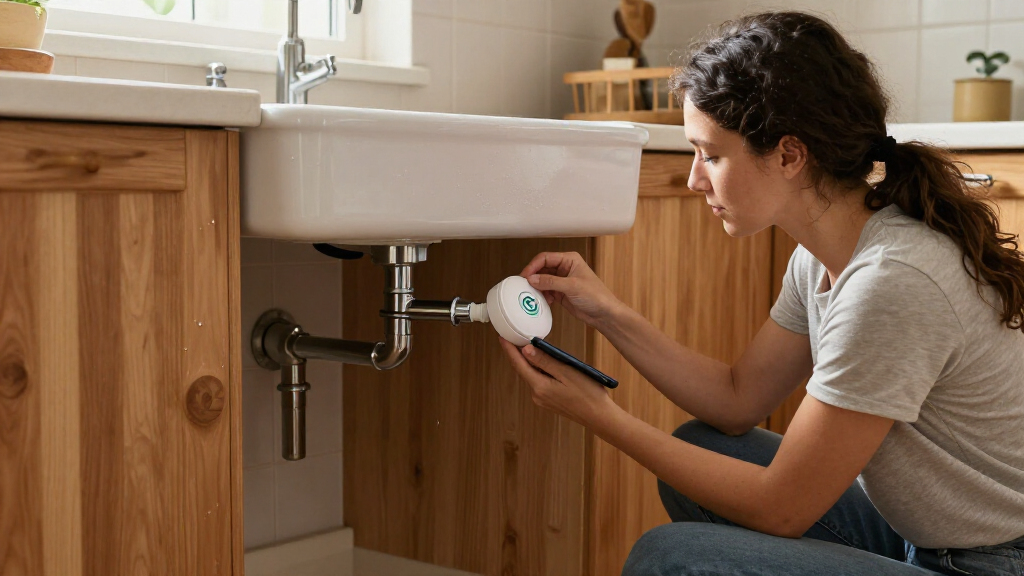

Smart leak detectors can alert you to water where a burst pipe, appliance leak, or slow drip might otherwise go unnoticed. I’d put the YoLink Water Leak Sensor 1 Kit with six sensors and a hub first for broad household coverage, while the GoveeLife Smart Water Leak Detector 2 six-pack stands out for long-range coverage and the Moen Flo three-pack offers a Wi-Fi-based alternative. The main tradeoffs are how sensors connect, how many areas one kit can cover, and whether you need a remote alert, a loud local alarm, or a cable probe for hard-to-reach spots. Hub-based kits can cover multiple rooms but add a central device, while Wi-Fi options may simplify setup yet depend more directly on home network reach. Read on for the full breakdown and guidance on matching a detector to your home.

Get home appliances delivered free — and shop member deals
- Fast, free delivery on millions of items
- Access to Prime Big Deal Days deals on October 6–7
- Prime Video, Amazon Music and more included
Complete the kit
![[Genuine] Waterdrop PF-01A Water Filter Replacement for W...](https://m.media-amazon.com/images/I/41+5tl9EiKL._SX342_SY445_QL70_FMwebp_.jpg)

Key Takeaways
- Six-sensor kits lead for whole-home coverage: YoLink’s six-pack bundle and GoveeLife’s six-pack give buyers more placements in one purchase than the smaller two-, three-, or four-sensor bundles.
- Connectivity is a meaningful dividing line: Several YoLink and Tapo options require a hub, while the Moen Flo and X-Sense kits use Wi-Fi-oriented setups; check where the base or hub will sit before choosing.
- Long-range claims matter most in detached or signal-challenged areas: GoveeLife Smart Water Leak Detector 2 models advertise up to 1,968 feet of range, a distinct fit compared with standard room-by-room sensor kits.
- Local alarms and remote notifications solve different problems: The YoLink Water Leak Sensor 4 kit includes a 105 dB alarm, while other picks focus on connected alerts; decide whether someone at home must hear the warning.
- A cable probe can reach where a flat sensor cannot: GoveeLife’s 4.92-foot cable model is the standout for narrow or awkward leak points, whereas puck-style sensors are easier to place under appliances and in open floor areas.
| GoveeLife Upgraded Smart Water Leak Detector 1s – 5 Pack |  | Best for Broad, Audible Coverage | Pack size: 5 sensors | Wireless range: Up to 1804 ft (550 m) | Maximum alarm volume: 105 dB | VIEW LATEST PRICE | See Our Full Breakdown |
| YoLink Water Leak Sensor 1 Kit: 6-Pack + Hub |  | Best for Whole-Home Expansion | Included items: 1 hub and 6 sensors | Maximum range: 2034 ft | Connectivity: LoRa | VIEW LATEST PRICE | See Our Full Breakdown |
| YoLink Water Leak Sensor 4-Pack + Hub |  | Best for Built-In Audible Alerts | Included items: 1 hub and 4 sensors | Maximum range: 2034 ft | Connectivity: LoRa | VIEW LATEST PRICE | See Our Full Breakdown |
| YoLink Water Leak Sensor 1 Kit: 4-Pack + Hub | 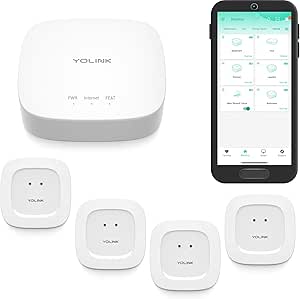 | Best for a Simple Hub-Based Starter Setup | Included sensors: 4 | Maximum range: 1320 ft | Connectivity: Wireless LoRa | VIEW LATEST PRICE | See Our Full Breakdown |
| GoveeLife Upgraded Smart Water Leak Detector 1s – 2 Pack |  | Best Compact Starter Pack | Pack size: 2 sensors | Wireless connectivity: Sub-1G, 915 MHz | Maximum range: Up to 1804 ft | VIEW LATEST PRICE | See Our Full Breakdown |
| Tapo Smart Water Leak Detector, Requires Tapo Hub, T300 | 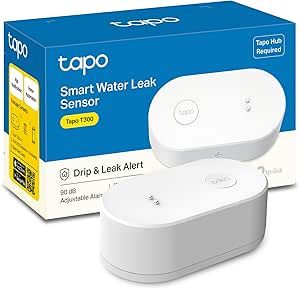 | Best Compact Pick | Power: Battery powered; 2 AAA batteries included | Detection: Dual-side contact sensors; detects leaks within 1 second | Audible alarm: Adjustable, up to 90 dB | VIEW LATEST PRICE | See Our Full Breakdown |
| GoveeLife Upgraded Smart Water Leak Detector 3 Pack |  | Best for Long-Range Alerts | Pack size: 3 detectors | Wireless: Sub-1G wireless; 915 MHz sensor technology | Maximum range: Up to 1,804 feet (550 meters) | VIEW LATEST PRICE | See Our Full Breakdown |
| YoLink Water Leak Sensor 4 with 105 dB Alarm Kit: 6-Pack + Hub |  | Best for Offline Whole-Home Coverage | Kit contents: 6 sensors and 1 hub | Wireless technology: LoRa | Maximum range: 2,034 feet | VIEW LATEST PRICE | See Our Full Breakdown |
| GoveeLife Smart Water Leak Detector 2 (4 Pack) with 1968 ft Ultra-Long Range |  | Best Four-Sensor Value in Coverage | Number of sensors: 4 | Maximum range: 1,968.5 feet | Battery: 8 AAA batteries included; over 5 years stated battery life | VIEW LATEST PRICE | See Our Full Breakdown |
| X-Sense Wi-Fi Water Leak Detector Kit, 3 Sensors + Base, SWS54 | 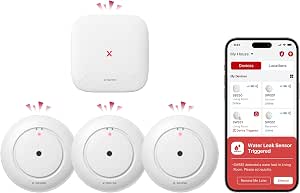 | Best for Loud Local Warnings | Kit contents: 3 sensors and 1 base station | Detection probes: 6 per sensor: 2 upper and 4 bottom | Alarm volume: 120 dB | VIEW LATEST PRICE | See Our Full Breakdown |
| Moen Flo Smart Water Leak Detector, WiFi Enabled, 3 Pack |  | Best for Moen System Owners | Power source: Battery powered | Battery type: 3 CR123A batteries required | Control method: App | VIEW LATEST PRICE | See Our Full Breakdown |
| GoveeLife Upgraded Smart Water Leak Detector 4 Pack |  | Best Four-Sensor Pick for Broad Coverage | Pack size: 4 detectors | Wireless connectivity: Sub-1G, up to 1,804 feet | Sensor frequency: 915 MHz | VIEW LATEST PRICE | See Our Full Breakdown |
| GoveeLife Upgraded Smart Water Leak Detector 1s (6 Pack) |  | Best for Maximum Sensor Coverage | Pack size: 6 detectors | Wireless connectivity: Sub-1G, up to 1,804 feet | Maximum range: 550 meters | VIEW LATEST PRICE | See Our Full Breakdown |
| GoveeLife Upgraded Smart Water Leak Detector with 4.92 ft Cable |  | Best for Hard-to-Reach Leak Points | Detection cable: 4.92 feet | Detection modes: Dual modes via app | Wireless maximum range: Up to 1,804 feet | VIEW LATEST PRICE | See Our Full Breakdown |
| GoveeLife Smart Water Leak Detector 2 (6 Pack) with 1968ft Ultra-Long Range |  | Best for Long-Range Sensor Networks | Pack size: 6 sensors | Wireless technology: LoRa | Maximum range: 1,968 feet | VIEW LATEST PRICE | See Our Full Breakdown |
| smart leak detector | Power | Maximum range | Battery life | Water resistance |
|---|---|---|---|---|
| GoveeLife Upgraded Smart Water | 10 AAA batteries included | — | Up to 5 years | IP67 |
| YoLink Water Leak Sensor 1 Kit | Hub uses AC/DC; listed voltage is 5 V | 2034 ft | Up to 5 years | — |
| YoLink Water Leak Sensor 4-Pac | AC/DC; listed voltage is 5 V | 2034 ft | Up to 5 years | — |
| YoLink Water Leak Sensor 1 Kit | Battery powered; listed voltage is 3 V | 1320 ft | Up to 5 years | — |
| GoveeLife Upgraded Smart Water | 4 AAA batteries | Up to 1804 ft | Up to 5 years | IP67 |
| Tapo Smart Water Leak Detector | Battery powered; 2 AAA batteries included | — | Over 3 years | IP67 |
| GoveeLife Upgraded Smart Water | — | Up to 1,804 feet (550 meters) | — | IP67 |
| YoLink Water Leak Sensor 4 wit | — | 2,034 feet | — | — |
| GoveeLife Smart Water Leak Det | — | 1,968.5 feet | — | IP66 |
| X-Sense Wi-Fi Water Leak Detec | — | — | — | IP66 |
| Moen Flo Smart Water Leak Dete | — | 48 inches | — | — |
| GoveeLife Upgraded Smart Water | 8 AAA batteries included | — | Up to 5 years | IP67 |
| GoveeLife Upgraded Smart Water | 12 AAA batteries included | 550 meters | Up to 5 years | IP67 |
| GoveeLife Upgraded Smart Water | 6 AAA batteries required | — | — | — |
| GoveeLife Smart Water Leak Det | 12 AAA batteries included | 1,968 feet | Over 5 years | IP66 |
More Details on Our Top Picks
GoveeLife Upgraded Smart Water Leak Detector 1s – 5 Pack
I’d choose this five-sensor set when the main challenge is covering distant areas and hearing an alert nearby. Its 1804-foot wireless range and alarms reaching 105 dB make it a practical fit for placing sensors across a basement, utility room, and kitchen, while app, SMS, and email notifications add ways to hear about a leak away from home. The IP67 rating is another advantage in damp locations. Compared with the YoLink Water Leak Sensor 1 Kit with six sensors, this GoveeLife set gives up one sensor and YoLink’s stated offline local-alert options, but offers a loud built-in alarm. The tradeoffs are a requirement for 2.4 GHz Wi-Fi, ten AAA batteries to replace eventually, and a bulkier form that may affect placement.
Pros:- Wireless range is specified at up to 1804 feet for coverage across larger homes.
- Adjustable alarm can reach 105 dB, providing an audible alert near a leak.
- IP67 waterproof design suits damp monitoring locations.
- App, SMS, and email notifications offer several ways to receive alerts.
Cons:- Requires ten AAA batteries, adding a future replacement task.
- Limited to 2.4 GHz Wi-Fi networks.
- Bulkier sensors may be harder to place discreetly.
Best for: Homeowners who want five sensors with loud local alarms and long-range coverage for separated areas of a house.
Not ideal for: Buyers who need internet-independent local alerts, want a smaller sensor footprint, or cannot use a 2.4 GHz Wi-Fi network.
- Pack size:5 sensors
- Wireless range:Up to 1804 ft (550 m)
- Maximum alarm volume:105 dB
- Battery life:Up to 5 years
- Power:10 AAA batteries included
- Water resistance:IP67
- Sensor type:Contact sensor
- Notifications:App, SMS, and email
- Wi-Fi requirement:2.4 GHz
Our verdict“Pick this five-pack if loud local alarms and long-range coverage matter more than offline operation or a compact sensor size.”
YoLink Water Leak Sensor 1 Kit: 6-Pack + Hub
For buyers who want to cover many rooms now and add more sensors later, I rank this YoLink kit ahead of the smaller kits. It includes six sensors and a hub, supports more than 300 devices, and lists a 2034-foot LoRa range, giving it room to grow beyond basic leak monitoring. Its defining advantage over the GoveeLife Upgraded Smart Water Leak Detector 1s – 5 Pack is local operation without internet, including the ability to trigger compatible alarms or shutoff valves. App, email, and SMS alerts add remote notice when connectivity is available. The catch is that the sensors are silent; a separate siren may be needed if you want an audible warning at home. Setup may also feel involved for less technical buyers, and the kit uses twelve AAA batteries across its sensors.
Pros:- Six sensors and a hub provide a ready-made starting point for whole-home coverage.
- LoRa range is specified up to 2034 feet.
- Local alerts and compatible shutoff actions can work without internet.
- System supports expansion beyond 300 devices and offers app, email, and SMS alerts.
Cons:- Sensors are silent, so audible warnings may require an additional siren.
- Hub-based setup and broader integrations may be complex for non-technical users.
- Twelve AAA batteries will eventually need replacement.
Best for: Homeowners planning to monitor multiple floors or outbuildings and expand a hub-based system with additional sensors or compatible devices.
Not ideal for: Buyers who want a simple, loud standalone sensor or prefer a setup that does not depend on configuring a hub.
- Included items:1 hub and 6 sensors
- Maximum range:2034 ft
- Connectivity:LoRa
- Battery life:Up to 5 years
- Batteries:12 AAA batteries included
- Power:Hub uses AC/DC; listed voltage is 5 V
- Control:App
- Compatibility:Android and Apple smartphones, Alexa, IFTTT, and Home Assistant
- System capacity:Supports over 300 devices
Our verdict“Choose this kit for expandable, internet-independent whole-home monitoring, but plan for a separate siren if you need an audible alarm.”
YoLink Water Leak Sensor 4-Pack + Hub
This four-sensor YoLink kit suits buyers who want a hub-based system but do not want to add a separate siren just to hear a leak warning. Each sensor has a 105 dB alarm, while LoRa coverage is listed up to 2034 feet. Like the six-sensor YoLink Water Leak Sensor 1 Kit, it can provide local protection without internet and supports app, email, and SMS alerts; it trades two sensors for an audible alarm included at the sensor. That makes it a more straightforward choice for a smaller home or a focused set of risk areas. The compromises are the lower sensor count and no stated water-resistance rating, which leaves less guidance for especially wet placements. It also uses eight AAA batteries and depends on app setup for smart features.
Pros:- Each sensor includes a 105 dB audible alarm.
- LoRa range is specified up to 2034 feet.
- Local protection can continue during an internet outage.
- Battery life is listed up to five years, with eight AAA batteries included.
Cons:- Four sensors cover fewer locations than the six-sensor YoLink kit.
- No water-resistance rating is provided in the product data.
- Smart features require app setup and the system’s hub.
Best for: Households that need a few leak-monitoring points with loud on-sensor alarms and long-range hub connectivity.
Not ideal for: Buyers seeking six or more sensors in one kit, or those who need a stated waterproof rating for very wet locations.
- Included items:1 hub and 4 sensors
- Maximum range:2034 ft
- Connectivity:LoRa
- Alarm volume:105 dB
- Battery life:Up to 5 years
- Batteries:8 AAA batteries included
- Power:AC/DC; listed voltage is 5 V
- Control:App
- Sensor mounting:Floor mount
Our verdict“This is the better YoLink choice when built-in audible alarms matter more than getting the extra two sensors in the six-pack.”
YoLink Water Leak Sensor 1 Kit: 4-Pack + Hub
I’d put this kit on the shortlist for buyers who want a basic four-point YoLink setup and may expand later. Its LoRa connectivity, stated range of up to 1320 feet, and up-to-five-year battery life suit sensors placed away from the hub, while local control options offer protection during internet outages. The system can scale beyond 300 devices, so this smaller kit can serve as a starting point rather than a dead end. Compared with the YoLink Water Leak Sensor 4-Pack + Hub, however, this model has no stated 105 dB sensor alarm; the listed silent design may call for separate speakers if you want an audible warning. It also provides less stated range than the other YoLink kits here. Choose it for hub-based coverage and expansion, not for built-in sound or the longest listed reach.
Pros:- Four sensors and a hub provide a ready starting setup.
- LoRa connectivity has a stated maximum range of 1320 feet.
- Battery life is listed up to five years.
- Local control options and support for over 300 devices allow outage resilience and expansion.
Cons:- Silent sensors may need separate speakers for audible alerts.
- Its stated range is shorter than the other YoLink kits in this roundup.
- Full functionality depends on a compatible hub.
Best for: Buyers who want four hub-connected sensors for a modest home setup and expect to add compatible devices over time.
Not ideal for: Anyone who needs a loud built-in alarm, the longest range in this group, or a leak detector that works without a compatible hub.
- Included sensors:4
- Maximum range:1320 ft
- Connectivity:Wireless LoRa
- Sensor type:Contact sensor
- Battery life:Up to 5 years
- Power:Battery powered; listed voltage is 3 V
- System capacity:Supports over 300 devices
- Notifications:App, email, and SMS
- Hub:Required for full functionality
Our verdict“Choose this as an expandable YoLink starter kit if four sensors are enough and you are comfortable arranging your own audible alert.”
GoveeLife Upgraded Smart Water Leak Detector 1s – 2 Pack
For a small home or a couple of high-risk spots, I’d favor this two-pack over buying more sensors than the layout needs. It pairs 1804-foot Sub-1G connectivity with alarms up to 105 dB, IP67 protection, and app, SMS, and email notifications, giving each sensor both a nearby warning and remote alerts. The two-pack is the smaller entry point compared with the five-sensor GoveeLife Upgraded Smart Water Leak Detector 1s, but it retains the same headline range and alarm level. That makes it a focused option for locations such as under a sink and beside a washing machine. Its limitations are meaningful: it needs a compatible gateway and 2.4 GHz Wi-Fi, and the supplied data does not specify broad smart-home integration beyond the listed Alexa and Google compatibility. Expansion is tied to compatible sensors and gateway hardware.
Pros:- Two sensors provide a focused starter setup for common leak locations.
- Sub-1G wireless range is specified up to 1804 feet.
- Alarm reaches 105 dB and can be adjusted.
- IP67 design and app, SMS, and email alerts support varied placements and notification needs.
Cons:- A compatible gateway and 2.4 GHz Wi-Fi are required.
- Two sensors may be insufficient for whole-home coverage.
- Expansion is limited to compatible sensors and gateway hardware.
Best for: Apartment residents or homeowners who need two leak sensors for specific risk areas and want loud alarms plus remote notifications.
Not ideal for: People planning immediate whole-home coverage, those without a compatible gateway or 2.4 GHz Wi-Fi, or buyers seeking broad smart-home compatibility.
- Pack size:2 sensors
- Wireless connectivity:Sub-1G, 915 MHz
- Maximum range:Up to 1804 ft
- Alarm volume:Up to 105 dB
- Battery life:Up to 5 years
- Power:4 AAA batteries
- Water resistance:IP67
- Compatibility:Alexa, Google, and smartphone
- Wi-Fi requirement:2.4 GHz
Our verdict“Pick this two-pack for a couple of high-risk spots; choose the five-pack GoveeLife version if you need broader coverage at once.”
Tapo Smart Water Leak Detector, Requires Tapo Hub, T300
I’d choose the Tapo T300 when I want a small sensor that reacts quickly without needing an especially loud siren. Its dual-side detection responds within one second, while the adjustable 90 dB alarm and app alerts give nearby occupants and remote users a warning. The IP67 rating is a useful advantage for a sensor placed where splashes or damp conditions are likely, and its stated battery life of over three years means less frequent maintenance than the GoveeLife Upgraded Smart Water Leak Detector 3 Pack, which is specified for five years.
The main compromise is its dependence on a Tapo Hub for full functionality; the hub adds a setup step and limits the appeal for homes built around another system. Unlike the six-sensor YoLink Water Leak Sensor 4 kit, this is a more focused choice for a few individual risk spots rather than broad property coverage.
Pros:- Dual-side sensors detect water within one second.
- Adjustable 90 dB alarm plus app notifications.
- IP67 water resistance suits damp or splash-prone placements.
- Battery life is stated as over three years.
Cons:- Requires a Tapo Hub for full functionality.
- Its stated battery life is shorter than the five years listed for the GoveeLife Upgraded 3 Pack.
- A single sensor offers less whole-home coverage than multi-sensor kits.
Best for: Tapo users who want a compact sensor for a specific leak-prone spot and quick local and app alerts.
Not ideal for: Buyers seeking a multi-sensor kit, five-year battery life, or a detector that works without adding a Tapo Hub.
- Power:Battery powered; 2 AAA batteries included
- Detection:Dual-side contact sensors; detects leaks within 1 second
- Audible alarm:Adjustable, up to 90 dB
- Water resistance:IP67
- Battery life:Over 3 years
- Compatibility:Alexa, Google Home, and Tapo; Tapo Hub required
- Control:App and touch
- Mounting:Tabletop
Our verdict“Choose the Tapo T300 for fast, compact detection in a Tapo-based home, but pick a multi-sensor kit for broader coverage.”
GoveeLife Upgraded Smart Water Leak Detector 3 Pack
The GoveeLife Upgraded Smart Water Leak Detector 3 Pack suits homes where sensors need to reach across walls or into distant areas such as a basement. Its stated wireless range of up to 1,804 feet gives it a clear placement advantage over the compact Tapo T300, while SMS, email, and app notifications offer several ways to receive a warning when nobody is near the alarm. Four selectable volume levels, reaching 105 dB, let buyers tune the siren to the room, and IP67 protection is suited to wet-prone locations.
The tradeoff is a more involved system: gateway pairing needs a 2.4 GHz Wi-Fi network, and the sensors work with the product’s specific gateway rather than any arbitrary setup. Its five-year battery life is longer than the Tapo’s stated term, but the unit’s bulkier form may be awkward in tight spaces. I’d favor the YoLink Water Leak Sensor 4 kit instead if offline operation and a larger sensor bundle matter more than this model’s alert channels.
Pros:- Listed wireless range reaches up to 1,804 feet.
- Offers SMS, email, and app notification options.
- IP67 water resistance suits damp locations.
- Five-year battery life reduces replacement frequency.
Cons:- Gateway pairing requires a 2.4 GHz Wi-Fi network.
- Bulkier sensors may not fit narrow or crowded spots.
- Sensor and gateway compatibility is limited to the intended system.
Best for: Owners of larger homes who need several sensors to communicate with a gateway across walls and want SMS, email, and app alerts.
Not ideal for: Buyers with limited placement space, no 2.4 GHz Wi-Fi, or a preference for sensors that work with a different gateway ecosystem.
- Pack size:3 detectors
- Wireless:Sub-1G wireless; 915 MHz sensor technology
- Maximum range:Up to 1,804 feet (550 meters)
- Alarm:Up to 105 dB; 4 volume levels
- Battery:5-year stated life; 6 AAA batteries included
- Water resistance:IP67
- Alerts:SMS, email, and app notifications
- Network requirement:2.4 GHz Wi-Fi for gateway pairing
Our verdict“Pick this three-pack when long-distance gateway coverage and multiple remote alert channels matter more than compact placement or offline operation.”
YoLink Water Leak Sensor 4 with 105 dB Alarm Kit: 6-Pack + Hub
For broad coverage with a fallback when internet service is down, I’d put the YoLink Water Leak Sensor 4 six-pack ahead of smaller bundles. It includes a hub and six sensors, each with a 105 dB built-in alarm, so the warning can be heard near the leak rather than relying only on a phone notification. Its LoRa connection has a stated maximum range of 2,034 feet, exceeding the listed reach of both GoveeLife options in this group, and the system supports local alerts and automation without internet.
That offline capability and support for over 300 devices make it a more expandable setup than the Tapo T300, but they also mean a hub-based ecosystem rather than a simple standalone sensor. The supplied AAA batteries and bulkier dimensions may complicate placement or upkeep. I’d choose the GoveeLife Upgraded 3 Pack instead for a smaller initial sensor bundle with SMS and email alert options; YoLink makes more sense when coverage and local operation take priority.
Pros:- Six sensors and a hub provide broad coverage in one kit.
- LoRa wireless has a stated range of up to 2,034 feet.
- Local alerts and automation can work without internet.
- Each sensor has a built-in 105 dB alarm.
Cons:- Requires 12 AAA batteries, creating multiple replacement points.
- Bulkier dimensions may limit placement in cramped areas.
- Expansion and integrations center on the YoLink ecosystem.
Best for: Homeowners protecting multiple leak-prone areas who want loud local alarms, long-range coverage, and alerts or automation that can operate without internet.
Not ideal for: Buyers who want a minimal setup, compact sensors for very tight locations, or compatibility beyond the YoLink ecosystem and its supported integrations.
- Kit contents:6 sensors and 1 hub
- Wireless technology:LoRa
- Maximum range:2,034 feet
- Audible alarm:105 dB per sensor
- Battery:12 AAA batteries included; up to 5-year battery life stated
- Internet operation:Local alerts and automation can work without internet
- System capacity:Compatible with over 300 devices
- Dimensions:3.5 × 8 × 6 inches
Our verdict“Choose YoLink for a large, expandable sensor network with loud local alerts and offline operation, rather than for a compact or minimalist setup.”
GoveeLife Smart Water Leak Detector 2 (4 Pack) with 1968 ft Ultra-Long Range
The GoveeLife Smart Water Leak Detector 2 four-pack is a practical middle ground for buyers who want several detection points without moving to the YoLink six-sensor kit. Its listed range of 1,968.5 feet is slightly greater than the GoveeLife Upgraded 3 Pack’s stated 1,804 feet, making it appealing for spread-out placements, while SMS, email, and app alerts help reach someone away from home. Alexa, Google Assistant, and IFTTT support also give it broader stated integrations than the Tapo T300.
There are tradeoffs: it needs eight AAA batteries, and setup is limited to 2.4 GHz Wi-Fi. The listing states over five years of battery life and IP66 water resistance, but unlike the IP67-rated Tapo and GoveeLife Upgraded 3 Pack, its protection rating is lower. I’d pick the YoLink kit instead for offline local operation and six sensors; this GoveeLife set is better for buyers prioritizing four sensors and remote notification options.
Pros:- Four sensors cover multiple leak-prone areas.
- Listed maximum range is 1,968.5 feet.
- SMS, email, and app alerts offer several notification routes.
- Supports Alexa, Google Assistant, and IFTTT.
Cons:- Requires eight AAA batteries.
- Setup supports 2.4 GHz Wi-Fi only.
- IP66 protection is below the IP67 rating on the Tapo T300 and GoveeLife Upgraded 3 Pack.
Best for: Households that need four sensors across separate rooms or outbuildings and want remote alerts plus voice-assistant or IFTTT compatibility.
Not ideal for: Buyers who need offline leak alerts, IP67-rated protection, or a simpler setup that avoids 2.4 GHz Wi-Fi requirements.
- Number of sensors:4
- Maximum range:1,968.5 feet
- Battery:8 AAA batteries included; over 5 years stated battery life
- Water resistance:IP66
- Alerts:SMS, app, and email
- Compatibility:Alexa, Google Assistant, and IFTTT
- Network requirement:2.4 GHz Wi-Fi
- Dimensions:5.8 × 3.5 × 2.5 inches
Our verdict“Choose this four-pack for broad remote-alert coverage and smart assistant integrations, but choose YoLink if offline operation matters more.”
X-Sense Wi-Fi Water Leak Detector Kit, 3 Sensors + Base, SWS54
The X-Sense SWS54 is the choice I’d make when a strong audible warning matters as much as a phone alert. Its 120 dB alarm is louder than the 105 dB alarms on the YoLink Water Leak Sensor 4 and GoveeLife Upgraded 3 Pack, while three sensors and a base station let you cover several locations. Each sensor has six probes—two upper and four bottom—so water can be detected from more than one contact position. The stated 1,804-foot wireless range also gives more placement flexibility than a short-range, hub-free arrangement.
That alarm strength comes with limits: the sensors are rated IP66, and the supplied information says detection may require water depth of at least 0.4 mm, so it may not catch the faintest moisture as quickly as the Tapo T300’s one-second detection claim suggests. Setup also requires 2.4 GHz Wi-Fi and may take more effort. I’d prefer the YoLink kit for offline operation and a larger sensor count; X-Sense is better when loud alarms are the deciding factor.
Pros:- 120 dB alarm can be heard clearly near the sensor.
- Three sensors provide multiple monitoring points.
- Six probes per sensor contact water from upper and bottom positions.
- Listed wireless range reaches up to 1,804 feet.
Cons:- Requires a 2.4 GHz Wi-Fi network and does not support 5 GHz.
- IP66 protection is below the IP67 rating of the Tapo T300 and GoveeLife Upgraded 3 Pack.
- The stated 0.4 mm detection threshold may miss very small leaks.
Best for: Households that want a base-and-sensor kit with a particularly loud local alarm and app alerts for several leak-prone areas.
Not ideal for: Buyers who need offline operation, 5 GHz Wi-Fi support, IP67 protection, or detection of the smallest traces of water.
- Kit contents:3 sensors and 1 base station
- Detection probes:6 per sensor: 2 upper and 4 bottom
- Alarm volume:120 dB
- Wireless range:Up to 1,804 feet (550 meters)
- Water resistance:IP66
- App alerts:Yes
- Wi-Fi requirement:2.4 GHz; 5 GHz not supported
- Sensor dimensions:3 × 3 × 1.14 inches
- Batteries:3 AAA batteries included
Our verdict“Pick X-Sense if a very loud local alarm is your priority, but choose Tapo for a stated one-second response or YoLink for offline operation.”
Moen Flo Smart Water Leak Detector, WiFi Enabled, 3 Pack
I’d choose the Moen Flo 3-pack when I want leak sensors that fit into an existing Moen water-monitoring setup. The sensors send real-time app alerts and can work on their own, but their strongest role is extending coverage alongside other Moen devices. Unlike the GoveeLife Upgraded Smart Water Leak Detector 1s 6-pack, this bundle doesn’t emphasize long-range connectivity or a multi-channel alert suite; it’s a more focused choice for homeowners already invested in Moen. The tradeoff is that these sensors do not provide whole-home shutoff protection by themselves: that requires the separate Flo Smart Water Monitor and Shutoff. Their stated 48-inch maximum range also calls for deliberate placement near likely leak sources, rather than relying on broad-area coverage.
Pros:- Sends real-time notifications through the Moen app.
- Can be used individually or with other Moen devices.
- Compact form suits appliance-adjacent placement.
- Three sensors offer coverage for several likely leak locations.
Cons:- Whole-home monitoring and shutoff require a separate Flo Smart Water Monitor and Shutoff.
- The stated maximum range is 48 inches, limiting placement flexibility.
- Battery replacement is part of ongoing upkeep.
Best for: Homeowners who already use Moen Flo equipment and want app-connected sensors near appliances such as a washing machine.
Not ideal for: Buyers seeking a standalone whole-home shutoff system or long-range sensor coverage without additional Moen hardware.
- Power source:Battery powered
- Battery type:3 CR123A batteries required
- Control method:App
- Maximum range:48 inches
- Sensor technology:Wireless sensor
- Compatible device:Washing machine
- Color:White
- Dimensions:2.63 x 1.5 x 3.25 inches
- Pack size:3 detectors
Our verdict“I’d pick this three-pack to add app-alert leak sensing to a Moen home, but not as a self-contained whole-home protection system.”
GoveeLife Upgraded Smart Water Leak Detector 4 Pack
The GoveeLife Upgraded 4-pack suits buyers who want several sensors and a long wireless link to monitor separated areas such as a basement and kitchen. Its Sub-1G connection, rated up to 1,804 feet, is the main distinction from the Moen Flo 3-pack, whose listed range is much shorter. SMS, email, and app alerts give you more ways to hear about a leak, while the IP67 rating adds protection in damp or spill-prone locations. The compromise is a bulkier sensor body, which can be awkward beside tight appliance clearances. The set also relies on a 2.4 GHz Wi-Fi connection and eight AAA batteries, so buyers should check their network and plan for battery upkeep rather than treating the long stated battery life as maintenance-free.
Pros:- Sub-1G wireless connectivity is rated up to 1,804 feet.
- Offers SMS, email, and app notifications.
- IP67 rating suits damp or spill-prone areas.
- Stated battery life is up to five years.
Cons:- Bulkier dimensions may not fit neatly in tight spaces.
- Requires eight AAA batteries.
- Wi-Fi support is limited to 2.4 GHz.
Best for: Homeowners who need four sensors across separated rooms and want remote alerts through more than one channel.
Not ideal for: People with crowded sensor locations, incompatible Wi-Fi setups, or a preference for compact detectors and fewer batteries.
- Pack size:4 detectors
- Wireless connectivity:Sub-1G, up to 1,804 feet
- Sensor frequency:915 MHz
- Alarm volume:105 dB
- Battery life:Up to 5 years
- Power:8 AAA batteries included
- Water resistance:IP67
- Compatible devices:Alexa, Google, smartphone
- Dimensions:7.22 x 3.58 x 2.51 inches
Our verdict“I’d choose this set over the Moen Flo 3-pack when long-range links and four-room coverage matter more than compact placement.”
GoveeLife Upgraded Smart Water Leak Detector 1s (6 Pack)
For buyers who want to place sensors in many rooms at once, this six-pack offers more detection points than the GoveeLife Upgraded 4-pack. It shares that model’s Sub-1G link rated up to 1,804 feet, 105 dB alarm, IP67 protection, and support for SMS, email, and app alerts. That makes the choice between them mostly about coverage needs: I’d favor this bundle for a home with multiple appliances, bathrooms, or basement locations, while the four-pack is a leaner fit for fewer zones. The reach figure is not a promise of the same performance through every wall or layout, and the larger set needs 12 AAA batteries. Its listed dimensions also suggest a less discreet fit than a small sensor designed for tight gaps.
Pros:- Six detectors allow coverage in more locations than the four-pack.
- Sub-1G connectivity is rated up to 1,804 feet.
- Supports SMS, email, and app alerts.
- IP67 protection and a stated five-year battery life suit longer-term placement.
Cons:- Requires 12 AAA batteries.
- The stated dimensions may make discreet placement difficult.
- Wi-Fi support is limited to 2.4 GHz.
Best for: Homeowners who want six leak-sensing points across multiple floors or around several appliances and damp areas.
Not ideal for: Buyers with only a few risk areas, tight placement spots, or a preference for minimizing battery count and sensor bulk.
- Pack size:6 detectors
- Wireless connectivity:Sub-1G, up to 1,804 feet
- Maximum range:550 meters
- Sensor frequency:915 MHz
- Alarm volume:105 dB
- Battery life:Up to 5 years
- Power:12 AAA batteries included
- Water resistance:IP67
- Control method:App
Our verdict“I’d pick this six-pack over the GoveeLife 4-pack when the extra two detection points will cover real leak risks around the home.”
GoveeLife Upgraded Smart Water Leak Detector with 4.92 ft Cable
The standout here is the 4.92-foot flexible cable, which lets the sensing end reach beneath or behind equipment where a standard detector may not sit well. I’d favor it for awkward spots such as behind a washing machine or along a pipe run; the GoveeLife Upgraded 4-pack is a better fit when I need several conventional floor sensors instead. This model pairs the cable with dual detection modes, a 105 dB alarm, long-range wireless connectivity rated up to 1,804 feet, and SMS, email, and app alerts. That added placement flexibility comes with a larger listed body and six AAA batteries. Setup may also take more attention, and the 2.4 GHz Wi-Fi limitation could rule it out for some network configurations.
Pros:- A 4.92-foot cable reaches locations a standard sensor may not fit.
- Offers dual detection modes through the app.
- Long-range connectivity is rated up to 1,804 feet.
- Supports SMS, email, and app notifications.
Cons:- The cable-equipped unit has a larger listed footprint than a simple floor sensor.
- Requires six AAA batteries.
- App setup may be complex, and Wi-Fi support is limited to 2.4 GHz.
Best for: Homeowners who need a cable to reach a leak-prone spot behind an appliance, under a fixture, or along a pipe.
Not ideal for: Buyers who need multiple independent sensing points, a small sensor body, or a setup that avoids app and Wi-Fi configuration.
- Detection cable:4.92 feet
- Detection modes:Dual modes via app
- Wireless maximum range:Up to 1,804 feet
- Sensor technology:915 MHz
- Audible alarm:105 dB
- Power:6 AAA batteries required
- Compatible devices:Alexa, Google, smartphone
- Color:White
- Dimensions:4.25 x 3.07 x 7.95 inches
Our verdict“I’d choose this cable model over the GoveeLife 4-pack when reaching one hidden leak point matters more than getting several separate sensors.”
GoveeLife Smart Water Leak Detector 2 (6 Pack) with 1968ft Ultra-Long Range
This six-sensor set is the range-focused choice in this group: its LoRa connection is rated up to 1,968 feet, exceeding the 1,804-foot rating of the GoveeLife Upgraded 1s 6-pack. That extra stated reach may appeal to buyers linking sensors across a large home, though real coverage depends on the building and layout. You get alerts through SMS, email, app, and compatible voice assistants, plus an onboard 100 dB alarm and IP66 water resistance. Compared with the 1s six-pack, this model lists a slightly quieter alarm and a lower water-resistance rating, so I’d choose it for its longer-range specification rather than assume it wins on every feature. It also requires 12 AAA batteries and gateway Wi-Fi setup, which adds setup and upkeep.
Pros:- LoRa connectivity is rated up to 1,968 feet.
- Alerts are available through SMS, email, app, and voice assistant.
- IP66 water resistance suits damp areas.
- Stated battery life exceeds five years.
Cons:- Requires 12 AAA batteries.
- Gateway connectivity requires 2.4 GHz Wi-Fi.
- Its 100 dB alarm is quieter than the 105 dB alarm on the GoveeLife 1s models.
Best for: Owners of large homes who want six sensors linked over a long distance and can accommodate a gateway-based setup.
Not ideal for: Buyers prioritizing IP67 protection, the louder 105 dB alarm of the GoveeLife 1s models, or a simpler setup with fewer batteries.
- Pack size:6 sensors
- Wireless technology:LoRa
- Maximum range:1,968 feet
- Audible alarm:100 dB
- Water resistance:IP66
- Power:12 AAA batteries included
- Battery life:Over 5 years
- Compatible devices:Alexa, Google Assistant, IFTTT
- Control method:App
Our verdict“I’d choose this set over the GoveeLife 1s six-pack when its longer LoRa range is more useful than the 1s model’s higher alarm volume and IP67 rating.”
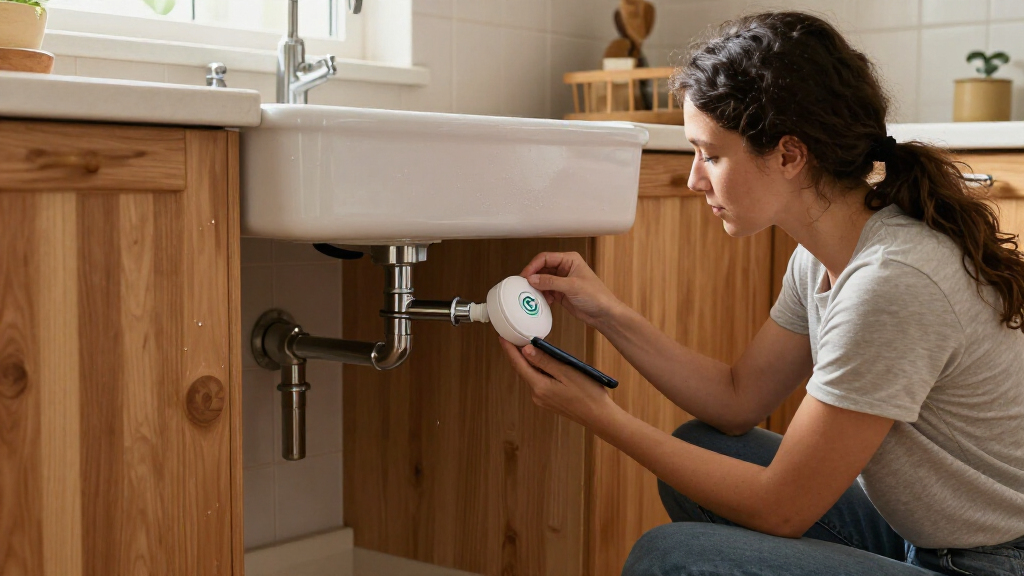
How We Picked
I compared these 15 smart leak detector bundles by the things that affect real household coverage: sensor count, connection method, stated range, alarm design, and the ability to place a sensor in tight or unusual locations. I also considered setup complexity and how much hardware a buyer must accommodate, since a hub-based system can be a good match for several rooms but adds another device and a network dependency.
The ranking favors useful coverage and clear differentiation over the largest bundle alone. YoLink’s six-sensor kit ranks first as a balanced multi-room starting point; GoveeLife’s long-range Detector 2 earns a strong alternative for extended reach, while Moen Flo and X-Sense provide Wi-Fi-oriented options. Smaller packs rank lower for broad coverage but can make more sense for a focused leak zone, and the cable-probe model is reserved for locations where a standard contact sensor may not fit.
| smart leak detector | Battery life | Water resistance |
|---|---|---|
| GoveeLife Upgraded Smart Water | Up to 5 years | IP67 |
| YoLink Water Leak Sensor 1 Kit | Up to 5 years | — |
| YoLink Water Leak Sensor 4-Pac | Up to 5 years | — |
| YoLink Water Leak Sensor 1 Kit | Up to 5 years | — |
| GoveeLife Upgraded Smart Water | Up to 5 years | IP67 |
| Tapo Smart Water Leak Detector | Over 3 years | IP67 |
| GoveeLife Upgraded Smart Water | — | IP67 |
| YoLink Water Leak Sensor 4 wit | — | — |
| GoveeLife Smart Water Leak Det | — | IP66 |
| X-Sense Wi-Fi Water Leak Detec | — | IP66 |
| Moen Flo Smart Water Leak Dete | — | — |
| GoveeLife Upgraded Smart Water | Up to 5 years | IP67 |
| GoveeLife Upgraded Smart Water | Up to 5 years | IP67 |
| GoveeLife Upgraded Smart Water | — | — |
| GoveeLife Smart Water Leak Det | Over 5 years | IP66 |
Factors to Consider When Choosing Smart Leak Detectors
Before choosing a kit, I’d map the places a leak could start and the route an alert must take to reach you. These broader checks can prevent a common mismatch: buying plenty of sensors that cannot connect reliably, or choosing a connected system when a nearby audible warning is the real priority.
Match Sensor Placement to Likely Leak Sources
Start by listing leak-prone spots rather than choosing a pack size first: under sinks, beside a washing machine, near a water heater, and around a refrigerator are common examples. A contact-style sensor needs its detection points to meet water, so a cramped cabinet or uneven floor can affect placement. A cable-probe model can put the sensing section into a narrow gap while leaving the main unit more accessible. Avoid hiding a sensor where you cannot inspect or replace it, since dust, cleaning, or stored items can interfere with routine checks. For a broad home layout, count distinct leak zones and leave room to add coverage later. The right number is the number of vulnerable locations you can place and maintain well, not simply the biggest bundle available.
Check the Connection Path Before Counting on Remote Alerts
A smart detector needs a route from the sensor to the app or other alert destination, and that route may involve a hub, a base station, Wi-Fi, or a combination. Think about walls, floors, utility rooms, and the distance from the router or hub before deciding that a system’s advertised range fits your home. A central hub can support multiple sensors but creates another device that needs power and a suitable location. Wi-Fi-oriented kits reduce some setup steps, though a sensor’s actual connection still depends on the product design and household network. Do not assume that a long advertised range means reliable alerts through every building material. Check the manufacturer’s connectivity requirements and test coverage at the intended placements after setup.
Decide Whether You Need a Local Alarm, a Phone Alert, or Both
A loud alarm helps when someone is home and close enough to hear it, while a phone notification can be more useful when the house is empty. Those functions are not interchangeable: a local siren may not reach a bedroom or another floor, and an app alert depends on connectivity, phone settings, and notification permissions. If a leak could cause damage while you are away, prioritize a dependable remote alert path and keep app notifications enabled. If the sensor sits near a frequently used room, an audible warning can prompt a quicker response from people in the home. Review how each system signals a leak, low battery, or lost connection before installation. Buyers often focus on the alarm’s loudness but overlook whether the warning can reach them in the situation that matters.
Choose Pack Size Around Coverage and Expansion
Large bundles can make sense when several appliances and plumbing points need monitoring from day one, but they are not automatically the best value for every home. A smaller kit is a more practical start if you only need to protect one or two high-risk areas or want to confirm that the system fits your network. Compare the included sensor count with the number of useful placements, and check whether you can add compatible sensors later. Also account for the hub or base: a multi-sensor kit may share one central device, while a standalone purchase may require separate hardware. Buying too few sensors leaves blind spots; buying too many can leave devices unused or poorly positioned. I’d prioritize complete coverage of the most consequential leak zones before adding secondary areas.
Consider Range Claims in the Context of Your Home
Long-range specifications can matter in large properties, outbuildings, or locations far from a hub, but they do not describe every real-world connection. Walls, metal appliances, building materials, and competing wireless signals can reduce practical reach. A range-focused detector may be more appealing than a standard kit when the sensor must sit well away from the central equipment, yet a compact home may gain little from that extra reach. Place the hub or base in a central, open location where possible, rather than tucked behind equipment or inside a cabinet. If coverage is uncertain, confirm the return policy and any setup guidance before committing to a full-house bundle. The best range is the range that works from your actual leak points, not only the figure on the box.
Plan for Maintenance and Alert Reliability
Leak sensors protect only the areas where they are installed and only if their power and alert path remain ready. Check how the product signals low battery or loss of connection, and decide how often you can inspect sensors in rarely visited spaces. Test each placement after installation with the method specified by the manufacturer, then repeat checks on a schedule that suits your home. App-based alerts can be muted accidentally, so verify notification permissions and keep the account linked to a phone someone monitors. A hub or base should also be placed where its power and network connection are unlikely to be disrupted. A modest kit that is maintained and tested can offer more dependable coverage than a larger setup that no one checks.
Frequently Asked Questions
Should I choose a hub-based leak detector kit or a Wi-Fi-oriented one?
I’d choose based on the connection layout you can support, not the label alone. Hub-based kits can coordinate several sensors through a central device, which suits multi-room coverage when the hub can sit in a useful location. Wi-Fi-oriented options may mean fewer system components, but their alerts still rely on the network and the product’s specific connection design. Check whether the hub is included, what network it needs, and how sensors communicate with it. If a leak point is far from the router or behind dense walls, verify the expected coverage before buying.
Is a six-sensor pack a better choice than a smaller kit?
A six-pack is a better fit when you can name six useful locations that need monitoring, such as several sinks and appliances spread across the home. It can reduce the chance of leaving a high-risk area uncovered, but extra sensors do not help if they end up unused or placed where water cannot reach them. Smaller bundles make sense for a focused setup or when you want to confirm connectivity before expanding. Compare the bundle’s included hub or base with the number of sensors, since the central hardware can affect where you can place them. Map your leak zones first, then choose the smallest bundle that covers them with room for any planned additions.
Does a long-range detector make sense in an ordinary house?
It can, but the advertised distance is most useful when sensors must sit far from a hub or base, such as in a detached space or a large property. In a compact home, placement flexibility and reliable alerts may matter more than maximum stated range. Obstacles and building materials can reduce wireless reach, so a headline range should not be treated as a guarantee for every room. Consider where the central device can be placed and whether the sensor path crosses floors or dense walls. If all leak zones are close together, a standard-range kit may cover them without paying attention to a feature you are unlikely to use.
Do I need a loud local alarm if I already receive phone alerts?
A local alarm and a phone notification cover different situations. The siren can prompt someone who is home to respond quickly, while a phone alert can reach you away from the property if the system’s connection and app notifications are working. A loud alarm is less useful if the sensor is in a remote corner or no one is home, and a phone alert can be missed if notifications are silenced. For a home with occupants present during the day, a strong local warning may add practical value. For leaks that may happen while the house is empty, prioritize a tested remote-alert route and treat a siren as an extra layer.
Where should I place sensors first if I cannot cover every room?
Begin with locations where water can escape near valuable equipment or cause damage before it is noticed. Common starting points include under sinks, beside a washing machine, near a water heater, and by appliances with water lines. Think about how quickly you would discover a leak without a sensor, since a seldom-visited utility area may deserve priority over a visible spot. Use a cable probe when the likely leak point is too narrow for a flat sensor, and keep the sensing area positioned where water can reach it. Once those higher-risk locations are covered, add sensors to secondary areas based on your home’s plumbing and past leak concerns.
Conclusion
For broad household coverage, I’d choose the YoLink Water Leak Sensor 1 Kit with six sensors and a hub as the best overall balance of sensor count and system structure. The GoveeLife Upgraded Smart Water Leak Detector 1s five-pack is my best value direction for buyers who want several sensors without stepping up to a six-pack, while the GoveeLife Smart Water Leak Detector 2 six-pack is the best premium-style fit for shoppers prioritizing its advertised long range. Beginners who want a straightforward, focused setup can start with the Tapo T300 or a smaller GoveeLife 1s bundle, after checking the required hub and their planned placements. For a loud local warning, choose the YoLink Water Leak Sensor 4 kit with 105 dB alarm; for tight spaces, the GoveeLife model with a 4.92-foot cable is the more purpose-built option. Match the connection system and sensor shape to your leak points, then choose a pack size that covers those locations without leaving devices idle.
Fall yard work Picks
leaf blowers
As an affiliate, we earn on qualifying purchases.