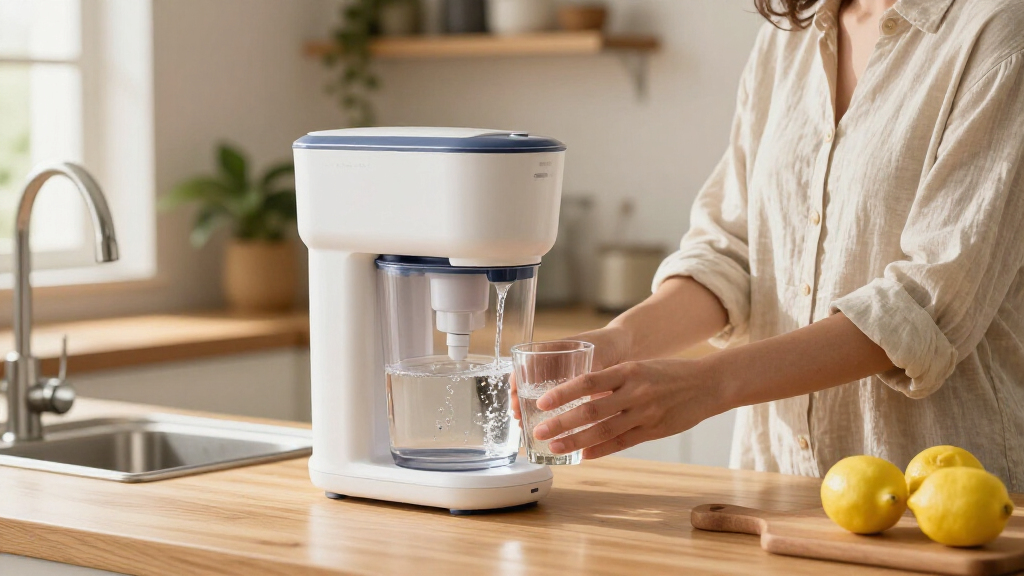
Countertop reverse osmosis water filters deliver bottled-water-quality purification without plumbing, drilling, or under-sink installation — but choosing between them comes down to real tradeoffs in filtration stages, wastewater ratio, speed, and extras like instant hot water or mineralization. My top pick is the Bluevua RO100-ROPOT, which balances a 4-stage RO process, remineralization, and a plug-and-fill design that suits almost any kitchen. If hot water on demand matters, the Philips Instant Hot and Cold model is the standout, while the AquaTru Glass Carafe remains the most beginner-friendly option thanks to its simple two-tank design and proven filtration. Cheaper units in this category tend to be slower, waste more water, and skip remineralization entirely, while premium models add chilling, UV sterilization, or auto-fill pitchers that justify their cost only for some households. Keep reading for the full breakdown of all 14 systems and who each one is actually for.

Get home appliances delivered free with Prime
- Fast, free delivery on millions of items
- Prime Video, Amazon Music and more included
- Member-only deals all year
Complete the kit


Key Takeaways
- The Bluevua RO100-ROPOT earned the top spot because it’s the only mid-priced model that combines remineralization, a low wastewater ratio, and tool-free setup — most competitors force you to pick two of the three.
- The DREO lineup dominates on convenience features (auto-fill pitchers, larger 5L tanks, fast dispensing), but buyers who don’t need those extras are paying for them in filter costs.
- Instant-hot models like the Philips Hot and Cold dispenser replace a kettle, but they trade away counter space and add warm-up time that pure-cold dispensers don’t have.
- AquaTru‘s two versions differ only in alkaline mineralization — the standard Glass Carafe is the smarter buy unless your tap water is already aggressively filtered of minerals.
- UV-equipped variants (Bluevua RO100ROPOT-UV, SimPure Y7P-BW) matter mainly for untreated well water or storage-tank bacteria concerns, not for standard municipal tap water.
| DREO Countertop Reverse Osmosis Water Filter with 2 Autofill Pitchers |  | Best Overall | Filtration Stages: 7-in-1 RO | Contaminant Removal: 99.9% (PFOA, PFOS, chlorine, fluoride, and more) | Pure-to-Drain Ratio: 3:1 | VIEW LATEST PRICE | See Our Full Breakdown |
| Bluevua RO100-ROPOT Countertop Reverse Osmosis Water Filter System |  | Best for Taste — Remineralized Water | Model: RO100-ROPOT | Filtration Stages: 5 (including remineralization filter) | Contaminant Removal: 99.9% | VIEW LATEST PRICE | See Our Full Breakdown |
| DREO Reverse Osmosis Countertop Water Filter, 7-in-1 RO Filtration System with Auto-Fill Pitcher |  | Best Value | Filtration Stages: 7-in-1 | Contaminant Removal: 99.9% (PFOA, PFOS, chlorine, fluoride, and more) | Pure-to-Drain Ratio: 3:1 | VIEW LATEST PRICE | See Our Full Breakdown |
| Philips Countertop Reverse Osmosis Water Filter with Mineralization | 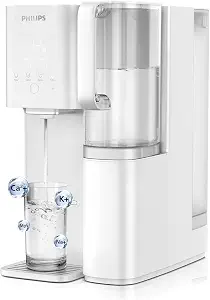 | Best for Family Capacity | Dimensions: 9.06″L x 16.64″W x 12.8″H | Weight: 15.8 lbs | Tap Water Tank Capacity: 6L (1.59 Gal) | VIEW LATEST PRICE | See Our Full Breakdown |
| SimPure Y7T-A Countertop Reverse Osmosis Water Filter, 5-Stage Mineral RO System |  | Most Water-Efficient | Filtration Stages: 5-stage RO with alkaline mineral filter | Contaminant Removal: 99.99% of 1,000+ contaminants | Pure-to-Drain Ratio: 4:1 | VIEW LATEST PRICE | See Our Full Breakdown |
| Bluevua RO100ROPOT-UV Countertop Reverse Osmosis Water Filter System |  | Best for Whole-Contaminant Coverage | Filtration Stages: 6 (RO membrane, UV light, remineralization) | Container Type: Borosilicate glass carafe (1700 ml) | Pure-to-Drain Ratio: 2:1 | VIEW LATEST PRICE | See Our Full Breakdown |
| APEC Water Countertop Reverse Osmosis Water Filter with Chilling, 6-Stage Filtration |  | Best for Ice-Cold Water | Cold Water Temperature: 40°F | Cold Water Reservoir: 27 oz | Filtration Stages: 6 Stage (Prime Filtration UV+) | VIEW LATEST PRICE | See Our Full Breakdown |
| DREO Reverse Osmosis Countertop Water Filter System (RO Water Filter 112, 3L) | 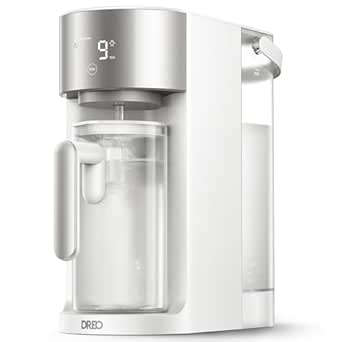 | Best Compact Pick | Purification Method: 7-in-1 Reverse Osmosis | Tank Capacity: 3 liters | Pitcher Capacity: 1.1 liters | VIEW LATEST PRICE | See Our Full Breakdown |
| DREO Reverse Osmosis Countertop Water Filter System, 5L |  | Best for Small Families | Filtration Stages: 7-in-1 RO | Tank Capacity: 5 liters | Included Pitchers: Two 1.1L pitchers | VIEW LATEST PRICE | See Our Full Breakdown |
| Philips Countertop RO Water Filter with Instant Hot and Cold Dispenser |  | Best Premium All-in-One | Purification Method: 6-Stage RO with Aquaporin Inside technology | Cold Water Temperature: 40°F (4°C) | Maximum Hot Temperature: 203°F (95°C) | VIEW LATEST PRICE | See Our Full Breakdown |
| Waterdrop C2SL Countertop Reverse Osmosis Water Filter with Mineral Addition |  | Best for Small Households | Filtration stages: 7 | RO membrane pore size: 0.0001 μm | Contaminant reduction: 99.8% PFOA, 99.96% microplastics, 99.83% lead, 98.45% fluoride | VIEW LATEST PRICE | See Our Full Breakdown |
| AquaTru Glass Carafe Alkaline Countertop Reverse Osmosis Water Purifier |  | Best for Alkaline Water Fans | Filtration stages: 4 | Contaminants reduced: 84 (incl. PFOA/PFOS, lead, arsenic, microplastics) | Certification: Tested & certified to NSF standards by IAPMO | VIEW LATEST PRICE | See Our Full Breakdown |
| AquaTru Glass Carafe Countertop Reverse Osmosis Water Filter |  | Best Certified Workhorse | Filtration stages: 4 | Contaminants removed: 84 (incl. PFOA, PFOS, lead, microplastics, fluoride, arsenic, chromium-6) | Certification: Tested & certified to NSF standards by IAPMO | VIEW LATEST PRICE | See Our Full Breakdown |
| SimPure Y7P-BW UV Countertop Reverse Osmosis Water Filter, 5-Stage RO Purification | 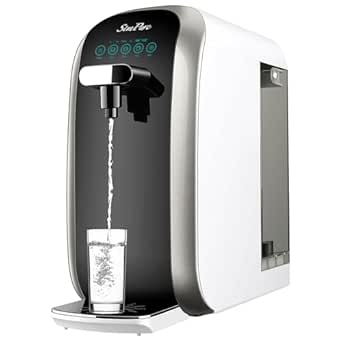 | Best for Speed and Heavy Use | Purification method: 0.0001 μm RO + UV | Filtration stages: 5 | Filter capacity: 528 gallons | VIEW LATEST PRICE | See Our Full Breakdown |
| countertop reverse osmosis water filter | Filtration Stages | Pure-to-Drain Ratio | Filter Life | Certification |
|---|---|---|---|---|
| DREO Countertop Reverse Osmosi | 7-in-1 RO | 3:1 | — | SGS tested, meets NSF/ANSI 58 |
| Bluevua RO100-ROPOT Countertop | 5 (including remineralization filter) | 2:1 | 12-24 months | ClimatePartner Certified |
| DREO Reverse Osmosis Counterto | 7-in-1 | 3:1 | — | SGS tested, meets NSF/ANSI 58 |
| Philips Countertop Reverse Osm | — | — | 12 months | — |
| SimPure Y7T-A Countertop Rever | 5-stage RO with alkaline mineral filter | 4:1 | 528 gallons per filter set | — |
| Bluevua RO100ROPOT-UV Countert | 6 (RO membrane, UV light, remineralization) | 2:1 | 12-24 months | — |
| APEC Water Countertop Reverse | 6 Stage (Prime Filtration UV+) | 3:1 | — | — |
| DREO Reverse Osmosis Counterto | — | 3:1 | 265 gallons (1000L) | SGS tested to NSF/ANSI 58 |
| DREO Reverse Osmosis Counterto | 7-in-1 RO | 3:1 | 265 gallons (1000L) | SGS tested to NSF/ANSI 58 |
| Philips Countertop RO Water Fi | — | — | 12 months | — |
| Waterdrop C2SL Countertop Reve | 7 | 3:1 | Up to 528 gallons or 12 months | NSF/ANSI/CAN 372, SGS tested |
| AquaTru Glass Carafe Alkaline | 4 | — | — | Tested & certified to NSF standards by IAPMO |
| AquaTru Glass Carafe Counterto | 4 | — | — | Tested & certified to NSF standards by IAPMO |
| SimPure Y7P-BW UV Countertop R | 5 | 4:1 | 6 months | — |
More Details on Our Top Picks
DREO Countertop Reverse Osmosis Water Filter with 2 Autofill Pitchers
This DREO stands out as the most complete package in the lineup, pairing 7-in-1 RO filtration with two autofill pitchers — a genuinely useful setup for households where one carafe is never enough. Compared with the Bluevua RO100-ROPOT, it wastes less water thanks to a 3:1 pure-to-drain ratio, and its SGS testing against NSF/ANSI 58 gives buyers third-party confidence on contaminant removal including PFOA and PFOS. The self-cleaning cycle and TDS readout mean less hands-on maintenance than simpler systems. The tradeoff: all this automation makes it heavier on counter space and electronics than a bare-bones unit, and if one pitcher is plenty for you, the single-pitcher DREO below is the smarter buy.
Pros:- Two autofill pitchers keep a household supplied without waiting on dispensing
- 3:1 pure-to-drain ratio is more water-efficient than most rivals
- TDS and filter life monitoring removes guesswork from maintenance
- SGS-tested to NSF/ANSI 58 for 99.9% contaminant removal
Cons:- Smart features and self-cleaning add complexity and potential failure points
- Large countertop footprint competes with other kitchen gear
Best for: Families of 3-5 who constantly drain one pitcher and want always-cold filtered water ready in the fridge
Not ideal for: Minimalists with tight counters — the second pitcher and self-cleaning hardware add bulk you may not need
- Filtration Stages:7-in-1 RO
- Contaminant Removal:99.9% (PFOA, PFOS, chlorine, fluoride, and more)
- Pure-to-Drain Ratio:3:1
- Certification:SGS tested, meets NSF/ANSI 58
- Installation:Install-free (countertop)
- Included Pitchers:2 autofill pitchers
- Features:Self-cleaning, TDS monitoring, filter life indicator
Our verdict“The most well-rounded pick here — buy it if your household goes through more than one pitcher of water a day.”
Bluevua RO100-ROPOT Countertop Reverse Osmosis Water Filter System
What separates the Bluevua RO100-ROPOT from the DREO models is its dedicated remineralization stage, which puts calcium and other minerals back into the water after RO strips everything out — the difference between flat, sterile-tasting water and something you actually want to drink. The borosilicate glass carafe is another differentiator versus plastic-jug rivals like the Philips, eliminating any plastic taste or microplastic concerns. Its 2:1 pure-to-drain ratio is respectable but trails the DREO’s 3:1 and the SimPure Y7T-A’s 4:1, so eco-minded buyers pay a small water-waste penalty for that taste advantage. Filter life of 12-24 months spreads out replacement costs nicely, though the warranty only activates if you remember to register.
Pros:- Remineralization stage noticeably improves taste over standard RO output
- Glass carafe avoids plastic aftertaste and secondary pollution
- Filters last 12-24 months, keeping running costs modest
- Fully portable plug-and-play design with no plumbing
Cons:- 2:1 pure-to-drain ratio is the least efficient in this batch
- Warranty only applies if you complete registration
Best for: Buyers who find plain RO water too flat and want mineral-enriched, better-tasting water from a glass carafe
Not ideal for: Water-conscious households in drought-prone areas — the 2:1 ratio wastes more water than the DREO or SimPure options
- Model:RO100-ROPOT
- Filtration Stages:5 (including remineralization filter)
- Contaminant Removal:99.9%
- Pure-to-Drain Ratio:2:1
- Filter Life:12-24 months
- Carafe Material:High borosilicate glass
- Installation:None required (countertop, plug-in)
- Certification:ClimatePartner Certified
Our verdict“The pick for people whose main complaint about RO is taste, not contamination.”
DREO Reverse Osmosis Countertop Water Filter, 7-in-1 RO Filtration System with Auto-Fill Pitcher
Essentially the little sibling of the two-pitcher DREO, this model delivers the same core package — 7-in-1 filtration, 3:1 pure-to-drain ratio, SGS-tested NSF/ANSI 58 performance, TDS display, and self-cleaning — with a single auto-fill pitcher instead of two. For singles and couples, that’s not a compromise at all; it’s the right-sized configuration at a lower cost, and one less pitcher hogging fridge space. It beats the Bluevua RO100-ROPOT on water efficiency but skips a remineralization stage, so expect crisper, more neutral-tasting water rather than mineral-round. The counter-space complaint still applies — like every unit here, it’s a box that lives on your kitchen counter — but the trimmed feature set keeps the footprint and the fuss to a minimum.
Pros:- Same 7-in-1 filtration and SGS-tested certification as the pricier DREO flagship
- 3:1 pure-to-drain ratio is among the more efficient here
- Auto-fill pitcher means grab-and-go water without babysitting the dispenser
- No installation and minimal setup complexity
Cons:- No remineralization stage, so water tastes flatter than Bluevua or SimPure output
- Still occupies a meaningful chunk of counter space
Best for: Singles and couples who want premium DREO filtration performance without paying for a second pitcher
Not ideal for: Larger households that will drain one pitcher faster than it refills — step up to the two-pitcher DREO
- Filtration Stages:7-in-1
- Contaminant Removal:99.9% (PFOA, PFOS, chlorine, fluoride, and more)
- Pure-to-Drain Ratio:3:1
- Certification:SGS tested, meets NSF/ANSI 58
- Installation:Installation-free (countertop)
- Features:TDS display, filter life indicator, auto-fill pitcher, self-cleaning
Our verdict“The smart-money choice — most of the flagship DREO’s performance for smaller households.”
Philips Countertop Reverse Osmosis Water Filter with Mineralization
The Philips plays the big-tank card: a 6L tap water reservoir feeding an auto-filling 1.8L jug, sized for families of 2-5 who don’t want to refill a smaller unit twice a day. Its Aquaporin Inside 6-stage membrane filters down to 0.0001 microns and adds minerals back, putting it in the same taste-focused camp as the Bluevua RO100-ROPOT but with substantially more raw capacity. The real-time TDS display is more transparent than basic filter-life lights on the DREO units. The compromises are real though — a 200 ml/min flow rate means filling a bottle takes patience, water comes out room-temperature only, and the warranty excludes the filter core, so factor replacement costs into ownership.
Pros:- 6L tap tank plus 1.8L auto-fill jug handles family-scale demand
- Aquaporin membrane filters to 0.0001 microns with mineralization for taste
- Real-time TDS display shows live filtration performance
- NSF/ANSI/CAN 372 and SGS certifications back the claims
Cons:- Slow 200 ml/min dispensing makes filling large bottles tedious
- Room-temperature water only, no heating or chilling
- Warranty covers the machine but excludes the filter
Best for: Families of 2-5 who prioritize capacity and don’t want to constantly refill a smaller tank
Not ideal for: Anyone wanting fast dispensing or hot/cold water — the slow flow rate and room-temperature-only output will frustrate
- Dimensions:9.06″L x 16.64″W x 12.8″H
- Weight:15.8 lbs
- Tap Water Tank Capacity:6L (1.59 Gal)
- Filtered Water Jug Capacity:1.8L (0.48 Gal)
- Flow Rate:200 ml/min
- Purification Method:6-Stage Reverse Osmosis with Mineralization
- Filtration Precision:0.0001 microns
- Filter Life:12 months
- Certifications:NSF/ANSI/CAN 372, SGS (filter core)
Our verdict“The capacity king for bigger households, as long as you can live with slow, room-temperature dispensing.”
SimPure Y7T-A Countertop Reverse Osmosis Water Filter, 5-Stage Mineral RO System
The SimPure Y7T-A’s headline number is its 4:1 pure-to-drain ratio — the best in this batch, doubling the efficiency of the Bluevua RO100-ROPOT and edging out both DREO models. For anyone on a water meter or in a drought region, that alone justifies a look. It also claims the deepest contaminant coverage here at 99.99% of 1,000+ contaminants, SGS-tested to NSF/ANSI 58, and the portable glass pitcher with alkaline filter puts minerals like calcium and magnesium back in, rivaling the Bluevua on taste. The catch is spatial: the lid needs 22 inches of vertical clearance to open, which rules out under-cabinet placement, and like the Philips it dispenses room-temperature water only.
Pros:- 4:1 pure-to-drain ratio is the most water-efficient in the lineup
- Removes 99.99% of 1,000+ contaminants including PFAS and heavy metals
- Portable glass pitcher with alkaline filter adds back calcium, magnesium, and potassium
- 528 gallons per filter set spreads replacement costs over time
Cons:- Needs 22+ inches of vertical clearance for the lid, limiting placement
- Room-temperature water only — no hot or cold options
- Won’t work with input water above 500 ppm TDS, a real limit for some well water
Best for: Eco-conscious buyers and anyone on a water meter who hates how much water traditional RO wastes
Not ideal for: Kitchens with low upper cabinets — the 22-inch lid clearance requirement rules out standard under-cabinet spots
- Filtration Stages:5-stage RO with alkaline mineral filter
- Contaminant Removal:99.99% of 1,000+ contaminants
- Pure-to-Drain Ratio:4:1
- Filter Life:528 gallons per filter set
- TDS Input Limit:<500 ppm
- Installation:None required (plug-in)
- Height:16.1 in (closed), 21.3 in (open)
- Water Temperature:Room temperature only
Our verdict“The efficiency champion for buyers who count every gallon of waste, provided your counter has the headroom.”
Bluevua RO100ROPOT-UV Countertop Reverse Osmosis Water Filter System
This Bluevua stands out for going beyond the standard RO stage: the UV light and remineralization filter mean water isn’t just stripped clean but polished and improved on the way out. Compared with the DREO 3L model, which relies on its 7-in-1 cartridge alone, the UV stage here adds a defense layer against microbes that carbon and membranes can miss. The borosilicate glass carafe is a genuine differentiator — unlike the DREO’s ABS plastic pitchers, it sidesteps any worry about purified water sitting in plastic. The 2:1 pure-to-drain ratio is respectable, though the APEC and both DREO units beat it at 3:1, so heavier water users will notice the difference on their utility bill. The built-in TDS meter and filter-life display make maintenance nearly foolproof. Tradeoffs: at 17.8 pounds and corded, ‘portable’ is a stretch, and the multi-stage filter stack means more replacement cartridges to budget for over time.
Pros:- 6-stage filtration with UV light targets microbes plus PFOA/PFOS, lead, arsenic, fluoride and chlorine
- Borosilicate glass carafe avoids storing purified water in plastic
- Built-in TDS meter and filter-life display take the guesswork out of maintenance
- Long 12-24 month filter life reduces replacement frequency
Cons:- 17.8 pounds is heavy for a unit marketed as portable
- 2:1 drain ratio wastes more water than the 3:1 competitors
- Multiple filter stages mean several ongoing replacement costs
Best for: Buyers prioritizing maximum contaminant coverage — including microbial concerns — who also want mineralized, better-tasting water and a plastic-free carafe
Not ideal for: Anyone who moves their filter between rooms or in an RV — at 17.8 pounds with a power cord, it’s better treated as a semi-fixed appliance
- Filtration Stages:6 (RO membrane, UV light, remineralization)
- Container Type:Borosilicate glass carafe (1700 ml)
- Pure-to-Drain Ratio:2:1
- Filter Life:12-24 months
- Max Supported Water TDS:500 PPM
- Dimensions:10.9″L x 15.4″W x 14.3″H
- Weight:17.8 pounds
- Certifications:WQA (NSF/ANSI/CAN 372), SGS tested
Our verdict“This is the pick for buyers who want the most thorough filtration chain on the counter and don’t mind the weight to get it.”
APEC Water Countertop Reverse Osmosis Water Filter with Chilling, 6-Stage Filtration
Most countertop RO units stop at room temperature — this APEC is the rare model that chills purified water to 40°F using a refrigerator-style compressor rather than thermoelectric cooling, which tends to struggle in warm kitchens. Compared with the Philips hot-and-cold dispenser, the APEC trades away instant hot water but keeps the design simpler and focused. Its 3:1 pure-to-drain ratio beats the Bluevua RO100ROPOT-UV’s 2:1, making it the more efficient choice for daily heavy use. The touch panel with live TDS readout and filter alerts puts it on par with the DREO units for monitoring. The real catch is the 27oz cold reservoir — fine for one desk, frustrating for a family dinner — and APEC locks you into its exclusive FI-ROCTC1-A replacement filter, so there’s no shopping around when it’s time to swap cartridges.
Pros:- Compressor-based chilling delivers true 40°F water, unlike thermoelectric rivals
- Efficient 3:1 pure-to-drain ratio minimizes water waste
- Plug-and-play setup with no plumbing required
- Touch panel tracks TDS and filter replacement timing
Cons:- Only compatible with the exclusive FI-ROCTC1-A replacement filter
- Small 27oz cold reservoir limits back-to-back dispensing
Best for: Solo users or couples who want genuinely cold RO water on demand without filling the fridge with pitchers
Not ideal for: Families or anyone serving several people at once — the 27oz cold reservoir empties fast and refills slowly
- Cold Water Temperature:40°F
- Cold Water Reservoir:27 oz
- Filtration Stages:6 Stage (Prime Filtration UV+)
- Pure-to-Drain Ratio:3:1
- Installation:Countertop, no plumbing required
- Compatible Filter:FI-ROCTC1-A
- Controls:Touch panel with TDS display
Our verdict“Choose this if cold water is your top priority and you’re filling one glass at a time; skip it for group use.”
DREO Reverse Osmosis Countertop Water Filter System (RO Water Filter 112, 3L)
At 6.73 inches wide and 9.5 pounds, this DREO is the slimmest machine in this lineup — its 3L tank and 1.1L pitcher are sized for one or two people, and the narrow footprint slides beside a coffee maker without colonizing the counter. Compared with its own 5L sibling, the smaller tank means more frequent refills, but the identical footprint and 3:1 drain ratio make this the smarter buy for apartments and offices where counter space is the scarce resource. The auto-fill and self-cleaning functions are the standout convenience: the pitcher tops itself up and the system flushes itself, something the APEC chilling model doesn’t offer. Filtration is SGS-tested to NSF/ANSI 58 with 99.9% contaminant removal, and the 265-gallon filter life keeps replacements infrequent. The tradeoff is simple — capacity. Households of three or more will be refilling the tank daily, and the 500 PPM input limit rules out very hard well water.
Pros:- Slim 6.73-inch-wide design fits tight counters and desks
- Auto-fill and self-cleaning features reduce daily upkeep
- 3:1 pure-to-drain ratio is among the most water-efficient available
- SGS-tested to NSF/ANSI 58 with 99.9% contaminant removal
Cons:- 3L tank capacity is limiting for more than 1-2 people
- Maximum supported input TDS of 500 PPM excludes harder water sources
Best for: Singles, couples, and small-office users who want full RO filtration in the smallest possible footprint
Not ideal for: Households of three or more, or anyone with very high-TDS source water — the 3L tank and 500 PPM cap will bottleneck daily use
- Purification Method:7-in-1 Reverse Osmosis
- Tank Capacity:3 liters
- Pitcher Capacity:1.1 liters
- Filter Life:265 gallons (1000L)
- Pure-to-Drain Ratio:3:1
- Certification:SGS tested to NSF/ANSI 58
- Dimensions:14.51″L x 6.73″W x 13.35″H
- Weight:9.5 pounds
Our verdict“The most space-efficient way to get certified RO filtration on a small counter — as long as your household is small too.”
DREO Reverse Osmosis Countertop Water Filter System, 5L
Same footprint as the DREO 3L, but with a 5L tank and two 1.1L pitchers — this version doubles down on capacity to serve three to four people without daily refill chores. That second pitcher is more useful than it sounds: one can live in the fridge while the other sits under the dispenser, effectively giving you continuous chilled and room-temperature RO water. Filtration matches the 3L model — 7-in-1 RO, SGS-tested to NSF/ANSI 58, 99.9% removal of PFOA/PFOS, chlorine and fluoride — and the 3:1 drain ratio still beats the Bluevua UV model’s 2:1. Where it can’t compete is with the Philips hot-and-cold unit: if your household drinks tea or wants chilled water on tap, DREO gives you neither temperature extreme. DREO also doesn’t publish long-term filter replacement costs, so budgeting beyond the first 265 gallons requires some faith. Real-time TDS tracking and BPA-free food-grade materials round out a strong mid-size package.
Pros:- 5L tank plus two pitchers keeps a family of 3-4 supplied without constant refills
- 3:1 pure-to-drain ratio minimizes water waste
- Real-time TDS meter and filter-life monitoring simplify upkeep
- BPA-free, food-grade materials and no-installation plug-in design
Cons:- No hot or cold dispensing despite the large capacity
- Long-term filter replacement costs are not specified
- Counter footprint is sizeable for compact kitchens
Best for: Households of 3-4 people who want low-maintenance, high-volume RO water at room temperature
Not ideal for: Buyers who want hot or chilled dispensing — this unit does room temperature only, unlike the Philips or APEC
- Filtration Stages:7-in-1 RO
- Tank Capacity:5 liters
- Included Pitchers:Two 1.1L pitchers
- Pure-to-Drain Ratio:3:1
- Filter Life:265 gallons (1000L)
- Certification:SGS tested to NSF/ANSI 58
- Dimensions:14.51″L x 6.73″W x 13.35″H
- Installation:No plumbing required, plug-in
Our verdict“The right choice when capacity matters more than temperature features — a family-scale version of DREO’s compact formula.”
Philips Countertop RO Water Filter with Instant Hot and Cold Dispenser
This Philips is the most complete appliance in the batch: RO purification, remineralization, 40°F chilled water, and instant heating to 203°F for tea, coffee, and formula — all from a plug-in countertop unit. The Aquaporin Inside 6-stage membrane and remineralization give it the taste edge over the DREO 5L, which filters comparably but dispenses at room temperature only. The APEC chilling model offers cold water but no hot, and a smaller reservoir. Philips also handles harder water better than anything here, accepting up to 1000 PPM input TDS versus the 500 PPM ceiling on both DREO units. The costs of that ambition are real, though: at 32 pounds it’s the heaviest pick, the 6.8 oz/minute flow rate means noticeable waits when filling bottles or pots, and the 2-year warranty excludes the filter, so consumables are entirely on you.
Pros:- Instant hot water up to 203°F plus 40°F chilled dispensing with quick presets
- 6-stage filtration with remineralization improves taste after purification
- Handles input TDS up to 1000 PPM, double most competitors
- Real-time inlet/outlet TDS display and 12-month filter life
Cons:- Slow purification rate of about 6.8 oz per minute
- Heavy at 32 pounds with a large countertop footprint
- 2-year warranty does not cover the filter
Best for: Households of 2-5 people who want to replace both their kettle and their filter pitcher with one appliance, especially in hard-water areas
Not ideal for: Impatient fillers and small counters — the slow 6.8 oz/min flow and 32-pound, 17.5-inch-tall body demand both space and patience
- Purification Method:6-Stage RO with Aquaporin Inside technology
- Cold Water Temperature:40°F (4°C)
- Maximum Hot Temperature:203°F (95°C)
- Tap Water Tank Capacity:6L (1.59 Gal)
- Filter Life:12 months
- Max Supported Water TDS:1000 PPM
- Dimensions:9.1 x 16.9 x 17.5 inches (W x H x D)
- Weight:14.5 kg (32 lbs)
- Warranty:2 years (machine only)
Our verdict“The one-appliance answer for hot, cold, and purified water — worth the price and patience if your household uses all three.”
Waterdrop C2SL Countertop Reverse Osmosis Water Filter with Mineral Addition
This option stands out for its 7-stage filtration with a dedicated mineral filter, which adds calcium, magnesium, potassium, and sodium back into the water after RO strips everything out. Compared with the AquaTru Glass Carafe (B0BT4FYHFJ), the Waterdrop C2SL offers a tighter contaminant-reduction story — 99.96% of microplastics and 99.83% of lead per SGS testing — plus a smarter 3:1 pure-to-drain ratio that wastes far less water than most countertop rivals. The auto-refilling 40 oz glass pitcher is genuinely convenient: fill the 108 oz tank once and the system keeps the pitcher topped up for the fridge.
The tradeoff is capacity. This model is sized for one or two people, so a family of four will find themselves refilling constantly — the SimPure Y7P-BW with its fast dispense rate handles heavier demand far better.
Pros:- No installation or plumbing required — fill the tank and plug in
- Mineral filter restores calcium, magnesium, and potassium for noticeably better taste
- Water-efficient 3:1 pure-to-drain ratio cuts wastewater versus typical countertop RO
- Filters last up to 528 gallons or 12 months, reducing maintenance hassle
Cons:- Capacity is genuinely small — designed around 1-2 person households
- Real-world filter life varies with source water quality, so replacement timing is unpredictable
Best for: Couples or solo dwellers in rentals who want mineral-enhanced RO water without touching their plumbing
Not ideal for: Families of three or more — the small tank and 40 oz pitcher mean frequent refills
- Filtration stages:7
- RO membrane pore size:0.0001 μm
- Contaminant reduction:99.8% PFOA, 99.96% microplastics, 99.83% lead, 98.45% fluoride
- Feed tank capacity:108 oz
- Pitcher capacity:40 oz glass
- Filter life:Up to 528 gallons or 12 months
- Pure-to-drain ratio:3:1
- Certification:NSF/ANSI/CAN 372, SGS tested
Our verdict“A great fit for one- or two-person households who prioritize taste and water efficiency over volume.”
AquaTru Glass Carafe Alkaline Countertop Reverse Osmosis Water Purifier
This model makes the most sense for buyers who specifically want alkaline mineral boosting on top of reverse osmosis. The VOC carbon stage includes a pH+ mineral boost filter, so the water that lands in the removable glass carafe is both purified and pH-elevated — something the standard AquaTru Glass Carafe (B0BT4FYHFJ) and the SimPure Y7P-BW don’t offer. Certification is the other strength here: it’s tested and certified to NSF standards by IAPMO for reducing 84 contaminants, including PFAS, lead, and arsenic, which gives it more third-party credibility than systems relying on in-house or SGS-only testing.
The compromise is pace and footprint. Dispensing into the carafe is slow compared with the SimPure’s 15-second fill, and like all tank-style AquaTru units it occupies serious counter real estate. The 1-year warranty and 30-day money-back guarantee soften the risk of trying it.
Pros:- Alkaline mineral boost filter raises pH while RO purifies
- IAPMO certification to NSF standards across 84 contaminants
- Long filter life — pre/carbon at 6 months, RO membrane at 1 year
- Removable glass carafe avoids plastic contact with finished water
Cons:- Ongoing replacement filter costs across three separate stages
- Slow dispensing compared with higher-flow systems like the SimPure Y7P-BW
- Bulky footprint on limited counter space
Best for: Buyers who already prefer alkaline water and want RO purification plus a pH boost in one plug-in unit
Not ideal for: Impatient drinkers or small-counter kitchens — it dispenses slowly and takes up considerable space
- Filtration stages:4
- Contaminants reduced:84 (incl. PFOA/PFOS, lead, arsenic, microplastics)
- Certification:Tested & certified to NSF standards by IAPMO
- Pre/carbon filter life:6 months or 300 gallons
- RO filter life:1 year or 600 gallons
- VOC carbon + pH mineral filter life:1 year or 300 gallons
- Carafe:Removable glass carafe with lid
- Warranty:1 year, plus 30-day money-back guarantee
Our verdict“The pick if alkaline mineral water is the goal and you’re willing to accept slower dispensing and IAPMO-backed peace of mind.”
AquaTru Glass Carafe Countertop Reverse Osmosis Water Filter
Compared with its alkaline sibling (B0C36HFC5Q), this version skips the pH-boost stage and focuses purely on contaminant removal across 84 targets, including fluoride, arsenic, and chromium-6 — a slightly broader removal list than the alkaline model emphasizes. The IAPMO certification to NSF standards is the strongest argument for this pick: buyers who want third-party verification rather than manufacturer claims get it here, which the Waterdrop C2SL can’t fully match. The removable glass carafe also means purified water never sits in plastic, a detail some buyers care about more than any spec sheet item.
The honest tradeoffs: it needs both counter space and a standard outlet, the RO membrane only reaches its 1-year lifespan at 600 gallons, and dispensing is characteristically slow for a tank-fed system. Renters who want plug-in simplicity will still find it hard to beat on trust.
Pros:- IAPMO-tested and certified to NSF standards for 84 contaminants
- No plumbing or drilling — works on any countertop with an outlet
- RO membrane lasts up to 1 year or 600 gallons
- Glass carafe with lid keeps purified water out of plastic
Cons:- Requires meaningful counter space plus a nearby electrical outlet
- Three-stage replacement schedule creates ongoing filter costs
- Slow dispensing into the carafe, typical of tank-fed RO systems
Best for: Buyers who prioritize independently certified filtration performance and glass storage over speed or frills
Not ideal for: Households wanting fast, on-demand dispensing — the carafe fills at a leisurely RO pace
- Filtration stages:4
- Contaminants removed:84 (incl. PFOA, PFOS, lead, microplastics, fluoride, arsenic, chromium-6)
- Certification:Tested & certified to NSF standards by IAPMO
- Pre/carbon filter life:6 months or 300 gallons
- RO filter life:1 year or 600 gallons
- VOC carbon filter life:1 year or 300 gallons
- Installation:None — plugs into standard outlet
- Warranty:1 year, plus 30-day money-back guarantee
Our verdict“A certified, no-nonsense choice for buyers who value verified contaminant removal above convenience features.”
SimPure Y7P-BW UV Countertop Reverse Osmosis Water Filter, 5-Stage RO Purification
This is the throughput pick of the batch. With a 418 GPD dispense rate that fills a cup in roughly 15 seconds, the SimPure Y7P-BW leaves both AquaTru carafe models and the Waterdrop C2SL far behind on pace — for busy households or anyone tired of waiting on a slow trickle, that difference matters daily. The 4:1 pure-to-drain ratio is also the most water-efficient figure in this group, and the added UV purification stage provides a secondary barrier the other three products lack. Claimed removal of 99.99% of 1,000+ contaminants is aggressive marketing, but the PFAS, lead, and fluoride coverage is consistent with what competitors list.
The catch is source water: it requires TDS below 500 ppm, so very hard or mineral-heavy wells are off the table. There’s no hot or cold dispensing, and filters need swapping every six months — a shorter interval than the AquaTru’s one-year membrane.
Pros:- Fills a cup in about 15 seconds — the fastest dispense in this lineup
- 4:1 pure-to-drain ratio is the most water-efficient here
- UV stage adds a second purification barrier beyond RO
- Quick-change twist cartridges make filter swaps painless
Cons:- Room-temperature water only — no hot or cold dispensing
- Requires source water below 500 ppm TDS, ruling out some wells
- Filters need replacement every 6 months, twice as often as some rivals’ membranes
Best for: Busy families and heavy water drinkers who need fast dispense speed and high water efficiency
Not ideal for: Homes with well water or TDS above 500 ppm — the system simply isn’t rated for that feed water
- Purification method:0.0001 μm RO + UV
- Filtration stages:5
- Filter capacity:528 gallons
- Filter life:6 months
- Pure-to-drain ratio:4:1
- Dispense rate:418 GPD (cup in ~15 seconds)
- Max supported TDS:500 ppm
- Dimensions:17.3″ L x 7.5″ W x 17″ H, 13 lbs
Our verdict“The right choice for high-volume households that value speed and low wastewater over temperature options.”

How We Picked
I ranked these 14 countertop RO systems on five buyer-facing criteria. Filtration performance came first: how many stages, whether the system includes remineralization, and whether TDS reduction is consistent across the filter’s lifespan. Wastewater ratio was a major separator — older-style countertop units can waste four or more gallons per gallon produced, while the best modern designs cut that to well under one, which matters for both water bills and environmental footprint. Usability covered setup difficulty, refill frequency (driven by tank size), dispensing speed, and how noisy the pump is during a cycle.
Next, I weighed long-term cost and maintenance: filter replacement frequency, how expensive each stage is, and whether the system locks you into proprietary cartridges. Finally, features and footprint — instant hot or cold dispensing, UV sterilization, auto-fill pitchers, and how much counter space each unit actually claims. Products that bundle genuinely useful features at a fair ongoing cost ranked above those that charge a premium for gimmicks. Where two models were nearly identical (the two AquaTrus, the two SimPures), I differentiated them by whether the added feature justifies the upsell for a typical buyer.
| countertop reverse osmosis water filter | Certification |
|---|---|
| DREO Countertop Reverse Osmosi | SGS tested, meets NSF/ANSI 58 |
| Bluevua RO100-ROPOT Countertop | ClimatePartner Certified |
| DREO Reverse Osmosis Counterto | SGS tested, meets NSF/ANSI 58 |
| Philips Countertop Reverse Osm | — |
| SimPure Y7T-A Countertop Rever | — |
| Bluevua RO100ROPOT-UV Countert | — |
| APEC Water Countertop Reverse | — |
| DREO Reverse Osmosis Counterto | SGS tested to NSF/ANSI 58 |
| DREO Reverse Osmosis Counterto | SGS tested to NSF/ANSI 58 |
| Philips Countertop RO Water Fi | — |
| Waterdrop C2SL Countertop Reve | NSF/ANSI/CAN 372, SGS tested |
| AquaTru Glass Carafe Alkaline | Tested & certified to NSF standards by IAPMO |
| AquaTru Glass Carafe Counterto | Tested & certified to NSF standards by IAPMO |
| SimPure Y7P-BW UV Countertop R | — |
Factors to Consider When Choosing Countertop Reverse Osmosis Water Filters
Before settling on a specific model, it helps to understand what actually separates a good countertop RO purchase from a regrettable one. These are the factors that shaped my rankings — and the mistakes I see buyers make most often.Wastewater Ratio: The Hidden Cost
Every reverse osmosis system produces two streams: purified water and reject water containing the filtered-out contaminants. What most product listings bury is the ratio between them, and it varies wildly across this category — from roughly 1:1 in efficient modern units to 4:1 or worse in older designs. Over a year of daily use, a wasteful unit can send hundreds of extra gallons down the drain, which shows up on your water bill and your conscience. The catch is that manufacturers often quote the best-case ratio for a fresh filter, and efficiency degrades as membranes age. If water conservation matters to you, treat the advertised ratio as a ceiling, not a floor, and prioritize brands that publish real-world figures. A slightly pricier unit with a genuinely efficient membrane usually pays for the difference over its life.
Remineralization: RO Water Isn’t Automatically Healthy Water
Reverse osmosis strips out nearly everything — lead, chlorine, PFAS, but also calcium and magnesium that contribute to your daily mineral intake and, frankly, to taste. Many buyers don’t realize that RO water straight from a bare membrane tastes flat or slightly acidic, and some are surprised by it after purchase. Models with a mineral or alkaline stage add those elements back, producing water that tastes closer to premium bottled spring water. If you already eat a mineral-rich diet, this is more about taste than nutrition — but taste is the reason most people abandon their RO system within months. My advice: if you’re new to RO, choose a remineralizing model or confirm the unit accepts an add-on cartridge. Deciding later usually means replacing the whole system.
Tank Size and Daily Refill Math
Tank capacity determines how often you’ll be filling the source tank, and this is where theoretical specs meet daily annoyance. A household drinking three gallons a day with a small tank will refill it multiple times daily — fine if the unit sits next to a sink, tedious if it doesn’t. Larger tanks (the 5L DREO, for example) reduce refill frequency but consume more counter space and take longer to complete a filtration cycle. Auto-fill pitcher systems split the difference by letting the unit top up a detachable pitcher in the background. Before buying, measure your counter space honestly and estimate your household’s daily consumption. A compact unit that’s constantly empty is a worse experience than a larger one that quietly keeps up with demand.
Instant Hot and Cold: Feature or Trap?
Units with built-in instant hot water (like the Philips Hot and Cold model) effectively replace a kettle and are genuinely excellent for tea, coffee, and formula prep. But there are tradeoffs buyers should walk in knowing: these units are larger, heavier, and draw more power to keep water at temperature. If you already own a kettle you love or rarely drink hot beverages, you’re paying for capacity you won’t use. Chilling functions have similar math — a refrigerator-dispenser household gains little from a unit that also cools. Match the feature set to your actual routine, not the aspirational one. The buyers happiest with hot-and-cold units are typically parents preparing formula and heavy tea or coffee drinkers.
Filter Replacement Costs and Proprietary Lock-In
The purchase price of a countertop RO system is only the entry fee; filter replacements are the subscription. Filter kits across this category range widely in annual cost, and replacement intervals differ by stage — sediment filters need swapping more often than RO membranes, which can last a year or more. The bigger issue is proprietary cartridges: most countertop units use brand-specific filters, so you can’t shop around, and if the manufacturer discontinues a line, your system becomes a paperweight. Before committing, check that replacement filters are readily available, reasonably priced, and that the brand has a track record of supporting older models. Budget the true two-year cost, not the sticker price, when comparing options.
UV Sterilization: Who Actually Needs It
Several models offer UV sterilization, and it’s frequently marketed as an upgrade everyone should want. The reality is more specific: UV kills bacteria and viruses that may colonize storage tanks or survive in untreated water sources. If you’re on municipal water that’s already chlorinated, your bacterial risk is low, and UV is largely redundant. If you’re on a well, have frequent boil-water advisories, or plan to store filtered water for days at a time, UV earns its keep. Don’t pay extra for it by default — pay for it when your water source justifies it. This is exactly why both Bluevua and SimPure appear twice in this lineup: the UV variant is the right call for well-water households and the standard version for everyone else.
Frequently Asked Questions
Do countertop RO filters work as well as under-sink systems?
In terms of water purity, yes — a countertop RO membrane removes the same classes of contaminants (dissolved solids, lead, PFAS, chlorine byproducts) as an under-sink system of comparable stage count. The differences are practical rather than performance-based. Countertop units dispense slower, hold less filtered water at once, and occupy visible counter space, while under-sink systems are plumbed in and invisible. Countertop units win decisively on installation: no drilling, no plumber, and full portability, which makes them ideal for renters and anyone who moves frequently. If your household drinks more than about four gallons a day, an under-sink system’s continuous supply may be worth the installation hassle.
How often do I need to replace the filters, and what will it cost?
Expect a multi-stage replacement cadence: pre-filters (sediment and carbon) typically last three to six months, RO membranes run twelve months or longer, and mineral or alkaline cartridges usually sit in between at six months or so. Most units in this lineup display filter life on-screen, so you’re not guessing. Annual filter costs vary meaningfully between brands — sometimes by a factor of two for systems at similar purchase prices — so check replacement-kit pricing before you commit to a unit. One pattern from this comparison: feature-rich brands like DREO and Philips tend to have pricier proprietary cartridges, which matters more over three years than the initial price difference. Always confirm cartridges are in stock and not close to being discontinued.
Is remineralized RO water actually better for you?
Honest answer: mostly for taste, somewhat for minerals. Reverse osmosis removes calcium and magnesium, and remineralizing stages add a modest amount back — helpful if your diet is low in these minerals, marginal if you already eat varied foods. Where remineralization genuinely matters is drinkability: plain RO water tastes flat to many people, and unpalatable water is the number-one reason countertop units end up unused. The alkaline versions (like the AquaTru Glass Carafe Alkaline) push pH slightly higher, though the health claims around alkaline water remain weakly supported by research. If you’re deciding between a standard and mineralized version of the same unit, choose based on taste preference and source-water hardness rather than health anxiety.
Can I connect a countertop RO filter to my faucet instead of refilling it?
Generally, no — and this is a defining distinction of the category. Countertop RO units are designed as self-contained systems with their own source tank you fill manually, which is precisely why they need no installation. Models marketed as “countertop connectable” exist elsewhere, but the 14 systems compared here operate on the fill-and-filter model. The manual refill is the main lifestyle adjustment: small-tank units need topping up daily, while larger 5L tanks or auto-fill pitcher systems (like the DREO models with autofill pitchers) stretch that out considerably. If daily refilling sounds like a dealbreaker for your routine, that’s a strong signal you should be shopping under-sink RO systems instead.
How loud are countertop reverse osmosis filters?
All countertop RO units use a pump, so some noise is unavoidable — but the range is real, and it matters if your kitchen adjoins a living or sleeping space. Most modern units run at roughly the volume of a quiet conversation, and the noise is intermittent rather than constant since the pump only runs during a filtration cycle. Faster-flow units like the DREO systems finish cycles quickly, which means noise for a shorter burst; slower systems hum longer per liter produced. Positioning helps too: keeping the unit off a hard, resonant countertop edge and away from walls reduces perceived noise noticeably. If you filter water overnight for morning use, check user feedback on pump noise specifically — it’s the most common complaint after slow dispensing.
Conclusion
The right countertop RO system depends less on specs and more on how your household actually drinks water. For most buyers, the Bluevua RO100-ROPOT is the best overall pick — it nails the balance of filtration quality, efficient water use, remineralization, and straightforward maintenance without paying for features you won’t touch. Budget-conscious buyers get the most value from the SimPure Y7T-A, which covers the essentials of five-stage mineral RO at a lower ongoing cost than feature-loaded rivals.
If money is no object, the Philips Instant Hot and Cold dispenser is the premium choice, effectively replacing a kettle and delivering restaurant-quality convenience for tea, coffee, and formula. Beginners and renters should start with the AquaTru Glass Carafe — its two-tank design is the simplest to understand and operate in the entire lineup. For specific needs: large families should look at the DREO 5L system for refill-free capacity, well-water households need the Bluevua RO100ROPOT-UV or SimPure Y7P-BW for UV protection, and chilled-water fans get the most from the APEC with built-in chilling. Whatever you choose, buy the unit that matches your daily routine — not the longest spec sheet.