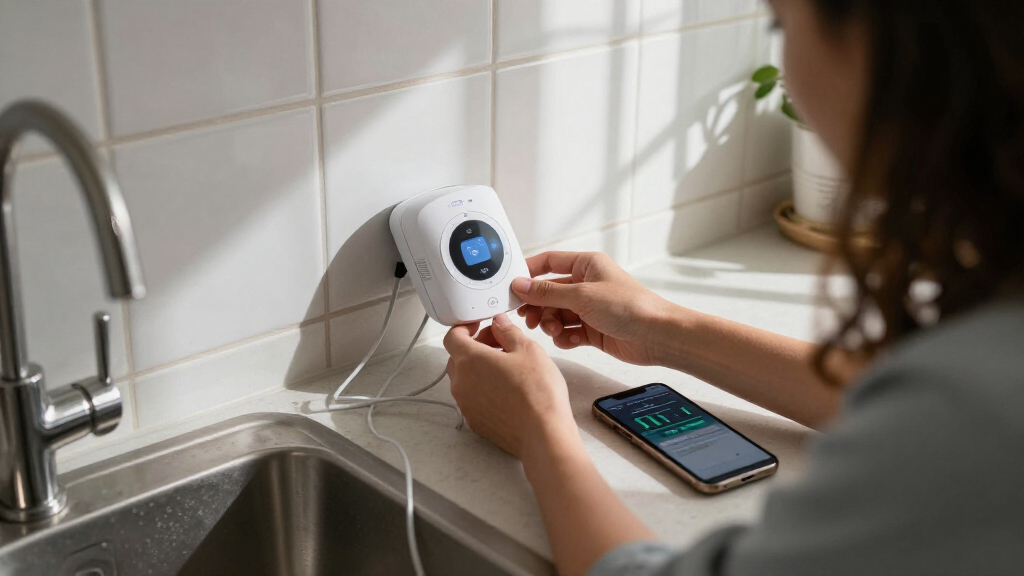

Smart water leak detectors turn a silent, expensive disaster — a burst pipe, a failing water heater, a cracked washing machine hose — into a problem you catch in seconds. After comparing 12 popular kits, the YoLink Water Leak Starter Kit (Hub + 6 Sensors with 105 dB Siren) stands out as the best overall pick thanks to LoRa long-range wireless that reaches basements and outbuildings Wi-Fi sensors often can’t, plus alerts that keep working offline. If budget leads your decision, the GoveeLife Upgraded Smart Water Leak Detector 3 Pack delivers dependable app alerts at a far lower per-sensor cost, while the X-Sense Wi-Fi Kit is the pick if a loud 120 dB siren matters more than smart-home integration. The main tradeoff in this category is simple: hub-based systems cost more upfront but offer range and reliability, while standalone Wi-Fi sensors are cheaper but depend entirely on your router. Keep reading for the full breakdown.

Get home appliances delivered free with Prime
- Fast, free delivery on millions of items
- Prime Video, Amazon Music and more included
- Member-only deals all year
Complete the kit


Key Takeaways
- Hub-based LoRa systems (all three YoLink kits) dominated on range and offline reliability, reaching sensors hundreds of feet away through walls where Wi-Fi-only detectors like the SwitchBot and X-Sense units dropped connections in basements and crawl spaces.
- Per-sensor pricing varied enormously: the Geevon 10-pack and GoveeLife multi-packs cost roughly a third per sensor of what single-detector Wi-Fi options run — a deciding factor for anyone covering a whole house rather than one appliance.
- A built-in siren separated the serious kits from the casual ones. The YoLink and X-Sense systems include sirens (105–120 dB) that alert you even without your phone, while most GoveeLife configurations rely entirely on app notifications.
- Battery life was the hidden differentiator: hub-based sensors routinely last two-plus years on replaceable batteries, whereas always-on Wi-Fi sensors drain faster and often need charging or battery swaps twice as often.
- Smart-home integrators should note that only YoLink officially supports Home Assistant and IFTTT; the GoveeLife and budget Wi-Fi kits are largely app-only ecosystems, which limits automation options.
| YoLink Water Leak Starter Kit: Hub + 4 Leak Sensors, LoRa Long-Range, App/SMS/Email Alerts, Offline Triggers | 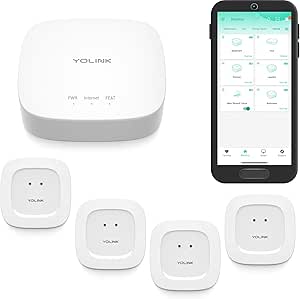 | Best for Large Properties | Number of Items: 5 (1 hub + 4 sensors) | Connectivity: LoRa Long-Range | Battery Life: Up to 5 years | VIEW LATEST PRICE | See Our Full Breakdown |
| GoveeLife Upgraded Smart Water Leak Detector 3 Pack |  | Best Value | Sensor Count: 3 | Connectivity: Sub-1G wireless, up to 1,804 ft | Alarm Volume: Up to 105 dB | VIEW LATEST PRICE | See Our Full Breakdown |
| YoLink Water Leak Starter Kit: Hub + 4 Leak Sensors with 105 dB Siren |  | Best Overall | Included Items: 1 hub + 4 sensors | Sensor Alarm Volume: 105 dB | Connectivity: LoRa Long-Range, up to 1/4 mile open air | VIEW LATEST PRICE | See Our Full Breakdown |
| X-Sense Wi-Fi Water Leak Detector Kit, 120 dB, 3 Sensors + Base |  | Loudest Alarms | Detection Probes: 6 per sensor (2 upper, 4 bottom) | Alarm Volume: 120 dB | Wireless Range: 1,804 ft (550 m) | VIEW LATEST PRICE | See Our Full Breakdown |
| SwitchBot WiFi Water Leak Detector for Home, Water Leak Sensor, 1m Cable |  | Best for Beginners | Connectivity: Wi-Fi 2.4 GHz only (no hub required) | Sensor Probes: 4 sensors | Water Level Detection: 1-meter extended probe | VIEW LATEST PRICE | See Our Full Breakdown |
| GoveeLife Smart Water Leak Detector 2 (6 Pack) |  | Best for Large Multi-Area Homes | Range: 1968 ft | Sensor Probes: 2 top, 4 bottom | Alarm Volume: 100dB | VIEW LATEST PRICE | See Our Full Breakdown |
| YoLink Water Leak Starter Kit: Hub + 6 Leak Sensors with 105 dB Siren |  | Best Premium Ecosystem Pick | Kit Contents: 1 hub + 6 leak sensors | Alarm Volume: 105 dB | Connectivity: LoRa | VIEW LATEST PRICE | See Our Full Breakdown |
| TECKNET Wi-Fi Water Leak Detector Kit, 5 Sensors + 1 Gateway |  | Best Loud-Alarm Value | Sensors: 5 | Gateway: 1 | Alarm Volume: 120 dB | VIEW LATEST PRICE | See Our Full Breakdown |
| GoveeLife Upgraded Smart Water Leak Detector 6 Pack |  | Best for Tunable Alerts | Connectivity: Sub-1G long-range wireless, up to 1804 ft | Alarm Volume: 4 levels, up to 105 dB | Waterproof Rating: IP67 | VIEW LATEST PRICE | See Our Full Breakdown |
| GoveeLife Upgraded Smart Water Leak Detector 5 Pack |  | Best Value in the Upgraded Line | Sensors: 5 | Connectivity: Sub-1G long-range wireless up to 1804 ft | Alarm Volume: 4 levels, up to 105 dB | VIEW LATEST PRICE | See Our Full Breakdown |
| WiFi Water Leak Detector with App Alerts and 6 Sensors |  | Best Multi-Room App Coverage | Connectivity: 2.4GHz WiFi (5GHz not supported) | Sensors Included: 6 leak sensors (Model WD61) | Range: 328 feet (100 meters) | VIEW LATEST PRICE | See Our Full Breakdown |
| Geevon 10 Pack Water Leak Detectors with 100dB Alarm |  | Best Budget Bulk Coverage | Alarm Volume: 100dB | Number of Sensors: 10 | Sensor Diameter: 3.15 inches | VIEW LATEST PRICE | See Our Full Breakdown |
| smart water leak detector | Connectivity | Battery Life | Alarm Volume | Waterproof Rating |
|---|---|---|---|---|
| YoLink Water Leak Starter Kit: | LoRa Long-Range | Up to 5 years | — | — |
| GoveeLife Upgraded Smart Water | Sub-1G wireless, up to 1,804 ft | 5 years | Up to 105 dB | IP67 |
| YoLink Water Leak Starter Kit: | LoRa Long-Range, up to 1/4 mile open air | — | — | — |
| X-Sense Wi-Fi Water Leak Detec | — | — | 120 dB | — |
| SwitchBot WiFi Water Leak Dete | Wi-Fi 2.4 GHz only (no hub required) | Up to 2 years (2 x AAA) | 100 dB | IP67 |
| GoveeLife Smart Water Leak Det | — | Over 5 years | 100dB | IP66 |
| YoLink Water Leak Starter Kit: | LoRa | Up to 5 years | 105 dB | — |
| TECKNET Wi-Fi Water Leak Detec | Wi-Fi 2.4G via Tuya Smart app | Over 2 years | 120 dB | IP67 |
| GoveeLife Upgraded Smart Water | Sub-1G long-range wireless, up to 1804 ft | 5 years | 4 levels, up to 105 dB | IP67 |
| GoveeLife Upgraded Smart Water | Sub-1G long-range wireless up to 1804 ft | 5 years | 4 levels, up to 105 dB | IP67 |
| WiFi Water Leak Detector with | 2.4GHz WiFi (5GHz not supported) | — | — | — |
| Geevon 10 Pack Water Leak Dete | — | Approximately 12 months | 100dB | — |
More Details on Our Top Picks
YoLink Water Leak Starter Kit: Hub + 4 Leak Sensors, LoRa Long-Range, App/SMS/Email Alerts, Offline Triggers
This kit makes the most sense for homes where Wi-Fi simply doesn’t reach — think basements, crawlspaces, or outbuildings. The LoRa long-range radio punches far beyond what the GoveeLife 3 Pack or X-Sense kits can manage over standard wireless, and the hub keeps offline triggers working even when your internet drops. That local-automation safety net is something Wi-Fi-only options like the SwitchBot detector can’t offer at all.
The tradeoff is real, though: these sensors are completely silent. If a pipe bursts at 3 a.m. and your phone is on silent, nothing in the room will wake you — unlike the YoLink siren kit (B0CCT7TH98) or the 120 dB X-Sense. You’d need to add a separate siren, which adds cost and setup.
Pros:- LoRa range reaches areas Wi-Fi detectors can’t, including outbuildings and deep basements
- Offline triggers keep protection active during internet outages
- Batteries last up to 5 years with minimal maintenance
- Works with Alexa, IFTTT, and Home Assistant for serious smart home setups
Cons:- Sensors have no built-in alarm, so audible alerts require buying a separate siren
- Requires the included hub, adding a setup step plug-in-only Wi-Fi options skip
- Four sensors may not cover larger homes without expansion purchases
Best for: Homeowners with large or sprawling properties, detached garages, or weak Wi-Fi who prioritize coverage range and reliability over built-in alarms
Not ideal for: Anyone who wants an audible alarm straight out of the box — these sensors are silent, so light sleepers or renters relying on sound alone should pick a siren-equipped kit instead
- Number of Items:5 (1 hub + 4 sensors)
- Connectivity:LoRa Long-Range
- Battery Life:Up to 5 years
- Offline Functionality:Yes
- Compatibility:Alexa, IFTTT, Home Assistant
- Audible Alarm:No (sensors are silent)
Our verdict“Buy this if range and reliability matter more than loud alarms — just budget for a siren if you want to hear leaks without your phone.”
GoveeLife Upgraded Smart Water Leak Detector 3 Pack
For the money, this trio is hard to beat. You get app, SMS, and email alerts, an IP67 waterproof housing, a 105 dB siren in each sensor, and a 5-year battery — a combination that quietly fixes the biggest weakness of the silent YoLink starter kit (B084WYB8PM). Coverage is generous too, with sub-1G wireless reaching up to 1,804 feet.
Where this option falls short of premium rivals is polish and flexibility. It’s locked to 2.4 GHz Wi-Fi, so households running mesh networks on 5 GHz bands will hit pairing headaches, and gateway pairing is limited to specific GoveeLife sensor models, which narrows future expansion compared with YoLink’s scalable ecosystem. The adjustable alarm volume is a nice touch, but finding a level that’s audible without being jarring takes some trial and error.
Pros:- Includes app, SMS, and email notifications at a budget price
- IP67 waterproofing survives damp environments where IP66 sensors falter
- 5-year battery life matches kits costing considerably more
- Built-in 105 dB alarm on every sensor
Cons:- 2.4 GHz Wi-Fi only, which complicates setup on modern mesh networks
- Gateway pairing restricted to specific sensor models limits expansion
- Alarm volume adjustment is finicky between too loud and too soft
Best for: Budget-conscious homeowners or first-time buyers who want multiple sensors, loud alarms, and multi-channel alerts without paying for a full hub-based system
Not ideal for: Smart home tinkerers invested in Home Assistant or IFTTT automations — this system is far less open than YoLink’s platform
- Sensor Count:3
- Connectivity:Sub-1G wireless, up to 1,804 ft
- Alarm Volume:Up to 105 dB
- Waterproof Rating:IP67
- Battery Life:5 years
- Wi-Fi Support:2.4 GHz only
Our verdict“The smart pick if you want maximum protection per dollar — just confirm your router broadcasts 2.4 GHz before ordering.”
YoLink Water Leak Starter Kit: Hub + 4 Leak Sensors with 105 dB Siren
This is the kit I’d point most homeowners toward, because it closes the one gap that kept the original YoLink starter kit (B084WYB8PM) off the top spot: each sensor now carries a 105 dB siren. That means you get YoLink’s quarter-mile LoRa range, offline control, and Home Assistant compatibility and an alarm that wakes the house when your phone doesn’t. Compared with the GoveeLife 3 Pack, the ecosystem here is far more scalable — add more sensors, sirens, or valves over time without compatibility dead ends.
It isn’t flawless. The multi-component setup means pairing a hub and four sensors before anything works, where the SwitchBot detector just joins your Wi-Fi directly. And functionally, this is leak detection only — no temperature or freeze sensing to round out whole-home monitoring.
Pros:- Combines loud 105 dB per-sensor alarms with long-range LoRa connectivity
- Offline control keeps automations running during outages
- Up to 5-year battery life on standard AAA cells
- Scalable ecosystem supports future sensors and smart home expansion
Cons:- Hub-based setup is more involved than plug-in Wi-Fi alternatives
- Water leak detection only — no temperature or freeze monitoring
- Higher entry price than standalone Wi-Fi sensors
Best for: Homeowners who want a complete, scalable leak protection system with both remote alerts and loud local alarms under one roof
Not ideal for: Renters or anyone wanting a single grab-and-go sensor — the hub requirement and four-sensor scope make this overkill for a studio apartment
- Included Items:1 hub + 4 sensors
- Sensor Alarm Volume:105 dB
- Connectivity:LoRa Long-Range, up to 1/4 mile open air
- Battery:2 AAA per sensor, up to 5 years
- Offline Control:Yes
- Compatibility:Alexa, IFTTT, Home Assistant
Our verdict“If you’re buying once and want alarms, range, and expandability in a single system, this is the one to get.”
X-Sense Wi-Fi Water Leak Detector Kit, 120 dB, 3 Sensors + Base
When the goal is making sure nobody sleeps through a leak, the X-Sense kit delivers the loudest alert in this lineup at 120 dB — noticeably louder than the 105 dB YoLink siren kit and a full 20 dB above the SwitchBot detector. Its other differentiator is the six-probe design, with sensors on top and bottom of each unit, catching drips from above and pooling water below in a way flat-bottomed competitors can’t match.
The tradeoffs mirror its Wi-Fi rivals: it’s 2.4 GHz only, and the IP66 rating means the sensors can handle splashes but shouldn’t sit anywhere that might actually flood — a step below the IP67 GoveeLife 3 Pack. Full functionality also leans heavily on the smartphone app, so this is less appealing if you want set-and-forget hardware that works without your phone nearby.
Pros:- Loudest alarms in the roundup at 120 dB per sensor
- Six detection probes per sensor catch leaks from above and below
- 1,804 ft wireless range allows placement in distant corners of the home
- Supports sharing with up to 12 users for whole-family alerts
Cons:- IP66 rating falls short of the IP67 protection rivals offer
- No 5 GHz Wi-Fi support complicates modern router setups
- Dependence on the app means limited value without a smartphone
Best for: Families with heavy sleepers, multistory homes, or noisy mechanical rooms who need maximum alarm volume and multi-directional leak detection
Not ideal for: Homes prone to actual standing water or submersion — IP66 sensors aren’t built for flooded basements the way IP67 options are
- Detection Probes:6 per sensor (2 upper, 4 bottom)
- Alarm Volume:120 dB
- Wireless Range:1,804 ft (550 m)
- Water Resistance:IP66
- User Sharing:Up to 12 users
- Wi-Fi Compatibility:2.4 GHz only
Our verdict“The pick when sheer alarm volume and thorough probe coverage matter more than waterproofing depth or smart home integration.”
SwitchBot WiFi Water Leak Detector for Home, Water Leak Sensor, 1m Cable
This is the simplest path into smart leak detection: no hub, no gateway — the sensor joins your Wi-Fi directly and starts pushing notifications in minutes. That alone makes it friendlier than the YoLink kits, which demand hub setup before a single alert goes out. The 1-meter extended probe is the standout feature here, detecting water levels, not just presence, which none of the other picks in this batch can do — handy for sump pits, tanks, and appliance drip trays.
Compared with the GoveeLife 3 Pack, you’re trading battery longevity and multi-sensor value for simplicity: 2-year battery life versus 5, and a single sensor rather than three for similar money. It’s also 2.4 GHz only, and at 100 dB its alarm is the quietest in this lineup, though still plenty loud for an adjacent room.
Pros:- Hub-free Wi-Fi setup takes minutes with no extra hardware
- 1m extended probe detects water levels in sump pits and tanks
- Broad compatibility including Alexa, Google, Siri, and SmartThings
- IP67 waterproofing handles genuinely damp environments
Cons:- 2-year battery life is the shortest in this lineup
- Single-sensor package offers poor value for multi-room coverage
- Alarm at 100 dB is the quietest among these picks
Best for: Beginners, renters, and anyone monitoring one specific spot — a sump pump, water heater, or washing machine — who wants notifications without buying a hub
Not ideal for: Whole-home coverage seekers — a single sensor at this price per unit scales poorly compared with 3- and 4-packs from GoveeLife or YoLink
- Connectivity:Wi-Fi 2.4 GHz only (no hub required)
- Sensor Probes:4 sensors
- Water Level Detection:1-meter extended probe
- Alarm Volume:100 dB
- Waterproof Rating:IP67
- Battery Life:Up to 2 years (2 x AAA)
- Compatibility:Alexa, Google, Siri, IFTTT, SmartThings, SwitchBot
Our verdict“The easiest way to start protecting one trouble spot — buy it for the probe and simplicity, not for whole-house coverage.”
GoveeLife Smart Water Leak Detector 2 (6 Pack)
GoveeLife’s 6-pack Detector 2 stands out for sheer coverage: six sensors with six probe points each (two top, four bottom) means you can guard a water heater, sump pit, dishwasher, and three more spots without buying add-ons. Its 1968 ft range edges out the GoveeLife Upgraded 5 Pack’s 1804 ft, which matters in sprawling ranch homes or basements with thick walls. The IP66 waterproofing is solid, though the Upgraded models carry the tougher IP67 rating. Compared with the YoLink starter kit, this set leans on Wi-Fi rather than LoRa, so it’s cheaper to start but weaker where your router signal struggles. The 100dB alarm is audible, but noticeably quieter than TECKNET’s 120dB siren.
Pros:- Six sensors and six probe points per unit cover an entire home in one purchase
- 1968 ft range is the longest in the GoveeLife lineup
- Triple-channel alerts via SMS, app, and email
- Alexa voice control included
- 5+ year battery life
Cons:- Requires 2.4G Wi-Fi gateway only — fails where router signal is weak, unlike YoLink’s LoRa
- No smart home automation platform support beyond Alexa
- IP66 rating is a step below the IP67 of newer GoveeLife models
Best for: Homeowners covering many leak-prone spots at once who want app, SMS, and email alerts without a big per-sensor investment
Not ideal for: Buyers in Wi-Fi dead zones or anyone wanting smart home automation triggers — the 2.4G gateway dependency and lack of Home Assistant support limit it
- Range:1968 ft
- Sensor Probes:2 top, 4 bottom
- Alarm Volume:100dB
- Waterproof Rating:IP66
- Battery Life:Over 5 years
- Wi-Fi Support:2.4G
- Voice Assistant:Alexa compatible
Our verdict“This is the pick for blanketing a large home in leak sensors on a budget, provided your Wi-Fi reaches every corner.”
YoLink Water Leak Starter Kit: Hub + 6 Leak Sensors with 105 dB Siren
The YoLink 6-sensor kit justifies its premium price with LoRa connectivity — a quarter-mile open-air range that works where the TECKNET and GoveeLife kits simply drop off. Its killer feature is offline operation: sensors trigger the 105dB siren and local actions even when your internet is down, something no Wi-Fi-based rival here can claim. The hub supports over 300 devices, so this kit doubles as the foundation for a full YoLink smart home, including IFTTT and Home Assistant integration. The tradeoff is complexity and cost — setup is more involved than GoveeLife’s plug-and-pair approach, and the ecosystem lock-in means mixing brands later is awkward. Standard AAA batteries in every sensor are a nice touch versus sealed designs.
Pros:- LoRa range up to 1/4 mile works far beyond typical Wi-Fi reach
- Offline operation keeps the siren and automations working during internet outages
- Scales to 300+ devices for whole-home monitoring
- Works with Alexa, IFTTT, and Home Assistant
- Replaceable AAA batteries with 5-year life
Cons:- Highest price point in this batch
- Setup can overwhelm non-technical users
- Locked into the YoLink ecosystem for future sensor expansion
Best for: Tech-savvy homeowners, rural properties with weak Wi-Fi, or anyone building a large smart home ecosystem around leak detection
Not ideal for: Buyers who want a simple app-and-done setup — the hub configuration and platform-specific ecosystem add friction and cost
- Kit Contents:1 hub + 6 leak sensors
- Alarm Volume:105 dB
- Connectivity:LoRa
- Range:Up to 1/4 mile (open air)
- Battery:2 AAA per sensor
- Battery Life:Up to 5 years
- Offline Operation:Yes
- Compatibility:Alexa, IFTTT, Home Assistant
Our verdict“If reliability during outages and long-range coverage outrank simplicity, this is the most future-proof kit in the roundup.”
TECKNET Wi-Fi Water Leak Detector Kit, 5 Sensors + 1 Gateway
TECKNET’s loudest-in-class 120dB alarm is the headline here — if a leak starts while you’re home but away from your phone, nothing else in this batch cuts through noise like it. The kit pairs five IP67-rated sensors with a gateway for app alerts through Tuya Smart, and batteries are included, so it works out of the box. Compared with the GoveeLife Detector 2 6-pack, you get one fewer sensor but a tougher waterproof rating and a louder siren. The YoLink kit beats it on range and offline reliability, but at a notably higher price. The weak spot is smart home isolation — no Alexa, Home Assistant, or IFTTT support — and reported false alarms in humid spots like near sump pumps or laundry rooms.
Pros:- 120dB alarm is the loudest in this lineup
- IP67 waterproof housing handles harsh environments
- Batteries included for true out-of-box use
- Five-sensor coverage at a lower price than the YoLink kit
Cons:- No smart home platform integration (Alexa, IFTTT, Home Assistant)
- False alarms reported in high-humidity environments
- 2-year battery life falls short of the 5-year GoveeLife and YoLink sensors
Best for: Budget-conscious homeowners who prioritize a deafening audible alarm and basic app alerts over automation
Not ideal for: Smart home enthusiasts or anyone placing sensors in high-humidity areas like bathrooms, where false alarms are more likely
- Sensors:5
- Gateway:1
- Alarm Volume:120 dB
- Waterproof Rating:IP67
- Connectivity:Wi-Fi 2.4G via Tuya Smart app
- Battery Life:Over 2 years
- Batteries Included:Yes, 2 AAA per sensor
Our verdict“A strong pick if a loud local siren matters more to you than ecosystem integration, with the caveat to avoid damp placements.”
GoveeLife Upgraded Smart Water Leak Detector 6 Pack
What separates the Upgraded 6-pack from the earlier GoveeLife Detector 2 is control: four adjustable alarm levels up to 105dB and app-based silencing, so a false alarm at 2 a.m. doesn’t force you to physically hunt down a shrieking sensor. The IP67 rating is a genuine upgrade over the Detector 2’s IP66 for sump pits and crawl spaces, and the device-finder feature in the app helps locate a tripped unit under a sink. Range drops slightly to 1804 ft — still far beyond what anyone realistically needs, and well past TECKNET’s Wi-Fi reach. YoLink still wins on offline operation and platform support; this kit has no Alexa or Home Assistant integration. Note the gateway pairing is limited to specific sensor models (H5059/H5830), so check compatibility before expanding later.
Pros:- Four alarm volume levels plus in-app silencing for comfortable customization
- IP67 waterproofing suits damp basements and sump areas
- 1804 ft sub-1G range easily covers large properties
- App device-finder locates a triggered sensor quickly
Cons:- Gateway only pairs with specific GoveeLife sensor models
- No Alexa, IFTTT, or Home Assistant integration
- Requires 2.4G Wi-Fi — no 5G network support
Best for: Homeowners who want granular volume control and quieter night modes without losing long-range coverage
Not ideal for: Automation-focused buyers — with no smart home platform support and restricted gateway pairing, it’s a closed loop
- Connectivity:Sub-1G long-range wireless, up to 1804 ft
- Alarm Volume:4 levels, up to 105 dB
- Waterproof Rating:IP67
- Battery Life:5 years
- App Features:Push notifications, device find, alarm silencing
- Supported Wi-Fi:2.4G only
- Gateway-Compatible Sensors:H5059/H5830 only
Our verdict“The best GoveeLife option for people who value adjustable alerts and tougher waterproofing over smart home hooks.”
GoveeLife Upgraded Smart Water Leak Detector 5 Pack
This 5-pack is functionally the same hardware as the Upgraded 6-pack — same 1804 ft sub-1G range, IP67 housing, 5-year batteries, and adjustable 105dB alarm — just one sensor lighter, which makes it the sweet spot for typical three-to-five-room coverage at a lower price. Compared with the TECKNET kit, you trade a louder 120dB siren for triple-channel notifications (SMS, email, and app) and three extra years of battery life. Against the original GoveeLife Detector 2, the IP67 rating and volume control are real upgrades worth choosing unless you genuinely need six sensors. The limitations mirror its siblings: 2.4G Wi-Fi only, gateway compatibility restricted to GoveeLife sensors, and no hooks into Alexa or other platforms. Placement flexibility is the other tradeoff — with no external probe cable like SwitchBot’s 1m option, the sensor itself must sit where water pools.
Pros:- Same upgraded IP67 hardware and 5-year battery as the 6-pack for less money
- SMS, email, and app notifications cover you even without the app open
- Adjustable alarm volume across four levels
- 1804 ft range handles multi-story or sprawling homes
Cons:- Only five sensors — large homes will need add-ons quickly
- No external probe cable for reaching cramped or elevated spots
- Locked to GoveeLife gateway and 2.4G Wi-Fi
Best for: Buyers protecting the standard hotspots — water heater, washer, two bathrooms, kitchen — who want GoveeLife’s upgraded hardware without paying for a sixth sensor
Not ideal for: Homes with more than five leak-prone areas or buyers needing remote probes to reach tight spaces like inside a drain pan
- Sensors:5
- Connectivity:Sub-1G long-range wireless up to 1804 ft
- Alarm Volume:4 levels, up to 105 dB
- Waterproof Rating:IP67
- Battery Life:5 years
- Alerts:SMS, email, app push
- Supported Wi-Fi:2.4G only
Our verdict“The smartest buy in the GoveeLife lineup if five sensors match your home — you get flagship features without the sixth-sensor premium.”
WiFi Water Leak Detector with App Alerts and 6 Sensors
Most starter kits in this roundup cap out at three to five sensors, which is why this option caught my attention for larger homes. With six sensors and a single gateway, it covers a water heater, sump pit, dishwasher, washing machine, and two bathrooms without buying expansion packs — something the GoveeLife 3 Pack would force you to do twice over. The 328-foot range also outpaces typical WiFi kits, so a basement sensor stays connected even through concrete floors. Alerts arrive through the TUYA app on iOS and Android, and the 32 ringtones plus adjustable volume let you tone things down in living areas while keeping the gateway loud. The tradeoff is connectivity rigidity: 2.4GHz WiFi only, no 5GHz support, and the gateway accepts just WD61 sensors — mixing in WD60 models won’t work.
Pros:- Six sensors in one kit covers more rooms than most competing starter bundles
- Real-time push alerts via the TUYA app on both iOS and Android
- 328-foot range keeps basement and attic sensors reliably connected
- Customizable volume and 32 ringtones let alerts fit each room
Cons:- 2.4GHz WiFi only — no 5GHz network support
- Only compatible with WD61 sensors, so expansion options are limited
- SMS and phone-call alerts may require paid add-ons
Best for: Homeowners with multiple risk points across two or more floors who want app alerts everywhere without buying extra kits
Not ideal for: Anyone wanting SMS or voice-call alerts — those may incur extra charges — or buyers with 5GHz-only routers
- Connectivity:2.4GHz WiFi (5GHz not supported)
- Sensors Included:6 leak sensors (Model WD61)
- Range:328 feet (100 meters)
- Volume Levels:4 for sensors, 5 for gateway
- Ringtones:32 options
- App Compatibility:iOS and Android via TUYA Smart App
Our verdict“This kit makes the most sense for buyers who want whole-home app-monitored coverage in a single purchase, provided their router broadcasts 2.4GHz.”
Geevon 10 Pack Water Leak Detectors with 100dB Alarm
Not everyone needs app alerts — and that’s exactly where this ten-sensor pack earns its place. At a per-unit cost that undercuts smart kits like the YoLink Starter Kit by a wide margin, the Geevon trades connectivity for sheer quantity, blanketing a basement, garage, crawlspace, and every sink in one purchase. Each puck fires a 100dB alarm when it touches water, loud enough to hear from another room, and the compact 3.15-inch footprint slides under appliances where bulkier WiFi sensors with gateways won’t fit. The obvious tradeoff: if a leak happens while you’re away, a siren helps nobody. Compared with the X-Sense kit’s 120dB alarm, it’s also slightly quieter. But for occupied homes and rentals, simplicity wins — no hub, no app setup, no WiFi pairing, just batteries in and go.
Pros:- Ten sensors plus included batteries deliver the most coverage per dollar in this roundup
- 100dB alarm is audible across rooms and floors
- Compact 3.15-inch pucks fit under appliances and inside tight sump crocks
- Zero setup — no hub, app, or WiFi configuration required
Cons:- No WiFi or smart connectivity, so no alerts when you’re not home
- 9V batteries need replacing roughly every 12 months across all ten units
- No smart home integration or automation support whatsoever
Best for: Owners of occupied homes, rentals, or cabins who want maximum sensor coverage per dollar and don’t need remote alerts
Not ideal for: Frequent travelers or remote homeowners who need phone notifications when a leak starts while they’re away
- Alarm Volume:100dB
- Number of Sensors:10
- Sensor Diameter:3.15 inches
- Sensor Height:1.18 inches
- Battery Type:9V (10 included)
- Battery Life:Approximately 12 months
Our verdict“Buy this if you need to cover a lot of floor space cheaply and someone will actually be home to hear the alarm.”
How We Picked
My ranking logic centers on what actually determines whether a leak detector saves your home: alert reliability, coverage range, alarm loudness, ecosystem fit, and cost per sensor. I weighted connectivity heavily — a detector that loses Wi-Fi in a basement is worse than no detector, because it creates false confidence. That’s why hub-based LoRa systems like the YoLink kits rank near the top: their signals penetrate walls and floors far better than household Wi-Fi, and their alerts continue working even when the internet is down via offline triggers and local sirens.
From there, I compared practical value. A kit’s price means little without knowing how many sensors you get, so I evaluated cost per sensor alongside siren volume, battery life, app quality, and smart-home compatibility (Alexa, IFTTT, Home Assistant). Multi-packs that let you cover water heaters, washing machines, sinks, and toilets simultaneously scored better than single units, because partial coverage is one of the most common mistakes buyers make. Budget Wi-Fi kits earned their spots by delivering solid app alerts at low prices — accepting tradeoffs in range and integration that I’ve flagged clearly in each breakdown.
Factors to Consider When Choosing Smart Water Leak Detectors
Choosing between these twelve kits gets much easier once you match the technology to your home’s layout and your own habits. Below are the factors that actually change outcomes — and the mistakes I saw repeated across this category.Hub-Based vs. Standalone Wi-Fi: The Biggest Decision
This is the single most consequential choice, and it’s not about price — it’s about physics. Standalone Wi-Fi sensors like the SwitchBot or X-Sense units connect straight to your router, which works fine in an open-plan apartment but fails predictably in basements, crawl spaces, and detached garages where Wi-Fi signal weakens. Hub-based systems like the YoLink kits use LoRa radio, which penetrates concrete and travels hundreds of feet, and the hub keeps functioning during internet outages by triggering local sirens. The mistake I see most often: buyers in multi-story homes choosing Wi-Fi sensors to save $20, then discovering the basement sensor — the one place leaks do the most damage — never connects. If you own a house with a basement, pay the hub premium. Renters covering one apartment floor can safely skip it.
Sensors Per Dollar vs. Coverage You Actually Need
Per-sensor math matters more than sticker price. A $70 kit with six sensors beats a $40 kit with two, unless you genuinely only need to guard one water heater. The common buying error is the opposite of what you’d expect: people overbuy sensor count and underbuy placement quality. Ten cheap sensors scattered loosely protect less than four sensors placed precisely at the lowest point under each appliance, near supply-line connections, and under any upstairs bathroom. Map your risk points before shopping — water heater, washing machine, dishwasher, refrigerator ice line, toilets, and HVAC condensate pan typically account for nearly all residential leaks — then buy the pack size that matches that list, not the biggest number on the page.
How Alerts Reach You — And Why Redundancy Wins
App push notifications are the default, but they’re also the weakest link: they fail when your phone is on Do Not Disturb, when the app is force-closed, or when the internet drops mid-leak. The kits that rank highest in this roundup layer their alerts — app notification plus SMS plus email plus a local siren. A built-in siren above 100 dB is the difference between a leak waking you at 3 a.m. and one you discover eight hours later. Offline operation deserves special attention: hub systems that trigger sirens without internet keep working during power outages (a leading cause of pipe bursts), while pure Wi-Fi sensors go silent. Anyone who travels regularly should treat SMS alerts and a physical siren as non-negotiable.
Battery Life and Long-Term Maintenance
Leak detectors live in dark, damp places for years, and battery behavior separates the reliable from the annoying. Hub-based LoRa sensors sip power — often two years or more on standard replaceable batteries — because the radio is efficient. Always-on Wi-Fi sensors transmit constantly and drain faster, sometimes requiring swaps every six to twelve months. Look for kits with low-battery alerts in the app; a dead sensor is worse than no sensor. Also check battery type: standard AAA or CR2032 cells you can replace cheaply beat proprietary rechargeables that force you to take the whole unit offline. Finally, confirm the sensors are actually waterproof or at least water-resistant — a detector that dies from the first splash it detects is a one-use product.
Smart Home Ecosystem Fit
If you run Alexa routines, IFTTT applets, or a Home Assistant server, integration support should narrow your shortlist fast. Only the YoLink kits in this roundup offer official Home Assistant and IFTTT support, which enables powerful automations like shutting off a smart water valve when a sensor trips. Most GoveeLife and budget Wi-Fi options are closed ecosystems: their apps work fine, but they can’t talk to the rest of your setup. Be honest with yourself here — buyers who pay extra for integrations they never configure are wasting money. If your entire smart home ambition is a phone notification, skip the ecosystem premium and put that budget toward more sensors.
Probe Cables and Detector Placement Flexibility
Most sensors in this category detect water at their base, which forces you to place the whole unit where puddles form. Options like the SwitchBot include a 1-meter probe cable, letting you tuck the electronics somewhere dry and reachable while only the slim probe sits at the detection point. This matters in tight spots: inside a dishwasher drip pan, behind a toilet, under a built-in refrigerator where a hockey-puck sensor simply won’t fit. It also makes battery changes far easier — you’re not crawling behind appliances. If your risk points are cramped or hidden, prioritize a cable-probe design over raw sensor count, even if it means fewer detectors overall.
Frequently Asked Questions
Do I really need a hub, or are Wi-Fi-only leak detectors enough?
It depends entirely on where your leak risks are. Wi-Fi-only detectors work well in apartments and single-floor homes where the router signal reaches every sensor location. In houses with basements, crawl spaces, thick walls, or detached structures, Wi-Fi reliability drops sharply — and the basement is statistically where the most expensive leaks happen. Hub-based systems like the YoLink kits use long-range LoRa radio that penetrates those obstacles and keeps the siren working during internet outages. If you’re covering one appliance under a desk in the same room as your router, save the money. If you’re protecting a whole house with a basement, the hub is cheap insurance.
How many leak sensors do I need for a typical home?
For most single-family homes, six to eight sensors covers the highest-risk points: water heater, washing machine, dishwasher, refrigerator ice line, two or three toilets, and the HVAC condensate pan. Upstairs bathrooms deserve priority too, since a leak there damages the floor below. A three-pack is really only adequate for an apartment or condo with one bathroom and no laundry. The ten-sensor Geevon pack makes sense for larger homes or anyone who wants to add a sump pit and utility room. Buy based on your mapped risk points rather than pack size — a precise four-sensor layout beats a sloppy ten-sensor scatter every time.
Will these detectors still alert me if the power or internet goes out?
Not all of them, and this is where the kits in this roundup differ sharply. Hub-based YoLink systems support offline triggers — the hub’s siren sounds locally without internet, and battery-powered sensors keep detecting through power outages. Pure Wi-Fi detectors depend on your router and internet connection, so a power cut silences them completely. This matters because pipe bursts frequently follow power failures (furnaces stop, pipes freeze). If you live somewhere with outages or you travel often, prioritize a kit with a physical siren and offline operation rather than app-only alerts.
Are cheap multi-pack detectors as reliable as premium kits?
For basic detection, yes — most budget sensors will faithfully trigger an app alert when their contacts get wet. Where they fall short is the surrounding system: weaker app software, slower notifications, shorter battery life, spottier Wi-Fi in distant rooms, and no smart-home integration. The GoveeLife multi-packs are the strongest budget performers here, with genuinely good apps and reliable push alerts. What you give up versus the YoLink kits is range, offline redundancy, and Home Assistant support. If your sensors all live within strong Wi-Fi range and you just need a phone notification, the budget packs deliver 90% of the protection at half the price.
Do smart leak detectors work with automatic water shutoff valves?
Some can, but only if the ecosystem supports it, and this is a real differentiator. YoLink’s IFTTT and Home Assistant compatibility lets a triggered sensor communicate with a smart shutoff valve to close your main water line automatically — turning detection into prevention. Most closed-ecosystem Wi-Fi detectors in this roundup can’t do this, no matter which valve you buy. If automatic shutoff is your goal, plan the purchase around integration support first and sensor count second. Keep in mind you’ll also need a compatible motorized valve installed on your main line, which typically costs more than the entire detector kit.
Conclusion
The right pick here depends less on specs and more on your home’s layout. For best overall, I’d point most homeowners to the YoLink Water Leak Starter Kit with 6 Sensors and Siren — the LoRa range, offline reliability, and Home Assistant support make it the most complete protection in this lineup, while the 4-sensor YoLink kits suit smaller homes that still want hub-based dependability. For best value, the GoveeLife Upgraded Smart Water Leak Detector 6 Pack delivers the lowest sensible cost per sensor with a solid app, and the 3-pack version is the right entry point for apartments. For beginners, the GoveeLife Upgraded 3 Pack is the easiest setup in the roundup — plug in, connect, place, done. For a loud-alarm-first approach, the X-Sense Wi-Fi Kit with its 120 dB siren and the TECKNET 5-sensor kit make sure anyone home hears the problem instantly. And for specific needs: the SwitchBot detector’s 1-meter probe cable is the answer for cramped spots behind appliances, the Geevon 10-pack covers large properties on a budget, and the WiFi detector with 6 sensors splits the difference for mid-size homes. Whatever you choose, place sensors at your actual risk points — even the best detector protects nothing sitting in a drawer.
NFL season / tailgating Picks
team gear
As an affiliate, we earn on qualifying purchases.