If your carbon filter starts emitting unpleasant odors, it’s a sign it might be saturated or contaminated. First, inspect the filter for dirt, dust, or damage, and replace it if necessary. Check that your system isn’t blocked or leaking and ensure proper airflow. Regular maintenance and timely replacements help prevent odor issues. To learn how to troubleshoot effectively and keep your system fresh, continue exploring practical steps for clean, odor-free air.
Key Takeaways
- Detect odors by monitoring air leaving the filter, noting musty, sour, or chemical smells indicating saturation or contamination.
- Regularly inspect and replace carbon filters every 3-6 months or when odors become noticeable.
- Ensure proper maintenance by cleaning ductwork and checking for system leaks or blockages.
- Turn the system on and off to observe if odor intensity changes, helping identify if the filter or another component causes the smell.
- Consider professional evaluation if odors persist after filter replacement or troubleshooting efforts.
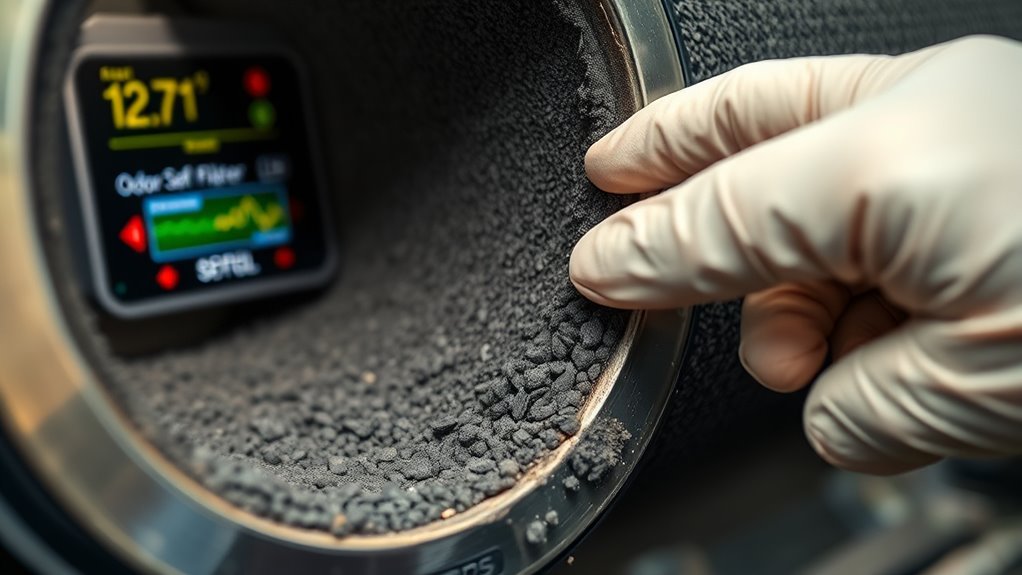
Carbon filters are indispensable for removing odors from air systems, but sometimes they develop unpleasant smells themselves. When this happens, it’s a clear sign that your filter needs attention. The first step in fixing the issue is understanding how to perform proper filter maintenance and accurately detect odors. Regular filter maintenance helps prevent odors from building up and keeps your air system functioning at its best. If you notice a change in smell, it’s essential to identify whether the odor is coming from the filter or elsewhere in your system. Odor detection involves paying close attention to the air leaving the filter and checking for any unusual or persistent smells. A musty, sour, or chemical scent often indicates that the carbon inside the filter has become saturated or contaminated.
Unpleasant smells from carbon filters signal the need for maintenance or replacement.
If your air system starts emitting strange smells, don’t ignore it. The cause could be that the filter is no longer effectively adsorbing odors due to overuse or improper maintenance. Regularly inspecting your filters is critical; look for signs of dirt, dust buildup, or physical deterioration. When the filter appears clogged or visibly dirty, it’s time for a replacement. Keep in mind that carbon filters have a limited lifespan, typically around three to six months, depending on usage and air quality. Over time, the activated carbon becomes saturated with odor molecules and loses its effectiveness. This saturation can cause the filter itself to emit odors, which then circulate through your space.
To address these issues, you should replace your filter promptly once you notice signs of saturation or odor. Proper filter maintenance isn’t just about swapping filters; it involves checking the entire system for blockages or leaks that could contribute to odor issues. Sometimes, a simple cleaning of the surrounding ductwork or vents can improve airflow and reduce smells. If you’re unsure whether the odor is from the filter or another part of the system, perform odor detection tests by turning the system on and off, and noting when the smell intensifies or diminishes. In many cases, replacing the filter is enough, but persistent odors might require deeper cleaning or professional inspection.
Additionally, understanding the importance of filter lifespan and adhering to recommended replacement schedules can significantly reduce the likelihood of odor issues. Ultimately, consistent filter maintenance and diligent odor detection are your best tools for preventing and fixing odor issues. Stay proactive by scheduling regular inspections and replacements, especially if you notice any change in air quality. By doing so, you’ll guarantee your air system remains efficient and free of unwanted smells, providing a healthier, more pleasant environment.
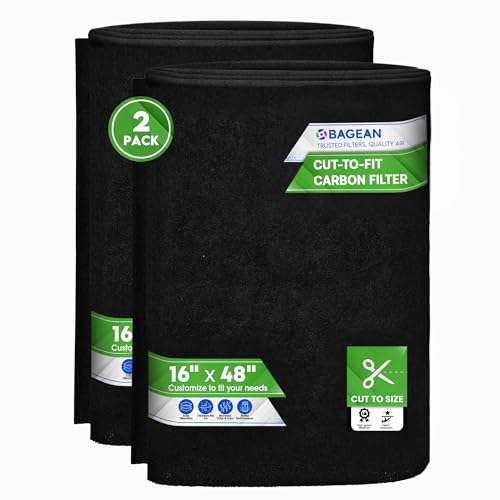
Bagean Cut to Fit Activated Carbon Filter Sheet 16” x 48” Carbon Air Filter
- Freshens Air: Removes odors for a clean environment
- Highly Absorbent: Made from coconut shell carbon
- Superior Odor Removal: Enhanced with extra carbon for better performance
As an affiliate, we earn on qualifying purchases.
As an affiliate, we earn on qualifying purchases.
Frequently Asked Questions
Can Certain Plants or Herbs Help Mask Carbon Filter Odors?
Yes, certain plants and herbs can help mask carbon filter odors through plant-based deodorization. Herbal air fresheners like mint, basil, and lavender release pleasant scents that can complement your filtration system. You can place these plants nearby or use their essential oils in diffusers. This natural approach boosts your indoor air quality and makes the space smell fresh while supporting plant-based deodorization efforts.
How Often Should I Replace My Carbon Filter to Prevent Odors?
Did you know that most carbon filters need replacement every 3 to 6 months? To keep odors at bay, follow a strict filter replacement schedule and practice odor prevention strategies like proper ventilation. You should replace your filter regularly, especially if you notice a decrease in air quality or persistent odors. Doing so guarantees your system stays effective and keeps your space smelling fresh and clean.
Are There Specific Brands Known for Longer-Lasting Odor Control?
Some brands stand out for longer-lasting odor control thanks to their strong reputation and advanced filter technology. You’ll want to look at brands like Activated Carbon, Blueair, or Austin Air, which are known for high-quality filters that effectively trap odors over extended periods. These brands invest in better materials and innovative technology, so you can trust their filters to last longer and keep your space smelling fresh.
Do Environmental Factors Affect the Lifespan of Carbon Filters?
Environmental factors definitely affect the lifespan of your carbon filter. Poor air quality, high humidity, and pollutants can cause the filter to become saturated faster, reducing its effectiveness. To extend its life, you should regularly check and maintain your filter, replacing it when necessary. Proper filter maintenance ensures ideal odor control and air quality, preventing odors from lingering and keeping your space fresh longer.
Can Using a Pre-Filter Extend the Life of the Main Carbon Filter?
Think of a pre-filter as a first line of defense in a battle against odors. Using a pre-filter offers significant benefits by capturing larger particles and contaminants, which helps extend the life of your main carbon filter. This not only keeps your system running efficiently but also enhances odor masking plants‘ effectiveness. As a result, investing in a pre-filter can save you money and effort while maintaining a fresher, cleaner environment.
Bagean Cut to Fit Activated Carbon Filter Sheet 16” x 48” Carbon Air Filter
- Freshens Air: Removes odors for a clean environment
- Highly Absorbent: Made from coconut shell carbon
- Superior Odor Removal: Enhanced with extra carbon for better performance
As an affiliate, we earn on qualifying purchases.
As an affiliate, we earn on qualifying purchases.
Conclusion
Just like a skilled detective uncovers hidden clues, you can identify and fix odor issues from your carbon filters. By paying close attention and taking prompt action, you prevent these nuisances from spreading like a shadow over your space. Remember, even the strongest defenses need regular checks—think of your filters as the guardians of fresh air. With a little effort, you’ll keep your environment smelling pristine, turning potential problems into triumphs.

Holikme Dryer Vent Cleaner Kit – 30Ft Fireplace Chimney Brushes Flexible
- Extended Chimney Cleaning Reach: 30-foot flexible rods with synthetic brushes
- Easy to Use: Operable with or without a power drill
- Enhanced Safety: Secure connection points with tape
As an affiliate, we earn on qualifying purchases.
As an affiliate, we earn on qualifying purchases.

MOOKA Air Purifiers for Home Large Room up to 1076ft², H13 True HEPA Air Filter Cleaner, Odor Eliminator, Remove Smoke Dust Pollen Pet Dander, Night Light, B-D02L White
- Coverage Area: Up to 1076 ft² for large rooms
- Filtration System: H13 True HEPA and activated carbon filters
- Air Changes: 6 per hour in 215 ft², 1 in 1076 ft²
As an affiliate, we earn on qualifying purchases.
As an affiliate, we earn on qualifying purchases.