A bad taste after installing a new water filter is often normal at first, caused by residues or compounds released from filter materials like activated carbon. These flavors typically diminish after flushing the filter thoroughly and running several gallons of water through it. However, if the taste persists or worsens, it could signal a problem like a clogged or expired filter, or contamination. Keep in mind, understanding the cause can help you maintain clean, great-tasting water.
Key Takeaways
- A temporary strange taste is common due to residual chemicals or compounds leaching from the new filter.
- Flushing the filter thoroughly with several gallons of water usually reduces or eliminates initial off-tastes.
- Persistent or strong off-tastes may indicate filter contamination, improper installation, or the need for replacement.
- The type of filter and local water quality can influence whether a taste issue is normal or problematic.
- Regular maintenance and timely filter replacement help prevent ongoing taste issues and ensure water safety.

When you install a new water filter, you might notice a strange or bitter taste lingering in your water. This can be unsettling, especially if you expected fresh, clean-tasting water right away. Usually, this odd flavor isn’t a sign of a serious problem but rather a normal part of the filter’s initial operation. It’s important to understand that some taste issues are temporary and related to how the filter interacts with your water during the first few uses. The key is to pay attention to the water quality and perform proper filter maintenance to guarantee your water remains safe and pleasant to drink.
One common reason for a strange taste after installing a new filter is the presence of manufacturing residues or materials used in the filtration process. These can sometimes leach into the water, causing bitterness or metallic flavors. Flushing the filter thoroughly before use helps remove these residues. Most manufacturers recommend running several gallons of water through the filter to clear out any leftover particles or chemicals. This step is vital for maintaining good water quality and preventing any undesirable flavors from reaching your glass.
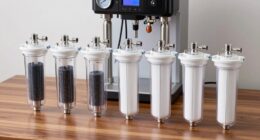
Another factor to consider is the type of filter you’re using. Some filters contain activated carbon, which adsorbs impurities and improves water taste. During the initial usage, the carbon may release some compounds that temporarily affect flavor. Once the filter is properly flushed, these flavors usually diminish. Regular filter maintenance, such as replacing filters at recommended intervals, is essential because overused or clogged filters can compromise water quality, leading to off-tastes or even potential health risks. Additionally, understanding how smart filtration systems work can help you optimize your filter’s performance and ensure consistent water quality.
It’s also worth noting that water quality varies depending on your source. If your tap water contains certain minerals or contaminants, your new filter might interact with these elements differently, producing an unusual taste. In such cases, testing your water can help identify the cause and guide you on the best filtration solution. Guaranteeing your filter is compatible with your water source and maintaining it properly will help keep the taste consistent and your water safe.
If the strange taste persists even after flushing and replacing the filter, it could indicate a problem with the filter itself or with your water source. Sometimes, filters can be defective or past their lifespan, which affects their ability to improve water quality. In these situations, it’s best to consult the manufacturer or consider testing your water for contaminants. Remember, good filter maintenance isn’t just about replacing filters on schedule but also about ensuring the entire filtration system functions effectively, protecting your health and enhancing the flavor of your water.
Frequently Asked Questions
How Long Should a New Filter Take to Eliminate Bad Taste?
A new filter should take about 1 to 2 weeks to eliminate the bad taste, but this depends on proper filter maintenance. During this time, your taste will adjust as the filter removes impurities. If the bad taste persists beyond this period, consider checking for issues like incorrect installation or filter quality. Regular filter maintenance helps guarantee clear, fresh-tasting water and faster taste adjustment.
Can a Bad Taste Indicate a Filter Installation Mistake?
Yes, a bad taste can signal installation issues or filter incompatibility. When you notice this, it’s likely your filter wasn’t installed correctly or isn’t compatible with your system. This mismatch can cause impurities or contaminants to linger, affecting taste. Double-check your installation instructions, verify the filter matches your system specifications, and reseat it properly. Addressing these issues promptly helps restore clean, fresh-tasting water.
Are Certain Water Sources More Prone to Causing Bad Taste After Filtering?
Yes, certain water sources are more prone to causing bad taste after filtering. Water quality varies depending on the source, and some contain higher levels of minerals or organic matter that interact with your filter material. If your source has high levels of contaminants or unusual compounds, it can lead to a lingering bad taste even after filtering. Regularly testing your water and choosing the right filter material can help improve taste.
Is It Safe to Consume Water With an Unusual Taste From a New Filter?
It’s like tasting a new recipe for the first time—you might notice an unusual flavor, but it’s usually safe. If your water has an odd taste from a new filter, check if you’ve done proper filter maintenance and consider your water source. Sometimes, minerals or contaminants can cause this. If the taste persists or is foul, it’s best to test your water or replace the filter to guarantee safety.
When Should I Replace My Filter if Bad Taste Persists?
You should replace your filter if the bad taste persists beyond the recommended filter lifespan, which is usually around 6 months or after filtering a specific volume of water. Regular taste testing helps you monitor quality, so if the water still tastes off despite cleaning or initial adjustments, it’s time for a new filter. Don’t wait too long, as a worn filter can affect water quality and safety.
Conclusion
So, next time your water tastes like a science experiment gone wrong, don’t jump to conclusions—maybe your new filter just needs a break. Or perhaps it’s secretly auditioning for “Worst Taste of the Year.” Remember, a little bad flavor might just be your filter’s way of saying, “Hey, I’m new here, give me a minute to settle in!” Cheers to hoping your tap water’s personality improves faster than your patience!