
TL;DR

Get home appliances delivered free with Prime
- Fast, free delivery on millions of items
- Prime Video, Amazon Music and more included
- Member-only deals all year
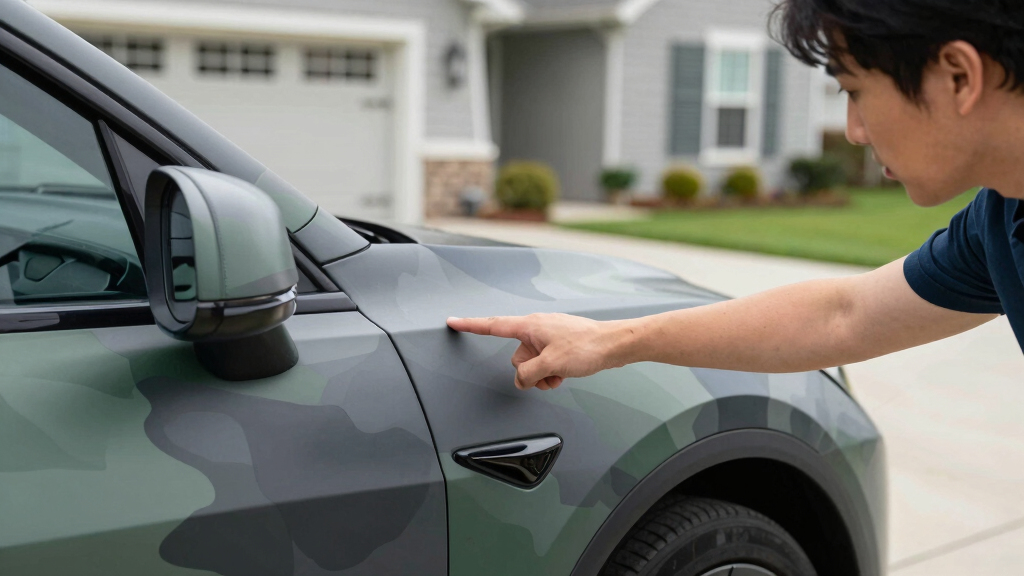
Squiggly camouflage on cars is a deliberate testing disguise used by automakers to conceal design details during development. This article explains why manufacturers use it, what it signifies, and what remains unclear about its application.
Automakers are increasingly seen applying squiggly camouflage patterns on prototype vehicles during testing, a practice confirmed by industry insiders. This camouflage is not merely aesthetic but serves a strategic purpose in concealing design details from competitors and the public. The use of such patterns has become a common sight on roads and test tracks, signaling ongoing development work for upcoming models.
Multiple automotive manufacturers, including major brands like Ford, BMW, and Tesla, employ squiggly camouflage on prototype vehicles during testing phases. This camouflage typically consists of irregular, high-contrast patterns designed to obscure lines, shapes, and features of the vehicle’s body. Experts say the purpose is to prevent competitors and observers from analyzing design changes before official launches. While the patterns are widely used, the specific materials and methods behind their application vary among companies. Industry insiders note that the camouflage is often applied in temporary wraps or paint, easily removable once testing concludes.Automotive companies have confirmed that the primary goal of squiggly camo is to protect intellectual property and maintain competitive advantage during the development process. Observers and automotive journalists frequently spot these camouflaged vehicles during testing on public roads or in controlled environments. The patterns are intentionally designed to distort visual cues, making it difficult to discern details such as headlights, taillights, or body contours.
Strategic Use of Camouflage in Automotive Development
The widespread use of squiggly camouflage highlights the competitive nature of the automotive industry, where revealing design details prematurely can impact a company’s market position. For consumers, this camouflage indicates that a new model is in development, often generating anticipation for upcoming releases. For industry analysts, understanding these patterns offers insights into which companies are actively testing new vehicles and what features might be upcoming. Additionally, the practice underscores the importance of intellectual property protection in vehicle design, especially as electric and autonomous vehicle technologies evolve rapidly.
As an affiliate, we earn on qualifying purchases.
Industry Norms and Evolving Testing Practices
Using camouflage during vehicle testing has been a standard practice for decades, with early versions including fabric covers and painted patterns. In recent years, advancements in wrap materials and printing technologies have allowed manufacturers to create more complex and effective disguises, such as squiggly patterns. The trend has grown alongside the development of new vehicle models, especially as automakers seek to keep design innovations under wraps until official unveilings. The appearance of these camo patterns often coincides with the testing of electric vehicles, autonomous driving systems, and major redesigns.
While companies do not typically disclose the specifics of their camouflage strategies, industry reports suggest that the goal remains to balance concealment with the need for functional testing in real-world conditions. The use of squiggly camo has become a recognizable sign of a vehicle in a critical development phase, often fueling speculation among enthusiasts and industry watchers.
“We use various wraps and patterns to ensure that critical design elements remain confidential during testing, especially when prototypes are driven on public roads.”
— Maria Lopez, senior engineer at a major automaker
As an affiliate, we earn on qualifying purchases.
What Specific Technologies and Materials Are Used?
It is not yet clear exactly which materials, printing techniques, or technologies are used to produce the squiggly camouflage wraps, and whether these methods evolve over time as part of stealth strategies.As an affiliate, we earn on qualifying purchases.
Upcoming Vehicle Tests and Industry Trends
Automakers are expected to continue using squiggly camouflage during upcoming testing phases, especially for electric and autonomous vehicles. Observers anticipate that new models will be unveiled with less camouflage once testing concludes, revealing design innovations. Industry analysts will monitor testing patterns to understand which companies are prioritizing stealth during development and how camouflage techniques might evolve with new vehicle technologies.
As an affiliate, we earn on qualifying purchases.
Key Questions
Why do automakers use squiggly camouflage instead of plain wraps?
Squiggly camouflage is designed to distort visual cues, making it harder to analyze specific design features, unlike plain wraps which are easier to interpret.
Is the camouflage permanent or temporary?
It is typically temporary, applied during testing phases and removed before the vehicle’s official release.
Can the camouflage hide all vehicle details?
No, it primarily obscures shape and contours but may not fully conceal all features, especially with close inspection.
Are all automakers using squiggly camo, or is it industry-specific?
Many major automakers use some form of camouflage during testing, but the specific patterns and techniques vary by company.
Does the use of camouflage affect the testing process?
Generally, no; the camouflage is designed to be lightweight and removable, allowing for accurate testing without impacting vehicle performance.
Source: rss
Halloween Picks
halloween
As an affiliate, we earn on qualifying purchases.