TL;DR
Automatic water leak detectors sense water at specific spots or identify unusual water flow, then alert you and sometimes close the main water valve. A sensor under a washing machine can catch a local leak, while whole-home flow monitoring can flag patterns elsewhere; neither system covers every risk, so check placement, backup power, connectivity, and maintenance.
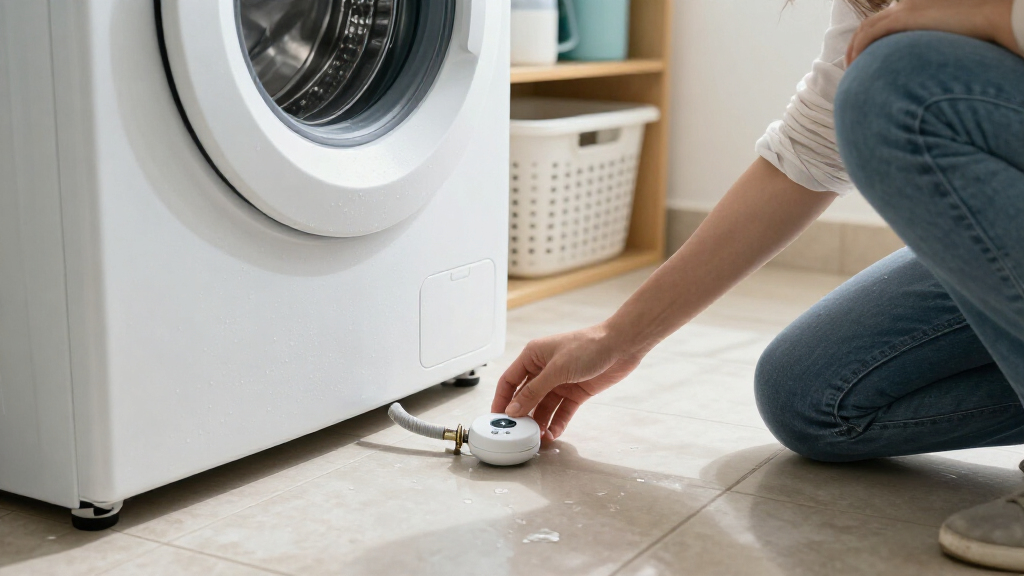
A washing machine hose can split while you’re away, turning a quiet laundry room into a shallow pool before anyone hears a thing. Automatic water leak detectors can give you an early warning, and some systems can shut off the water before you get home.

Get home appliances delivered free with Prime
- Fast, free delivery on millions of items
- Prime Video, Amazon Music and more included
- Member-only deals all year
Detectors are devices that sense unwanted water and alert you, close a water supply, or do both. They can help limit damage from burst pipes, leaking appliances, and slow leaks, but they cannot catch water that never reaches a sensor or prevent every kind of water damage.
This guide explains the difference between spot sensors and whole-home flow monitoring, where to place sensors, and what to check before you buy. You’ll also see why a smartphone alert is useful only if the system can still do something when your Wi-Fi or power goes out.
A spot sensor detects water at its location; it does not automatically cover the rest of the house.
Flow monitoring can flag unusual water use without telling you the exact leak location.
Check whether a detector only alerts you or connects to a valve that can shut off water.
Confirm how the system works during power, Wi-Fi, or internet outages.
Test sensors, check batteries, and follow the maker’s maintenance guidance.
How detectors catch leaks before a small puddle spreads
Automatic water leak detectors find trouble either by sensing water at a particular spot or by tracking water moving through your plumbing. The difference matters because each method notices a different stage of a leak. A sensor beneath a sink can react as soon as water reaches the floor, while a flow monitor may notice water running longer or differently than usual. Some products combine both, trading a higher upfront cost and more setup for broader ways to catch problems.
A spot sensor sits near a likely leak source: under a dishwasher, beside a water heater, or behind a washing machine. Water bridges contacts on the sensor, which can trigger a siren, send an app alert, or signal a connected shutoff valve. Its main strength is direct detection at a known risk point; its main limitation is that water has to reach the sensor. A cable sensor extends that coverage along a longer stretch, such as a basement floor, but still cannot detect water elsewhere.
A flow-monitoring system watches water use through a pipe. If it detects a steady flow at 2 a.m. when the house is empty, it may send a warning or close the main valve. This can reveal a hidden leak before water appears in a room, but patterns are not proof of a leak: normal activities such as filling a tub can look unusual, and the system may not identify the source. The value depends on how well its settings fit your household’s routines.
Imagine the hose behind your washing machine loosens during a weekend trip. A spot sensor may detect water once it reaches the floor; a flow monitor may notice the extended use or unusual pattern. One watches the floor. The other watches the plumbing. If either system can close a valve, it may limit how much water escapes, but a sensor that only alerts still depends on someone seeing and acting on the warning.
Products Worth Considering

Dyson V12 Detect Slim Absolute Cordless Stick Vacuum

Sony BRAVIA 6 65-Inch OLED 4K HDR Smart Google TV with Gemini (K-65A60)

Hisense 75-Inch U7 Mini-LED ULED 4K UHD Smart Google TV (75U7SG)
As an affiliate, we earn on qualifying purchases.
Choose coverage that matches the leaks your home can suffer
The useful distinction between leak detectors is how much ground they cover: spot sensors guard the places where you put them, while flow monitors watch water use across the plumbing. Automatic water leak detectors often work best as a combination when you want local sensing and whole-home oversight. That broader coverage costs more and adds components to install and maintain, so the right choice depends on which gaps matter most in your home.
A sensor tucked beneath the kitchen sink can catch a drip from the trap before it swells the cabinet floor. But it won’t necessarily notice a leak inside a wall upstairs. A flow monitor may flag the extra water moving through the pipe, but it cannot usually point to the wall, fitting, or appliance that caused it. In practice, spot sensing can give you a faster, more specific clue at a known hazard; flow monitoring can cast a wider net but may require investigation after an alert.
Use this comparison to match the device to the problem you want to catch:
| System | What it detects | Example | What to know |
|---|---|---|---|
| Spot sensor | Water at one location | A puddle under a dishwasher | Coverage depends on placement |
| Cable sensor | Water along a cable | Water tracking across a basement floor | Follow the maker’s placement guidance |
| Flow monitor | Unusual water use in the plumbing | Continuous flow while the house is vacant | May flag use without locating the leak |
| Automatic shutoff valve | A leak signal or suspicious flow | Closing the main line after detection | Check installation, power, and settings |
If you travel often, a whole-home monitor may add protection while you’re away because it can detect some patterns beyond the reach of individual sensors. If you mainly worry about a refrigerator water line, a well-placed spot sensor may solve that narrower problem without the cost or installation demands of a main-line system. The setup should fit your risk, not just your phone.
Place sensors where water has a chance to collect
Place spot sensors close to likely leak sources and where escaping water would collect. A detector behind a washing machine is more useful on the floor near the hoses than on a high shelf across the room. This placement shortens the path between a leak and detection, which can matter when even a small delay lets water spread into flooring or cabinets. Follow the manufacturer’s directions for the sensor’s orientation and clearance.
Common places include under sinks, near toilets, beside water heaters, under dishwashers, near refrigerators with water lines, by sump pumps, and in basements or utility rooms. Prioritize spots where a leak could go unnoticed or damage finished areas. If a pipe runs through an area you rarely visit, a cable sensor can cover more floor than several isolated contacts, though it still protects only the route you install it along.
Think about the path water would take. If the water heater sits on a platform, a sensor placed beside it may stay dry while a leak drains down the far side. During installation, check where the floor slopes and where water would pool; move the sensor to that low point if the instructions allow it. A sensor placed at the source may catch a leak sooner, while one at a low point may cover water traveling from a wider area. The best location depends on the appliance layout and the route water can take.
A practical walkthrough helps: follow the water lines you can see, notice appliances that fill or drain, and identify floors or cabinets that would be costly to repair. In a home with a laundry room above finished living space, a sensor near the washing machine may deserve priority because a leak could affect both the laundry floor and the room below. Placement sets the boundary of what a spot sensor can catch, so concentrate coverage where early warning would make the biggest difference.
Know when an alert can shut off water—and when it cannot
Some leak detectors only sound an alarm or send a notification; others connect to an automatic shutoff valve that closes the main water line. That difference determines whether the system merely gives you time to respond or can act while you are asleep or away. Check the product details carefully, because an app alert alone does not stop a leak. A valve can limit the amount of water escaping, but only if the detection signal reaches it and the valve operates correctly.
Before relying on automatic shutoff, confirm that the system fits your pipe size and valve type, and find out what happens if its power or communication fails. Check whether the sensor talks directly to the valve, needs a hub, or depends on an internet connection. A system with local communication may still shut off water when the internet is down, while remote app features may stop. Knowing which functions survive an outage helps you understand whether the system can protect the home or only alert you once service returns.
Flow systems also need settings that make sense for your household. Filling a large bathtub, running irrigation, or topping up a pool can look like unusual use. A setting that’s too sensitive may shut off water during normal activity; one that’s too relaxed may miss a slow problem. These are competing costs: fewer false shutoffs can mean more tolerance for water running unnoticed. Review the manufacturer’s guidance, adjust for routines in your home, and understand how to restore water after a shutoff.
A notification tells you there may be a leak; a shutoff valve can stop the main supply. Check which action your system actually takes, and test it before you depend on it.
A whole-home valve connects to plumbing and may require professional installation. Have a licensed plumber handle work on the main line if you’re unsure about the setup or local requirements; poor installation can leave you with a system that fails when it matters. Also consider how a shutoff affects household needs: if someone relies on water for a medical device or other essential use, understand the system’s behavior and plan for restoring the supply.
Compare the full cost, including upkeep and outages
The purchase price is only one part of choosing automatic water leak detectors. Factor in any hub, valve, installation, replacement batteries, monitoring plan, or subscription. A sensor that looks inexpensive at checkout may need extra equipment for phone alerts or remote monitoring. Compare the total cost with the protection each component adds: a basic sensor may be enough for one appliance, while a valve and flow monitor may make sense if you want the system to respond when nobody is home.
Smart features can be useful: an app may let you check sensors while you’re away, and a connected system may work with other smart-home devices. Yet “smart” can also mean relying on Wi-Fi, cloud services, a separate hub, or a subscription. Each dependency can add convenience, but it also creates another point that can interrupt alerts or remote control. Check the current manufacturer specifications, since product features and compatibility can change over time.
Power and connectivity deserve a real-world check. Ask whether the sensor can sound a local alarm without internet, whether the hub has backup power, and what the valve does during an outage. If an app alert is the only warning, a dead router could leave you unaware until you return to a damp hallway. A local siren or backup-powered valve may preserve some protection, but confirm exactly which functions continue rather than assuming the whole system remains operational.
Keep the system ready with periodic checks. Test the sensors, look for low-battery warnings, confirm the app or hub still connects, and follow the maker’s instructions for testing a shutoff valve. These checks matter because a detector that has lost power or connectivity can appear installed while offering less protection than expected. One minute spent checking a sensor under the sink can reveal a flat battery before a slow drip starts.
- Device and installation: Include the valve and plumbing work if the system controls the main line.
- Ongoing costs: Check batteries, monitoring charges, and subscriptions.
- Insurance: Ask your insurer directly whether a particular device qualifies for a discount; programs and savings vary.
Use detectors as one layer of protection, not a guarantee
Automatic water leak detectors can alert you to a problem or shut off water, but they do not prevent every source of water damage. A spot sensor cannot report water that never reaches its contacts, and a flow monitor may not identify the exact leak location. Flooding from outside the home also falls outside the protection these systems provide. This means the device can reduce the time before you learn about some leaks, but it cannot replace inspection, repairs, or preparation for risks beyond the plumbing.
Frozen pipes show where detection and prevention differ. A leak detector may alert you after ice causes a pipe to split and water begins escaping. A device with freeze monitoring can warn of low temperatures sooner, but it cannot keep the pipe warm by itself. You still need suitable cold-weather precautions for your home, because an early warning only helps if someone can respond before the pipe freezes.
Before leaving for a long trip, test the system, check its batteries, and confirm you’ll receive alerts. If your setup includes an automatic valve, verify that it can operate and that household members know how water will be restored after a shutoff. A shutoff may reduce ongoing flow, but it does not remove water already released or repair the failed hose, pipe, or appliance. These checks give a system a better chance of helping when no one is home.
For example, a detector beside a water heater might catch a small tank leak early, while a flow monitor could flag an unexpected continuous supply. Neither replaces repairs to aging plumbing or a response to a burst pipe. Treat the device as an extra set of eyes: useful, but only where it can see.
Frequently Asked Questions
Do all leak detectors automatically shut off the water?
No. Many sensors only sound a local alarm or send a notification. Check whether the model includes a shutoff valve or works with one.
Can a detector find a leak inside a wall?
A spot sensor generally detects water only when it reaches the sensor. A flow monitor may flag unusual water use from a hidden leak, but it may not locate the source.
Will leak detectors work if Wi-Fi or power goes out?
It depends on the model and system. Some sensors can sound a local alarm without internet, while app alerts may stop; check whether the hub and valve have backup power and what functions remain available.
Are whole-home leak detectors difficult to install?
Standalone spot sensors are often designed for simple placement. A system connected to the main water line involves plumbing, so confirm the installation requirements and use a licensed plumber when needed.
Can a leak detector prevent damage from frozen pipes?
A leak sensor may warn you after a pipe starts leaking. Freeze monitoring can provide an earlier temperature warning, but it does not stop pipes from freezing without other prevention measures.
How often should I test and maintain leak sensors?
Follow the product instructions. Periodically test the sensors, check battery and connectivity alerts, and confirm that an automatic shutoff valve can operate.
Conclusion
Choose a detector around the water risks your home actually has: place spot sensors near likely leak sources, and consider flow monitoring if you want broader coverage. Check the shutoff, power, and connectivity details before you count on an alert.
Then test the system and keep it maintained. A small sensor beside a washing machine can be a quiet early warning between a loose hose and a soaked floor.