
Skipping the 15-minute commissioning checklist can seem quick, but it’s a costly mistake. It helps you catch misaligned equipment, inaccurate sensors, and faulty connections early. This essential step saves you hours of troubleshooting later and prevents costly system failures. Taking just a short time now ensures your setup is correct, reliable, and efficient from the start. Keep going to discover how these simple steps can drastically improve your project’s success.
Key Takeaways
- The checklist ensures proper hardware calibration, documentation, and system checks within just 15 minutes.
- It prevents costly rework by confirming all equipment is correctly installed and configured early.
- Proper documentation during setup creates a reliable record for troubleshooting and future reference.
- Quick verification of firmware, software, and system settings safeguards system reliability.
- Investing 15 minutes in setup reduces risks, delays, and troubleshooting headaches later in the project.

Are you ready to guarantee your project runs smoothly from the start? One of the most overlooked yet essential steps is completing a thorough commissioning checklist. This quick, 15-minute setup can save you hours of troubleshooting later. Many skip this step, thinking it’s unnecessary or too time-consuming, but that misconception can lead to misaligned equipment, inaccurate readings, or even costly rework. By dedicating a few minutes upfront, you ensure everything is correctly configured and functioning as intended from day one.
Invest 15 minutes on commissioning to ensure smooth project startup and prevent costly issues later
The first critical element is hardware calibration. Proper calibration ensures that all your instruments and sensors are providing precise measurements. If you neglect this, you risk data inaccuracies that can cascade into flawed decisions or system failures. During the commissioning process, double-check that all hardware calibration procedures are completed and documented properly. Documenting calibration results isn’t just a bureaucratic step; it’s your proof that the equipment is functioning within specified tolerances. This documentation also helps in future troubleshooting, maintenance, and audits. When hardware calibration is verified early, you prevent potential discrepancies from snowballing into bigger issues down the line.
Next, you should review and execute all documentation procedures. Clear, organized documentation creates a reliable record of your setup process, including calibration logs, configuration settings, and initial test results. This documentation acts as a roadmap, guiding you through troubleshooting if problems arise and providing a reference for future upgrades or repairs. It’s essential to verify that all documentation is complete and accurate before moving forward. Skipping this step can lead to confusion, miscommunication, and errors that might not surface until much later, when fixing them becomes more complicated and costly.
Additionally, during this initial check, verify that all hardware components are correctly installed and securely connected. Loose wires or improperly seated modules can cause inconsistent operation or intermittent failures, which might be hard to diagnose later. Make sure firmware and software versions are current, and confirm that system settings match the project specifications. This initial setup acts as a foundation for all subsequent testing and operation.
In essence, those extra 15 minutes spent on the commissioning checklist—covering hardware calibration, documentation procedures, and basic system checks—are investments in your project’s success. They minimize risks, improve system reliability, and give you peace of mind that everything is aligned from the outset. Skipping this step might seem minor, but it’s often the difference between a smooth operation and a troubleshooting nightmare. So, take the time to get it right—your project will thank you.
Frequently Asked Questions
How Often Should Commissioning Be Repeated for Optimal Results?
You should repeat commissioning based on your maintenance schedule and performance monitoring results. Typically, it’s recommended every 6 to 12 months to guarantee peak performance. Regular checks help identify issues early and maintain efficiency. Keep tracking system performance closely, and if you notice deviations, consider re-commissioning sooner. Consistent commissioning aligns with your maintenance routine, ensuring your system operates smoothly and reliably over time.
What Tools Are Essential for a Quick 15-Minute Setup?
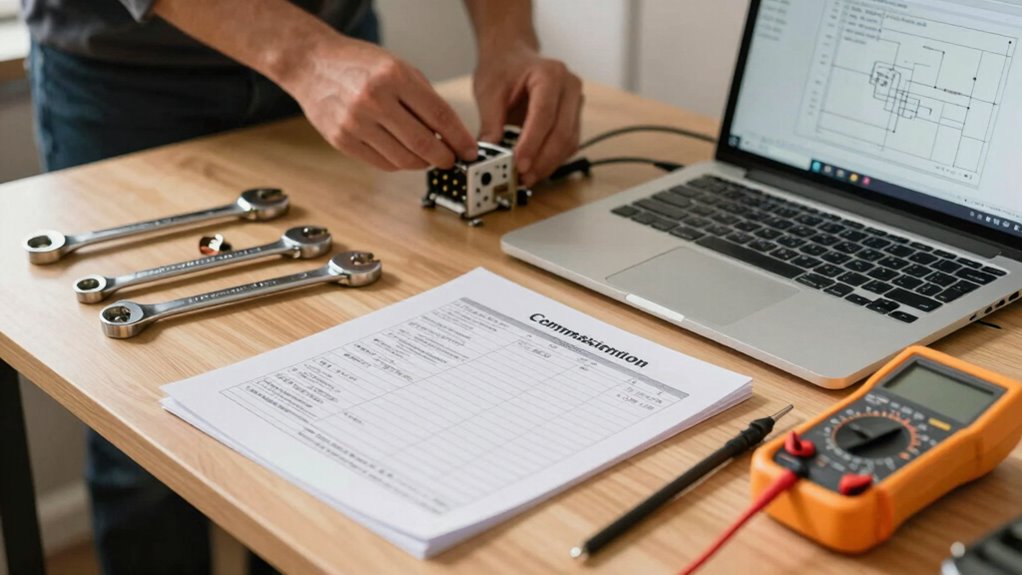
To complete a quick 15-minute setup, you need essential tools like a multimeter for installation troubleshooting, a screwdriver set, and a voltage tester. Always follow safety protocols to prevent accidents and guarantee proper connections. Keep your checklist handy to verify each step, and use these tools efficiently to identify issues quickly, saving time and maintaining safety while setting up or commissioning equipment.
Can Commissioning Be Automated or Integrated Into Existing Systems?
Automation potential and system integration can streamline commissioning, making it faster and more reliable. You can automate repetitive tasks with specialized software or integrate commissioning processes into existing systems, reducing manual effort. This approach minimizes errors and saves time, ensuring a smoother setup. By leveraging automation and integration, you enable a more efficient commissioning process, allowing you to focus on critical adjustments instead of routine procedures.
What Common Mistakes Delay the Commissioning Process?
You often delay commissioning by neglecting meticulous system calibration and insufficient staff training. Skipping proper calibration causes inaccuracies, leading to delays and rework. Additionally, if your team isn’t well-trained, they may overlook key steps or troubleshoot improperly. To avoid these mistakes, prioritize detailed calibration procedures and invest in extensive staff training upfront. This proactive approach ensures a smoother commissioning process, saving you time and preventing costly setbacks later.
Is Special Training Needed to Perform This Checklist Efficiently?
You don’t need special training to perform this checklist efficiently, but a little skill development goes a long way—think of it as turning a simple task into a rocket launch! Basic training can boost your confidence, help you avoid mistakes, and speed up the process. With just a short focus on key steps, you’ll master the setup quickly, making your commissioning smoother and far more effective.
Conclusion
Just like a master chef ensuring every ingredient is perfect before serving, taking those 15 minutes to complete your commissioning checklist guarantees your system runs smoothly. Don’t let overlooked steps turn your project into a recipe for disaster. Remember, even the greatest artists take time to perfect their work—so why rush through this vital stage? Embrace the checklist, and you’ll avoid the pitfalls of skipping essential setup, ensuring long-term success and peace of mind.