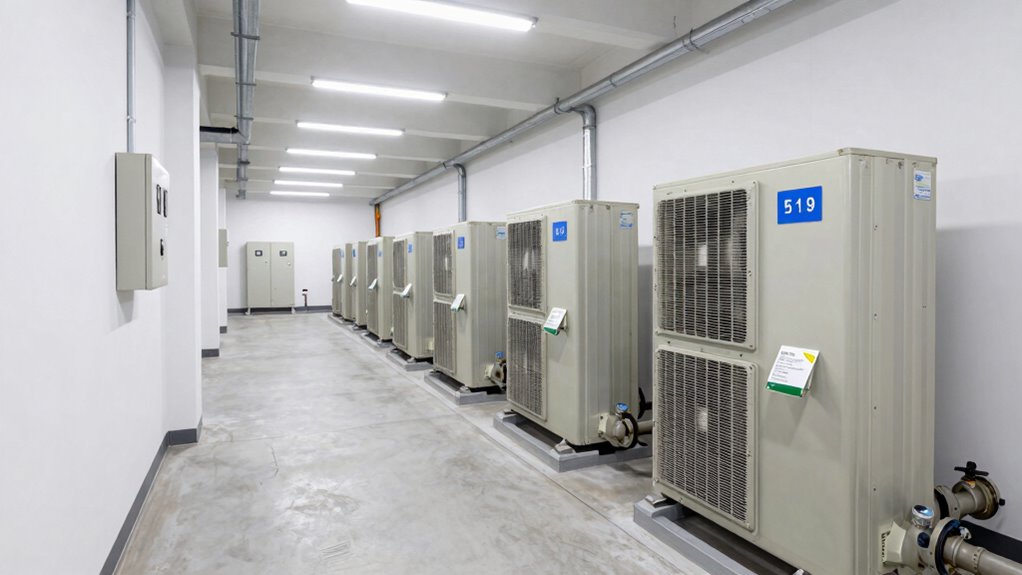

To plan a more serviceable mechanical room, prioritize logical equipment placement for easy access and maintenance, especially near entrances for heavy or critical units. Incorporate efficient ventilation and lighting systems to prevent overheating and guarantee safety. Keep pathways clear and leave enough space around machinery for repairs, inspections, and future upgrades. Use clear labels and organize wiring to simplify troubleshooting. Follow these steps to create a safer, more reliable space that meets your ongoing needs and expectations.

Get home appliances delivered free — and shop member deals
- Fast, free delivery on millions of items
- Access to Prime Big Deal Days deals on October 6–7
- Prime Video, Amazon Music and more included
Key Takeaways
- Prioritize logical equipment placement near entrances and on solid foundations for easier access and maintenance.
- Incorporate strategic ventilation to prevent overheating and ensure efficient airflow away from air intakes.
- Design clear pathways and sufficient clearance around equipment for unobstructed servicing and inspections.
- Use layered lighting and organized wiring to enhance safety, visibility, and maintenance efficiency.
- Include accessible emergency shut-offs, durable equipment, and flexible space planning for future upgrades.
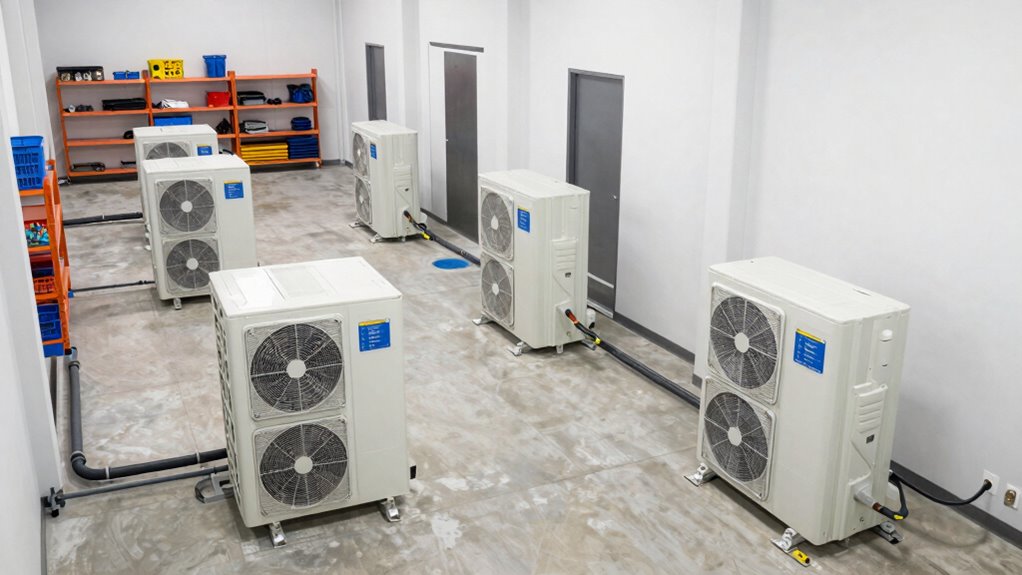
Are you ready to streamline your mechanical room planning? The key to creating a more serviceable space starts with careful consideration of equipment placement and ventilation strategies. When designing your mechanical room, you want to guarantee that all components are positioned for easy access, maintenance, and safety. Start by mapping out a layout that prioritizes logical equipment placement. Place heavy or frequently serviced equipment near the entrance to minimize the need for cumbersome maneuvering or disassembly. Keep larger units, like boilers or chillers, on solid, level foundations and arrange smaller components nearby to facilitate efficient workflows. This thoughtful placement reduces downtime and makes routine inspections or repairs faster and safer. Incorporating proper airflow management ensures that your ventilation strategies effectively prevent overheating and humidity buildup, thereby prolonging equipment lifespan. Additionally, considering equipment durability during layout planning can further enhance the longevity of your mechanical systems.
Ventilation strategies are equally critical. Proper airflow prevents equipment overheating, reduces humidity, and maintains air quality, all of which prolongs equipment lifespan and improves safety. Incorporate ventilation systems that are robust yet discreet, ensuring they don’t obstruct access to essential components. Consider installing exhaust fans, louvers, or vents that promote continuous air exchange without creating drafts or noise issues. Position intake and exhaust vents strategically to optimize airflow paths. For example, locate exhausts away from air intakes to prevent re-circulation of warm or contaminated air. You might also explore adding dedicated ventilation zones for different equipment clusters, which allows for targeted airflow management and easier control. Implementing systematic ventilation design can further enhance the efficiency and effectiveness of your airflow strategies.
Lighting also plays a crucial role in making your mechanical room more serviceable. Good illumination reduces the risk of accidents and makes inspections more straightforward. Use layered lighting—combining general overhead lights with task-specific fixtures near critical equipment. Keep electrical wiring organized and accessible, avoiding clutter that can hinder your ability to quickly identify issues or perform maintenance. Proper lighting can also highlight areas prone to leaks or corrosion, enabling early detection of potential problems.
Additionally, plan for adequate space around equipment. Sufficient clearance not only facilitates maintenance but also helps in cooling and ventilation. Creating a pathway around each major piece of machinery allows technicians to move freely and perform their work without obstruction. Label all major components and emergency shut-offs clearly to streamline troubleshooting and improve safety.
Finally, think about future expansion. Design your space with flexibility in mind—leave room for additional equipment or upgrades. This foresight can save you from costly renovations later on. By focusing on strategic equipment placement, effective ventilation strategies, and thoughtful layout, you’ll develop a mechanical room that’s easier to maintain, safer, and more reliable over time.
mechanical room ventilation system
As an affiliate, we earn on qualifying purchases.
As an affiliate, we earn on qualifying purchases.
Frequently Asked Questions
How Much Space Is Typically Needed for a Mechanical Room?
You’ll typically need about 100 to 150 square feet for a mechanical room, depending on equipment size. Focus on adequate room dimensions to allow easy access for maintenance and repairs. Consider space requirements for HVAC units, pumps, and other systems, ensuring sufficient clearance around each piece. Proper planning helps avoid cramped areas, making your mechanical room more functional and serviceable, ultimately saving you time and effort during upkeep.
What Safety Features Should Be Included in the Design?
Think of your mechanical room as a fortress—safety is its shield. You should include fire safety measures like alarms, extinguishers, and sprinkler systems. Proper ventilation is essential to prevent overheating and remove hazardous fumes; follow the ventilation requirements closely. Just like a fortress needs strong walls, your room needs safety features to protect personnel and equipment, ensuring smooth, safe operation at all times.
How Often Should Mechanical Equipment Be Inspected?
You should inspect mechanical equipment at least once a year, though more frequent checks might be necessary depending on usage. Develop a maintenance schedule that includes regular inspections, and use an inspection checklist to guarantee all components, like filters and safety devices, are functioning properly. Consistent inspections help catch issues early, prevent costly repairs, and keep your mechanical room running efficiently and safely.
What Are the Best Materials for Soundproofing?
Think of soundproofing as building a fortress for your mechanical room. Use acoustic barriers like mass-loaded vinyl or dense drywall to block noise from escaping. Add sound-absorbing materials such as mineral wool or fiberglass insulation to dampen vibrations. These materials act like a sponge, soaking up noise and preventing it from traveling. Combining acoustic barriers with sound-absorbing layers creates a quiet sanctuary amid noisy mechanical equipment.
How Can I Improve Energy Efficiency in the Room?
To improve energy efficiency, you should focus on energy-saving upgrades like upgrading insulation and sealing leaks to prevent heat loss. Additionally, optimize ventilation by installing energy-efficient fans and controls that adjust airflow based on demand. Regular maintenance of equipment ensures everything runs smoothly, reducing energy waste. Implementing these strategies helps lower energy costs and enhances overall system performance, making your mechanical room more sustainable and cost-effective.
industrial LED lighting fixtures
As an affiliate, we earn on qualifying purchases.
As an affiliate, we earn on qualifying purchases.
Conclusion
Designing a mechanical room with practicality in mind saves you time and money down the line. Keep in mind that a well-planned space reduces maintenance costs by up to 30%, making your investment more worthwhile. By considering access, airflow, and future needs from the start, you guarantee everything runs smoothly. Don’t overlook the importance of smart planning—your future self will thank you for a space that’s efficient, accessible, and easy to service.
electrical wiring organization kit
As an affiliate, we earn on qualifying purchases.
As an affiliate, we earn on qualifying purchases.
emergency shut-off switch for HVAC
As an affiliate, we earn on qualifying purchases.
As an affiliate, we earn on qualifying purchases.
Fall yard work Picks
leaf blowers
As an affiliate, we earn on qualifying purchases.