TL;DR

Get home appliances delivered free with Prime
- Fast, free delivery on millions of items
- Prime Video, Amazon Music and more included
- Member-only deals all year
Apple is holding its first dedicated smart home event in New York on October 13, with new hardware widely expected but not confirmed by the company. Reports point to a smart display, refreshed HomePod Mini and Apple TV; the bigger test may be whether Siri and Apple’s home software can make devices work together reliably.
Apple is hosting its first dedicated smart home event in New York on Tuesday, October 13, as the company appears poised to refresh its home-device lineup and make a larger push into home automation. Apple has not disclosed what it will announce, but reports point to a smart display, updated HomePod Mini and Apple TV; whether the products can help Apple compete with Amazon and Google may depend more on Siri and software than on hardware alone.
According to The Verge, which published an analysis of the event, Bloomberg has reported that Apple plans to release a smart home display alongside refreshed versions of the HomePod Mini and Apple TV. MacRumors has reported that the display may be called HomeView. Apple has not confirmed the name, specifications, price or release date of any of these products.
The reported display could have a 6-inch square screen, either mounted on a speaker base or on a wall. Bloomberg’s reported feature list includes facial recognition for personal messages and calendars, controls for locks and thermostats, and FaceTime and intercom calls, capabilities that fit into a connected smart home. The Verge says the reported price is $350. These details are based on reporting and leaks, not an Apple product announcement.
The software may be the more consequential part of the event. Bloomberg has reported that the display will run a new homeOS built around Siri AI. Apple’s existing HomePods and Apple TV have not yet received the company’s newer AI-enabled Siri, according to The Verge. A more capable assistant could help users control smart home devices through everyday requests, but performance, availability and supported features have not been confirmed.
Software Could Set Apple Apart
Apple’s opportunity is not simply to add another screen to the kitchen or living room. Smart displays from Amazon and Google already combine voice controls with device management, calls and camera feeds. The Verge’s analysis argues that the category has seen limited innovation, with digital photo frames among its strongest uses. Apple would need to show how its software makes a connected home more useful, not just reproduce familiar hardware features.
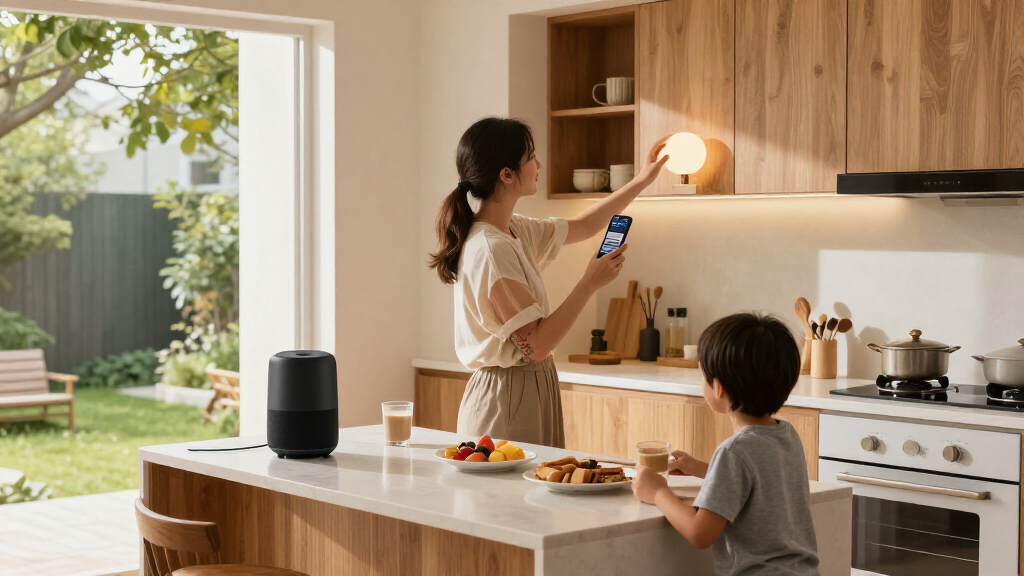
A home assistant operates in a shared, varied environment and may control consequential systems, including locks, heating and cooling, and security devices. A mistaken response can have a different impact from an error in an email or a phone search. If Siri can reliably use household context and coordinate devices, Apple could make its ecosystem more valuable; if it cannot, new hardware alone may not close the gap with rivals.
Potential uses described by The Verge include warning that an oven is on while nobody is home, suggesting that air conditioning be turned off when a window is open, or directing notifications to the room where someone is located. These are illustrative possibilities, not confirmed features of Apple’s reported display.
As an affiliate, we earn on qualifying purchases.
Apple’s Home Platform So Far
Apple introduced HomeKit in 2014, but it has lagged Amazon and Google in dedicated smart home hardware, according to The Verge. Apple announced the HomePod Mini on October 13, 2020, and the report says the newest Apple TV 4K is four years old. Those devices serve other roles as speakers and media players as well as offering home controls.
Apple has made changes to its platform. The Verge reports that four years ago the company rebuilt HomeKit’s underlying architecture and updated the Home app, broadening support for devices from more manufacturers. Industry standards such as Matter and Thread also aim to make products from different companies easier to connect. But standards do not, by themselves, provide the software that makes devices cooperate in daily use.
The AI race in the home is also moving unevenly. The Verge says Google and Amazon began bringing generative AI to their home assistants before Apple, while describing Alexa Plus as still developing and Gemini for Home as early access with limitations. The same report says Apple announced Apple Intelligence in 2024 and that its new Siri AI arrived only recently. The pace and scope of these rollouts underscore that a capable home assistant remains a difficult product to deliver.
“A smart home isn’t just about the devices you put in it. It’s about making them work together.”
— The Verge
As an affiliate, we earn on qualifying purchases.
Products and Siri Capabilities Remain Unconfirmed
Apple has not said what it will announce at the October 13 event. The reported HomeView name, display design, $350 price, homeOS features and release timing have not been confirmed by the company. It is also unclear whether refreshed HomePod Mini and Apple TV models will be introduced at the event or when any reported products would go on sale.
The larger uncertainty is what the new Siri can do in a real household. The source material does not establish how well it will recognize different residents, manage permissions, handle conflicting requests or control devices safely. Nor is it clear which existing Apple products will receive the updated assistant, or how much of the experience will require newer hardware.
As an affiliate, we earn on qualifying purchases.
Apple’s October 13 Event
Apple’s scheduled October 13 event in New York is the next point at which the company could clarify its plans. Product announcements, if made, should establish which hardware is real, how Apple intends to position its home platform and whether Siri AI will be a central feature.
After any announcement, the practical questions will be availability, pricing, compatibility with existing smart home products and the assistant’s performance in multi-person homes. Until Apple supplies those details—and users can see the system in use—the claim that software can give Apple an advantage remains a possibility, not a demonstrated result.
smart home devices compatible with Siri
As an affiliate, we earn on qualifying purchases.
As an affiliate, we earn on qualifying purchases.
Key Questions
What is Apple expected to announce at the event?
Reports cited by The Verge point to a smart home display, a refreshed HomePod Mini and a refreshed Apple TV. Apple has not confirmed the lineup.
Is Apple’s smart display called HomeView?
MacRumors has reported that HomeView may be the name. Apple has not confirmed that name or the product itself.
What might the display do?
Bloomberg’s reported features include a 6-inch square screen, facial recognition, controls for locks and thermostats, and FaceTime and intercom calls. These details remain unconfirmed reports.
Why is Siri important to Apple’s smart home plans?
The Verge’s analysis argues that an assistant that can coordinate devices and understand household context could matter more than the display’s hardware. Apple has not yet shown how its new Siri AI will work across a home.
Has Apple confirmed the display’s price?
No. The $350 figure is a reported price, not an Apple announcement. The company has not confirmed pricing or a release date.
Source: rss
Halloween Picks
halloween
As an affiliate, we earn on qualifying purchases.