
TL;DR

Get home appliances delivered free with Prime
- Fast, free delivery on millions of items
- Prime Video, Amazon Music and more included
- Member-only deals all year
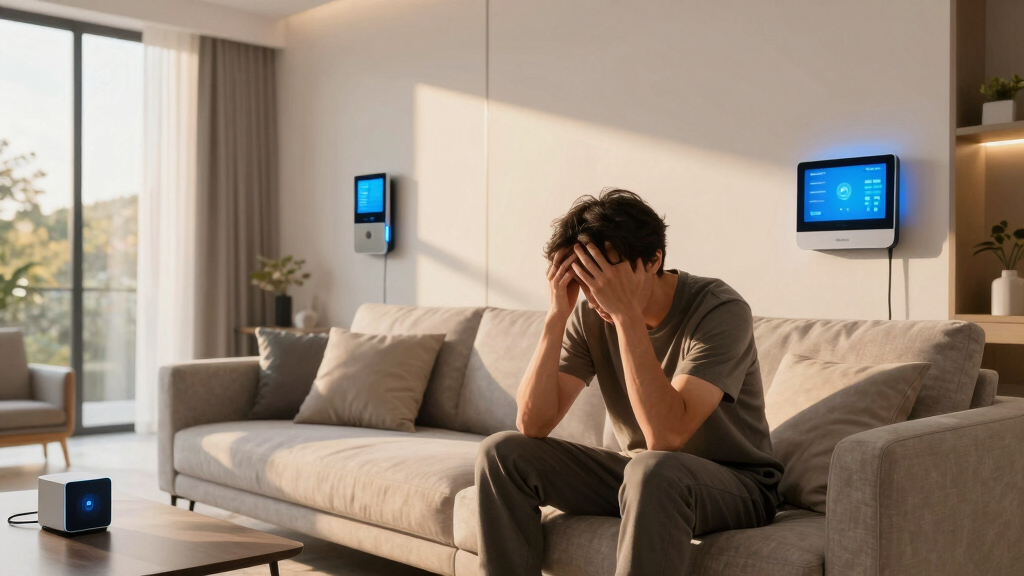
A recent study indicates that modern decor styles could be causing increased mental strain. Experts warn this may impact well-being, but further research is needed to confirm the connection.
A new study published in the Journal of Environmental Psychology suggests that modern decor styles may be contributing to increased brain strain among individuals. The research indicates that certain design elements could be overwhelming the brain’s processing capacity, potentially affecting mental well-being.
The study, conducted by a team of cognitive scientists and interior designers, analyzed the effects of contemporary interior aesthetics—characterized by minimalism, high contrast, and clutter-free spaces—on cognitive function. Participants exposed to modern decor environments reported higher levels of mental fatigue and difficulty concentrating, according to the findings.
While the study does not establish a definitive cause-and-effect relationship, it highlights a correlation between certain design features and increased cognitive load. The researchers noted that elements such as stark color schemes, lack of visual cues, and simplified layouts might contribute to this phenomenon, though more research is needed to understand the mechanisms involved.
Potential Impact on Mental Health and Well-Being
This research raises concerns about the long-term effects of modern interior design on mental health. If certain decor styles indeed contribute to cognitive overload, it could influence how people choose their living and working spaces. Mental fatigue can impair productivity, mood, and overall well-being, making this an issue of public interest.
Experts caution that these findings are preliminary. However, they suggest that designers and homeowners should consider the psychological effects of their choices, especially in environments meant for relaxation or focus.
minimalist interior decor lighting
As an affiliate, we earn on qualifying purchases.
As an affiliate, we earn on qualifying purchases.
Rise of Minimalist and Contemporary Interior Styles
Modern decor, characterized by minimalist aesthetics, neutral color palettes, and clutter-free spaces, has gained popularity over the past decade. This trend is driven by a desire for simplicity, functionality, and aesthetic appeal. Prior studies have focused mainly on the visual and emotional effects of decor, with less attention paid to cognitive impacts.
The current research builds on existing knowledge by exploring how these design choices may influence brain function, especially in environments where individuals spend significant amounts of time. The study is part of a growing interest in environmental psychology and its implications for mental health.
“Our findings suggest that certain elements of modern decor may inadvertently increase mental fatigue, which could have implications for everyday well-being.”
— Dr. Emily Carter, lead researcher
As an affiliate, we earn on qualifying purchases.
Unconfirmed Causal Relationship and Broader Impacts
It is not yet clear whether modern decor directly causes increased brain strain or if other factors, such as individual differences or environmental variables, play a role. The study establishes correlation but not causation, and further research is needed to confirm these findings.
Additionally, the long-term health implications remain unknown, and it is unclear whether certain populations are more vulnerable to these effects.
As an affiliate, we earn on qualifying purchases.
Further Research and Practical Recommendations
Researchers plan to conduct longitudinal studies to better understand the causal relationship between decor styles and cognitive health. Meanwhile, interior designers and consumers are advised to consider psychological comfort alongside aesthetic preferences.
Future investigations may explore specific design features that mitigate cognitive overload, as well as potential interventions to create more mentally supportive environments.
As an affiliate, we earn on qualifying purchases.
Key Questions
Can modern decor styles cause mental health problems?
Current research suggests a possible link between modern decor and increased mental fatigue, but there is no conclusive evidence that it causes mental health issues. More studies are needed to understand the relationship fully.
What design elements might contribute to brain strain?
Elements such as stark color contrasts, minimal visual cues, and clutter-free layouts are suspected to contribute to cognitive overload, but definitive causal links have not yet been established.
Should I avoid modern decor in my home?
Not necessarily. If you feel mentally overwhelmed in minimalist environments, consider adding visual warmth or personal touches. Consulting with a psychologist or interior designer may help tailor spaces to your needs.
How soon will more definitive research be available?
Further longitudinal and experimental studies are planned, with results expected within the next 1-2 years to better clarify the relationship between decor and cognitive health.
Source: hn
Fall yard work Picks
leaf blowers
As an affiliate, we earn on qualifying purchases.