
Leak sensors work best as a system because they offer thorough coverage and real-time alerts, helping you catch leaks early before costly damage occurs. Relying on a single gadget limits protection and can lead to false alarms or missed leaks. A network of interconnected sensors, combined with wireless connectivity, ensures smarter responses like automatic shutoff and remote monitoring. To discover how a cohesive system offers maximum protection and peace of mind, keep exploring these key strategies.

Get home appliances delivered free with Prime
- Fast, free delivery on millions of items
- Prime Video, Amazon Music and more included
- Member-only deals all year
Key Takeaways
- A network of sensors provides continuous, real-time monitoring and early leak detection, reducing potential water damage.
- Wireless connectivity enables flexible placement and seamless communication, enhancing system responsiveness.
- Proper sensor placement in vulnerable areas improves detection accuracy and minimizes false alarms.
- Interconnected sensors coordinate responses like automatic shutoff for comprehensive water safety.
- An integrated system offers a complete overview, proactive alerts, and smarter leak prevention than a standalone gadget.
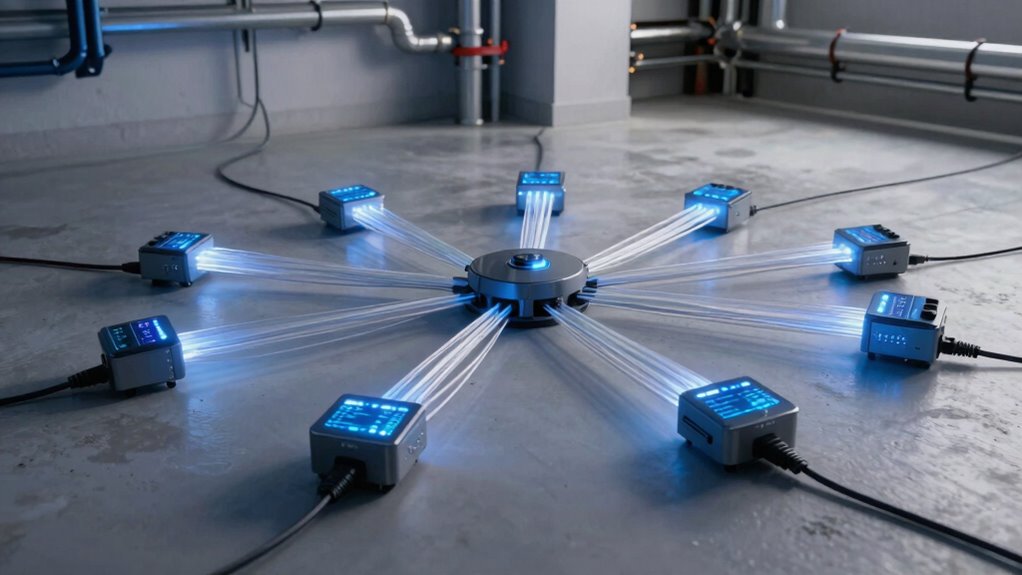
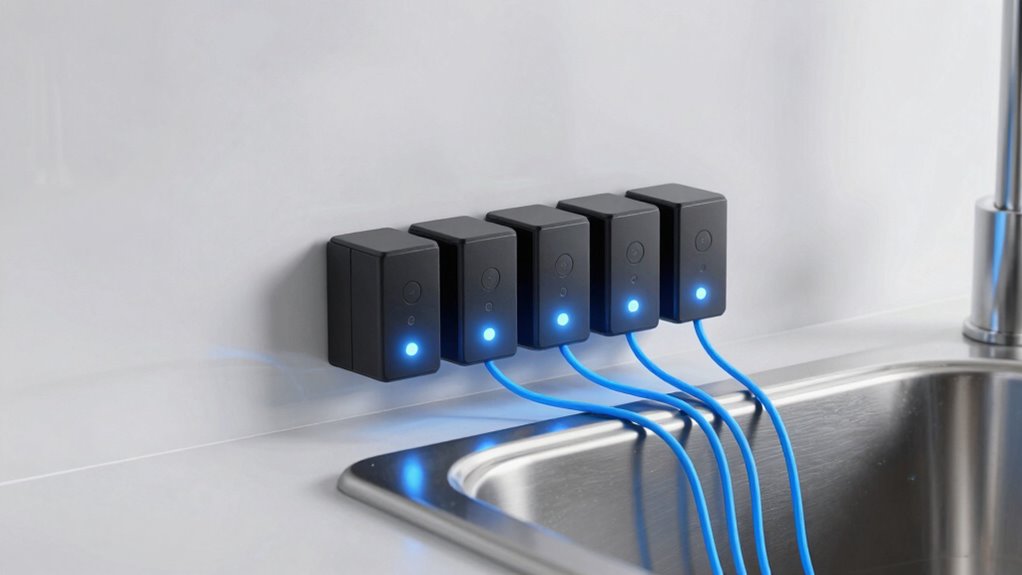
Leak sensors are most effective when integrated into a thorough system that continuously monitors for water intrusion. Relying on a single gadget might seem like a quick fix, but to truly protect your property, you need a network of sensors working together. When you set up a comprehensive leak detection system, you benefit from real-time alerts that can prevent costly water damage before it happens. Wireless connectivity plays an essential role here, allowing your sensors to communicate seamlessly with your smartphone or security system. This feature means you don’t have to worry about complicated wiring or placing sensors near power outlets. Instead, you can position them wherever water might leak, such as under sinks, near appliances, or along basement walls, ensuring coverage where it’s most needed.
Sensor placement is critical. You want to strategically position sensors in areas prone to leaks or where water damage could cause the most harm. A system that relies on multiple sensors can detect even small leaks early, giving you the chance to respond quickly. When each sensor is placed correctly, the system becomes more reliable, reducing the chance of false alarms while catching genuine issues. Remember, a single sensor in one spot isn’t enough—water can leak in various locations, so spreading sensors across critical areas enhances overall protection. Additionally, considering sensor placement strategies can significantly improve the system’s accuracy and responsiveness.
A standalone leak gadget might alert you to a problem, but it often lacks the broader context to identify the source or severity of the leak. When integrated into a system, sensors communicate with each other and with a central hub, providing a complete overview of your property’s water status. This interconnected setup allows for smarter responses—like shutting off your water supply automatically if a leak is detected or notifying you immediately through your connected devices. Wireless connectivity makes this possible without cluttering your space with wires, giving you flexibility in sensor placement. Additionally, system integration ensures that all components work together to optimize leak detection and response. Incorporating smart home technology further enhances the system’s capabilities, allowing you to control and monitor your leak sensors remotely.
Ultimately, a leak detection system isn’t just a collection of sensors but a coordinated network designed to keep your home safe. It’s about creating a proactive approach rather than reacting after damage occurs. By focusing on proper sensor placement and leveraging wireless connectivity, you maximize the system’s effectiveness. This way, you get early alerts, minimal false alarms, and peace of mind, knowing your property is protected by a smart, integrated network rather than a lone gadget. Additionally, understanding the benefits of interconnected sensors can help you make more informed decisions about your leak protection strategy.
As an affiliate, we earn on qualifying purchases.
Frequently Asked Questions
Can Leak Sensors Detect Slow, Small Leaks Effectively?
Yes, leak sensors can effectively detect slow, small leaks, especially when designed for minor leak detection. You should look for sensors with high sensor sensitivity, which can pick up even tiny amounts of water. When used as part of a thorough system, these sensors work together to provide early warning, reducing water damage risk. Relying on a system ensures you get more reliable detection than using standalone gadgets.
How Do Leak Sensors Communicate With Other Home Systems?
Leak sensors communicate with your home systems primarily through wireless connectivity like Wi-Fi, Zigbee, or Z-Wave. This allows seamless integration with smart home hubs or apps, enabling you to receive alerts and control devices remotely. The integration capabilities mean your leak sensors can trigger alarms, shut off water, or activate other connected devices automatically, providing thorough protection. This interconnected setup ensures quick responses to leaks, minimizing damage and water waste.
Are System-Based Leak Sensors More Expensive Than Gadgets?
System-based leak sensors tend to be more expensive than gadgets, mainly due to their advanced features and integration capabilities. You’ll find the cost comparison reflects the installation complexity; systems often require professional setup and wiring, which adds to the expense. However, this investment offers better coverage, real-time alerts, and seamless communication with your home systems, making it worth considering if you want reliable, all-encompassing leak detection.
What Maintenance Is Required for Leak Sensor Systems?
You need to regularly check your leak sensor system for proper operation. This includes sensor calibration to guarantee accuracy and replacing batteries before they die, which affects the sensor’s lifespan. Clean the sensors periodically to prevent dust and debris buildup that could cause false alarms. Also, test the system periodically to confirm it detects leaks promptly. Proper maintenance keeps your leak sensor system reliable and effective in protecting your home.
Can Leak Sensors Prevent Water Damage Before It Starts?
Yes, leak sensors can help prevent water damage before it starts by detecting leaks early. They rely on proper sensor placement in areas with high water pressure or prone to leaks, such as under sinks or near appliances. When water pressure causes a leak, the sensors trigger an alert, allowing you to act quickly and shut off water supply, effectively stopping damage before it worsens.
As an affiliate, we earn on qualifying purchases.
Conclusion
Think of leak sensors not as lone guardians but as a symphony working in harmony. When they operate together, they form a shield that’s both delicate and strong—like a web catching every drop before it becomes a flood. In this system, each sensor is an essential note, and together, they compose a melody of protection. Remember, a single drop can cause chaos, but a coordinated system keeps your home safe, steady, and sound.
smart leak detection and automatic shutoff
As an affiliate, we earn on qualifying purchases.
As an affiliate, we earn on qualifying purchases.
As an affiliate, we earn on qualifying purchases.
Columbus Day / Indigenous Peoples' Day Picks
long weekend sales
As an affiliate, we earn on qualifying purchases.