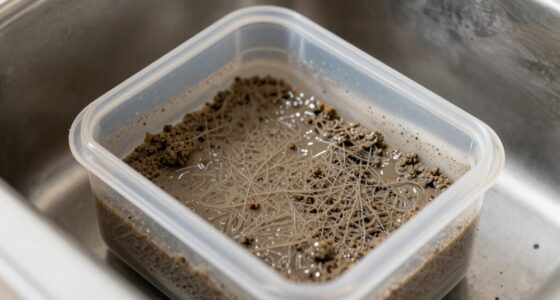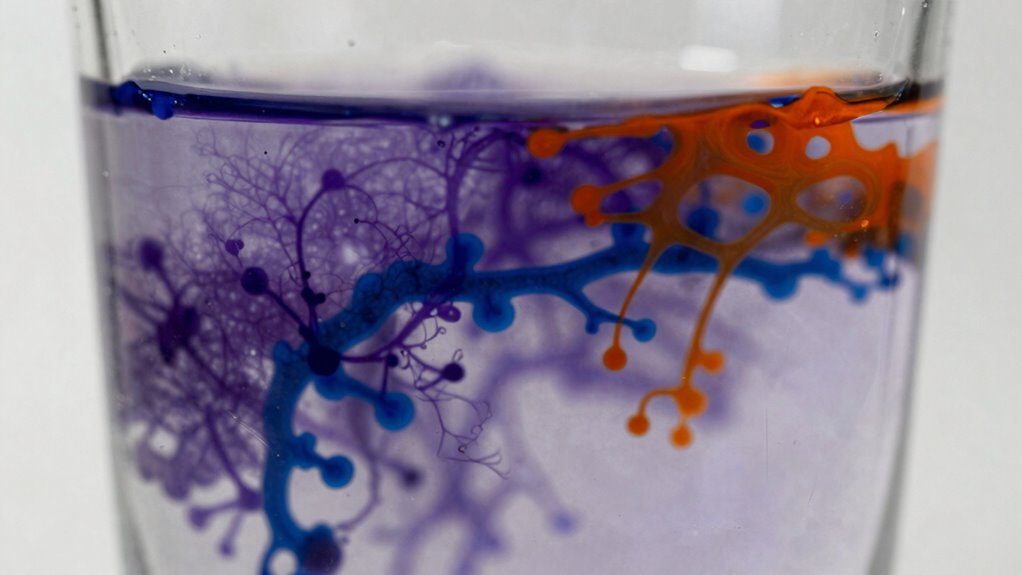

Staining patterns on surfaces like fabrics, tiles, or paper can tell you a lot about what’s in your water. Uneven or colored stains often indicate impurities, minerals, or contaminants such as iron, manganese, or organic pollutants. By observing these patterns, you can get an early sense of water quality issues and spot signs of heavy metals or organic matter. Keep an eye on these signs, and you’ll discover more about what’s really lurking in your water.

Get home appliances delivered free — and shop member deals
- Fast, free delivery on millions of items
- Access to Prime Big Deal Days deals on October 6–7
- Prime Video, Amazon Music and more included
Key Takeaways
- Uneven dye absorption and staining patterns indicate the presence of specific contaminants like heavy metals or organic pollutants.
- Colored or stubborn stains reveal impurities such as iron, manganese, or mineral levels in water.
- Patterns showing blotchy or streaked areas suggest uneven distribution of impurities or particles.
- Visual analysis of stains helps identify early signs of water contamination before advanced testing.
- Monitoring staining patterns over time assesses the effectiveness of water filtration and purification systems.

Have you ever noticed the unique patterns that form when water interacts with different surfaces or substances? These patterns can tell you a lot about what’s in your water, especially when it comes to waterborne contaminants. When water comes into contact with surfaces like fabrics, tiles, or paper, it leaves behind distinctive stains that reveal the presence of impurities. For example, if your water contains high levels of minerals or certain contaminants, the staining patterns can become more pronounced or develop unusual colors. Recognizing these patterns can be a first step in understanding whether your water is clean or if it’s hiding something more concerning beneath the surface.
One of the most revealing aspects of staining patterns is dye absorption. When you add a dye or colorant to water, it acts as a visual indicator of how water interacts with different materials. In cases where water carries impurities, the dye may absorb unevenly, creating blotchy or streaked stains. This uneven absorption often points to the presence of waterborne contaminants like iron, manganese, or organic compounds. These substances can affect not only the color of the stains but also their texture and spread. For example, contaminated water might cause dyes to cling more strongly to certain areas or to spread irregularly, highlighting where impurities are concentrated.
Uneven dye absorption reveals waterborne contaminants like iron, manganese, or organic compounds through blotchy, streaked stains.
Dye absorption is particularly valuable because it allows you to see subtle differences that might not be obvious otherwise. When you observe how dyes settle into fabrics or surfaces, you’re fundamentally getting a visual map of water quality. If the dye doesn’t spread evenly or leaves behind stubborn spots, it could indicate that your water contains particles or chemicals that resist normal filtration. These patterns can help you diagnose issues such as heavy metal contamination or organic pollutants, which often cause specific staining behaviors. Recognizing these patterns helps you determine whether your water needs treatment or filtration to remove harmful substances. Additionally, understanding how different waterborne contaminants influence staining patterns can guide you in choosing appropriate purification methods.
In short, paying close attention to staining patterns and dye absorption can serve as an informal, yet insightful, way to assess your water’s purity. They act as visual clues that point to the presence of waterborne contaminants. Instead of relying solely on lab tests, you can perform simple observations at home to get a basic understanding of your water quality. For example, visual analysis of staining patterns can help identify early signs of contamination before they become more severe. Using staining patterns as diagnostic tools can also help you monitor the effectiveness of your filtration system over time. While these patterns don’t replace professional testing, they certainly provide valuable insights into what’s really in your water — helping you make better decisions about filtration, purification, or whether to contact experts for further analysis. Understanding the decoding of water patterns can also be linked to broader concepts of water quality assessment and water treatment strategies.
water testing kit for contaminants
As an affiliate, we earn on qualifying purchases.
As an affiliate, we earn on qualifying purchases.
Frequently Asked Questions
How Long Do Staining Patterns Typically Last After Water Testing?
Staining patterns usually last for several days to a week after water testing, depending on water quality and staining intensity. You’ll notice the staining longevity varies, but if the pattern remains consistent, it indicates ongoing issues. Keep monitoring the pattern’s consistency over time; persistent staining suggests a need for further testing or water treatment. Clean surfaces regularly to prevent long-term staining, and consider professional analysis for accurate results.
Can Staining Patterns Indicate Specific Contaminants Accurately?
Yes, staining patterns can sometimes accurately indicate specific contaminants through visual diagnostics, acting like a crystal ball for your water. Chemical indicators in the stains respond to particular substances, revealing their presence. However, don’t depend solely on these patterns; they can be misleading. Proper testing with laboratory analysis ensures precise identification. Use staining as an initial clue, but confirm findings with definitive chemical tests for true water safety.
Are There Safety Precautions When Analyzing Water Staining Patterns?
Yes, you should take safety precautions when analyzing water staining patterns. Chemical reactions involved can produce hazardous fumes or residues, so wearing gloves, goggles, and a mask is essential. Use visual indicators carefully to avoid direct contact, and work in well-ventilated areas. Handling chemicals responsibly minimizes risks, ensuring you stay safe while accurately interpreting staining patterns to identify contaminants.
Do Staining Patterns Vary With Water Temperature?
Yes, staining patterns do vary with water temperature. When temperature fluctuations occur, they can influence staining variability, making patterns more or less pronounced. Warmer water might cause certain minerals to dissolve more readily, intensifying stains, while colder water can slow this process down. So, you should keep temperature in mind during analysis, as it directly impacts the staining patterns you observe. Don’t overlook this factor; it’s key to accurate water assessment.
How Cost-Effective Are Staining Pattern Tests Compared to Other Methods?
Staining pattern tests are quite cost-effective compared to more advanced testing methods. They offer a quick, visual way to identify potential issues without expensive lab work, making them ideal for initial assessments. When considering cost comparison and testing efficiency, staining patterns provide a practical, low-cost option that helps you decide if further detailed analysis is necessary. Overall, they’re an affordable, efficient tool for early water quality screening.
iron and manganese water stain remover
As an affiliate, we earn on qualifying purchases.
As an affiliate, we earn on qualifying purchases.
Conclusion
Knowing what’s in your water can feel overwhelming, but understanding staining patterns makes it easier. For instance, did you know that over 85% of household water tests reveal some form of mineral buildup? By paying attention to these patterns, you can identify contaminants early and take action. Staying informed helps you protect your health and improve water quality. So, keep observing those staining clues—they’re your water’s subtle signals, guiding you toward safer, cleaner water every day.
As an affiliate, we earn on qualifying purchases.
water filtration system for heavy metals
As an affiliate, we earn on qualifying purchases.
As an affiliate, we earn on qualifying purchases.
NFL season / tailgating Picks
team gear
As an affiliate, we earn on qualifying purchases.