
To extend your RO membrane’s life without falling for hype, focus on regular maintenance practices like monitoring mineral levels and installing pre-filters. Clean the membrane every 6 to 12 months with proper cleaning solutions, avoiding harsh chemicals. Maintain system pressure and flow, and promptly address performance issues. By sticking to proven strategies in membrane care, you can maximize its lifespan and guarantee ideal water quality. Keep going to discover more reliable tips for long-lasting performance.
Listen free for 30 days with Audible
Thousands of audiobooks and originals — cancel anytime.
As an affiliate, we earn on qualifying purchases.
Key Takeaways
- Regularly monitor water mineral levels and install pre-filtration to reduce scaling risks.
- Schedule membrane cleaning every 6 to 12 months using manufacturer-approved solutions.
- Maintain proper system pressure and flow rates to minimize membrane stress.
- Rinse membranes thoroughly after cleaning to prevent chemical residues.
- Keep the entire system well-maintained and components in good condition for optimal performance.

Maintaining your RO membrane is essential to guarantee ideal water filtration and prolong its lifespan. One of the key issues you’ll face is scaling, which occurs when minerals like calcium and magnesium build up on the membrane surface. Scaling prevention is crucial because it directly impacts your membrane’s efficiency and longevity. To avoid this problem, you should regularly monitor your water’s mineral content and consider installing pre-filtration stages, such as sediment or carbon filters, to reduce the load before water reaches the membrane. Using a proper water softener can also help minimize mineral buildup, especially if your source water is hard. By taking these measures, you prevent mineral deposits from forming, which can clog the membrane and reduce its flow rate. Proper system setup also plays a vital role in maintaining membrane health and efficiency.
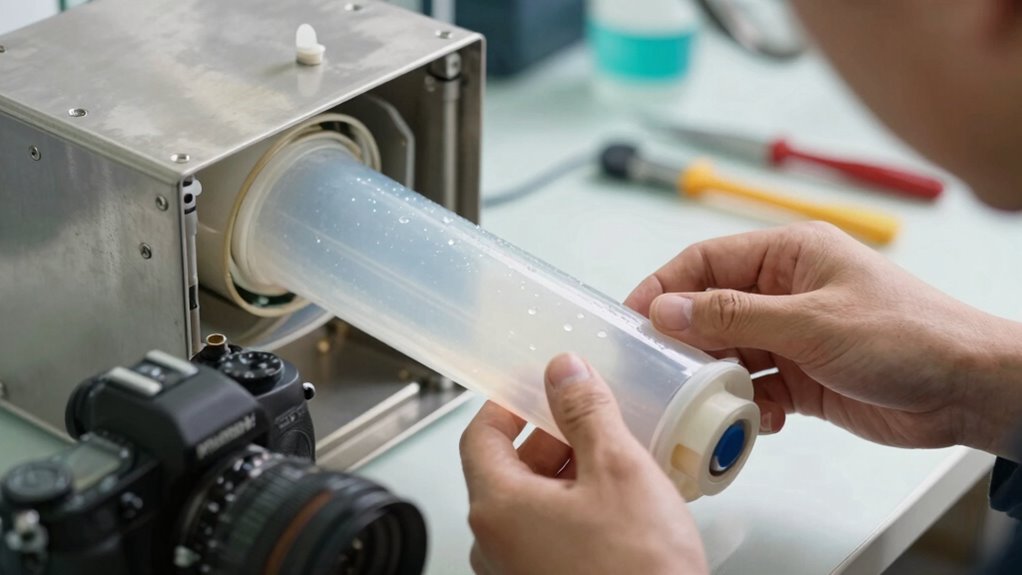
Membrane cleaning is another vital aspect of RO maintenance. Over time, even with scaling prevention efforts, some contaminants may accumulate on the membrane, leading to decreased performance. Regularly cleaning your membrane helps remove these deposits and restore optimal filtration. You should follow your system’s specific cleaning procedures, typically involving a cleaning solution designed for RO membranes. This process usually entails shutting down the system, removing the membrane, and soaking it in the cleaning solution to dissolve any accumulated dirt or scale. Avoid neglecting membrane cleaning because neglect can lead to irreversible damage, forcing you to replace the membrane prematurely. Keep in mind that the frequency of cleaning depends on your water quality and usage but generally occurs every 6 to 12 months for most domestic systems.
To maximize your membrane’s lifespan, always use the recommended cleaning agents and follow the manufacturer’s instructions carefully. Using improper chemicals or cleaning too aggressively can damage the delicate membrane surface. When cleaning, ensure thorough rinsing afterward to remove any residual cleaning solution, which could otherwise harm the membrane or compromise water quality. Additionally, maintaining proper system pressure and flow rates supports membrane health, preventing undue stress that can accelerate wear and tear. Keep a close eye on system performance indicators, such as permeate flow rate and water quality, to catch potential problems early.
As an affiliate, we earn on qualifying purchases.
Frequently Asked Questions
Can I Clean the Membrane With Household Chemicals?
You shouldn’t clean your RO membrane with household chemicals because they can damage the membrane and reduce its lifespan. Instead, use proper membrane cleaning products designed specifically for this purpose. These specialized solutions effectively remove buildup without harming the membrane. Regular membrane cleaning prevents clogging and guarantees peak performance, helping your RO system last longer. Avoid household chemicals to maintain your membrane’s integrity and avoid costly replacements.
How Often Should I Replace Pre-Filters for Optimal RO Membrane Life?
Imagine your pre-filters as the first line of defense, catching dirt before it reaches your RO membrane. Change them every 6 to 12 months, depending on your water quality and usage. This replacement schedule helps maintain ideal pre-filter lifespan, ensuring your system runs smoothly. Regular swaps prevent clogging and extend the membrane’s life, saving you from costly replacements and keeping your water pure and fresh.
Is It Necessary to Sterilize the Membrane Regularly?
Yes, sterilizing your membrane regularly is important for maintaining membrane hygiene and preventing bacterial growth. Proper sterilization helps eliminate harmful microbes that can clog or damage the membrane, ultimately extending its lifespan. You should follow your system’s guidelines for sterilization frequency, typically every 6 to 12 months, depending on usage. Regular sterilization ensures ideal performance and cleaner, safer drinking water.
What Are the Signs of Membrane Deterioration Beyond Pressure Drops?
Did you know that around 60% of membrane failures are caused by fouling or scaling? If your pressure remains stable but output quality drops, you might notice increased permeate turbidity or foul odors, indicating membrane deterioration. Membrane fouling and mineral scaling reduce efficiency, even without pressure drops. Keep an eye on water quality and flow rates, as these signs signal your membrane needs cleaning or replacement to prevent irreversible damage.
How Does Water Temperature Affect Membrane Longevity?
Water temperature critically impacts membrane longevity; higher temperatures accelerate chemical reactions and increase stress on the membrane, leading to faster deterioration. Keeping water temperature within the recommended range helps maintain ideal performance and extends your membrane’s lifespan. Conversely, colder water can reduce permeability, but extreme heat should be avoided. Monitoring and controlling water temperature ensures you get the most out of your membrane, saving you money and reducing replacement frequency.
As an affiliate, we earn on qualifying purchases.
Conclusion
By following these simple maintenance tips, you keep your RO membrane running smoothly, but don’t stop here. Picture your system operating flawlessly, filtering pure water day after day—yet, unseen challenges could still be lurking. Stay vigilant, regularly check for signs of wear, and keep your system well-maintained. Because when you think you’ve got it all under control, that’s when the real test begins. Will your membrane stand the test of time? Only careful upkeep will tell.
pre-filter sediment and carbon filters
As an affiliate, we earn on qualifying purchases.
As an affiliate, we earn on qualifying purchases.
As an affiliate, we earn on qualifying purchases.
Flea & tick season Picks
flea and tick prevention
As an affiliate, we earn on qualifying purchases.