
TL;DR

Get home appliances delivered free with Prime
- Fast, free delivery on millions of items
- Prime Video, Amazon Music and more included
- Member-only deals all year
An Ideal Home report sets out six habits for drying laundry indoors while limiting excess moisture: use an extra spin where suitable, space garments out, consider a heated airer and dehumidifier, position the rack carefully, and ventilate the room. These are practical recommendations, not a guarantee against damp or mould; results depend on the room, weather and laundry load.
Ideal Home has published six recommendations for drying laundry indoors while limiting moisture in the home, including removing more water in the washing machine, leaving space between clothes and ventilating the room. The advice matters during cold or wet weather, when outdoor drying may not be practical and wet garments can add moisture to indoor air.
The report recommends running an extra spin cycle before hanging washing, provided the selected spin speed is suitable for the garments. Removing more water at the washing-machine stage can shorten drying time and reduce the amount of moisture that evaporates into the room. The article singles out heavier items such as towels, jeans and bedding as garments that can retain substantial water.
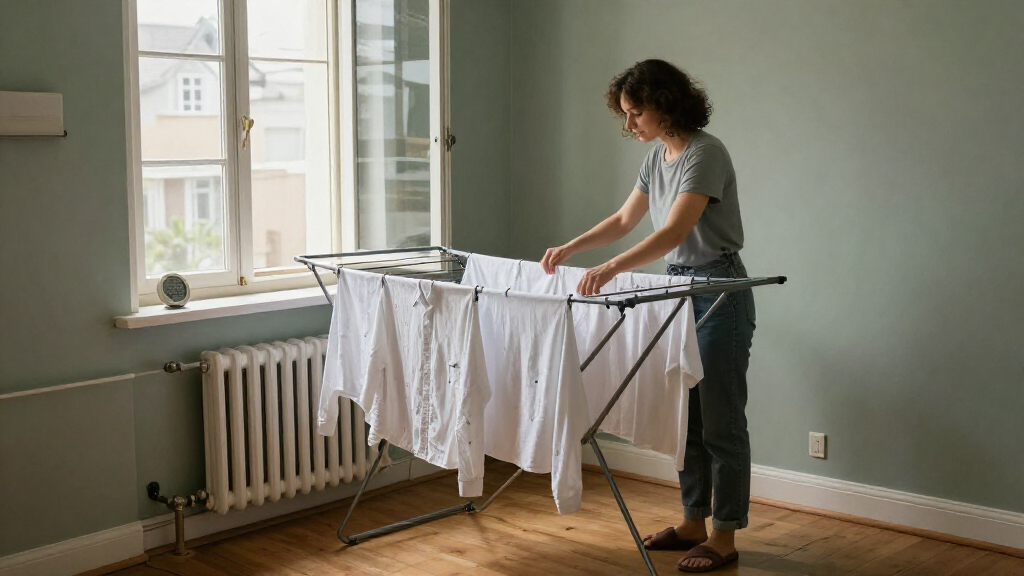
It also advises leaving space between garments on an airer so air can circulate. Spread sleeves and open shirts rather than layering fabric, and turn heavier items partway through drying to help prevent persistently damp areas. Lauren Roelofs, identified in the report as a laundry expert at Brabantia, says:
“One of the simplest ways to speed things up is to avoid overcrowding your drying rack. Leaving space between garments allows air to circulate, helping clothes dry more evenly.”
The other recommendations are to consider a heated clothes airer, pair the rack with a dehumidifier, keep the rack slightly away from walls, and ventilate the room. The report says a heated airer can help dry clothes but does not itself remove moisture released into the room. Catrin Parry, buying lead at Lakeland, recommends pairing an airer with a dehumidifier to remove excess moisture from the air. The article also says a compatible cover may reduce drying times by a couple of hours, depending on the load and conditions.
Keeping Laundry Moisture Under Control
Indoor drying is a routine household task, but the moisture from wet clothing enters the home unless it is removed or carried away. Overcrowded racks and poor airflow can also leave garments drying unevenly, extending the time that moisture is released. The suggested steps address both sides of the problem: reducing water in the laundry and improving airflow or moisture removal in the room.
The report presents these measures as ways to limit condensation risk, not as a promise that damp or mould will be prevented. Conditions vary with room size, ventilation, outdoor weather, the amount of washing and how much moisture a dehumidifier can extract. Readers should treat equipment choices as options rather than requirements: the article offers no comparative cost or energy-use figures for the methods.
Products Worth Considering

eufy Security E30 4K Indoor Camera, 2-Pack

Dyson Car+Boat Cordless Handheld Vacuum

Philips Hue Smart LED Candle Light Bulb (B39, E12) – 2 Pack
As an affiliate, we earn on qualifying purchases.
Why Indoor Drying Needs Airflow
The article frames its advice around cold and wet weather, when outdoor lines are less usable and households may rely on clothes airers. It notes that a tumble dryer is not available or affordable for everyone, making indoor drying a common alternative. Its six suggestions are assembled from the report’s own guidance and comments from laundry-sector representatives.
The source includes product examples, including heated airers and dehumidifiers, but the main recommendations do not depend on buying a particular model. A rack’s placement and spacing, garment handling, and room ventilation are also part of the advice. The supplied source ends as it introduces ventilation; it does not provide specific instructions about how long to open a window or quantify the effect of that step.
““One of the simplest ways to speed things up is to avoid overcrowding your drying rack. Leaving space between garments allows air to circulate, helping clothes dry more evenly.””
— Lauren Roelofs, laundry expert at Brabantia, as quoted by Ideal Home
Limits of the Drying Advice
The supplied report does not cite independent testing or provide measurements showing how much each habit reduces indoor humidity, drying time or mould risk. Its time-saving estimate for a heated-airer cover is qualified as dependent on the load and conditions, and no exact test conditions are given. The source also does not specify a ventilation schedule or explain what to do when opening windows is impractical.
It remains unclear how much benefit households will see from any single measure, or whether the combined steps are sufficient in a home with persistent condensation. The article offers general household guidance rather than a diagnosis of damp, mould or building-related problems.
Applying the Six Household Steps
The report sets out no formal follow-up or further testing. Its practical next step for readers is to adjust indoor drying habits: use an appropriate extra spin, avoid crowding the rack, consider whether a heated airer or dehumidifier suits the household, keep the rack clear of walls, and ventilate the room where possible. Monitor how the room and laundry respond, since results depend on local conditions and the size of each load.
For ongoing condensation or suspected mould, these drying tips alone may not address the underlying cause. The source does not offer specialist advice for persistent problems, so readers should seek appropriate housing or building guidance if moisture remains an issue.
Key Questions
What are the six recommended habits for indoor laundry drying?
The report recommends an extra spin cycle where suitable, spacing garments on the rack, considering a heated airer, using a dehumidifier, placing the rack slightly away from walls, and ventilating the room.
Does a heated clothes airer remove moisture from the room?
Not by itself, according to the Ideal Home report. It helps dry clothes, while a dehumidifier removes moisture from the air.
Why should clothes be spaced out on an airer?
Gaps allow air to circulate between garments, which the report says can help clothes dry more evenly. It also recommends spreading sleeves and turning heavy items during drying.
Will these steps guarantee that damp and mould are prevented?
No such guarantee is established in the source. The advice is intended to limit moisture build-up, but the report gives no measured results and says outcomes depend on conditions.
Source: idealhome.co.uk